You're viewing free preview questions — 4 questions previewing here — subscribe to unlock 80 more, plus the Full Question Bank, Mock Papers & Worksheets.Upgrade
Skeletal and Muscular Systems — Free MYP2 Sciences Practice Questions

1QuestionFunctions of the Human SkeletonConcept Practice
2 marks~3 minCriterion A
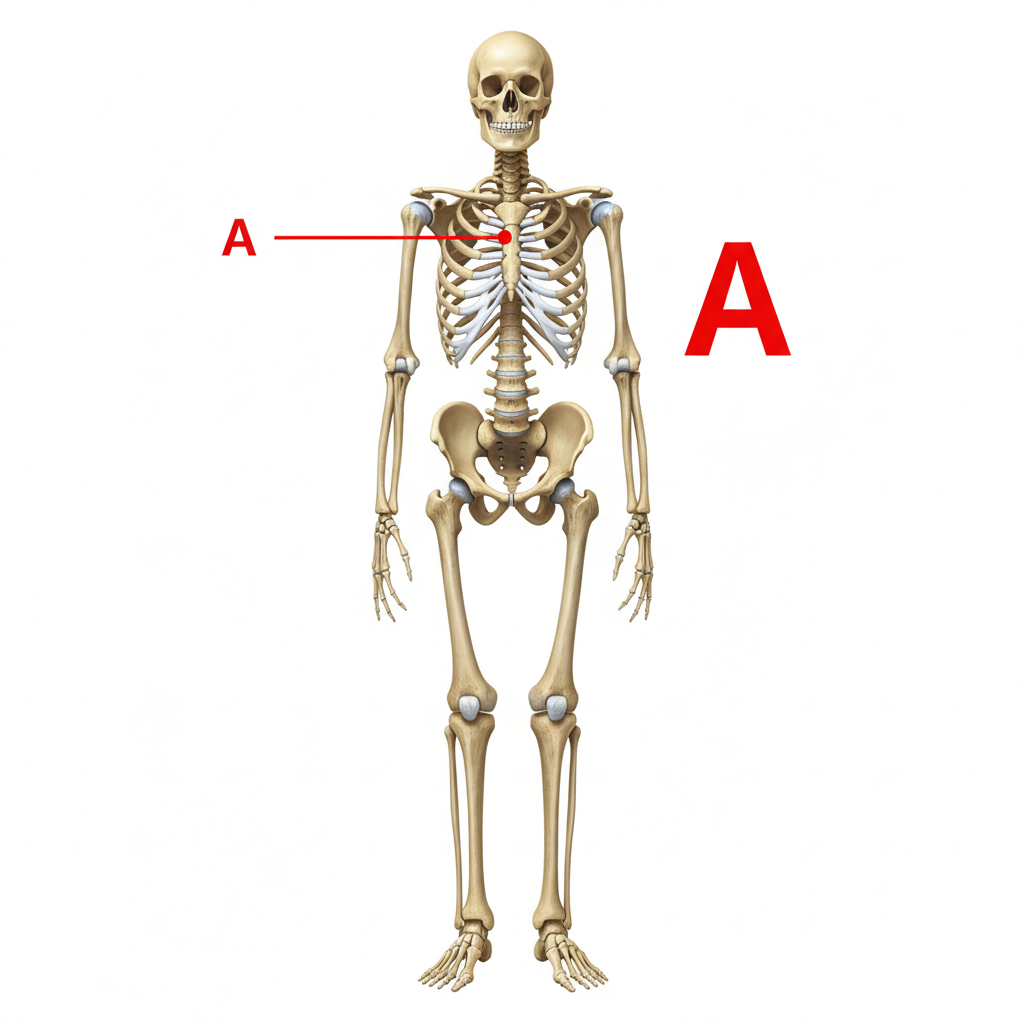
The diagram shows a human skeleton with one bone structure labeled A.
a
Identify the name of structure A. [1]
b
Describe one function of structure A in the human body. [1]

Solutions
2QuestionFunctions of the Human SkeletonAssessment Practice
4 marks~6 minCriterion D
A PE teacher says running on concrete causes micro-damage (tiny cracks) to bones, so teenagers should run on grass instead.
a
Identify two functions of the human skeleton. [1]
b
Explain why a teenager's bones may recover from micro-damage caused by running on concrete. [1]
c
Compare the strengths and limitations of the PE teacher's advice. [2]

Solutions
3QuestionProtection Support and MovementAssessment Practice
5 marks~8 minCriterion B
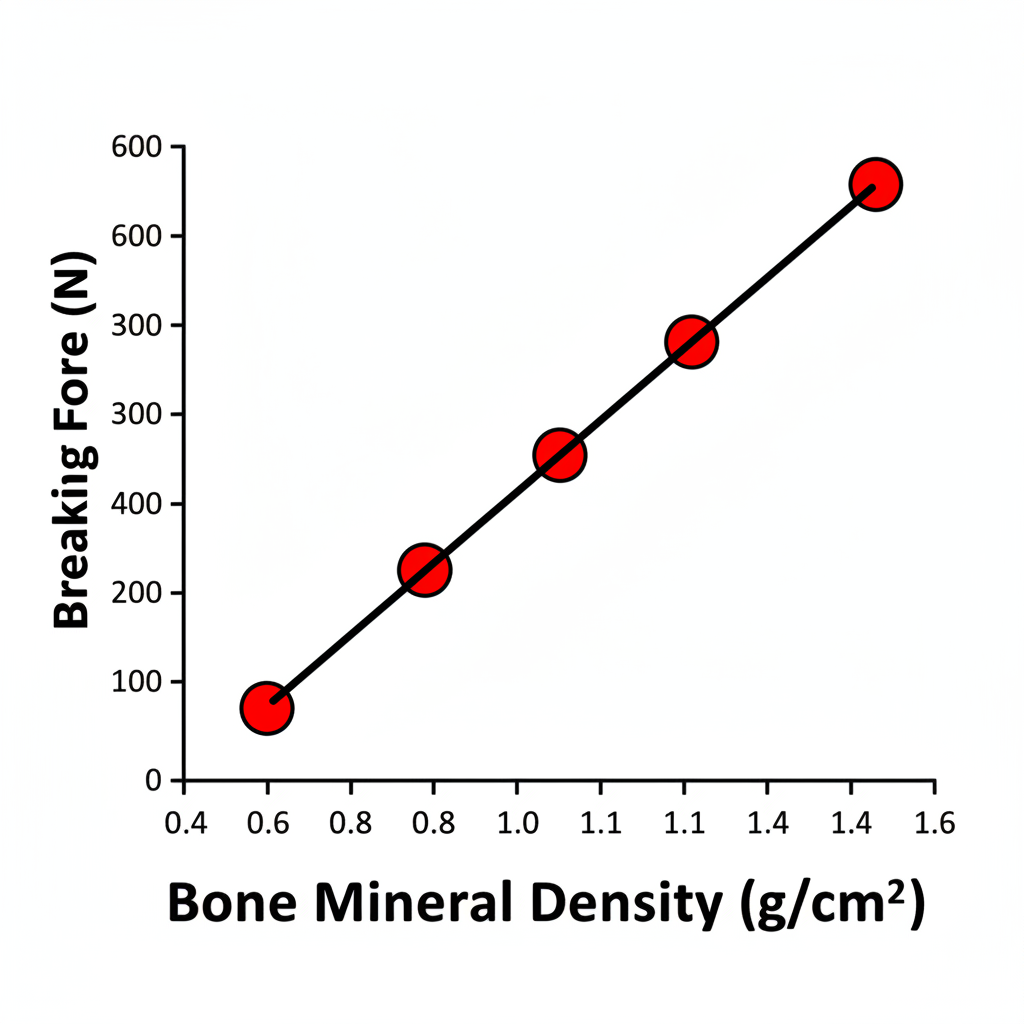
The table below shows the bone mineral density (BMD — a measure of how much mineral is packed into bone) and the breaking force for four animal bones.
| BMD () | 0.5 | 0.8 | 1.1 | 1.4 |
|---|---|---|---|---|
| Breaking force (N) | 200 | 320 | 440 | 560 |
a
Identify the relationship between BMD and breaking force shown in the table. [1]
b
Calculate the increase in breaking force for every increase in BMD. Show your working. [2]
c
A bone with a BMD of is placed under a load of 500 N. Using your answer from (b), estimate the breaking force of this bone, then explain whether it is likely to break. [2]
Solutions
4QuestionFunctions of the Human SkeletonAssessment Practice
6 marks~9 minCriterion C
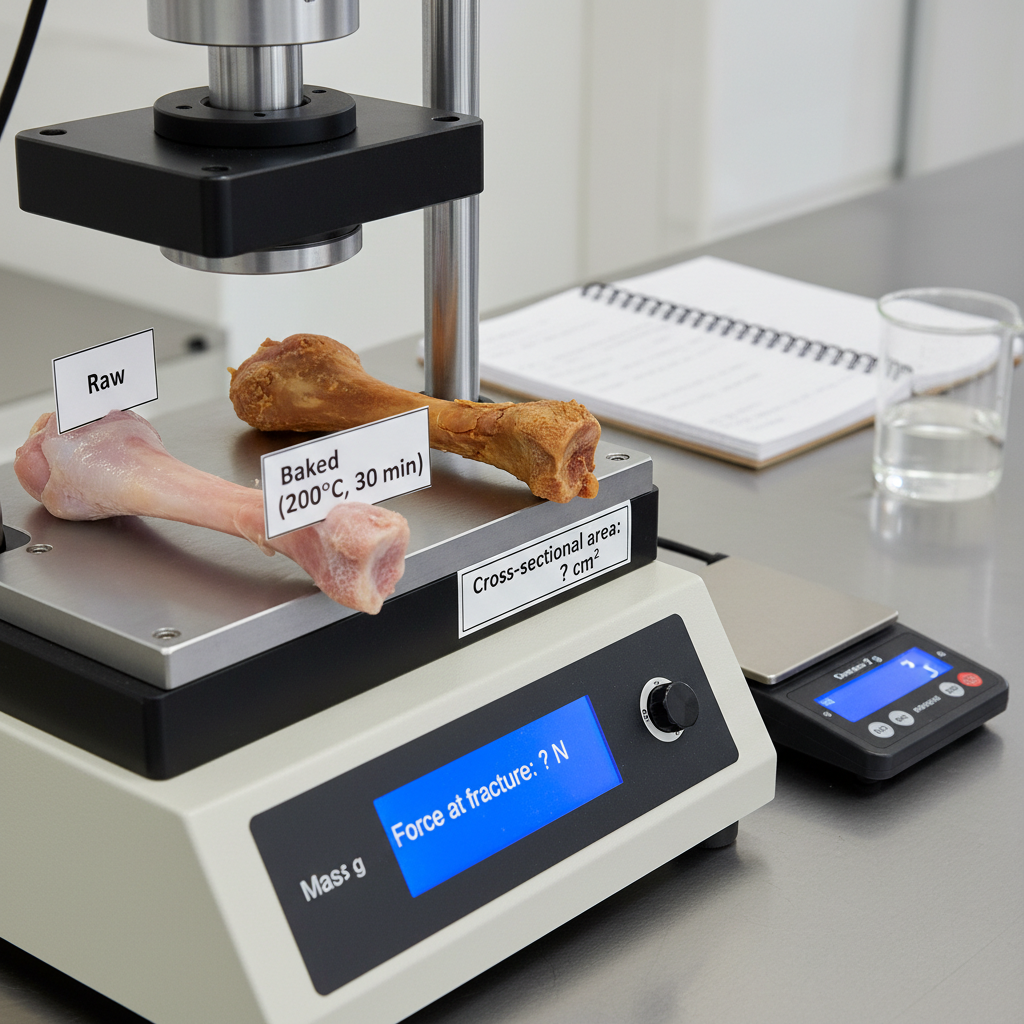
A student tests two chicken leg bones of similar size. One bone is left raw; the other is baked at for 30 minutes. A machine records the force needed to break each bone and the bone's mass.
Raw bone — mass: ; force at fracture:
Baked bone — mass: ; force at fracture:
Raw bone — mass: ; force at fracture:
Baked bone — mass: ; force at fracture:
a
Calculate the force-to-mass ratio (N/g) for each bone. [2]
b
Describe what the difference in force-to-mass ratios tells you about the effect of baking on bone strength. [2]
c
Compare the conclusion "baking makes bones stronger" with the limitations of this investigation. [2]
Solutions
That's every free question here — 4 of 84.
+80 more questions, plus Mock Papers & Worksheets, are waiting in Premium.