You're viewing free preview questions — 4 questions previewing here — subscribe to unlock 79 more, plus the Full Question Bank, Mock Papers & Worksheets.Upgrade
Color and the Electromagnetic Spectrum — Free MYP2 Sciences Practice Questions

1QuestionDispersion of Light Through a PrismConcept Practice
2 marks~3 minCriterion A
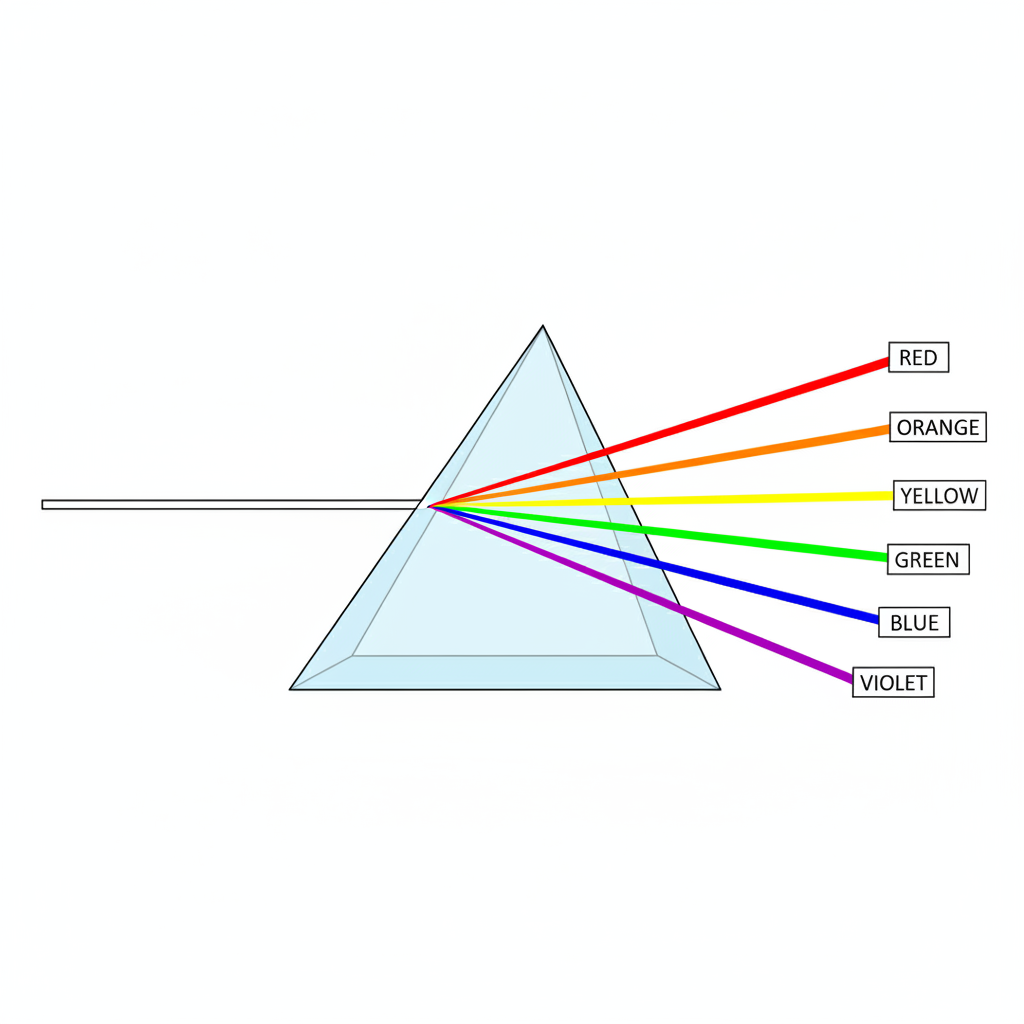
The diagram shows white light entering a glass prism and spreading into a spectrum of colours.
a
Identify the colour of light that bends the most as it passes through the prism. [1]
b
Explain why that colour bends more than red light. [1]

Solutions
2QuestionPrimary and Secondary Colors of LightAssessment Practice
3 marks~5 minCriterion B
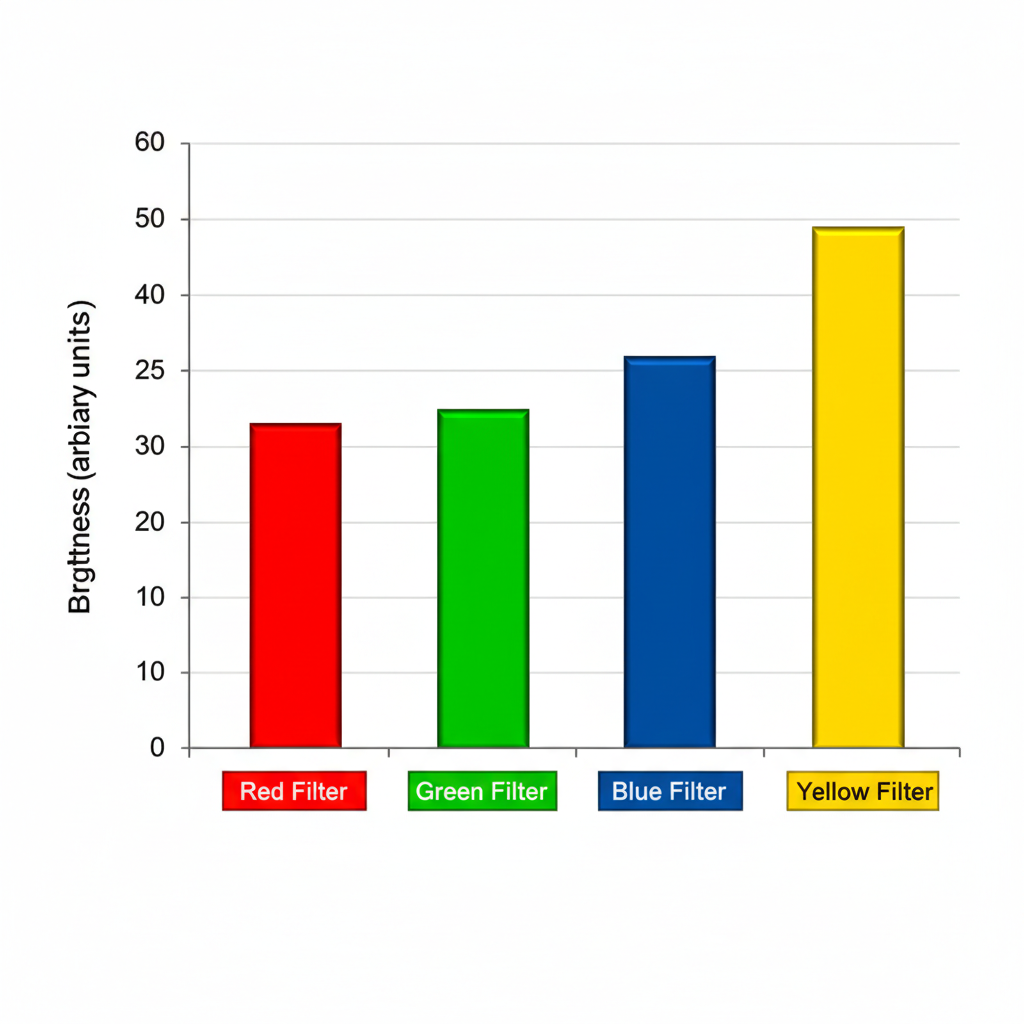
White light passes through four filters. The brightness of the transmitted light, measured in arbitrary units, is recorded below.
| Filter | Brightness (arbitrary units) |
|---|---|
| Red | 30 |
| Green | 25 |
| Blue | 20 |
| Yellow | 55 |
a
State which two primary colors of light combine to produce yellow light. [1]
b
Explain why the yellow filter transmits more light than the red filter alone. [1]
c
Compare the brightness of the yellow filter with the brightness values of the red and green filters, and explain what this tells you about how a yellow filter works. [1]
Solutions
3QuestionUses of Different EM Waves IntroductoryAssessment Practice
5 marks~8 minCriterion C
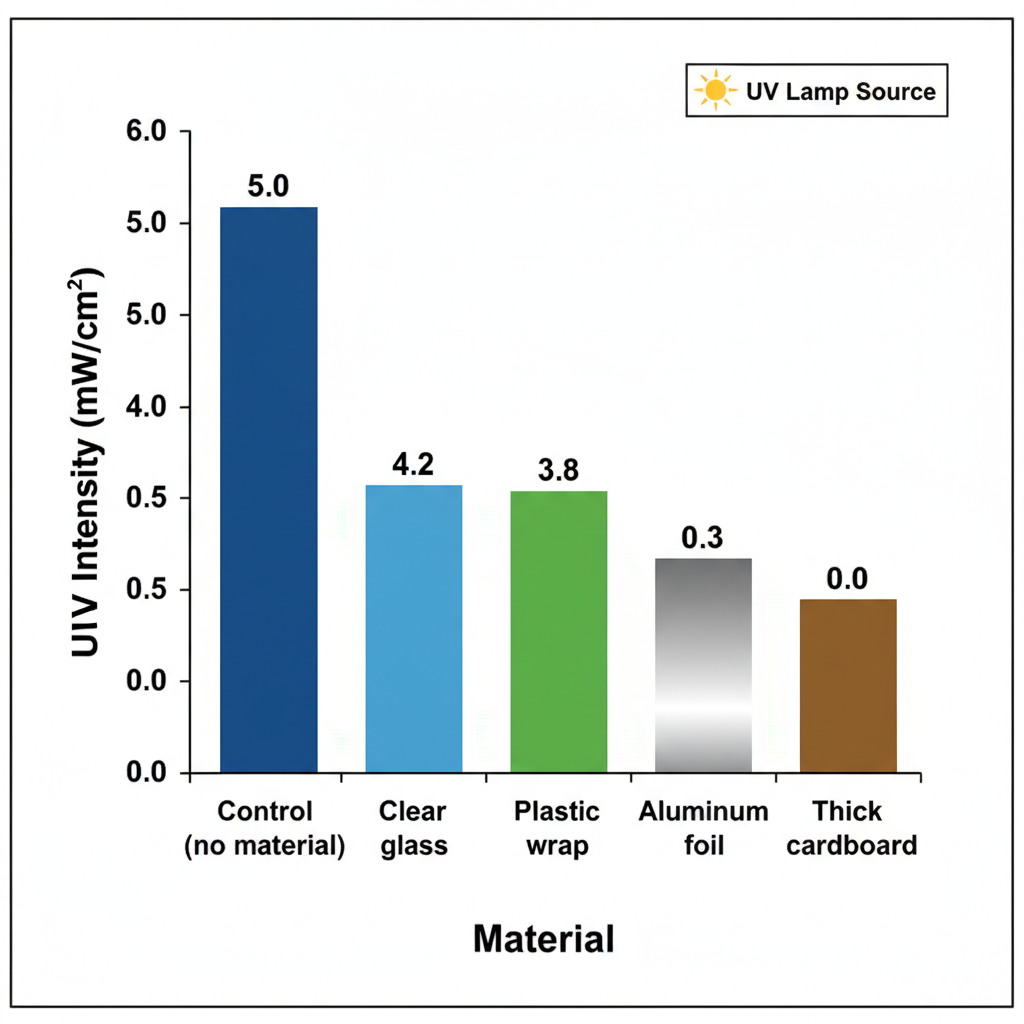
A student claims that aluminium foil blocks 100% of UV (ultraviolet) radiation from a UV lamp. To test this, they place a UV light meter behind five materials and record the UV intensity in mW/cm².
Control (no material): 5.0 mW/cm²
Clear glass: 4.2 mW/cm²
Plastic wrap: 3.8 mW/cm²
Aluminium foil: 0.3 mW/cm²
Thick cardboard: 0.0 mW/cm²
Control (no material): 5.0 mW/cm²
Clear glass: 4.2 mW/cm²
Plastic wrap: 3.8 mW/cm²
Aluminium foil: 0.3 mW/cm²
Thick cardboard: 0.0 mW/cm²
a
Identify the UV intensity reading recorded for aluminium foil. [1]
b
Calculate the percentage of UV radiation blocked by aluminium foil. Show your working. [2]
c
Compare the performance of aluminium foil and thick cardboard, and explain whether the data support the student's claim. [2]
Solutions
4QuestionDispersion of Light Through a PrismAssessment Practice
8 marks~12 minCriterion D
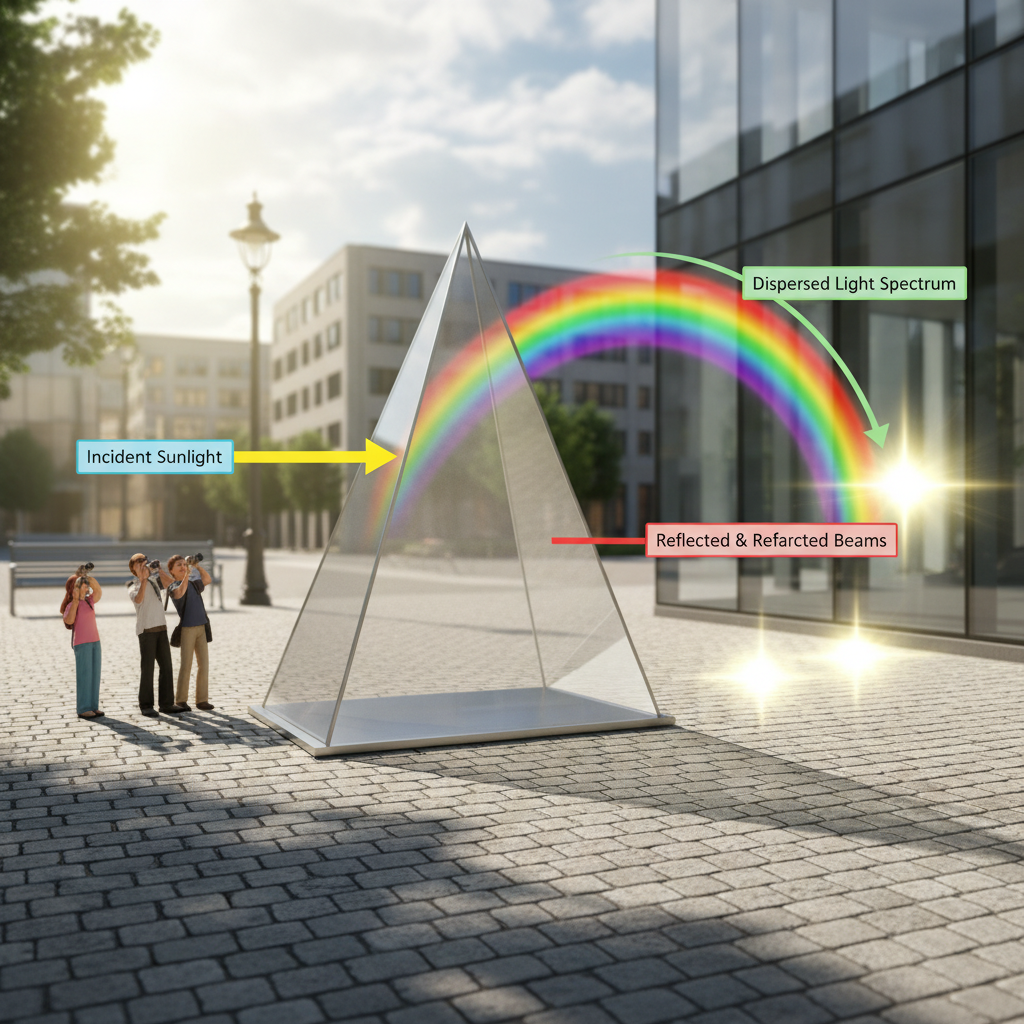
A city council plans to install large glass prisms in public squares to split sunlight into rainbow colours and attract tourists. The same prisms also focus sunlight into bright hot spots on the ground, which could harm people nearby.
a
Identify the two conditions needed for a prism to split sunlight into a rainbow. [2]
b
Explain why the hot spots created by the prisms are a safety risk to people in the area. [2]
c
A councillor claims the prisms will produce rainbows all day, every day. Compare this claim with the real-world conditions the prisms would face, and decide whether the council should proceed with the project. [4]
Solutions
That's every free question here — 4 of 83.
+79 more questions, plus Mock Papers & Worksheets, are waiting in Premium.