You're viewing free preview questions — 4 questions previewing here — subscribe to unlock 80 more, plus the Full Question Bank, Mock Papers & Worksheets.Upgrade
Properties of Waves — Free MYP2 Sciences Practice Questions

1QuestionDefinition of a Wave and Wave TypesConcept Practice
2 marks~3 minCriterion A
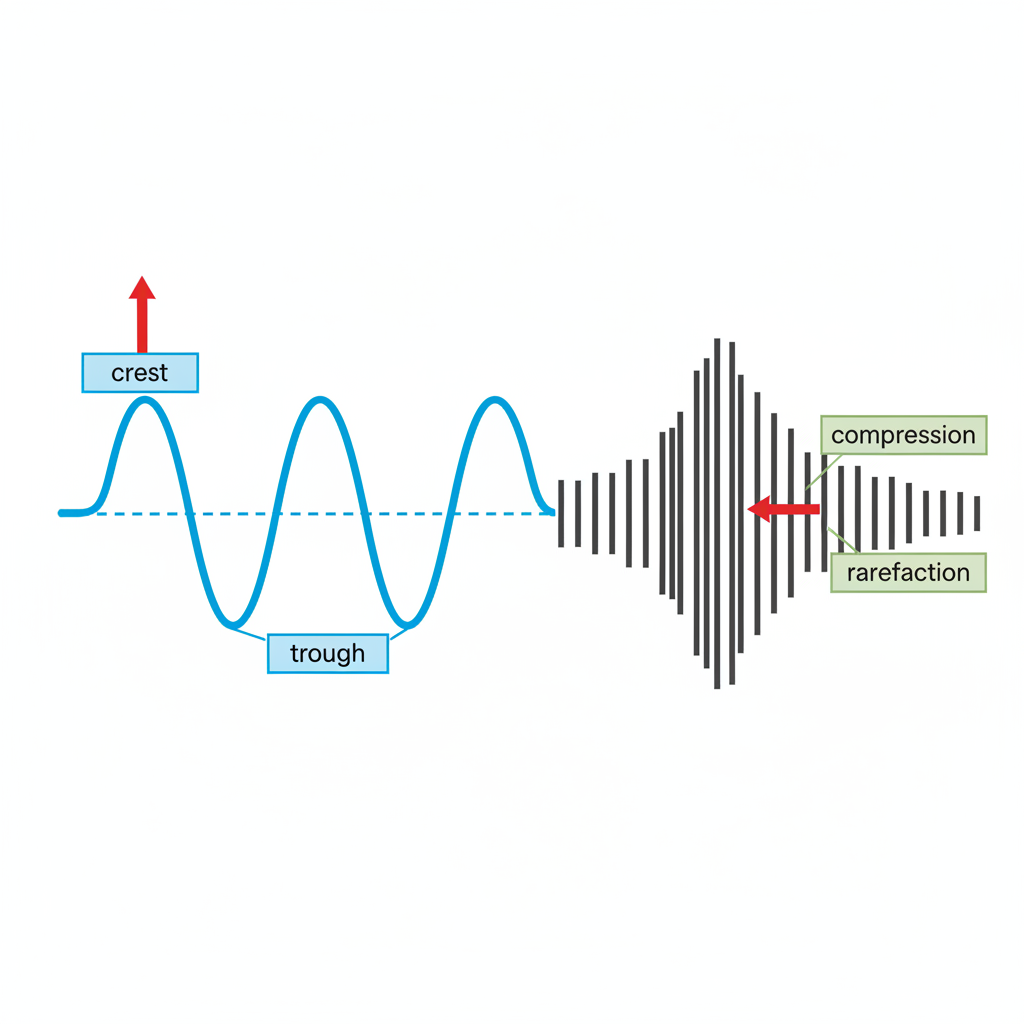
The diagram shows two waves: Wave A and Wave B. Wave A has a repeating up-and-down shape. Wave B shows regions where particles are squeezed together and spread apart.
a
Identify which wave is transverse and which is longitudinal. [1]
b
Identify the labeled part of Wave A at its highest point, and the labeled part of Wave B where particles are closest together. [1]

Solutions
2QuestionDefinition of a Wave and Wave TypesAssessment Practice
2 marks~3 minCriterion D
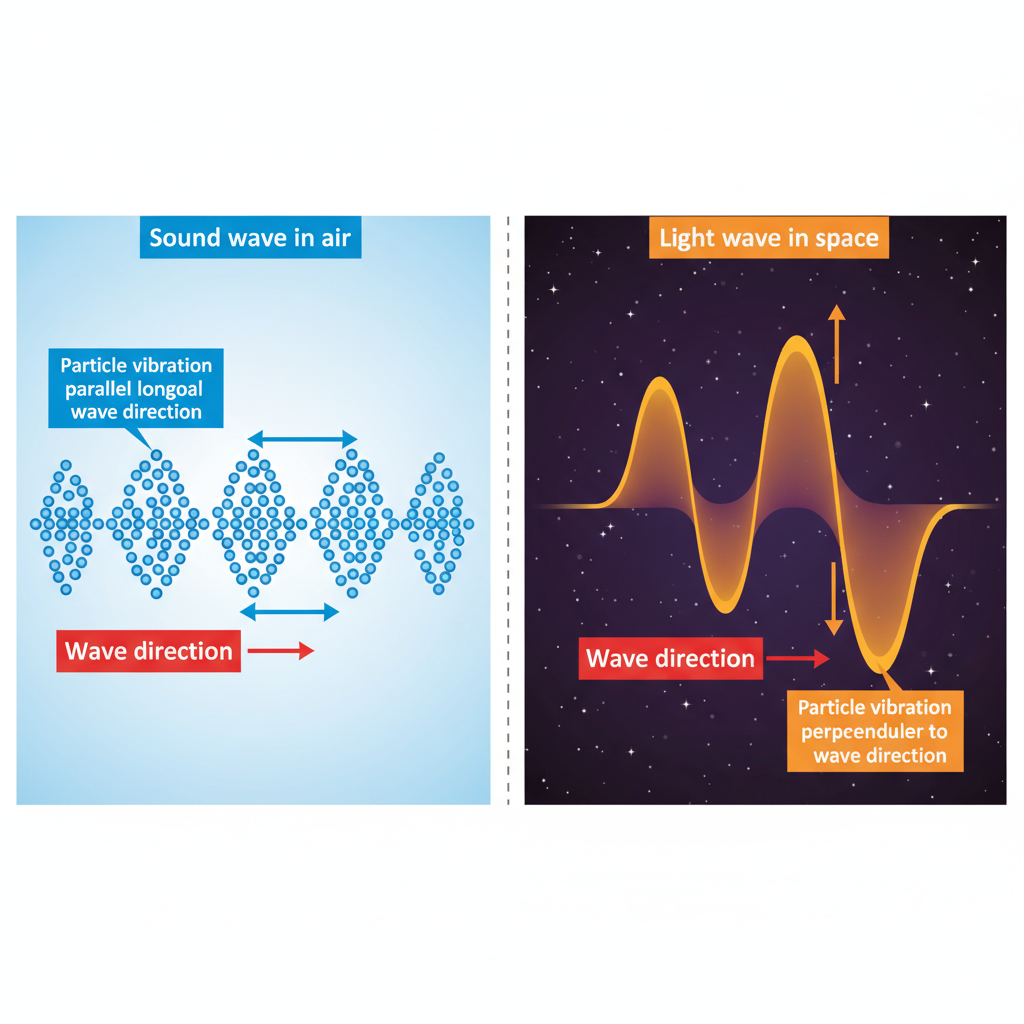
Sound is a longitudinal wave (particles vibrate back and forth) and light is a transverse wave (particles vibrate side to side).
Describe one real-world impact of this difference in wave type on how sound and light reach you in everyday life. [2]
Describe one real-world impact of this difference in wave type on how sound and light reach you in everyday life. [2]
Solutions
3QuestionKey Terms Wavelength Frequency Amplitude SpeedAssessment Practice
3 marks~5 minCriterion B
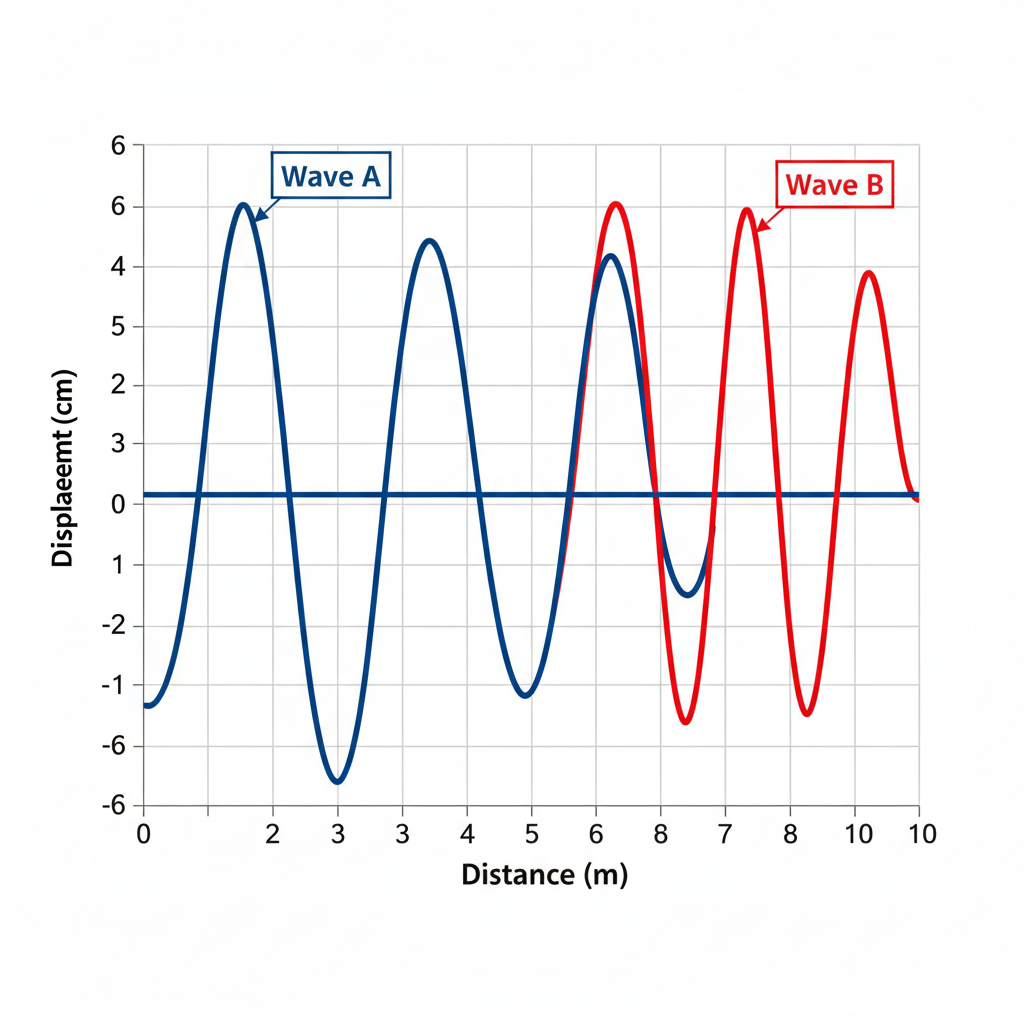
The graph shows two waves on the same grid.
Wave A: wavelength = 4 units, amplitude (height from rest position) = 1 unit
Wave B: wavelength = 2 units, amplitude = 2 units
Wave A: wavelength = 4 units, amplitude (height from rest position) = 1 unit
Wave B: wavelength = 2 units, amplitude = 2 units
a
Identify which wave has the greater amplitude. [1]
b
Explain what happens to the amplitude as the wavelength increases. [1]
c
Compare the relationship between wavelength and amplitude for the two waves, using the data to support your answer. [1]
Solutions
4QuestionDefinition of a Wave and Wave TypesAssessment Practice
5 marks~8 minCriterion C
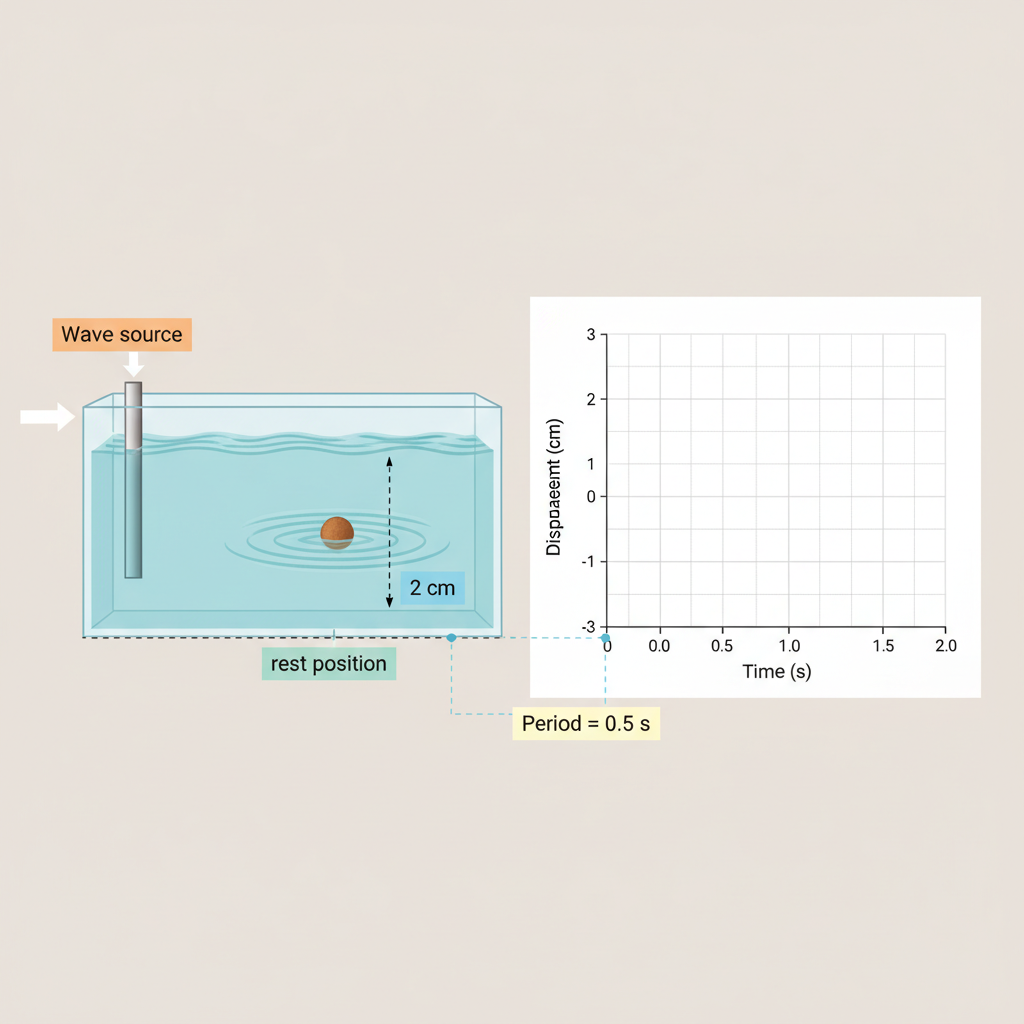
A cork floats on water in a ripple tank. As waves pass, the cork moves up and down with an amplitude of and a period of , but does not move sideways.
A student claims: "Waves transfer matter from one place to another."
A student claims: "Waves transfer matter from one place to another."
a
State what waves transfer as they travel through a medium. [1]
b
Describe the motion of the cork using the values given. [2]
c
Using the cork's behaviour, explain whether the experimental data supports or contradicts the student's claim. [2]
Solutions
That's every free question here — 4 of 84.
+80 more questions, plus Mock Papers & Worksheets, are waiting in Premium.