You're viewing free preview questions — 6 questions previewing here — subscribe to unlock 78 more, plus the Full Question Bank, Mock Papers & Worksheets.Upgrade
Back

Uses of Light and Sound in Technology — Free MYP2 Sciences Practice Questions

Free questions

Open in full, with answers, mark scheme and examiner insights.

Question 1Criterion A · Easy · 2 marksrevisionprep.com

Applications of Light in Everyday Life
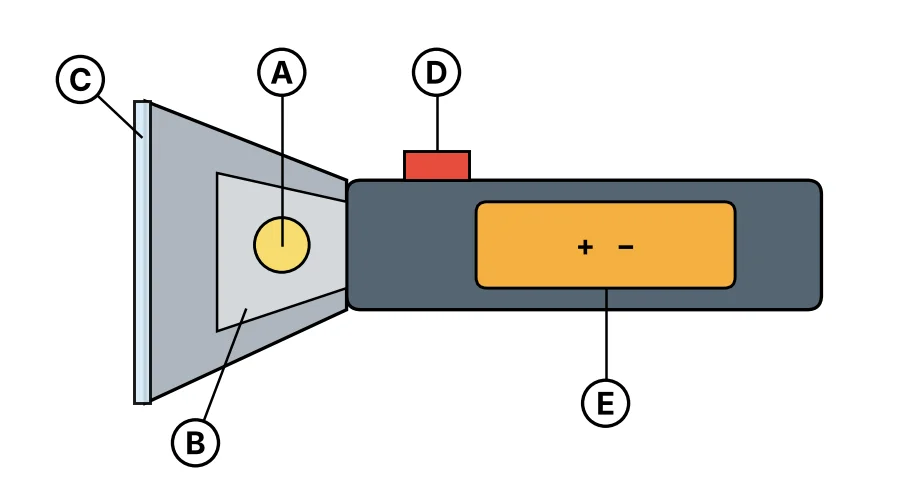
The diagram shows the parts of a torch (flashlight). The parts are labelled A, B, C, D and E.
Question diagram
(a)
Identify the part that gives out the light. [1]
(b)
Identify the part that stores the energy for the torch. [1]

revisionprep.com

Summary Answer

Not available for this question.

Model Answer

Not available for this question.

Marking Scheme

Not available for this question.

Examiner Insights

Not available for this question.

Question 2Criterion A · Easy · 2 marksrevisionprep.com

Radar and Sonar Basics

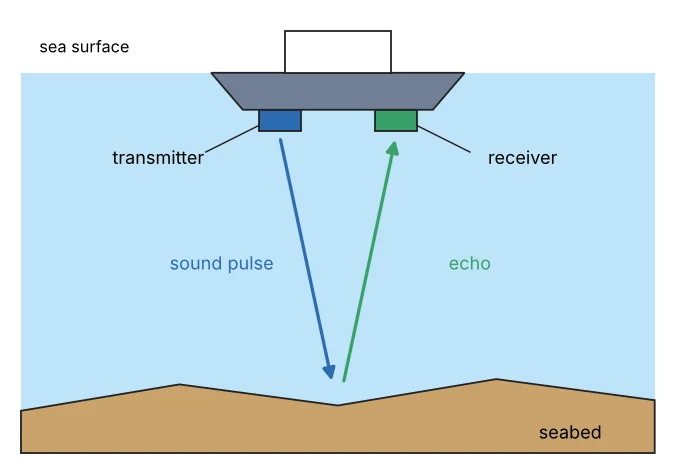
The diagram shows a sonar system on a boat. A transmitter sends out a sound pulse. The pulse travels down to the seabed, bounces back and is detected by a receiver.
Question diagram
(a)
Identify the part that sends out the sound pulse. [1]
(b)
Explain why the receiver alone cannot measure the depth of the sea. [1]

revisionprep.com

Summary Answer

Not available for this question.

Model Answer

Not available for this question.

Marking Scheme

Not available for this question.

Examiner Insights

Not available for this question.

Question 3Criterion C · Medium · 5 marksrevisionprep.com

Fiber Optics and Communication

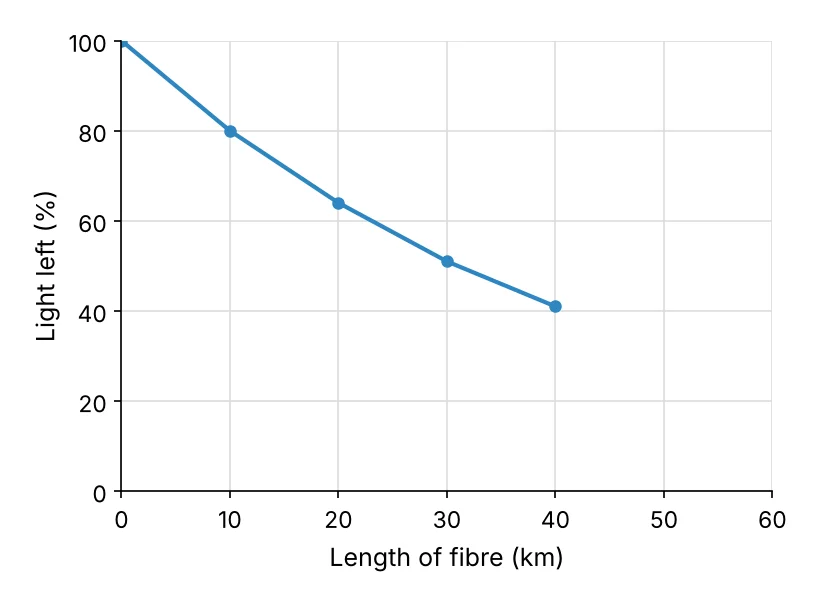
An optical fibre loses light. The graph shows how the percentage of light left changes with the length of the fibre. A fibre with less than 40% left cannot be used.
Question diagram
(a)
Read from the graph the percentage of light left at 20 km. [1]
(b)
Calculate the percentage of light lost in the first 20 km. [1]
(c)
Use the graph to find the longest length of fibre that can be used. [1]
(d)
A company wants to send a signal 60 km. Explain why a single fibre is not enough. [2]

revisionprep.com

Summary Answer

Not available for this question.

Model Answer

Not available for this question.

Marking Scheme

Not available for this question.

Examiner Insights

Not available for this question.

Question 4Criterion B · Medium · 4 marksrevisionprep.com

Ultrasound in Medicine and Industry

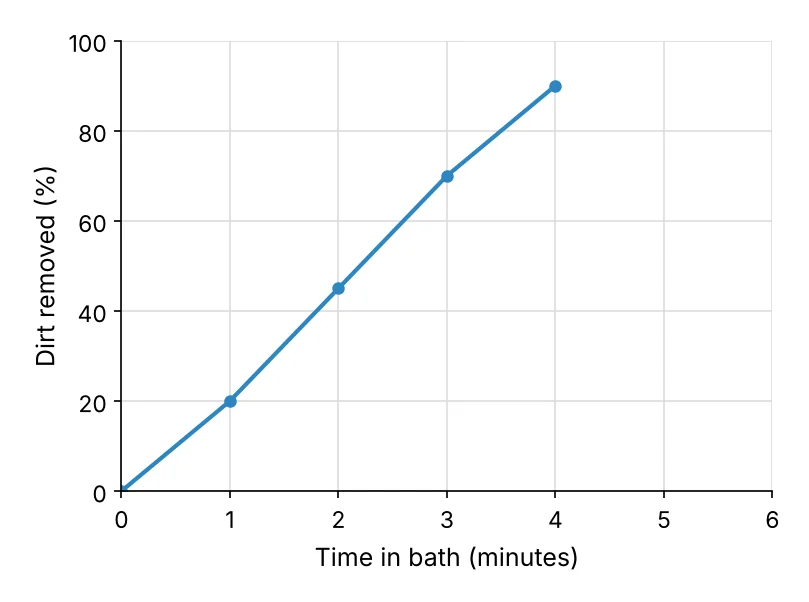
A jeweller cleans rings in an ultrasonic bath. High-pitched sound makes tiny bubbles that shake the dirt off. The graph shows the percentage of dirt removed after different times.
Question diagram
(a)
Read from the graph the percentage of dirt removed after 3 minutes. [1]
(b)
Describe the pattern in the results. [1]
(c)
Predict the percentage removed after 6 minutes. Give a reason. [2]

revisionprep.com

Summary Answer

Not available for this question.

Model Answer

Not available for this question.

Marking Scheme

Not available for this question.

Examiner Insights

Not available for this question.

Question 5Criterion D · Challenge · 8 marksrevisionprep.com

Applications of Light in Everyday Life

A village uses a diesel generator for street lights. It costs 5000 dollars a year to run and makes 15 tonnes of carbon dioxide each year. The council could buy solar street lights. They cost 20 000 dollars to install and save 4000 dollars a year in fuel. The batteries must be replaced every 5 years.
(a)
State one benefit of the solar lights for the environment. [1]
(b)
Calculate how much money the village saves on fuel in 10 years. [1]
(c)
Calculate how many years it takes for the savings to pay back the installation cost. [2]
(d)
Give one problem with solar street lights. [1]

(e) Do you think the council should buy the solar lights? Use your answers to give a reason. [3]

revisionprep.com

Summary Answer

Not available for this question.

Model Answer

Not available for this question.

Marking Scheme

Not available for this question.

Examiner Insights

Not available for this question.

Question 6Criterion D · Challenge · 6 marksrevisionprep.com

Light and Sound in Entertainment Systems

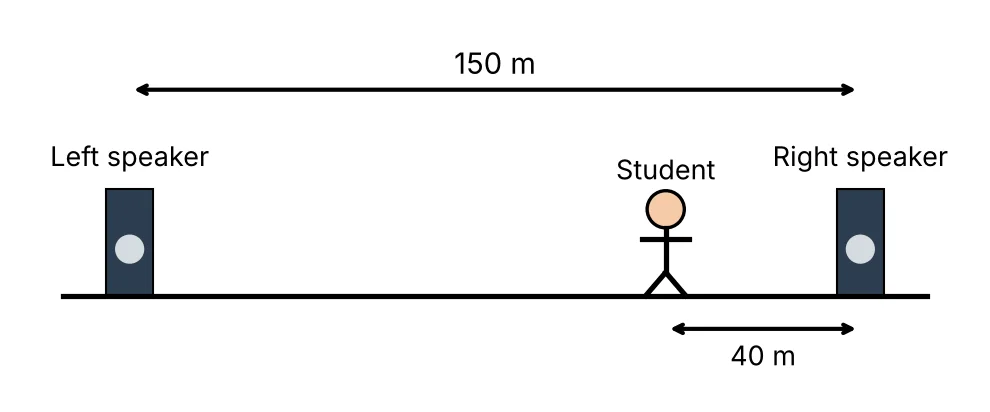
A school has two outdoor speakers 150 m apart for a film night. A student stands on the line between them, 40 m from the right speaker. Sound travels 340 m/s in air. The diagram shows the set-up.

time = distance / speed
Question diagram
(a)
Identify which speaker's sound reaches the student first. [1]
(b)
Calculate the time for the sound to travel from the right speaker to the student. [2]
(c)
Calculate the time for the sound from the left speaker to reach the student. [1]
(d)
Calculate how much later the left speaker's sound arrives. [1]

(e) Suggest one way the organisers could make the sound from the two speakers arrive together. [1]

revisionprep.com

Summary Answer

Not available for this question.

Model Answer

Not available for this question.

Marking Scheme

Not available for this question.

Examiner Insights

Not available for this question.

That's every free question here — 6 of 84.

+78 more questions, plus Mock Papers & Worksheets, are waiting in Premium.

Upgrade