You're viewing free preview questions — 4 questions previewing here — subscribe to unlock 76 more, plus the Full Question Bank, Mock Papers & Worksheets.Upgrade
Simplifying and Rearranging Expressions — Free MYP3 Mathematics Practice Questions

1QuestionCombining Like TermsConcept Practice
2 marks~3 minCriterion A
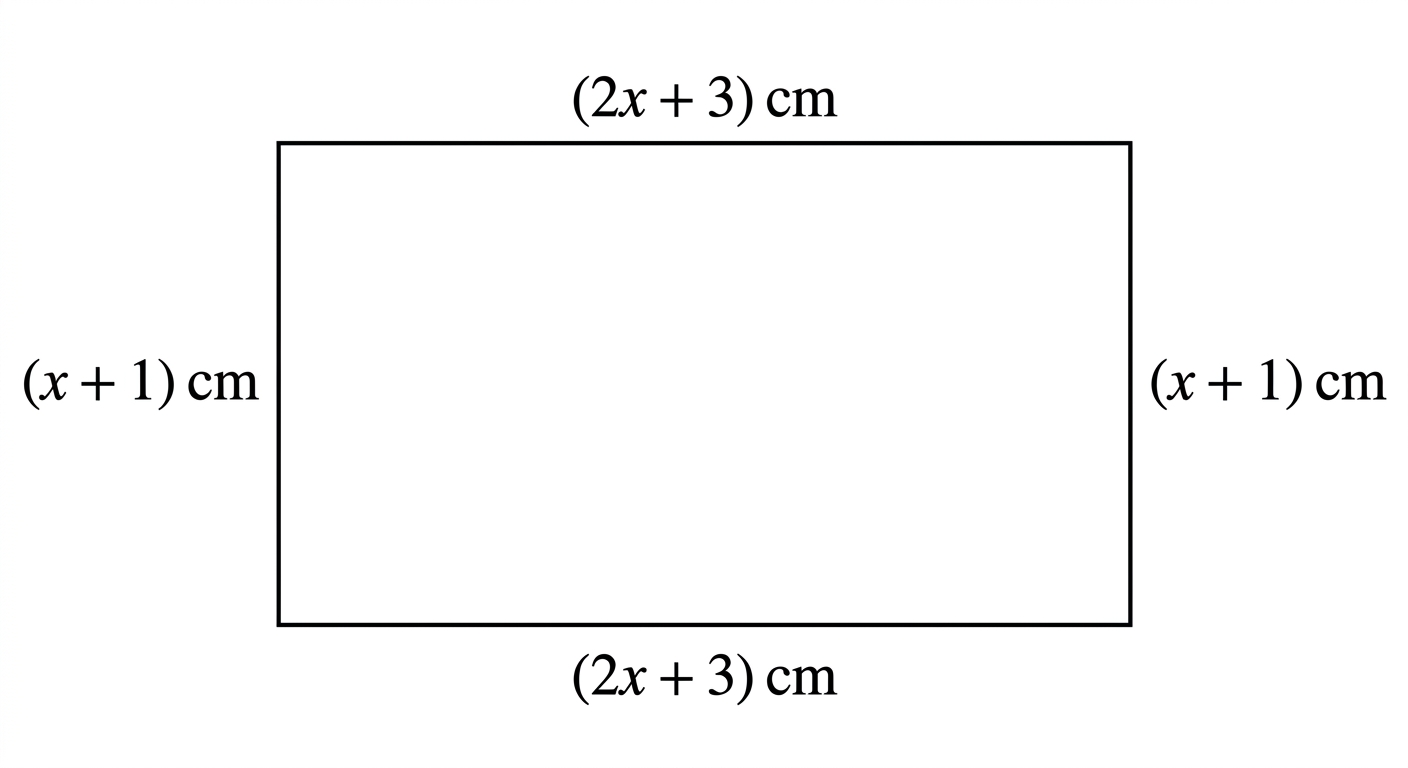
A rectangle has side lengths cm and cm.
Calculate the perimeter of the rectangle, giving your answer as a simplified expression. [2]
Calculate the perimeter of the rectangle, giving your answer as a simplified expression. [2]

Solutions
2QuestionCombining Like TermsAssessment Practice
2 marks~3 minCriterion D
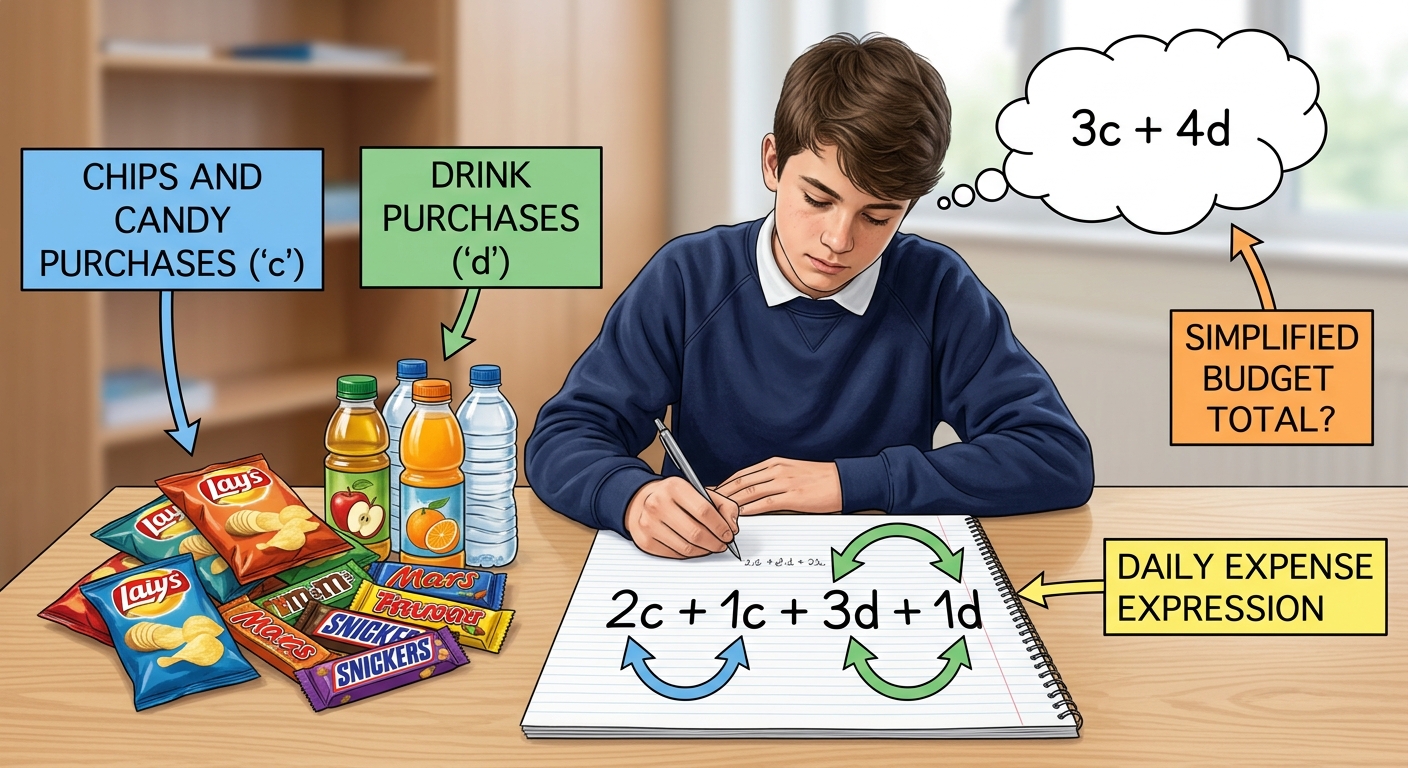
A student tracks weekly spending on snacks and drinks. Chips cost 2 dollars each, candy costs 1 dollar each, juice costs 3 dollars each, and water costs 1 dollar each. Let represent the total number of snack items (chips and candy) purchased, and represent the total number of drink items (juice and water) purchased. The student writes the total cost as .
a
Calculate the simplified expression for the total cost by combining like terms. [1]
b
Explain one limitation of using this simplified expression to model the student's actual spending. [1]
Solutions
3QuestionUsing the Distributive PropertyConcept Practice
2 marks~3 minCriterion B
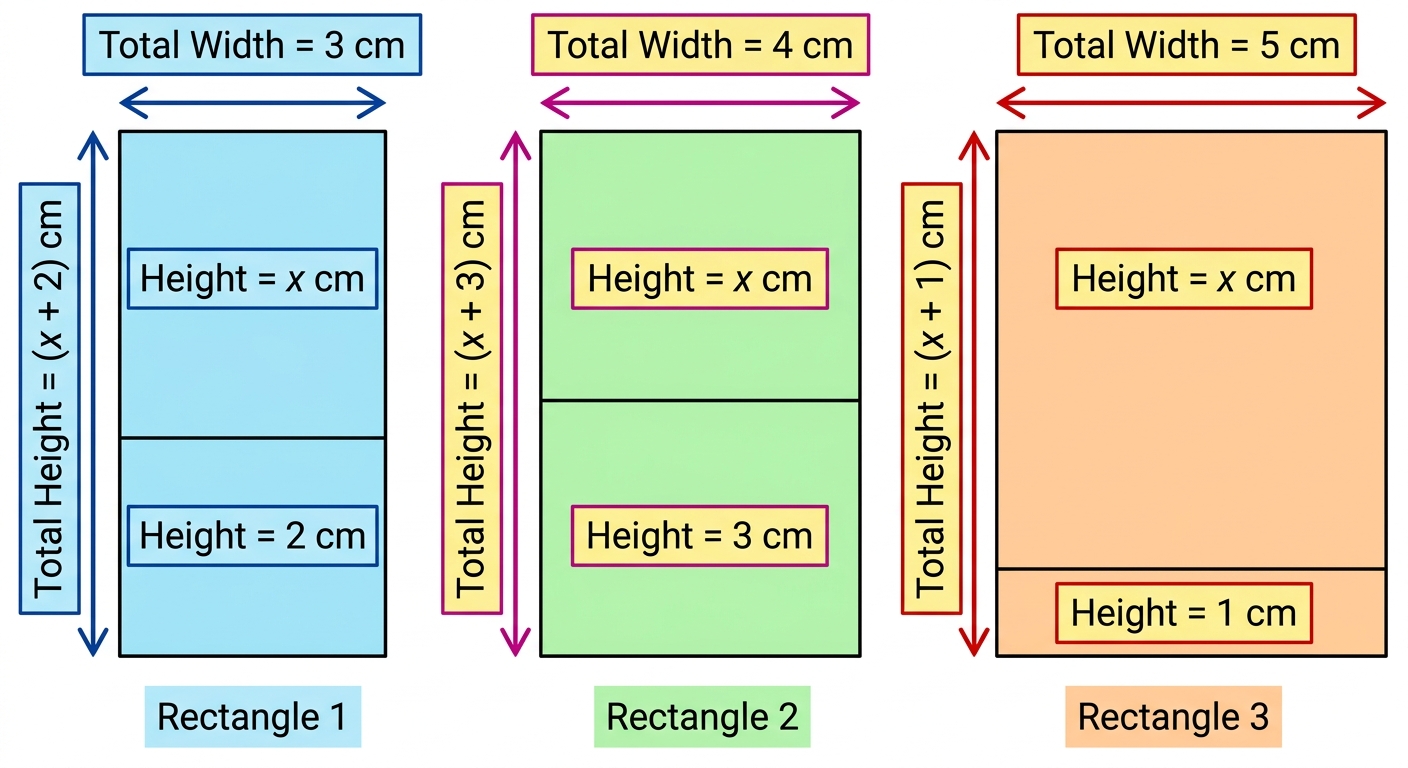
The diagram shows three rectangles, each divided into two smaller rectangles.
Rectangle 1: width cm, heights cm and cm.
Rectangle 2: width cm, heights cm and cm.
Rectangle 3: width cm, heights cm and cm.
Rectangle 1: width cm, heights cm and cm.
Rectangle 2: width cm, heights cm and cm.
Rectangle 3: width cm, heights cm and cm.
a
Calculate the total area of Rectangle 1 in two different ways and show that both expressions are equal. [1]
b
State the general rule shown by this pattern in the form [1]
Solutions
4QuestionUsing the Distributive PropertyAssessment Practice
6 marks~9 minCriterion C
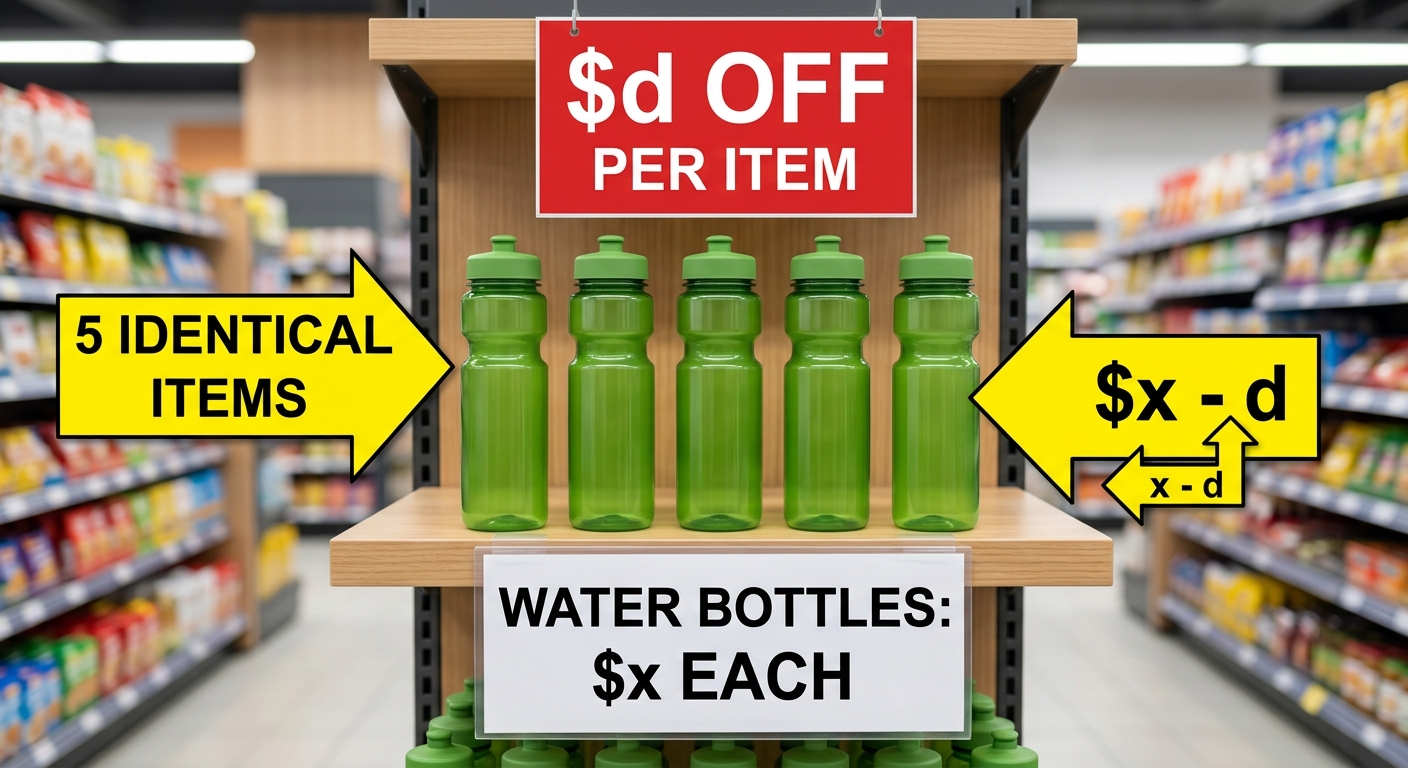
A student buys 5 identical items, each priced at dollars, using a coupon that gives a fixed discount of dollars off each item. The student writes for the total cost.
a
Apply the distributive property to expand and explain what each term in your result represents. [2]
b
The store instead offers a percentage discount of % off each item. Write an expression for the total cost of 5 items after this discount is applied. [2]
c
Compare the two models and explain whether could still be useful when the discount is actually %. [2]
Solutions
That's every free question here — 4 of 80.
+76 more questions, plus Mock Papers & Worksheets, are waiting in Premium.