You're viewing free preview questions — 4 questions previewing here — subscribe to unlock 63 more, plus the Full Question Bank, Mock Papers & Worksheets.Upgrade
Formulas in Real-World Contexts — Free MYP3 Mathematics Practice Questions

1QuestionApplying the Speed Distance Time FormulaConcept Practice
2 marks~3 minCriterion A
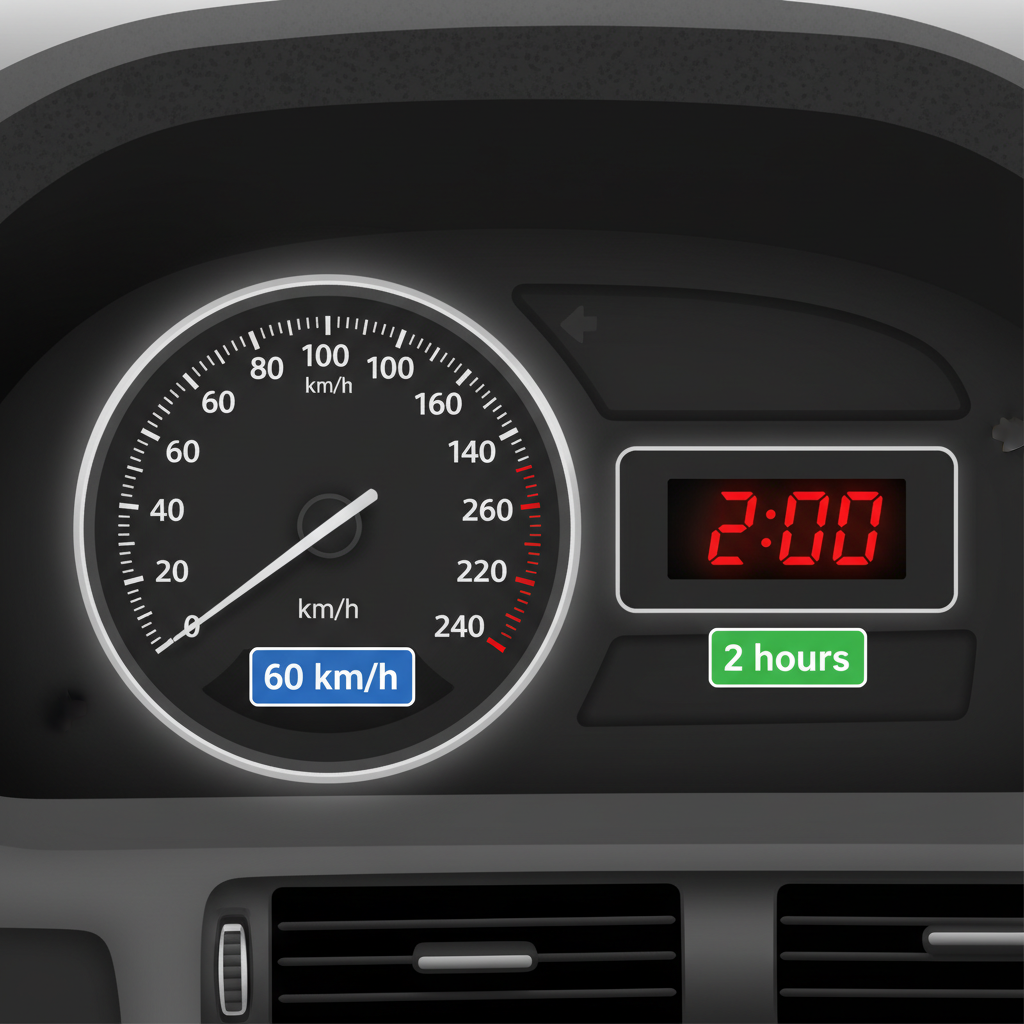
A car travels at a constant speed of km/h for hours.
Calculate the total distance travelled by the car. [2]
Calculate the total distance travelled by the car. [2]

Solutions
2QuestionUsing Volume and Surface Area FormulasAssessment Practice
3 marks~5 minCriterion B
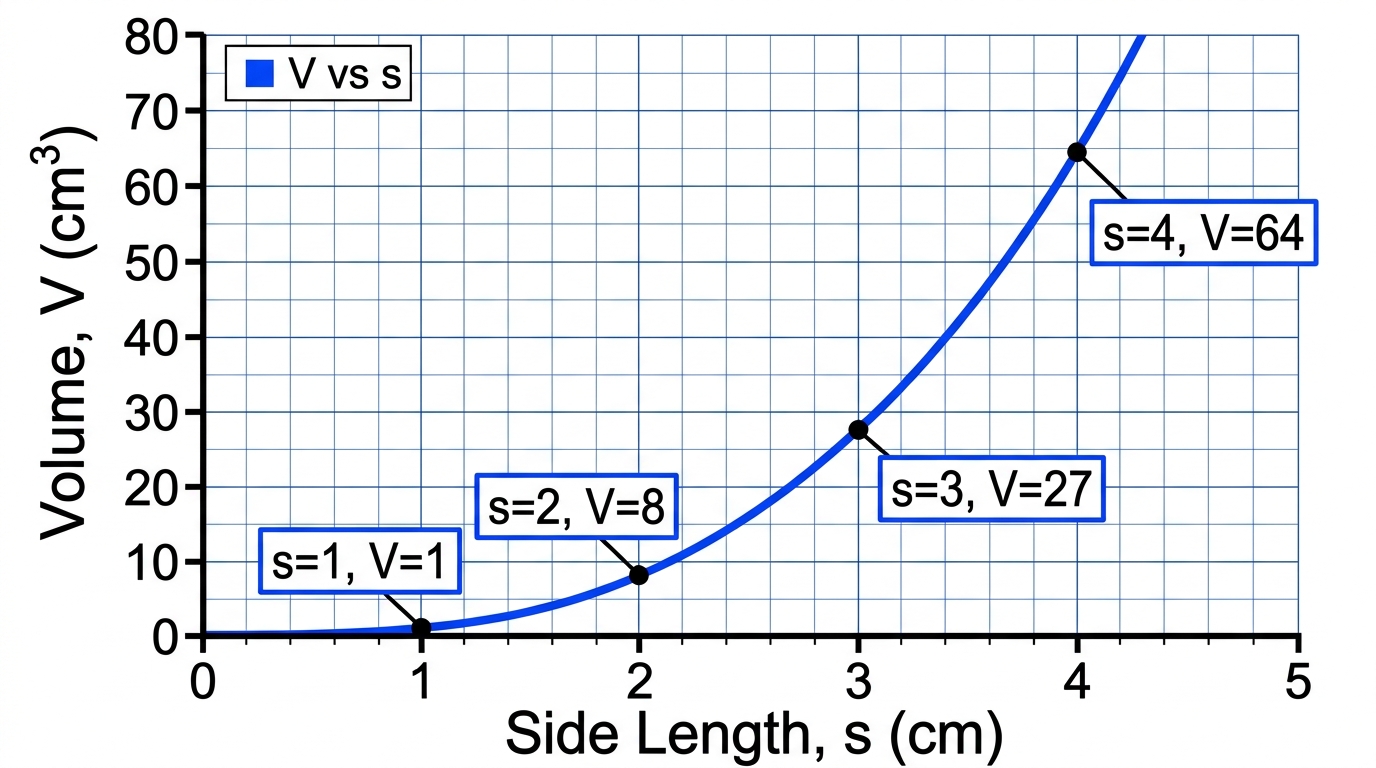
The table below shows the volume (in cm³) of a cube with side length (in cm).
These points are plotted on a graph with a smooth curve connecting them.
| (cm) | 1 | 2 | 3 | 4 |
|---|---|---|---|---|
| (cm³) | 1 | 8 | 27 | 64 |
These points are plotted on a graph with a smooth curve connecting them.
a
Apply the formula to calculate the volume of a cube with side length cm. [1]
b
Explain why the graph of is a curve and not a straight line. [1]
c
The increases in volume between consecutive values of in the table are 7, 19, and 37. Analyse what these increasing differences tell you about the rate at which volume grows as side length increases. [1]
Solutions
3QuestionUsing the Formula for Area of ShapesAssessment Practice
5 marks~8 minCriterion C
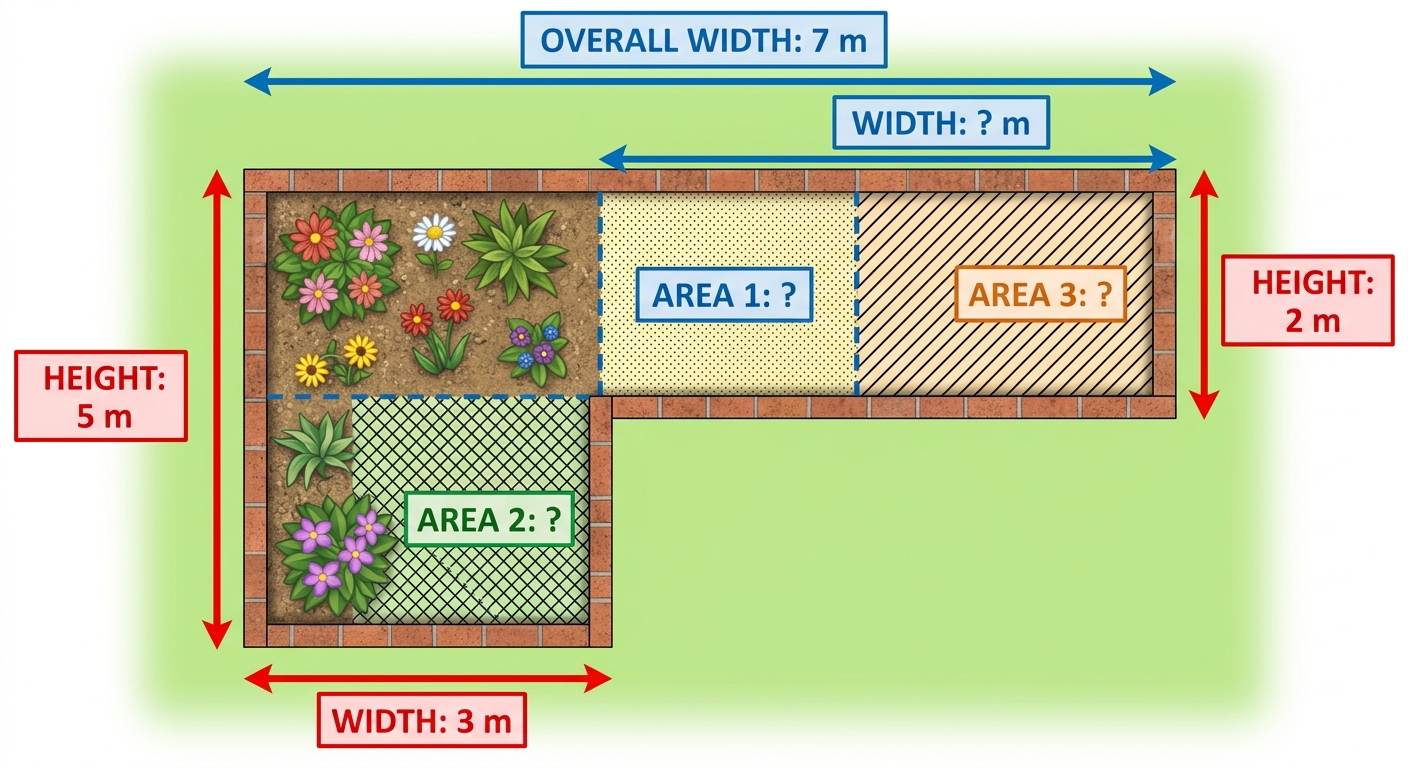
A gardener designs an L-shaped flower bed made from two rectangles. The left rectangle measures and the right rectangle measures . Their top edges are aligned.
a
Describe how dividing the L-shape into two rectangles allows you to find the total area. [1]
b
Calculate the area of each rectangle and the total area of the flower bed. [2]
c
A second flower bed is a single rectangle measuring . The gardener says the L-shaped bed uses less than half the area of the rectangular bed. Justify whether the gardener is correct. [2]
Solutions
4QuestionApplying the Speed Distance Time FormulaAssessment Practice
6 marks~9 minCriterion D
A delivery company uses the formula
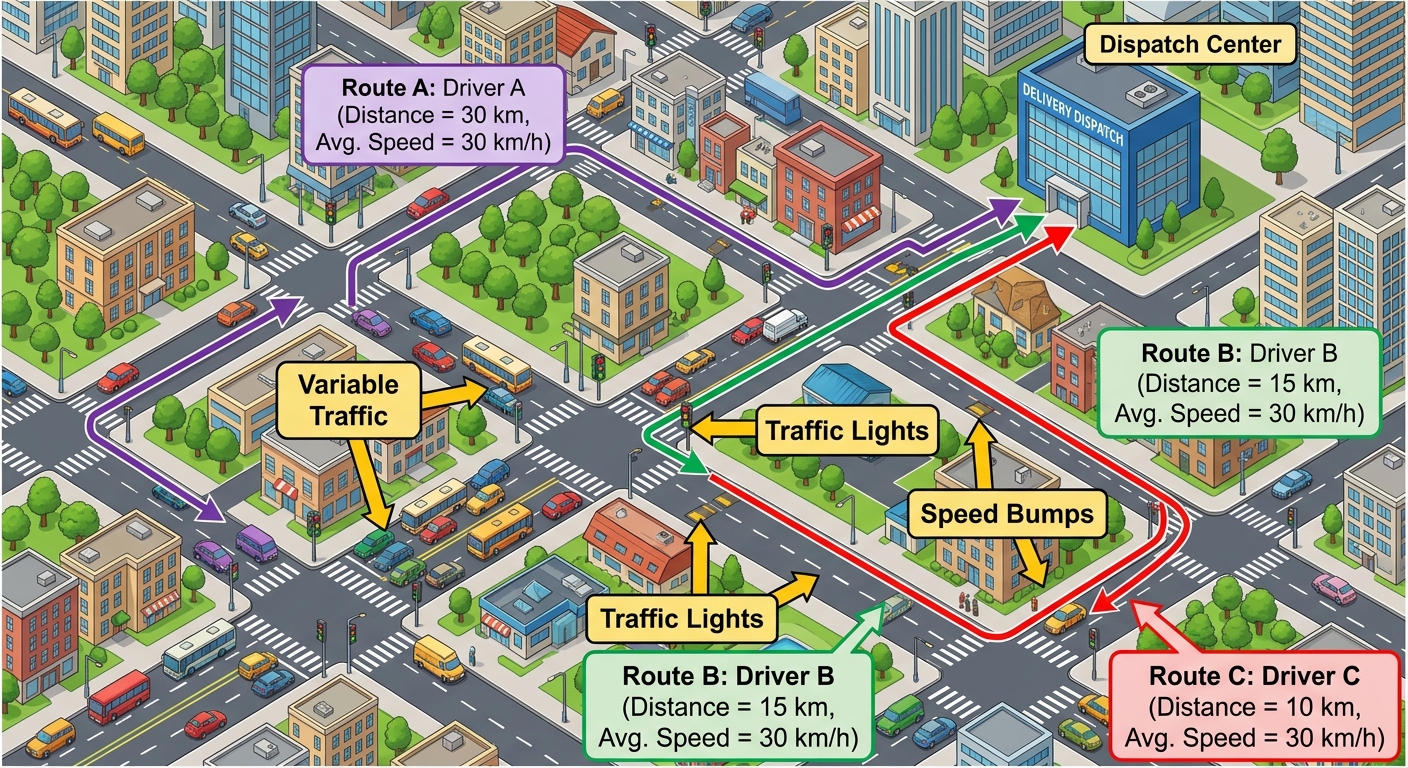
to schedule drivers in a city. Driver A travels 120 km, Driver B travels 90 km, and Driver C travels 60 km. All three drive at an average speed of 60 km/h through city routes with traffic lights, speed bumps, and variable traffic.
to schedule drivers in a city. Driver A travels 120 km, Driver B travels 90 km, and Driver C travels 60 km. All three drive at an average speed of 60 km/h through city routes with traffic lights, speed bumps, and variable traffic.
a
Calculate the theoretical time, in hours, for each driver. [2]
b
Explain why the constant-speed assumption is unrealistic for city driving. Give two specific examples from the scenario. [2]
c
A manager notices that Driver A consistently arrives 30 minutes later than the formula predicts. Calculate Driver A's actual average speed, then analyse what this tells you about the reliability of the formula for scheduling. [2]
Solutions
That's every free question here — 4 of 67.
+63 more questions, plus Mock Papers & Worksheets, are waiting in Premium.