You're viewing free preview questions — 4 questions previewing here — subscribe to unlock 63 more, plus the Full Question Bank, Mock Papers & Worksheets.Upgrade
Positive and Negative Numbers Integers — Free MYP3 Mathematics Practice Questions

1QuestionComparing and Ordering IntegersConcept Practice
2 marks~3 minCriterion A
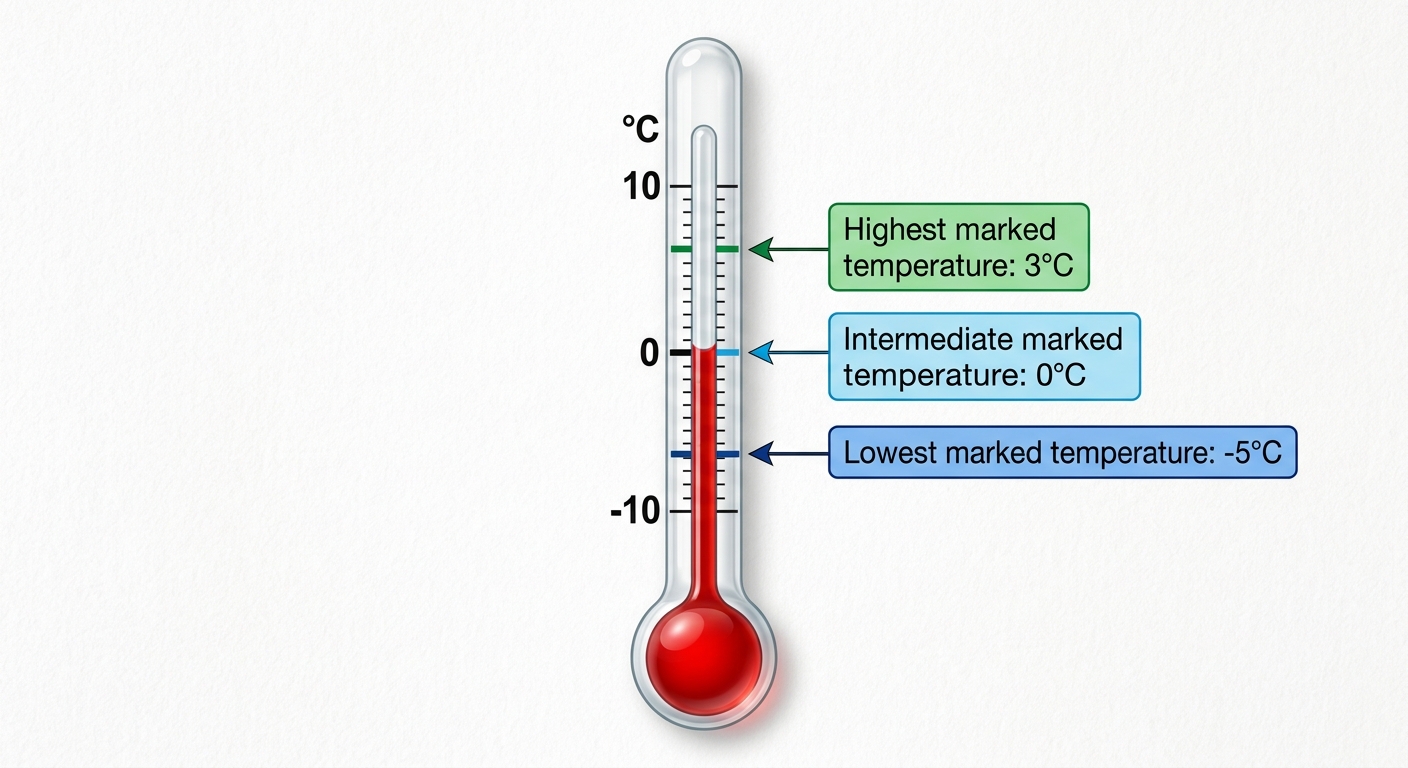
A thermometer shows three temperatures: , , and .
a
Compare the three temperatures and identify the coldest and the warmest. [1]
b
List all three temperatures in ascending order. Explain how you know which temperature is least. [1]

Solutions
2QuestionOpposites and Zero on the Number LineAssessment Practice
4 marks~6 minCriterion C
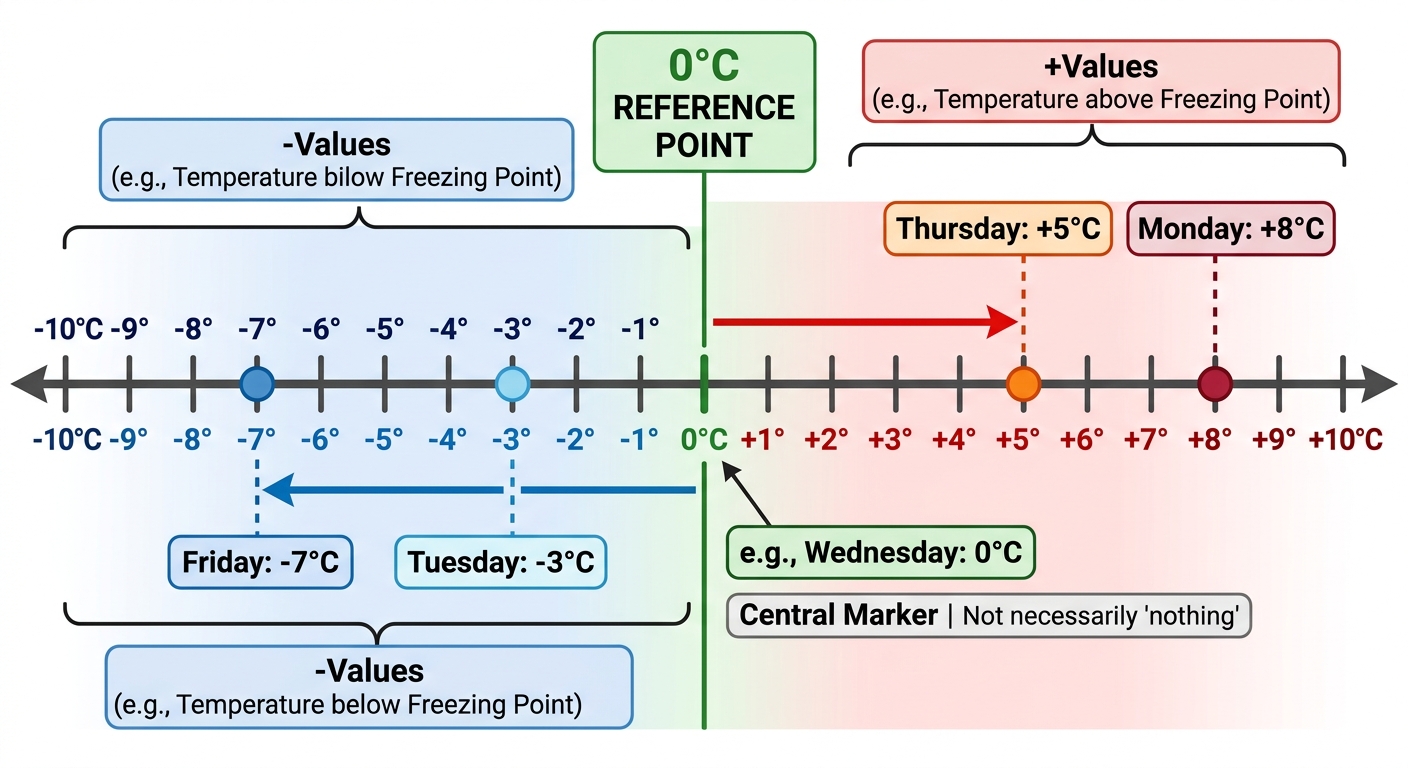
A weather station records daily high temperatures:
Monday:
Tuesday:
Wednesday:
Thursday:
Friday:
A student claims: " means no temperature, so Wednesday had no heat energy."
Monday:
Tuesday:
Wednesday:
Thursday:
Friday:
A student claims: " means no temperature, so Wednesday had no heat energy."
a
Explain how acts as a reference point on the number line, using at least two temperatures from the data to support your answer. [2]
b
Explain one real-world problem that arises from treating as "nothing," and refer to and as opposites in your response. [2]
Solutions
3QuestionAbsolute Value of an IntegerAssessment Practice
6 marks~9 minCriterion D
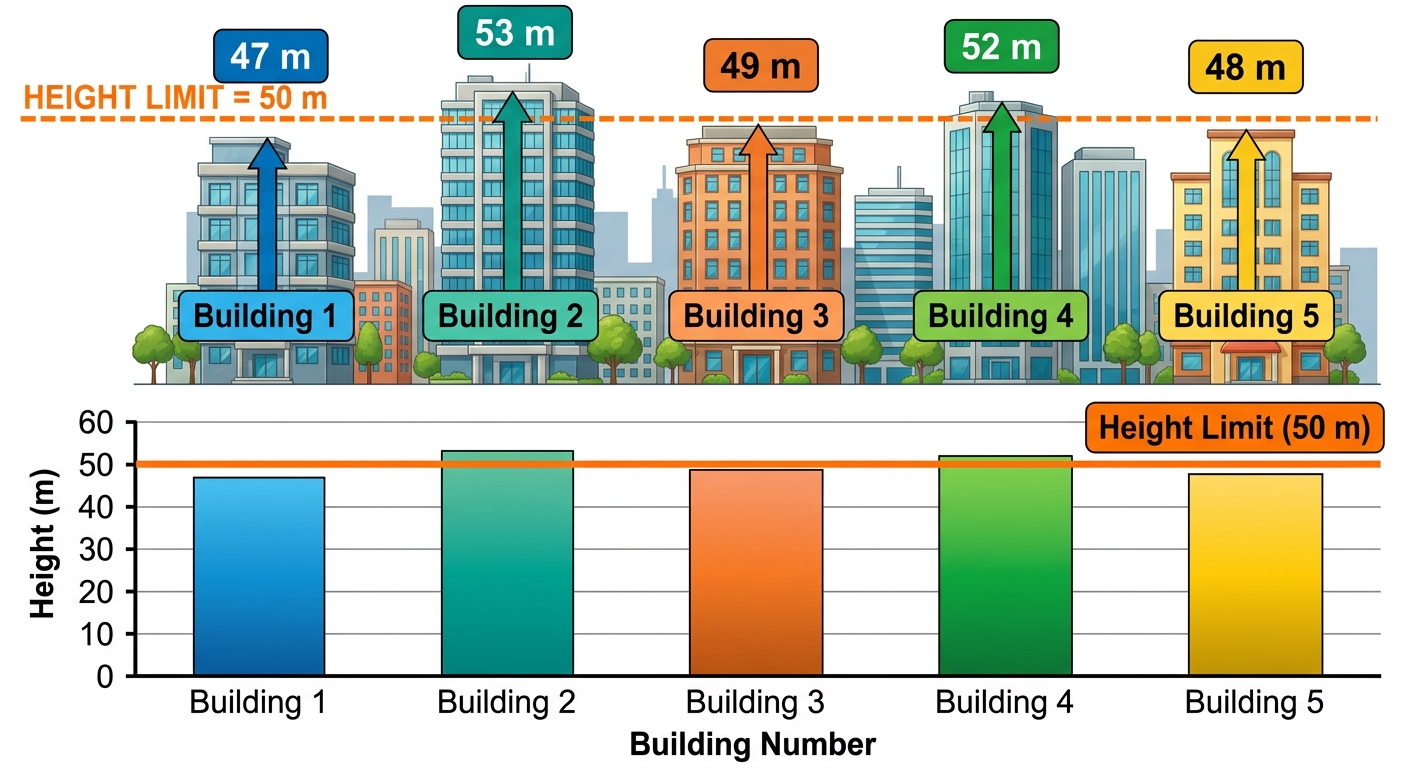
A city planner checks whether five buildings comply with a height limit of 50 m.
Building 1: 47 m
Building 2: 53 m
Building 3: 49 m
Building 4: 52 m
Building 5: 48 m
The planner measures total deviation by calculating for each building and summing the results.
Building 1: 47 m
Building 2: 53 m
Building 3: 49 m
Building 4: 52 m
Building 5: 48 m
The planner measures total deviation by calculating for each building and summing the results.
a
Calculate the total deviation from the height limit. [2]
b
Explain one limitation of using absolute value to measure compliance in this situation. [2]
c
A revised model only penalises buildings that exceed the limit. Analyse whether this revised model is more useful to the city planner, using the data above to support your answer. [2]
Solutions
4QuestionAbsolute Value of an IntegerAssessment Practice
4 marks~6 minCriterion B
The absolute value of an integer is its distance from zero on the number line.
Integer:
Absolute value:
Integer:
Absolute value:
a
Describe a general rule for the absolute value of any integer , writing your rule using . [2]
b
Apply your rule to show that , stating which part of your rule you used. [1]
c
A student claims: "Because and give the same result, absolute value tells us nothing useful about the original integer." Justify whether this claim is correct or incorrect. [1]
Solutions
That's every free question here — 4 of 67.
+63 more questions, plus Mock Papers & Worksheets, are waiting in Premium.