You're viewing free preview questions — 4 questions previewing here — subscribe to unlock 55 more, plus the Full Question Bank, Mock Papers & Worksheets.Upgrade
Rational and Irrational Numbers — Free MYP3 Mathematics Practice Questions

1QuestionDefining Rational NumbersConcept Practice
2 marks~3 minCriterion A
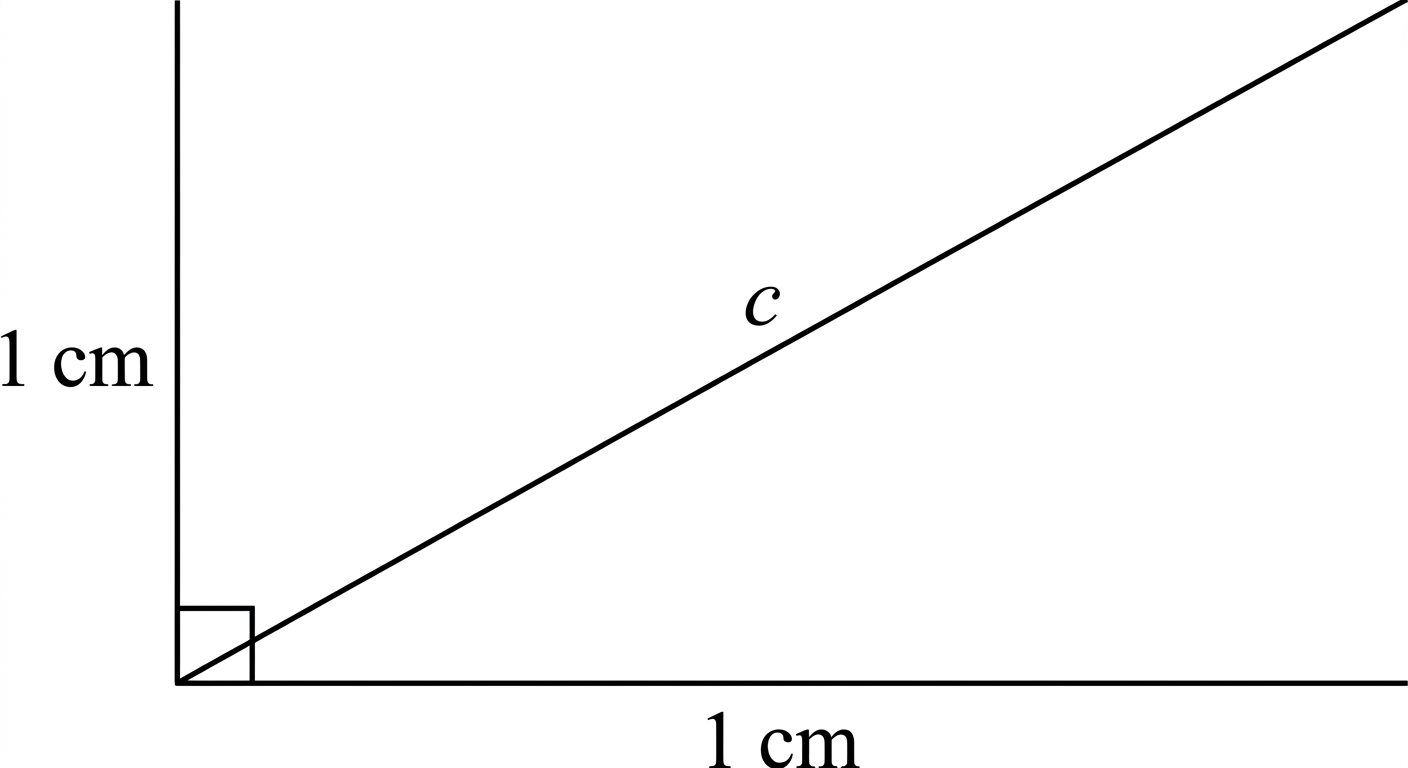
A right-angled triangle has two legs, each measuring 1 cm.
a
Calculate the length of the hypotenuse. [1]
b
Explain whether the hypotenuse length is a rational number, using the definition of rational numbers in your answer. [1]

Solutions
2QuestionVisualizing Rational vs Irrational on a Number LineAssessment Practice
4 marks~6 minCriterion C
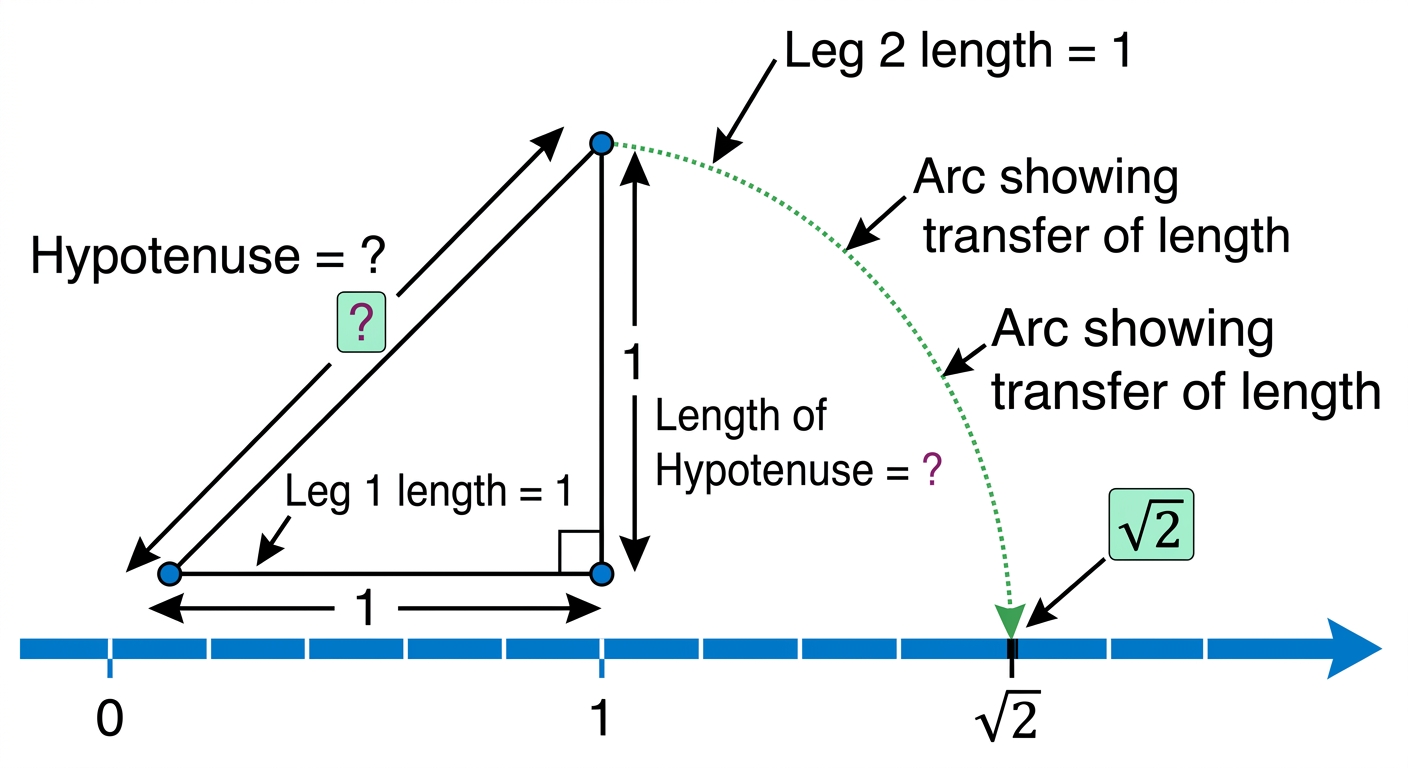
A student claims: "I can mark exactly on a number line by constructing a right triangle with two legs of length 1 unit. This means must be a rational number."
a
Explain why the student's conclusion is incorrect. [2]
b
Explain one limitation of using geometric constructions to decide whether a number is rational or irrational. [2]
Solutions
3QuestionRational Numbers as Terminating and Repeating DecimalsConcept Practice
2 marks~3 minCriterion B
The decimal expansions of , , , , , and share a surprising pattern.
a
Calculate the decimal expansion of each fraction. [1]
b
Describe how the six decimal expansions are related to one another. [1]
Solutions
4QuestionDefining Rational NumbersAssessment Practice
5 marks~8 minCriterion D
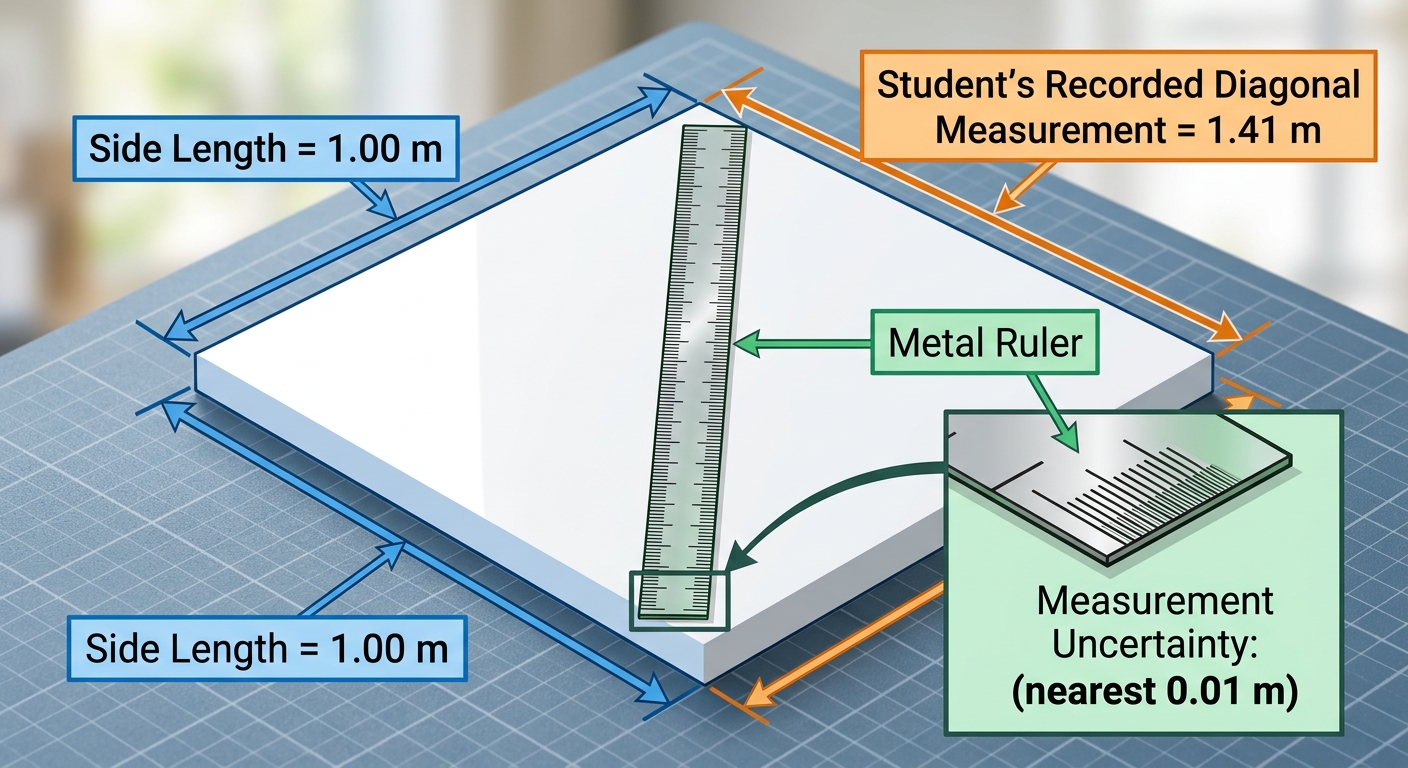
A student measures the diagonal of a square tile using a ruler accurate to the nearest . The student records the diagonal as .
a
Calculate the exact length of the diagonal using the Pythagorean theorem. [1]
b
Explain why is a rational number but the exact diagonal length is not. [2]
c
A builder uses when cutting ten tiles in a row. Analyse whether this approximation is appropriate, and describe one consequence of using it. [2]
Solutions
That's every free question here — 4 of 59.
+55 more questions, plus Mock Papers & Worksheets, are waiting in Premium.