You're viewing free preview questions — 4 questions previewing here — subscribe to unlock 69 more, plus the Full Question Bank, Mock Papers & Worksheets.Upgrade
Mixed Numbers and Improper Fractions — Free MYP3 Mathematics Practice Questions

1QuestionAdding and Subtracting Mixed NumbersConcept Practice
2 marks~3 minCriterion A
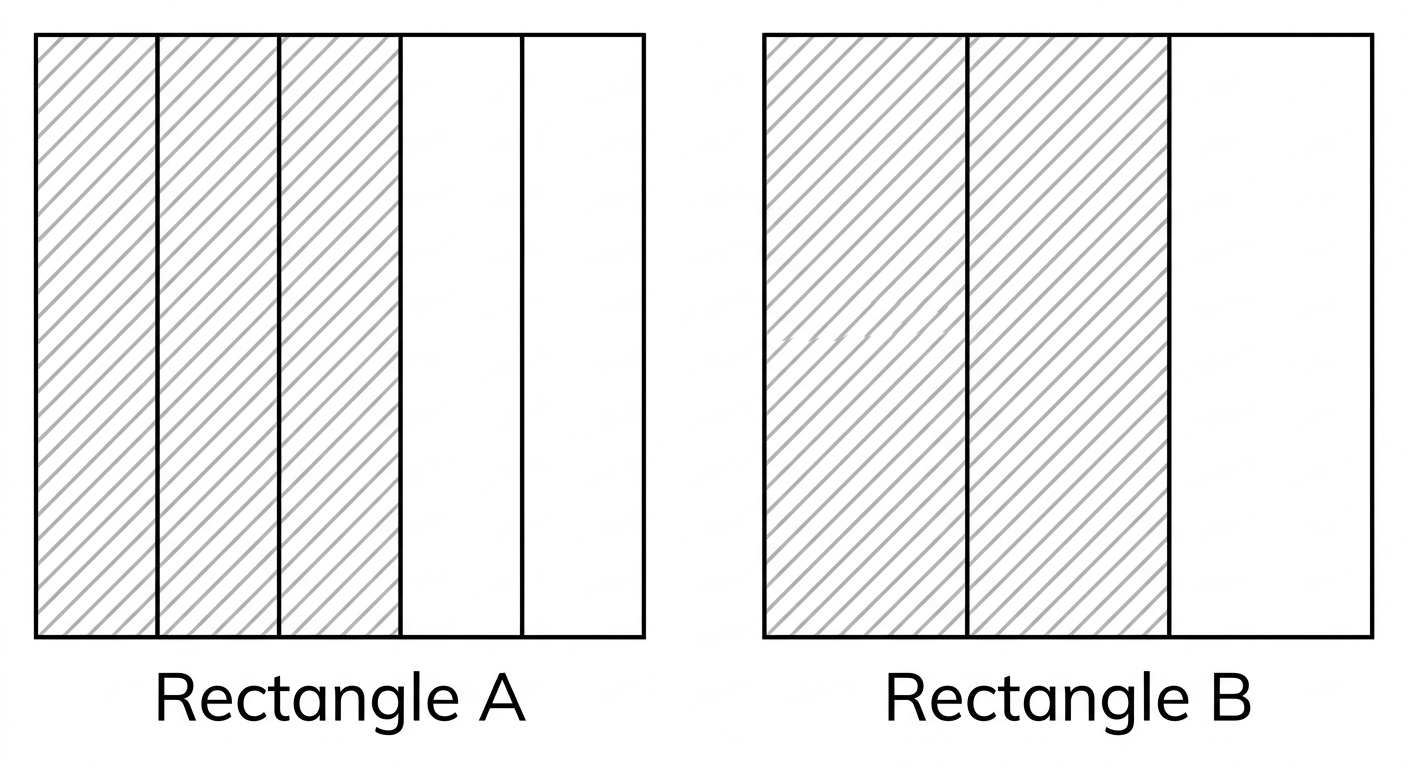
The diagram shows two rectangles of equal size.
Rectangle A is divided into 5 equal parts, with 3 parts shaded.
Rectangle B is divided into 3 equal parts, with 2 parts shaded.
Calculate the total shaded area from both rectangles, expressing your answer as a mixed number. [2]
Rectangle A is divided into 5 equal parts, with 3 parts shaded.
Rectangle B is divided into 3 equal parts, with 2 parts shaded.
Calculate the total shaded area from both rectangles, expressing your answer as a mixed number. [2]

Solutions
2QuestionAdding and Subtracting Mixed NumbersAssessment Practice
6 marks~9 minCriterion D
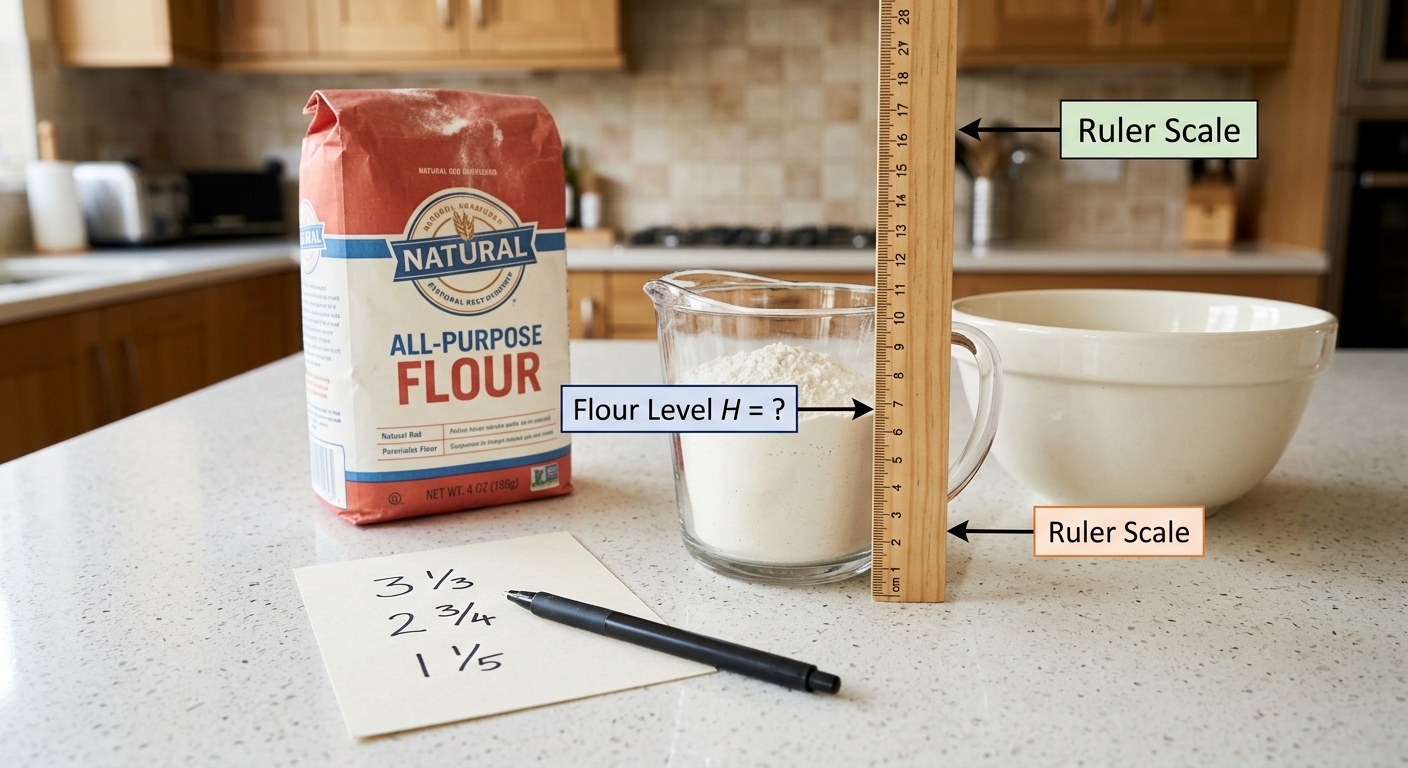
A baker has cups of flour, adds cups for a large batch, then removes cups to make a smaller batch. Each measurement has a possible error of cup.
a
Calculate the final amount of flour as a simplified mixed number. [2]
b
Explain how the measurement error affects the reliability of your answer in part (a). [2]
c
A recipe requires exactly cups of flour. Analyse whether the baker's final amount is sufficient, taking into account the maximum possible measurement error. [2]
Solutions
3QuestionApplications in Geometry and MeasurementAssessment Practice
6 marks~9 minCriterion C
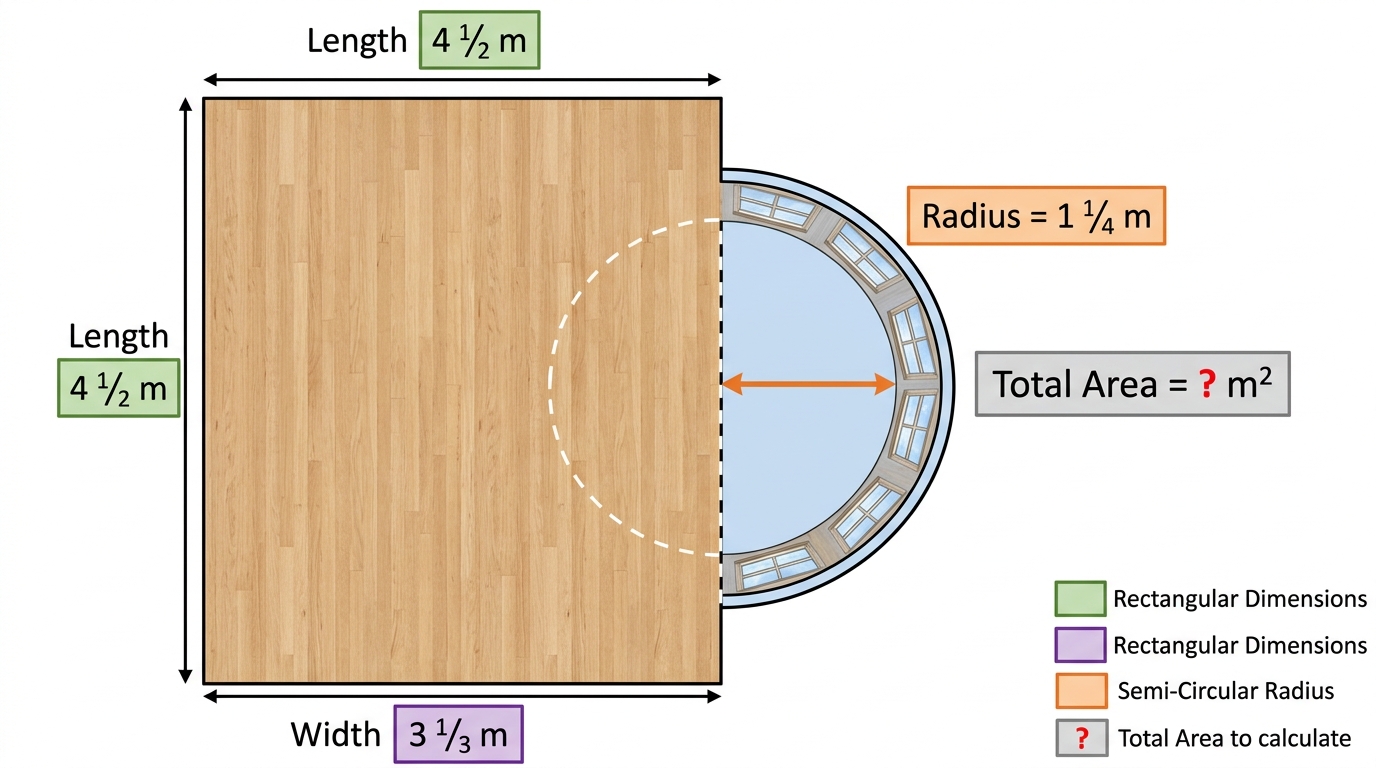
A room has a rectangular section measuring m by m, and a semi-circular bay window of radius m. A student claims the total floor area is m.
a
Calculate the correct total floor area of the room. Show all working. [3]
b
Explain one reason why the rectangular section area alone may not be exact in a real room. [1]
c
The student's answer differs from the correct value by approximately m. Interpret what this difference suggests about the reliability of the student's method. [2]
Solutions
4QuestionAdding and Subtracting Mixed NumbersAssessment Practice
8 marks~12 minCriterion B
When two mixed numbers are added, their fractional parts sometimes sum to exactly 1.
a
Calculate the first four sums. Express each result as a whole number. [4]
b
Describe the rule that determines when the sum of the fractional parts of two mixed numbers equals exactly 1. [2]
c
A student claims the fifth sum equals 8 without working out the fractions separately. Justify whether the student is correct. [2]
Solutions
That's every free question here — 4 of 73.
+69 more questions, plus Mock Papers & Worksheets, are waiting in Premium.