RevisionPrep
Log inGo Premium

Mathematics

Free Version

Patterns, sequences and algebraic thinking

6 subtopics · 379 exam-style questions

“Pick a subtopic to start practising.”
Visual and spatial patternsNumber patterns and sequencesPattern recognition in real lifeAlgebraic patterns and expressionsArithmetic and geometric sequencesGeneral rules and nth terms

Sample questions from Patterns, sequences and algebraic thinking

  1. Arithmetic and geometric sequences[3 marks]
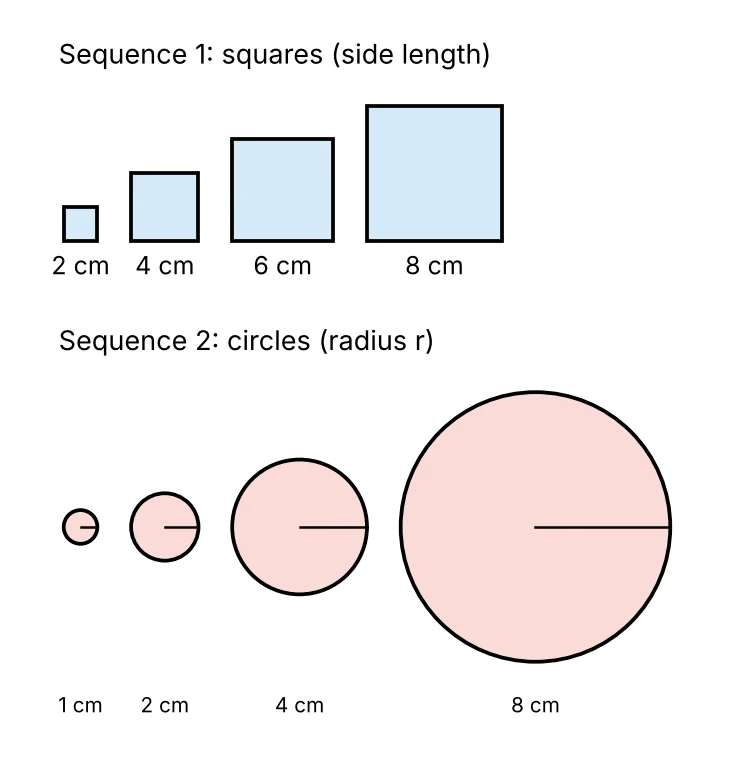
    The diagram shows two sequences of shapes drawn to scale. Sequence 1 is made of squares and Sequence 2 is made of circles.

    (a) Calculate the common difference of the side lengths of the squares. [1]

    (b) Calculate the common ratio of the radii of the circles. [1]

    (c) Use the picture to explain which sequence adds the same amount each time and which multiplies by the same amount each time. [1]
    Diagram for a Arithmetic and geometric sequences practice questionPractise this subtopic
  2. General rules and nth terms[2 marks]
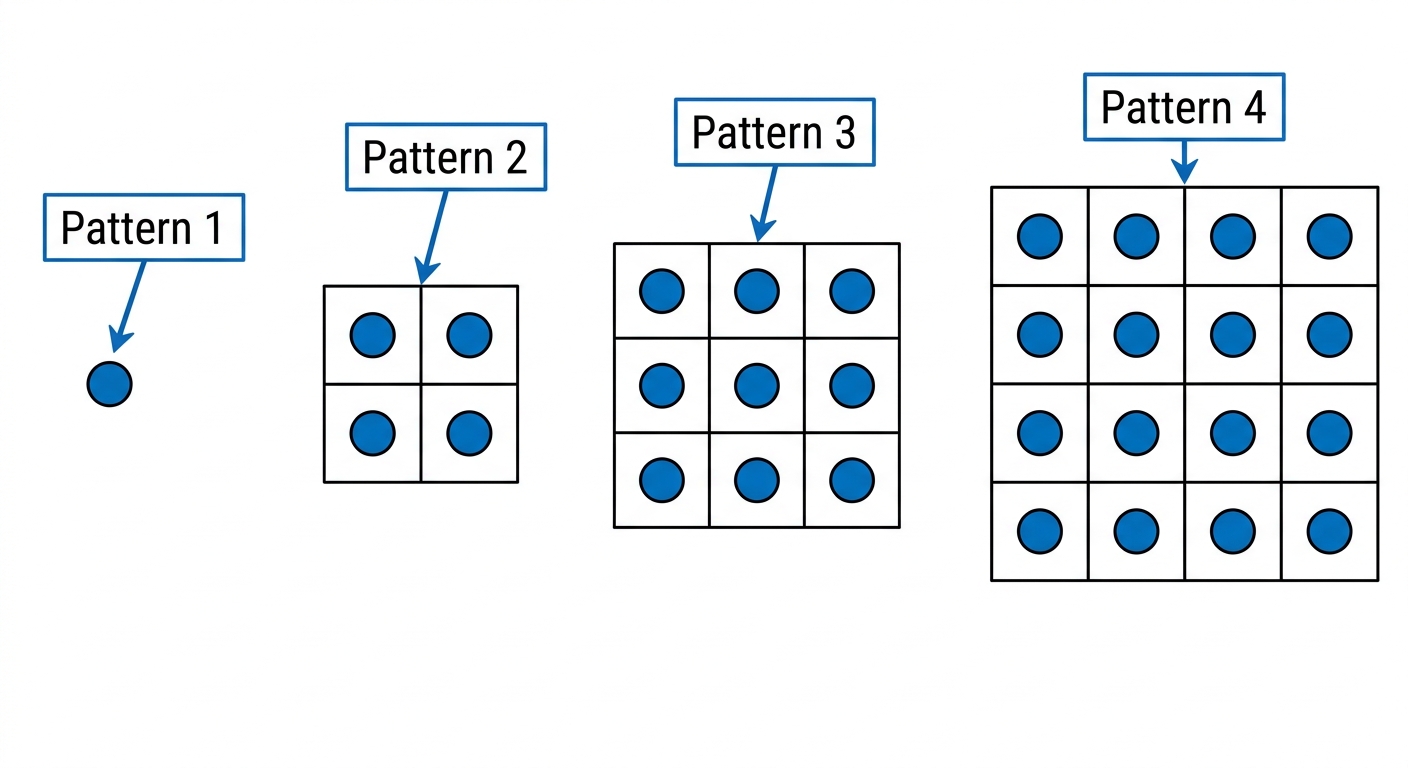
    The pictures show a pattern of dots. Pattern 1 has 1 dot, Pattern 2 has 4 dots, Pattern 3 has 9 dots and Pattern 4 has 16 dots. The number of dots in Pattern nn is n2n^2.

    (a) Work out the number of dots in Pattern 7. [1]

    (b) Work out how many more dots Pattern 10 has than Pattern 9. [1]
    Diagram for a General rules and nth terms practice questionPractise this subtopic
  3. Pattern recognition in real life[2 marks]
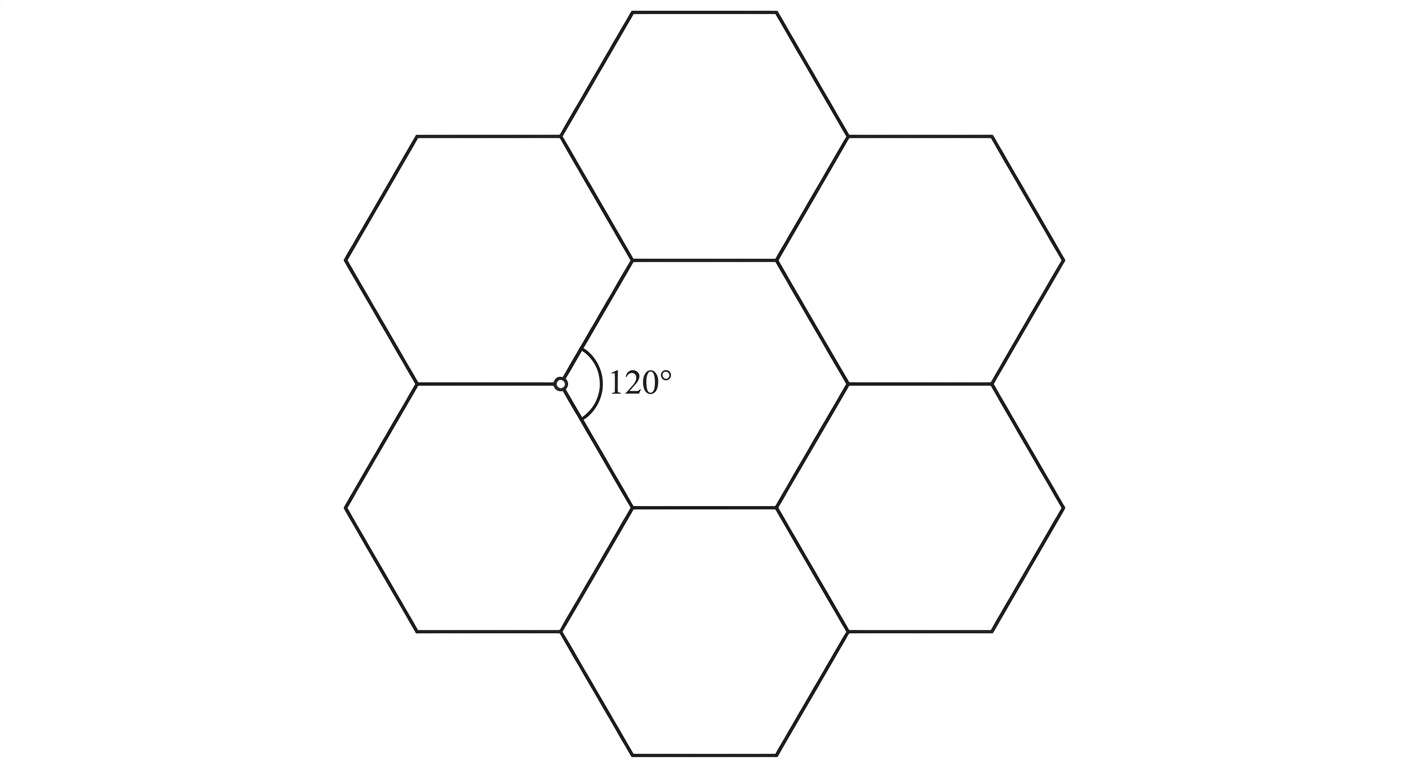
    Bees build honeycombs from cells shaped like regular hexagons. In a regular hexagon all the sides are equal and all the angles are equal. The picture shows some cells.

    (a) State the number of sides of a regular hexagon. [1]

    (b) Each angle of a regular hexagon is 120∘120^\circ. Explain why hexagon cells fit together with no gaps. [1]
    Diagram for a Pattern recognition in real life practice questionPractise this subtopic
  4. Algebraic patterns and expressions[3 marks]
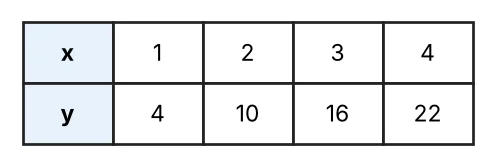
    A tile pattern grows by the same amount at each step. The table shows the step number xx and the number of tiles yy.

    (a) Find how many tiles are added at each step. [1]

    (b) Write a rule for yy in terms of xx. [1]

    (c) A student says the pattern will have exactly 100 tiles at some step. Justify whether this claim is correct. [1]
    Diagram for a Algebraic patterns and expressions practice questionPractise this subtopic
  5. Number patterns and sequences[3 marks]
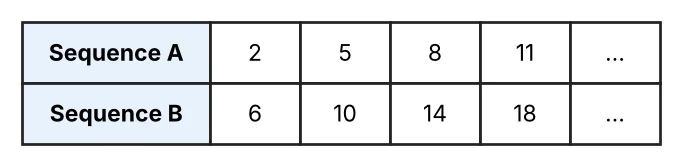
    Two arithmetic sequences are shown in the table.

    (a) Write down the common difference of each sequence. [1]

    (b) Calculate the 10th term of each sequence. [1]

    (c) Both sequences have 50 as a term. Find which sequence reaches 50 first by comparing the term numbers. [1]
    Diagram for a Number patterns and sequences practice questionPractise this subtopic
  6. Visual and spatial patterns[4 marks]
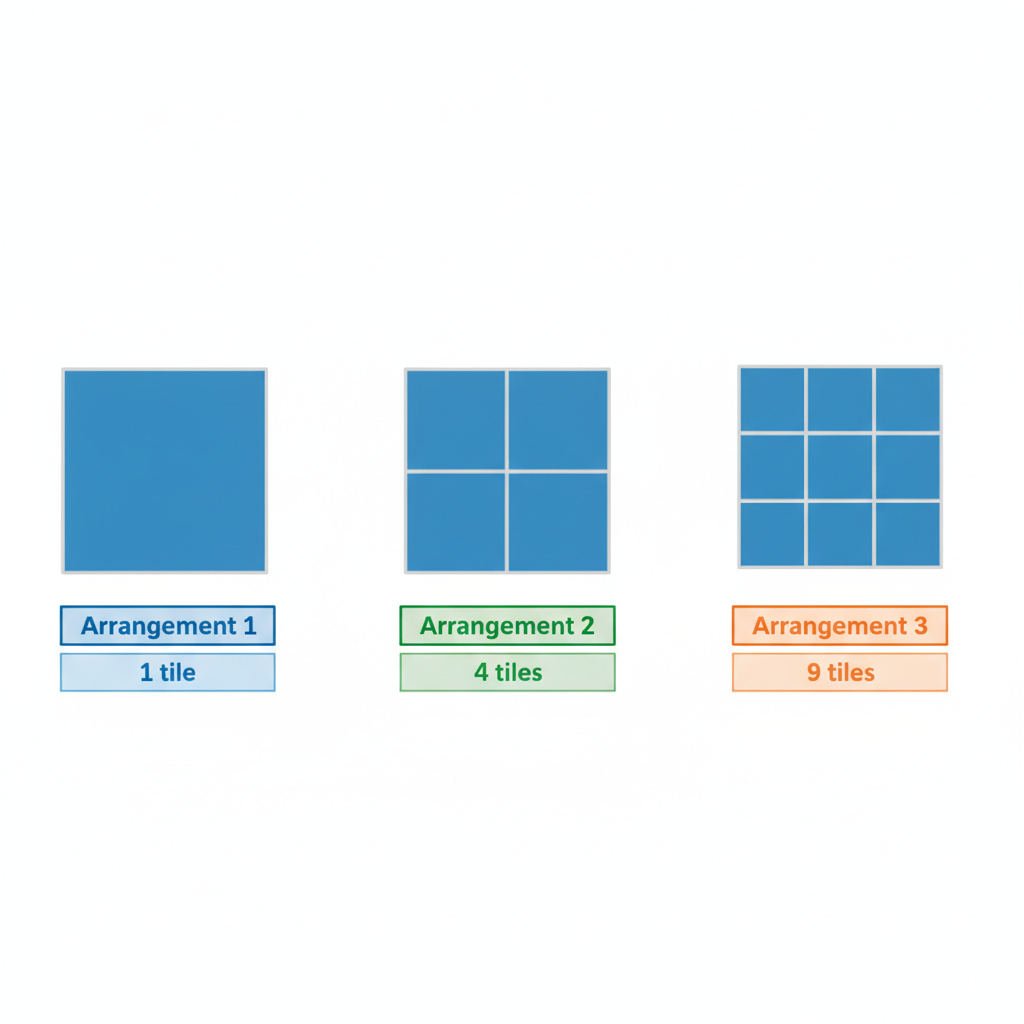
    The picture shows square tile arrangements. Arrangement 11 is 11 tile, Arrangement 22 is a 22 by 22 square and Arrangement 33 is a 33 by 33 square.

    (a) Calculate the number of tiles in Arrangement 77. [1]

    (b) Explain why the rule n2n^2 gives the number of tiles in Arrangement nn. [1]

    (c) A student says Arrangement 1010 has exactly twice as many tiles as Arrangement 55. Analyse the claim and decide whether it is correct. [2]
    Diagram for a Visual and spatial patterns practice questionPractise this subtopic

Every question, revision note and worksheet for Patterns, sequences and algebraic thinking — with Premium.

Unlock Full Access