You're viewing free preview questions — 4 questions previewing here — subscribe to unlock 73 more, plus the Full Question Bank, Mock Papers & Worksheets.Upgrade
Calculating Mean Median Mode and Range — Free MYP3 Mathematics Practice Questions

1QuestionCalculating the Range and Interpreting ItConcept Practice
2 marks~3 minCriterion A
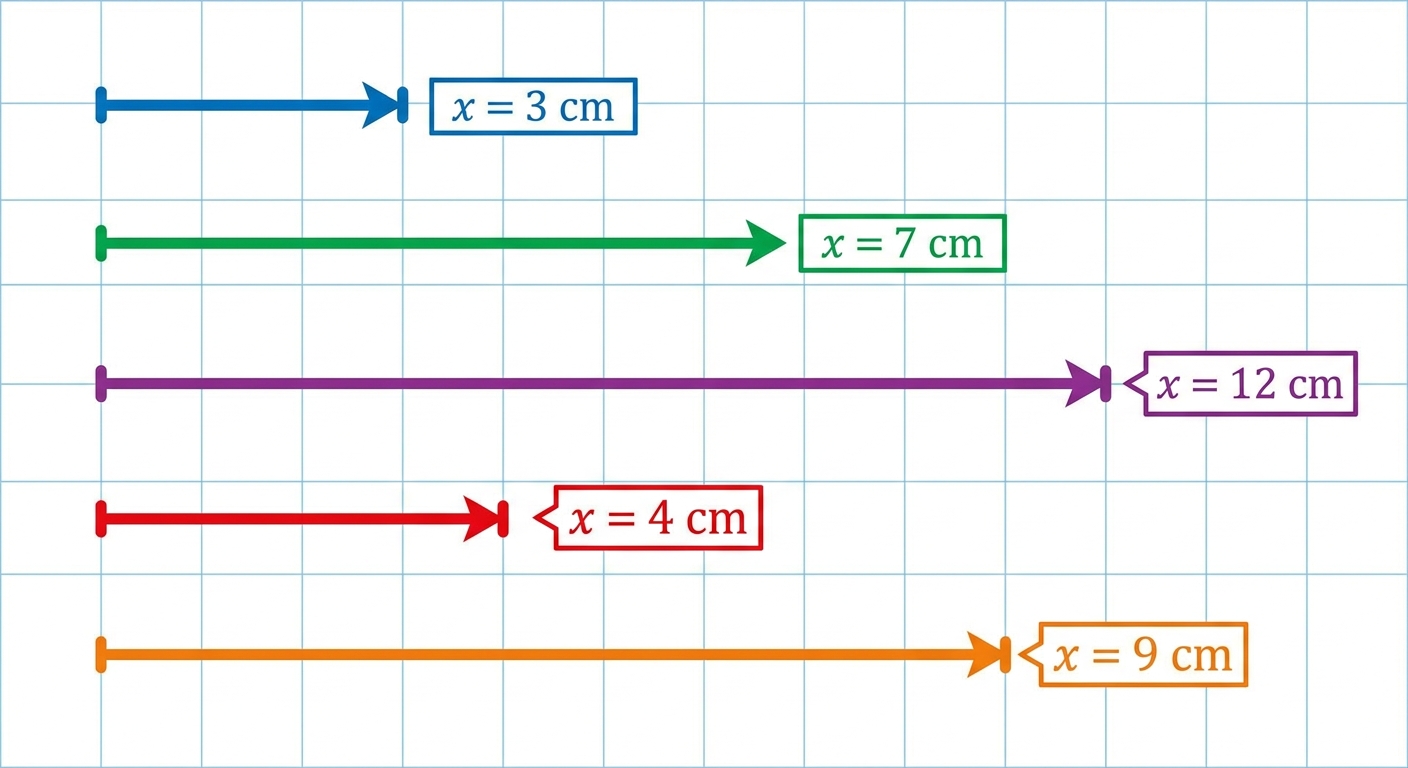
Five line segments have the following lengths (in cm):
3, 7, 12, 4, 9
3, 7, 12, 4, 9
a
Calculate the range of these lengths. [1]
b
Explain what the range indicates about the spread of the five measurements. [1]

Solutions
2QuestionDetermining the Mode in a Data SetAssessment Practice
4 marks~6 minCriterion D
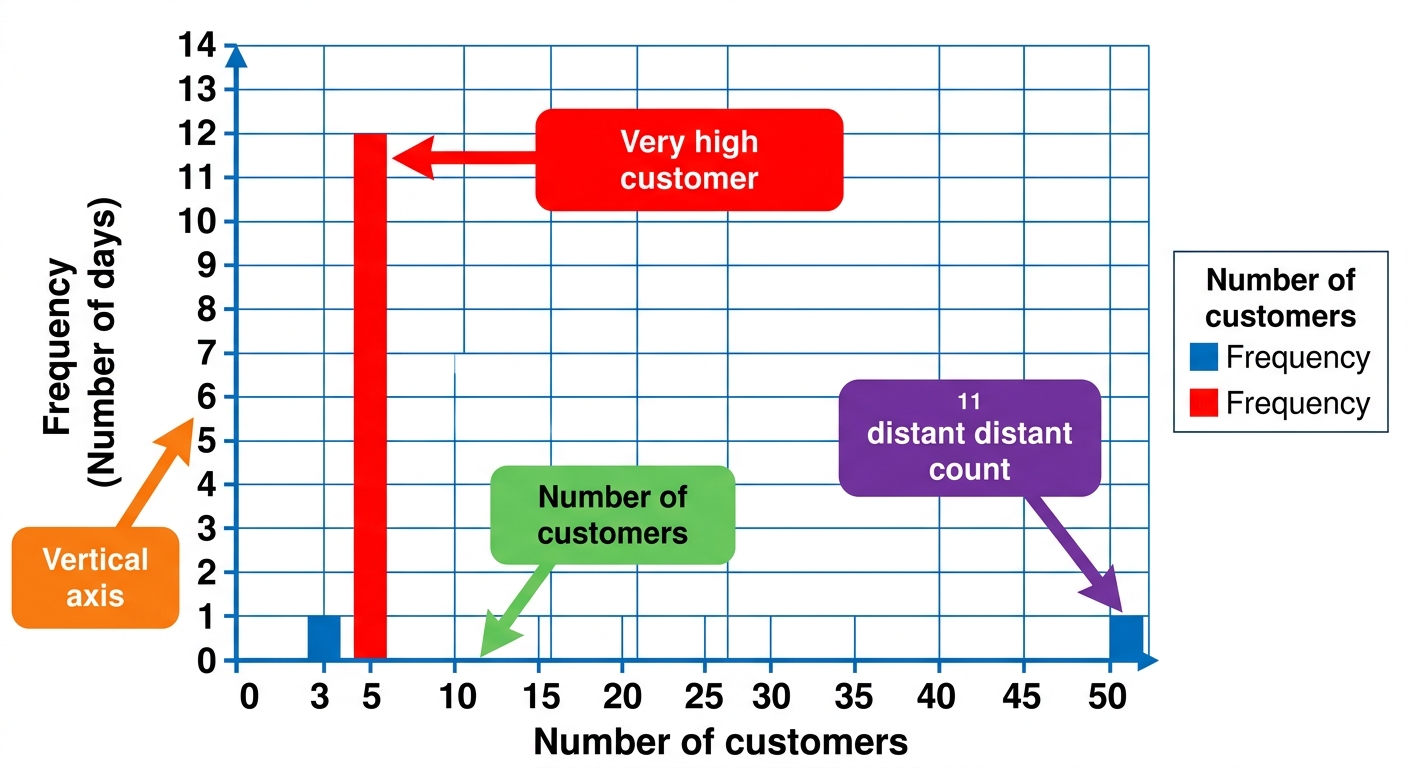
A small business owner records the number of customers per day over two weeks:
The owner claims that the "typical" number of daily customers is because it is the mode.
The owner claims that the "typical" number of daily customers is because it is the mode.
a
State the mode of the data set. [1]
b
Explain what the mode indicates about the daily customer count in this context. [1]
c
Analyse whether the mode is a reliable measure of the typical number of daily customers, referring to the outlier in the data set. [2]
Solutions
3QuestionCalculating the Range and Interpreting ItAssessment Practice
4 marks~6 minCriterion C
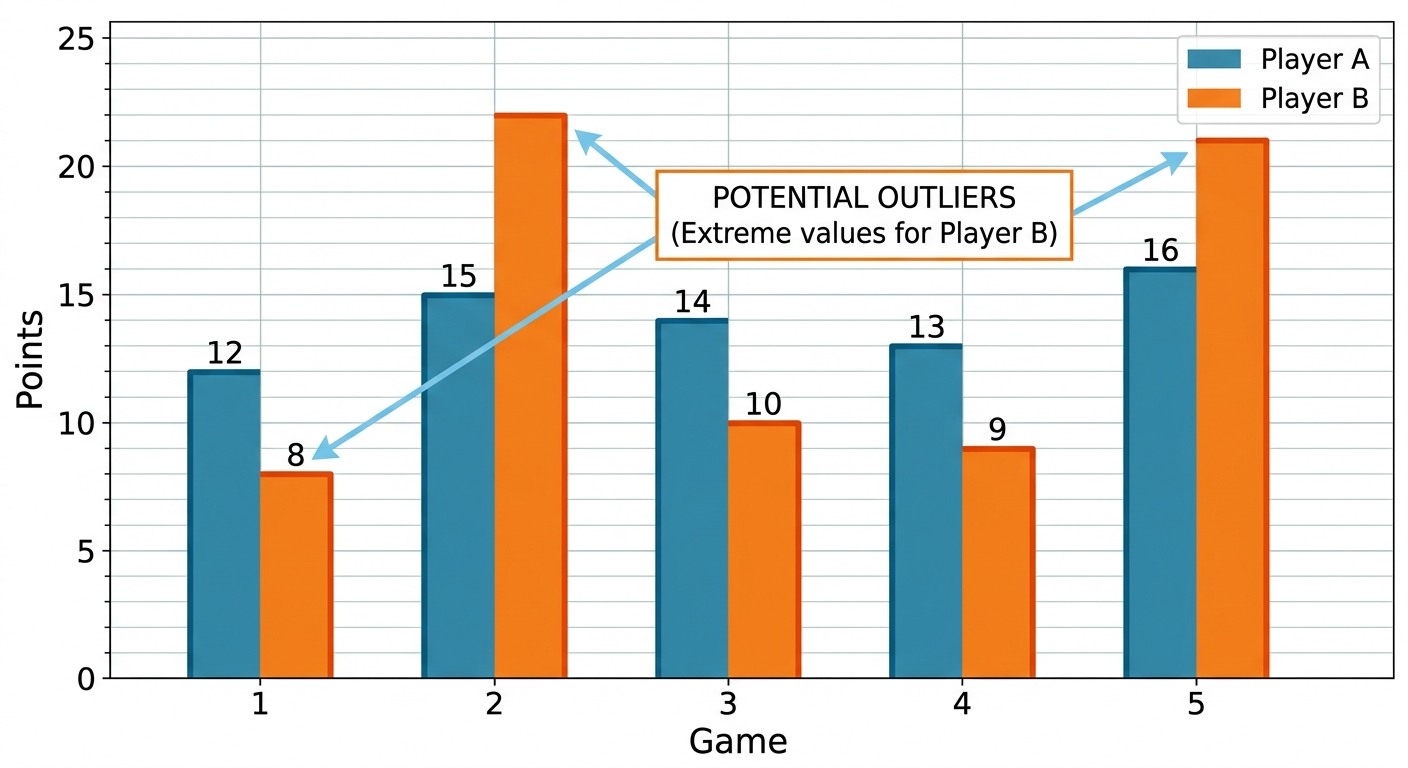
A basketball coach records the points scored by two players over five games.
| Player A | 12 | 15 | 14 | 13 | 16 |
|---|---|---|---|---|---|
| Player B | 8 | 22 | 10 | 9 | 21 |
a
Calculate the range of points scored by each player. [2]
b
Explain one limitation of using the range to compare the consistency of the two players, referring to Player B's data in your answer. [2]
Solutions
4QuestionCalculating the Range and Interpreting ItAssessment Practice
6 marks~9 minCriterion B
Consider the data set: .
a
Calculate the range of the data set. Then add one new number so that the range increases by exactly 6. Explain your reasoning. [2]
b
Using your new set from part (a), explain which type of number you would add to make the range as large as possible, and why. Add a number of your choice and calculate the new range. [2]
c
Analyse how adding a value outside the current range affects the range of a data set. Choose a different starting set, apply your rule, and show that it holds. [2]
Solutions
That's every free question here — 4 of 77.
+73 more questions, plus Mock Papers & Worksheets, are waiting in Premium.