You're viewing free preview questions — 4 questions previewing here — subscribe to unlock 69 more, plus the Full Question Bank, Mock Papers & Worksheets.Upgrade
Static and Current Electricity — Free MYP3 Sciences Practice Questions

1QuestionAttraction and Repulsion of ChargesConcept Practice
2 marks~3 minCriterion A
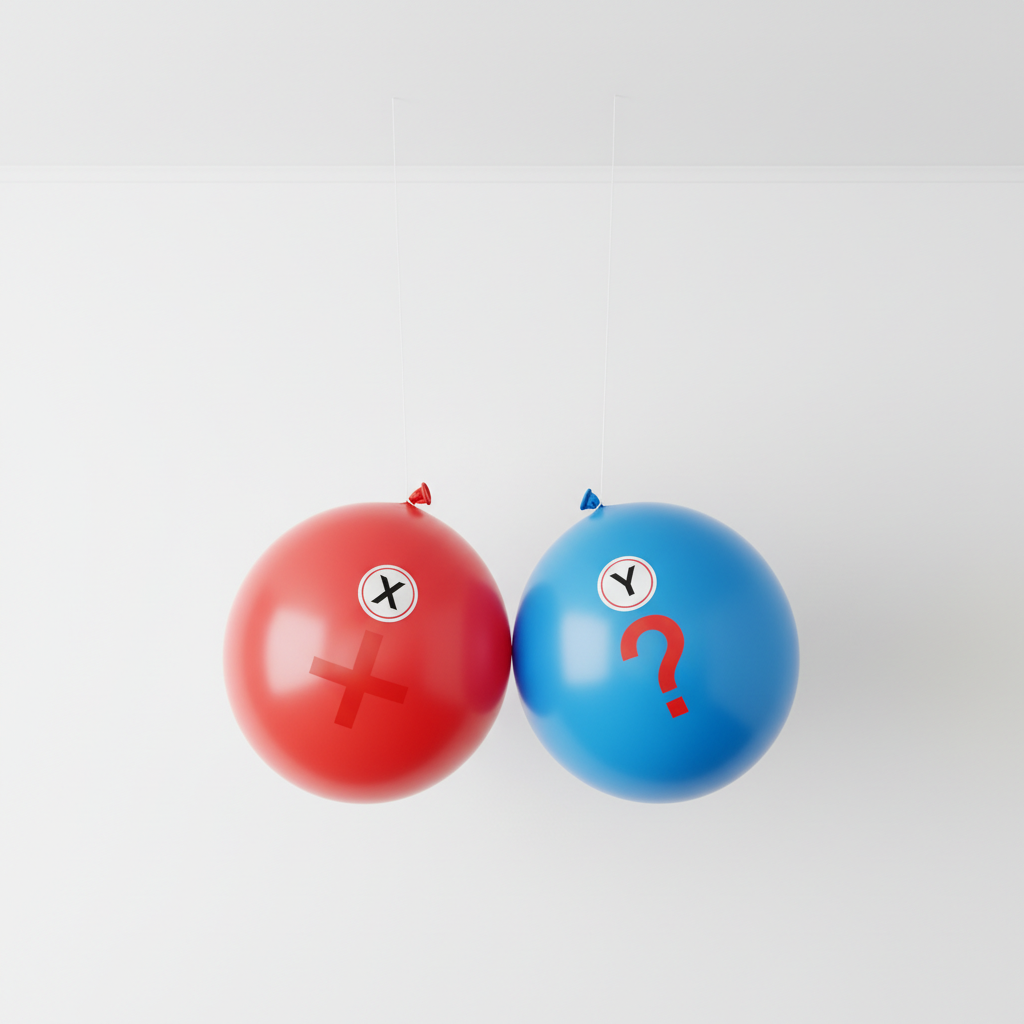
The diagram shows two balloons suspended from strings. Balloon X has a positive charge, and the two balloons attract one another.
a
State the charge of balloon Y. [1]
b
Explain how the behaviour of the balloons supports your answer to part (a). [1]

Solutions
2QuestionDefinition of Static ElectricityAssessment Practice
5 marks~8 minCriterion C
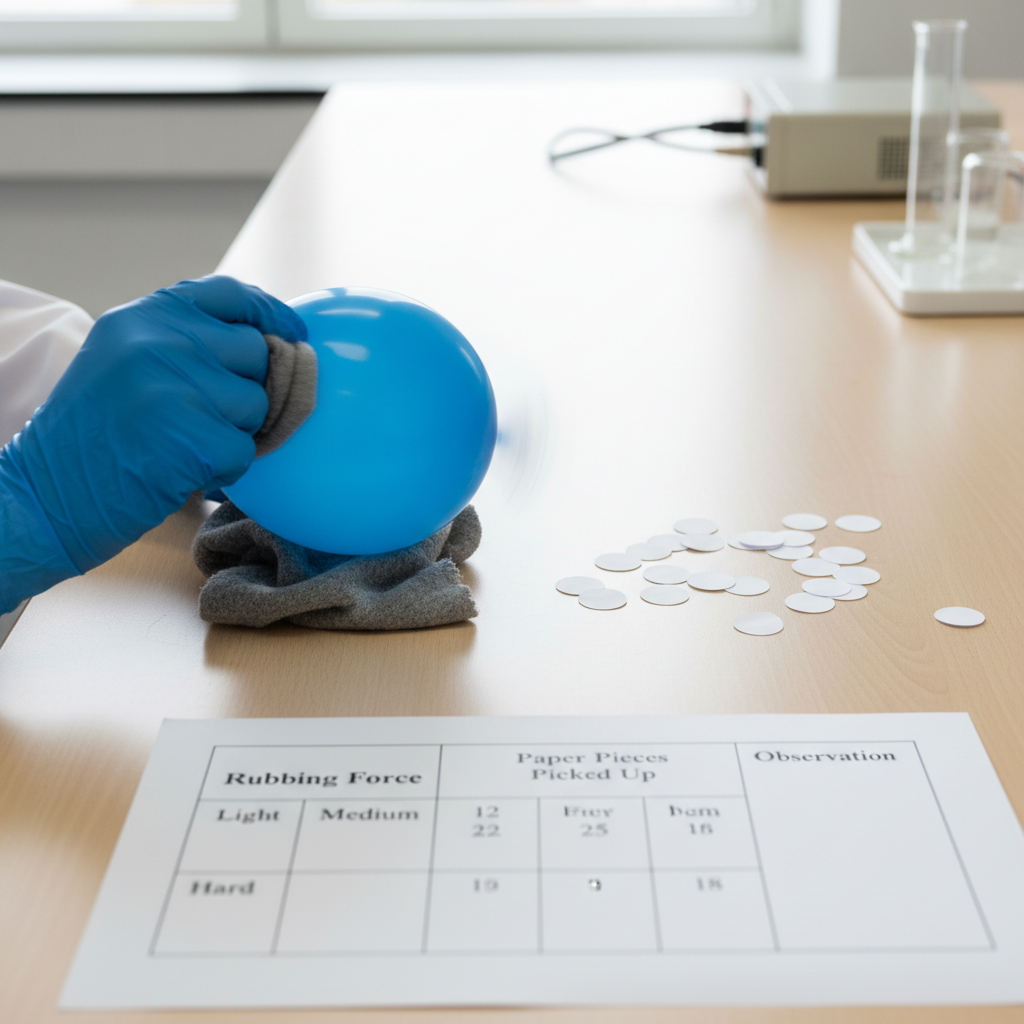
Students rub a balloon with a wool cloth and record how many small paper pieces the balloon picks up after each trial.
Rubbing force — paper pieces picked up:
Light: 12
Medium: 25
Hard: 18
The students conclude: "Rubbing harder always transfers more charge to the balloon."
Rubbing force — paper pieces picked up:
Light: 12
Medium: 25
Hard: 18
The students conclude: "Rubbing harder always transfers more charge to the balloon."
a
State what the number of paper pieces picked up indicates about the balloon. [1]
b
Explain why the data from the light and medium trials supports the students' claim. [2]
c
Analyse the full dataset and evaluate whether the students' claim is valid. Identify one possible source of error that could have affected the results. [2]
Solutions
3QuestionComparing Static and Current ElectricityAssessment Practice
6 marks~9 minCriterion B
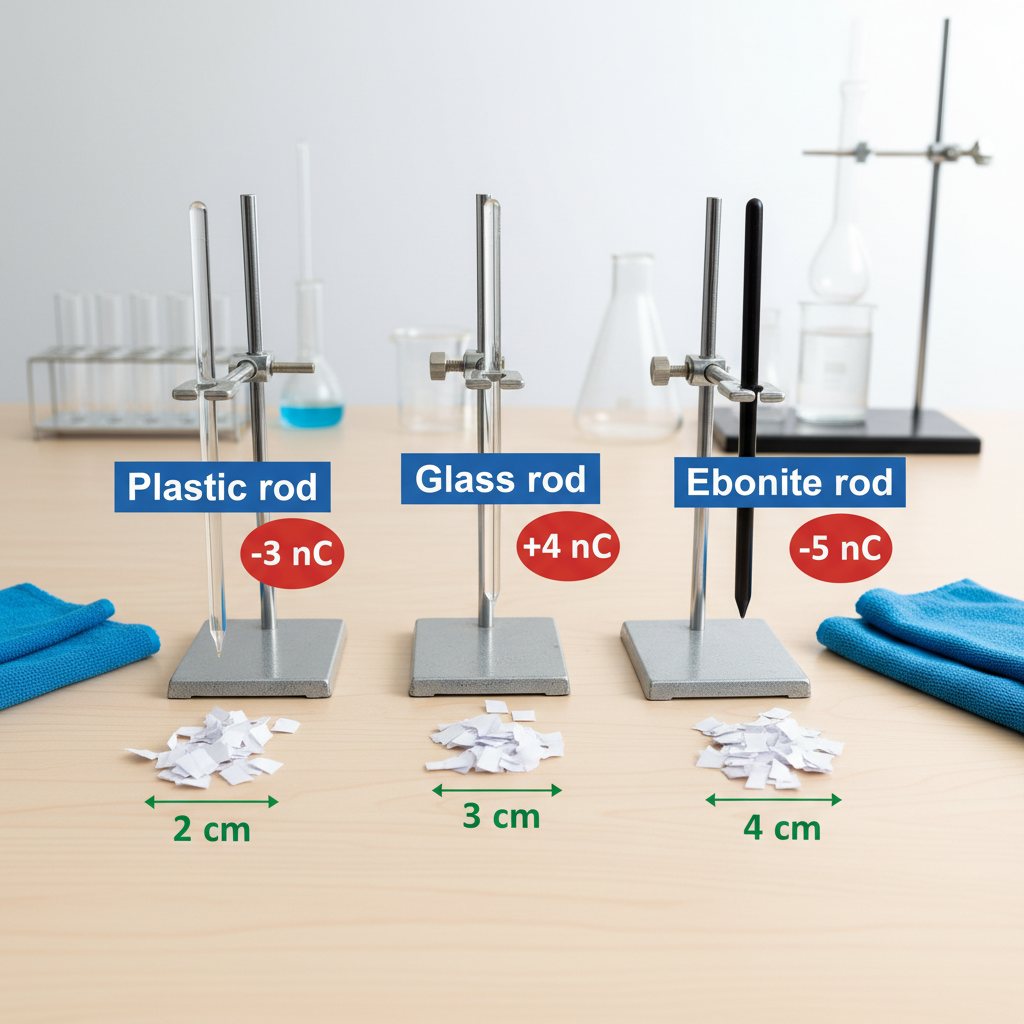
A student rubs three materials with a cloth and records the charge gained and the maximum distance at which each material attracts small pieces of paper.
| Charge magnitude (nC) | 3 | 4 | 5 |
|---|---|---|---|
| Maximum attraction distance (cm) | 2 | 3 | 4 |
a
Describe the pattern shown in the data. [1]
b
Explain why a larger charge produces a stronger attractive force on the paper pieces. [2]
c
A rubber balloon gains a charge of when rubbed. Using the pattern in the data, calculate the maximum attraction distance for the balloon. Justify whether this prediction is reliable. [3]
Solutions
4QuestionAttraction and Repulsion of ChargesAssessment Practice
10 marks~15 minCriterion D
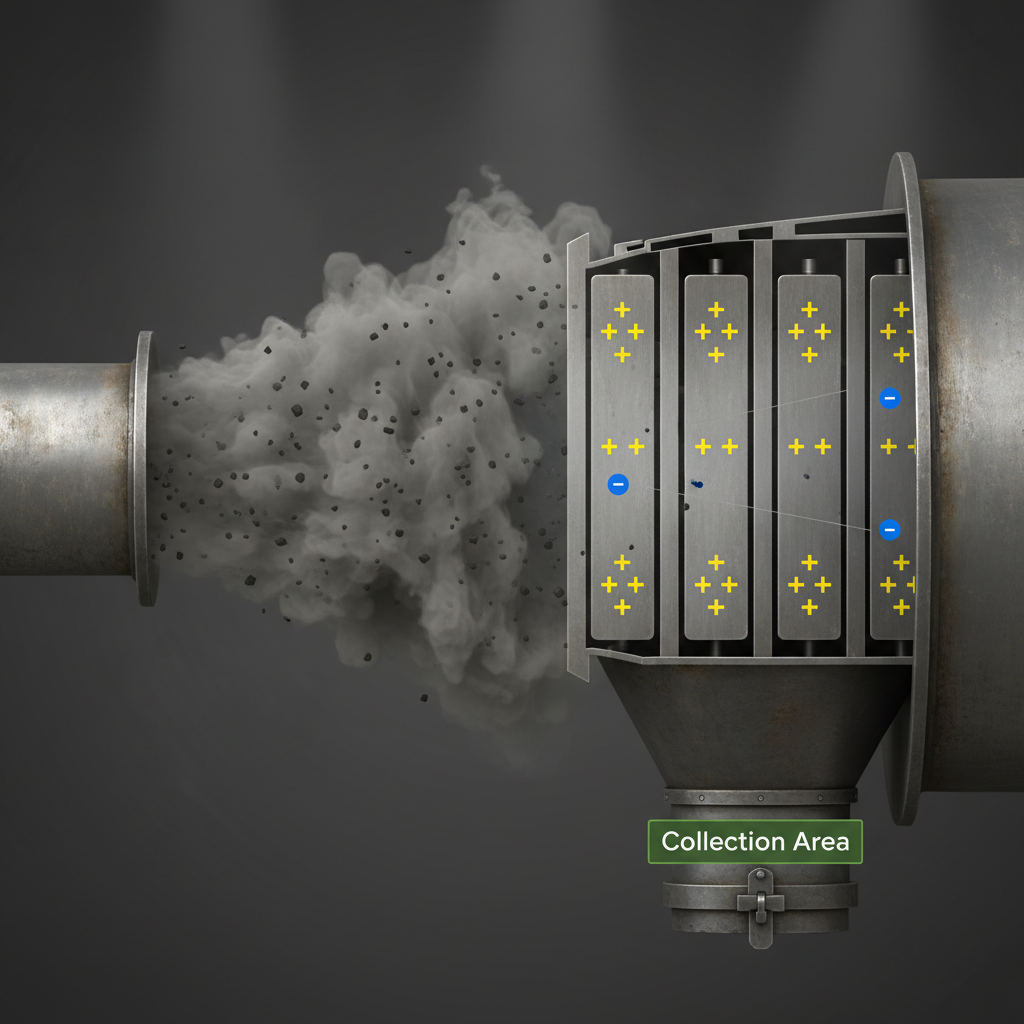
A factory uses an electrostatic precipitator to reduce air pollution. Smoke passes between positively charged metal plates. Particles gain a negative charge and are then pulled toward a collection area, where they are removed from the gas stream.
a
Describe how opposite charges cause smoke particles to move toward the collection plates. [2]
b
Explain two environmental benefits of using this device in a factory. [4]
c
A factory manager claims the precipitator is always the best solution for reducing industrial air pollution. Using your knowledge of the device's limitations and societal impacts, analyse whether this claim is fully justified. [4]
---
---
Solutions
That's every free question here — 4 of 73.
+69 more questions, plus Mock Papers & Worksheets, are waiting in Premium.