You're viewing free preview questions — 4 questions previewing here — subscribe to unlock 66 more, plus the Full Question Bank, Mock Papers & Worksheets.Upgrade
Acids Bases and Indicators — Free MYP3 Sciences Practice Questions

1QuestionCommon Acids and Bases in Everyday LifeConcept Practice
2 marks~3 minCriterion A
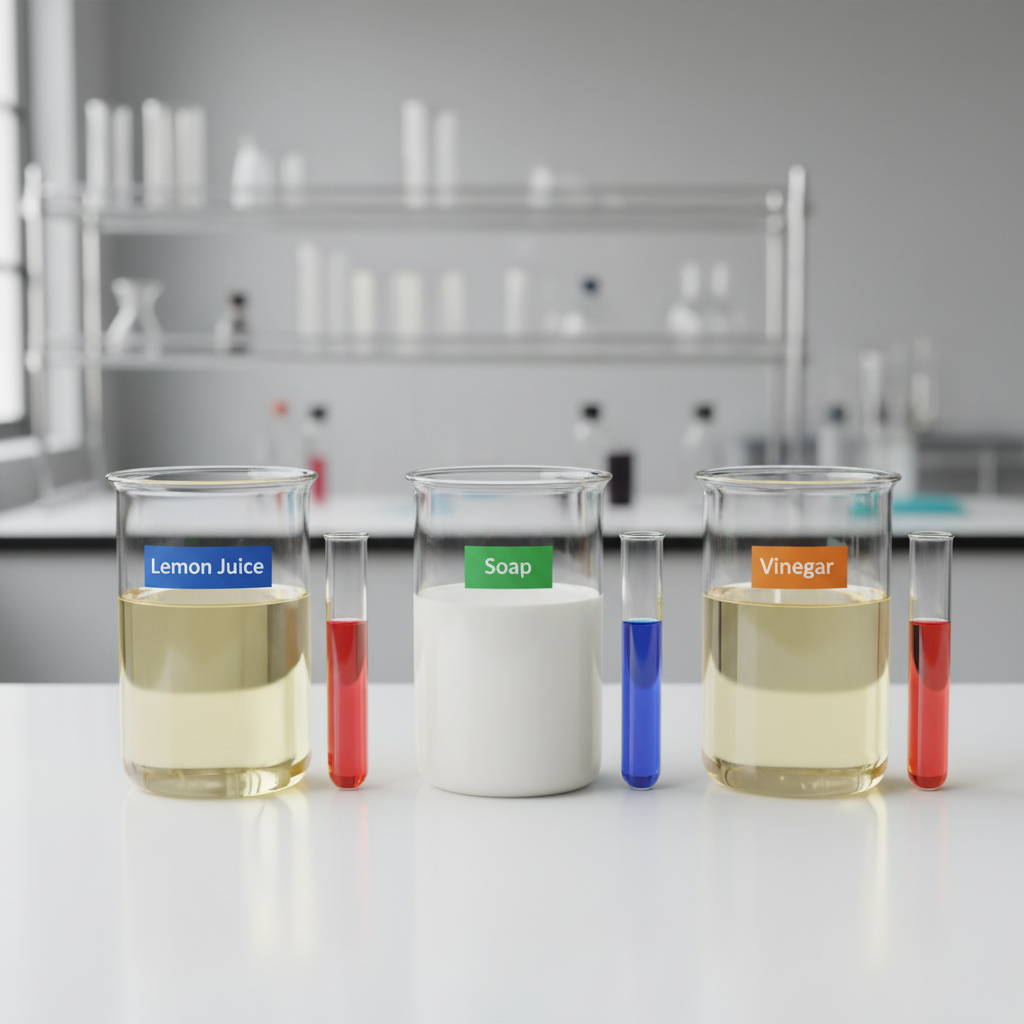
A student tests three household substances with universal indicator and records the results.
Lemon juice → red
Soap → blue
Vinegar → red
Lemon juice → red
Soap → blue
Vinegar → red
a
Classify each substance as an acid, a base, or neutral. [1]
b
Explain what the red colour of the universal indicator tells you about lemon juice and vinegar. [1]

Solutions
2QuestionCommon Acids and Bases in Everyday LifeAssessment Practice
3 marks~5 minCriterion C
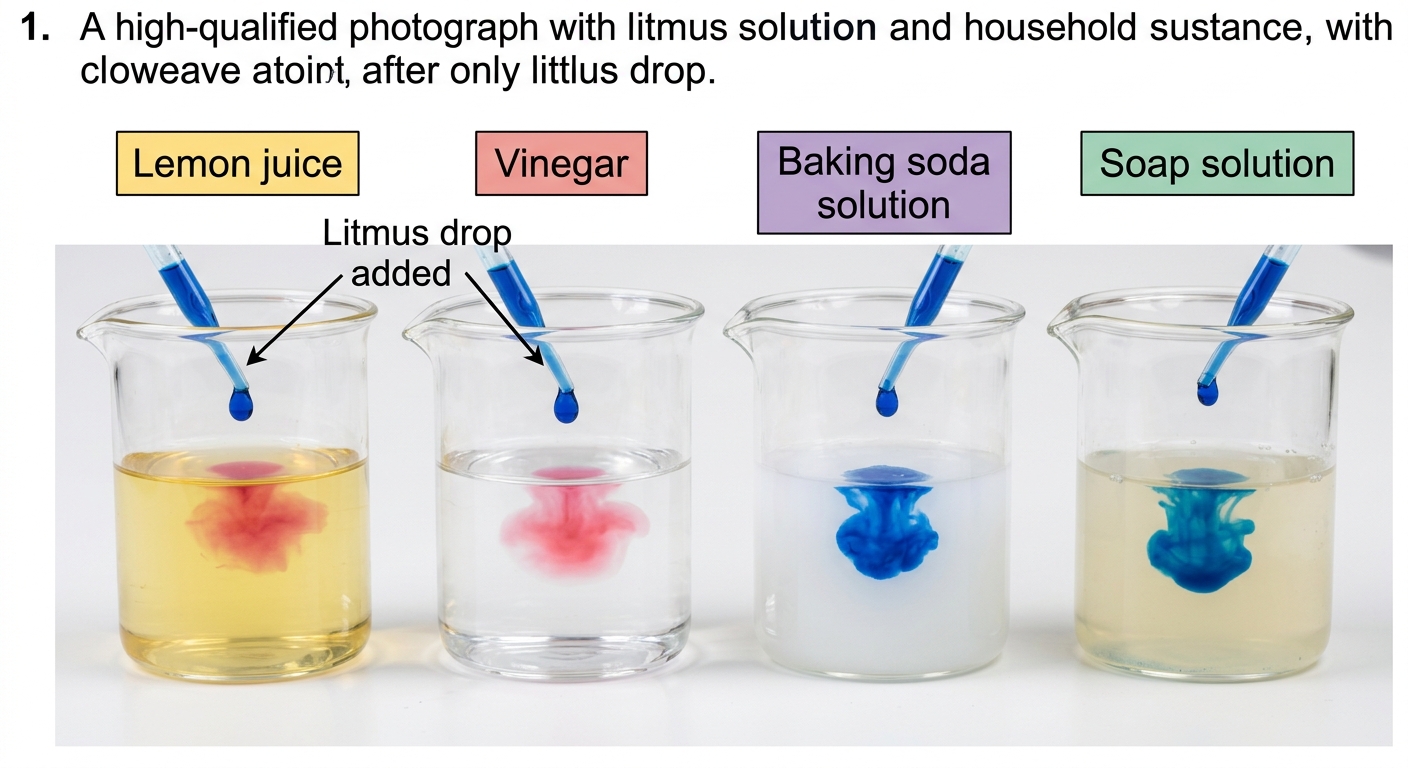
Four household substances — lemon juice, vinegar, baking soda, and soap — are each tested with a drop of blue litmus solution. Lemon juice and vinegar turn the litmus red. Baking soda and soap leave the litmus blue.
a
Classify each substance as an acid or a base. [1]
b
Explain why lemon juice turns blue litmus red. [1]
c
A student claims that soap and baking soda must behave identically in all acid-base tests because both leave blue litmus unchanged. Explain why this claim may not be correct. [1]
Solutions
3QuestionSafety and Handling of Acids and Bases in the LabAssessment Practice
6 marks~9 minCriterion B
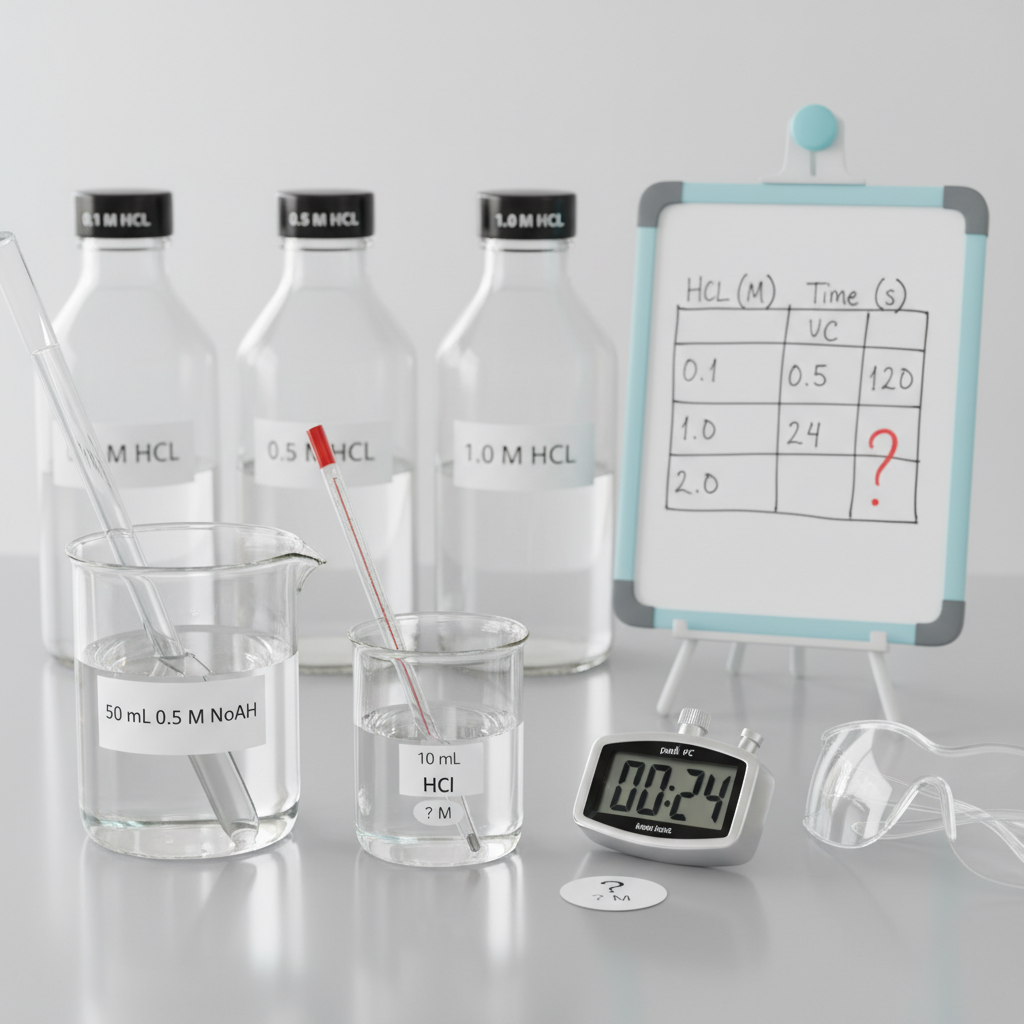
A student investigates how the concentration of hydrochloric acid (HCl) affects how quickly it neutralises sodium hydroxide (NaOH). Each trial uses 50 mL of 0.5 M NaOH at 25°C, with 10 mL of HCl added. The time for the solution to reach pH 7 is recorded.
| Concentration of HCl (M) | 0.1 | 0.5 | 1.0 |
|---|---|---|---|
| Time to reach pH 7 (s) | 120 | 24 | 12 |
a
Describe the relationship between HCl concentration and the time to reach pH 7 shown in the data. [1]
b
Calculate the time you would expect 2.0 M HCl to take to reach pH 7. Show your working. [2]
c
Explain why increasing the concentration of HCl increases the rate of neutralisation. Use collision theory in your answer. [3]
Solutions
4QuestionCommon Acids and Bases in Everyday LifeAssessment Practice
6 marks~9 minCriterion D
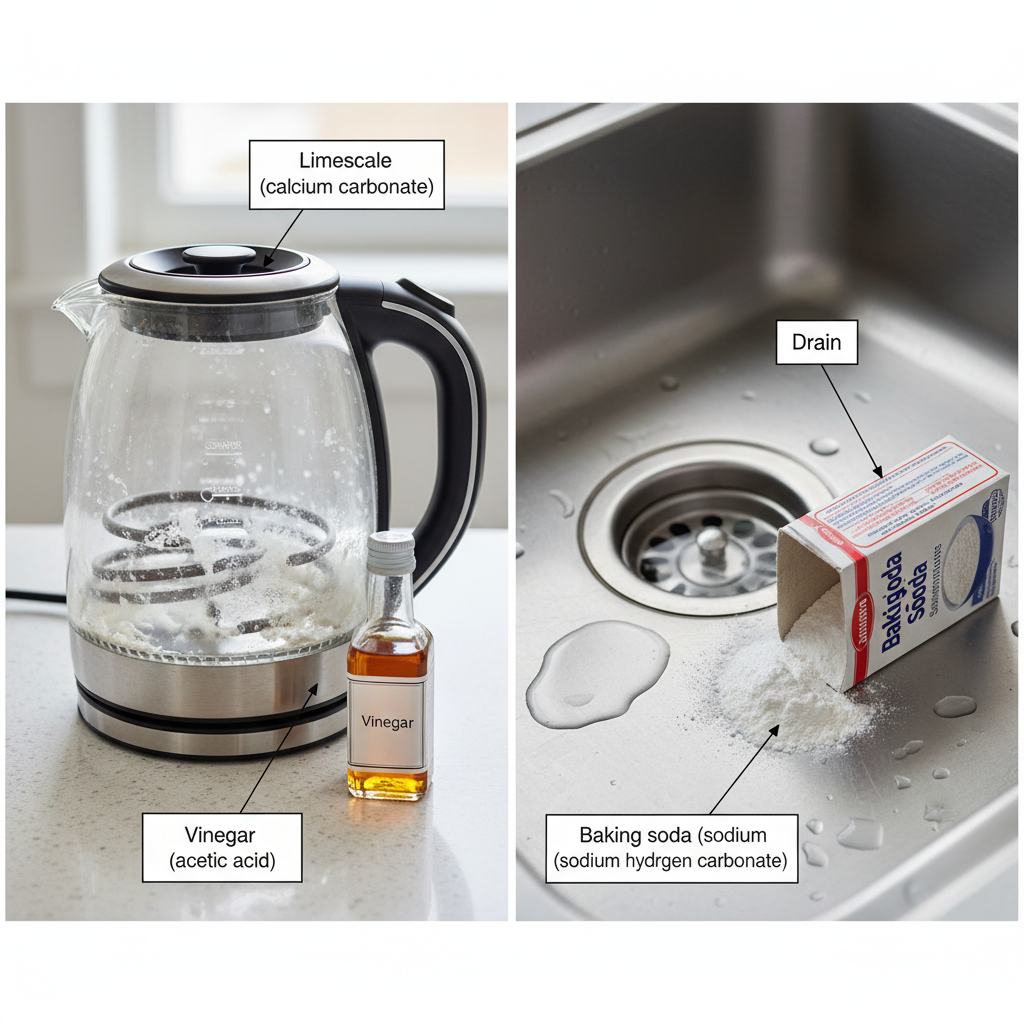
Vinegar (acetic acid, ) is used to remove limescale (calcium carbonate, ) from kettles. Marble is also made of calcium carbonate.
a
Describe what happens when vinegar reacts with limescale, naming the type of reaction and the products formed. [2]
b
Explain why vinegar should not be used to clean marble surfaces. [2]
c
A student claims: "A stronger acid is always a better cleaner." Using vinegar and one other household cleaner, analyse whether this claim is accurate. [2]
Solutions
That's every free question here — 4 of 70.
+66 more questions, plus Mock Papers & Worksheets, are waiting in Premium.