You're viewing free preview questions — 4 questions previewing here — subscribe to unlock 77 more, plus the Full Question Bank, Mock Papers & Worksheets.Upgrade
Atomic Structure Introductory — Free MYP3 Sciences Practice Questions

1QuestionAtomic Number and Mass Number BasicConcept Practice
3 marks~5 minCriterion A
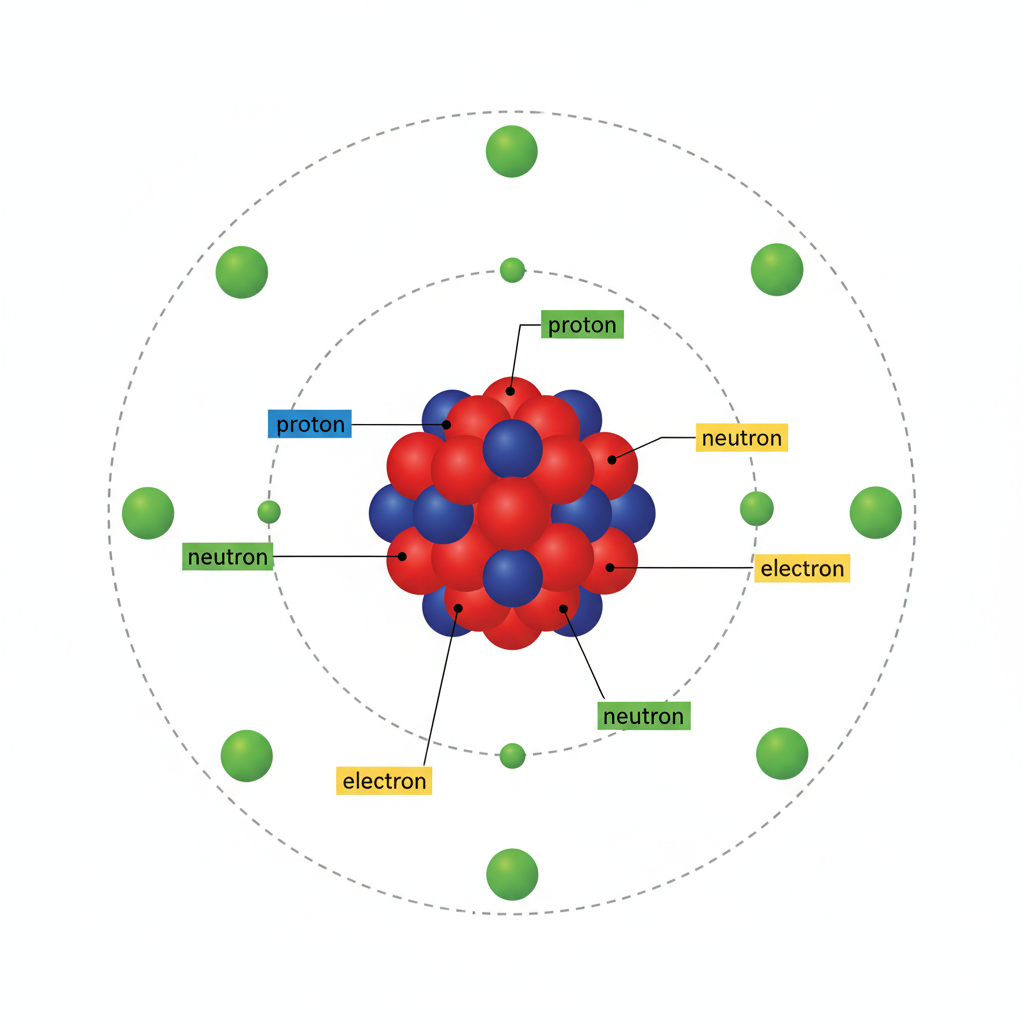
The diagram shows a carbon atom. The nucleus contains 6 protons and 6 neutrons. Two electron shells surround the nucleus: 2 electrons on the inner shell and 4 electrons on the outer shell.
a
State the atomic number of carbon. [1]
b
Calculate the mass number of carbon. [1]
c
A different atom has 6 protons and 8 neutrons. Its mass number is 14. Explain what type of atom this is and why. [1]

Solutions
2QuestionHistorical Models of the Atom SimplifiedAssessment Practice
5 marks~8 minCriterion C
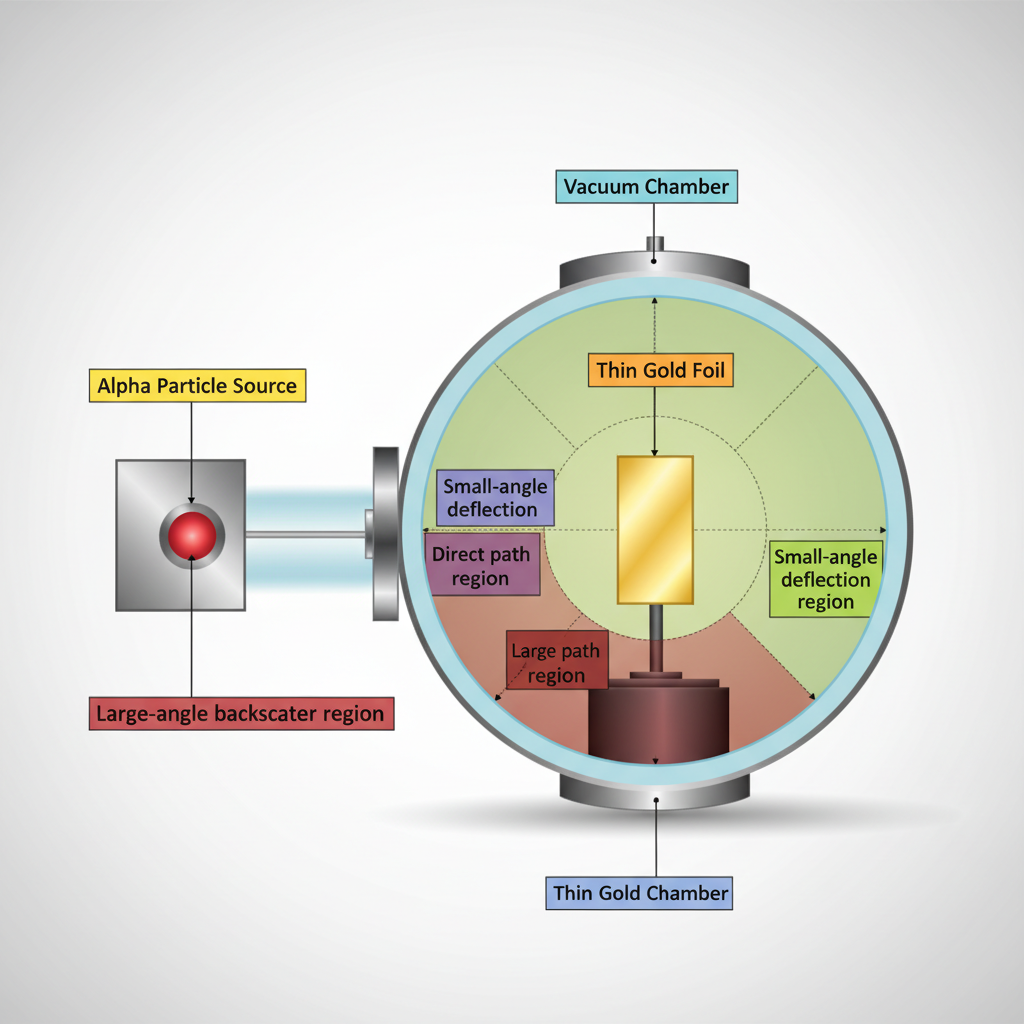
In 1911, Ernest Rutherford fired alpha particles at a thin gold foil and recorded three observations:
1
Most alpha particles passed straight through.
2
A small number were deflected by small angles.
3
Approximately 1 in 8000 bounced back toward the source.
Two models existed: Thomson's plum pudding model (positive charge spread throughout the atom) and Rutherford's nuclear model (tiny, dense, positive nucleus surrounded by empty space).
Justify which model is better supported by the experimental evidence. In your answer, explain how each observation supports or contradicts each model. [5]
Two models existed: Thomson's plum pudding model (positive charge spread throughout the atom) and Rutherford's nuclear model (tiny, dense, positive nucleus surrounded by empty space).
Justify which model is better supported by the experimental evidence. In your answer, explain how each observation supports or contradicts each model. [5]
Solutions
3QuestionHistorical Models of the Atom SimplifiedAssessment Practice
6 marks~9 minCriterion B
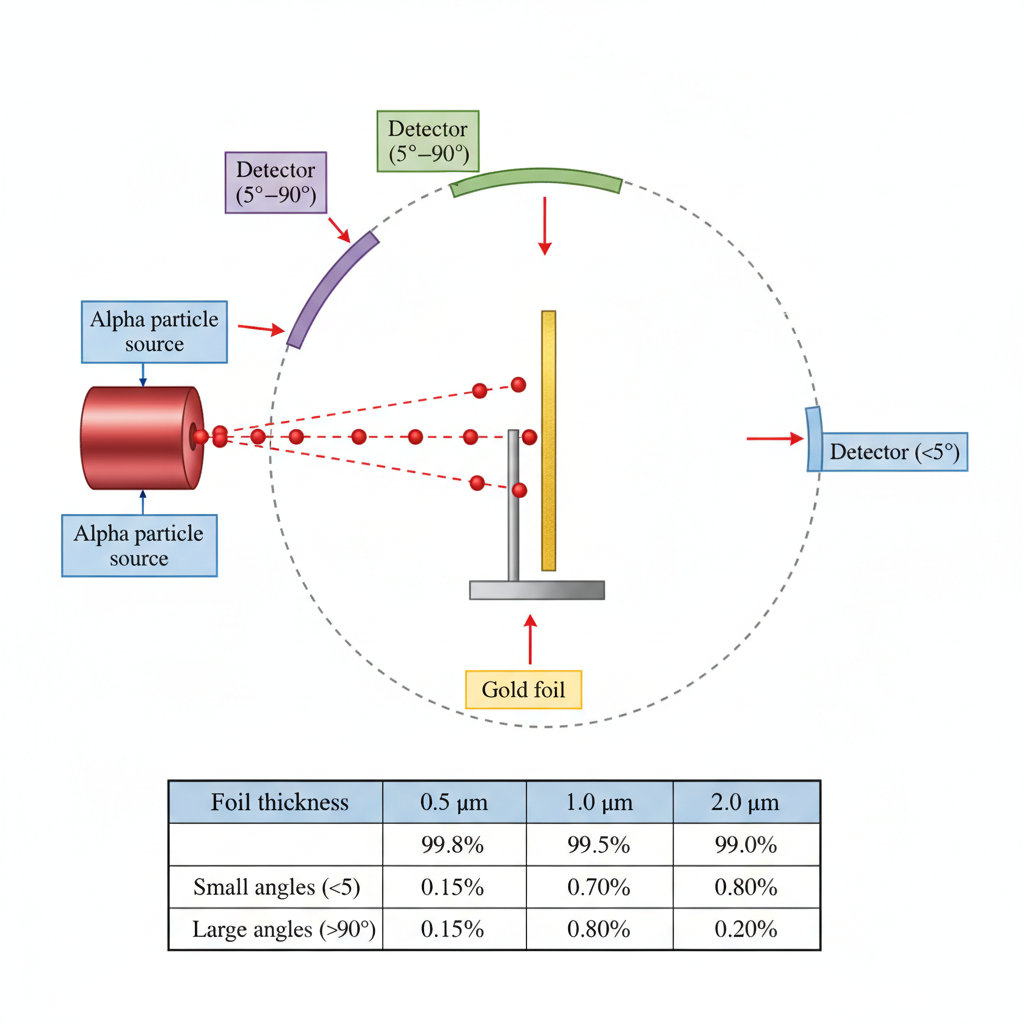
In the Geiger–Marsden experiment, alpha particles were fired at thin gold foils of different thicknesses. The results below show the percentage of alpha particles detected at each angle range.
| Foil thickness | 0.5 μm | 1.0 μm | 2.0 μm |
|---|---|---|---|
| Small angles (less than 5°) | 99.8% | 99.5% | 99.0% |
| Medium angles (5°–90°) | 0.15% | 0.40% | 0.80% |
| Large angles (greater than 90°) | 0.05% | 0.10% | 0.20% |
a
Describe the pattern shown in the large-angle (greater than 90°) data as foil thickness increases. [1]
b
Explain, using the nuclear model of the atom, why most alpha particles pass straight through the gold foil with little or no deflection. [2]
c
A student uses a gold foil of thickness 0.1 μm. Using the data, predict the percentage of alpha particles detected at large angles (greater than 90°) and justify your prediction. [3]
Solutions
4QuestionAtomic Number and Mass Number BasicAssessment Practice
6 marks~9 minCriterion D
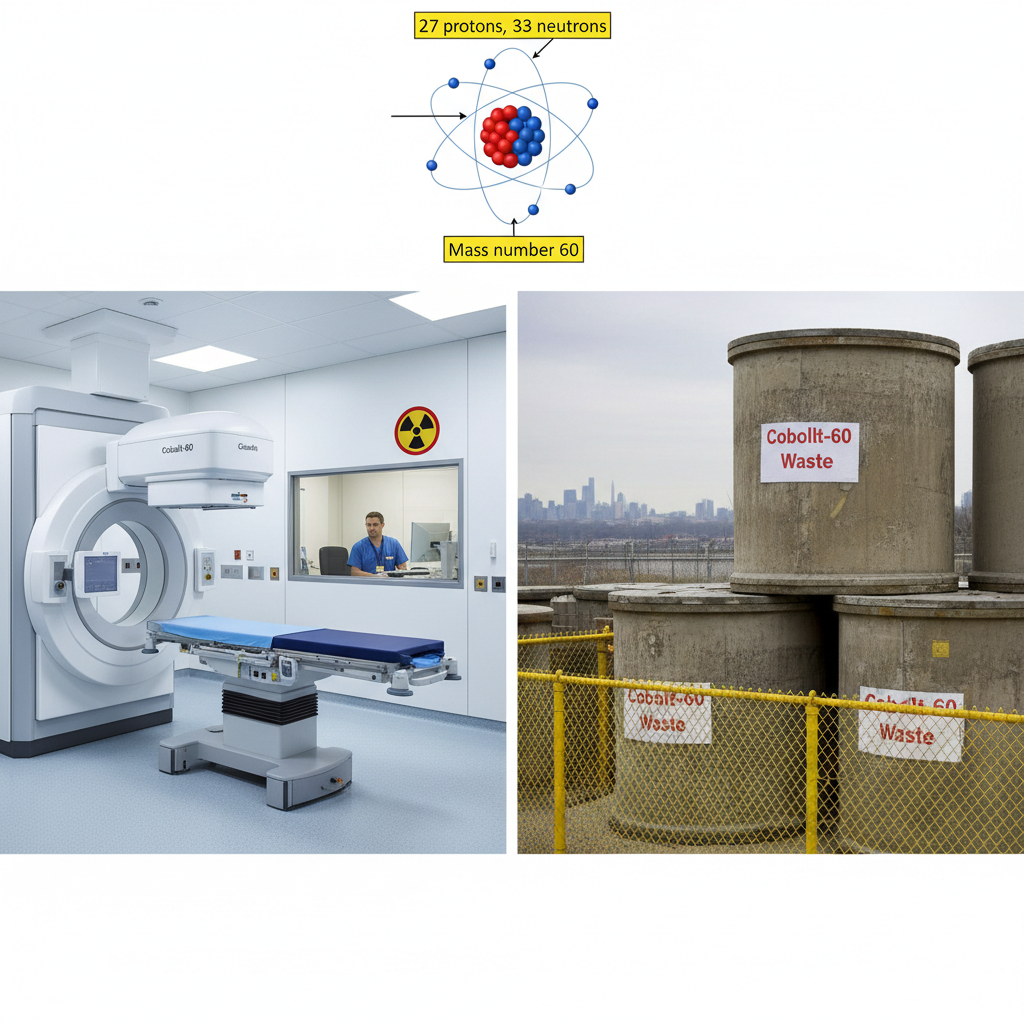
Cobalt-60 is a radioactive isotope with an atomic number of 27 and a mass number of 60. It is used in radiotherapy to destroy cancer cells by emitting gamma rays. However, its use carries risks, including radiation exposure for medical staff and challenges in disposing of radioactive waste.
a
Describe one benefit and one limitation of using Cobalt-60 in cancer treatment. [2]
b
Explain how medical facilities can manage the risks associated with Cobalt-60 use, including risks to staff and to the environment. [2]
c
Evaluate whether the use of Cobalt-60 in cancer treatment is ethically acceptable. Use evidence from the stimulus to support your judgement. [2]
Solutions
That's every free question here — 4 of 81.
+77 more questions, plus Mock Papers & Worksheets, are waiting in Premium.