You're viewing free preview questions — 4 questions previewing here — subscribe to unlock 79 more, plus the Full Question Bank, Mock Papers & Worksheets.Upgrade
Physical and Chemical Changes — Free MYP3 Sciences Practice Questions

1QuestionDefinition and Comparison of Physical and Chemical ChangesConcept Practice
2 marks~3 minCriterion A
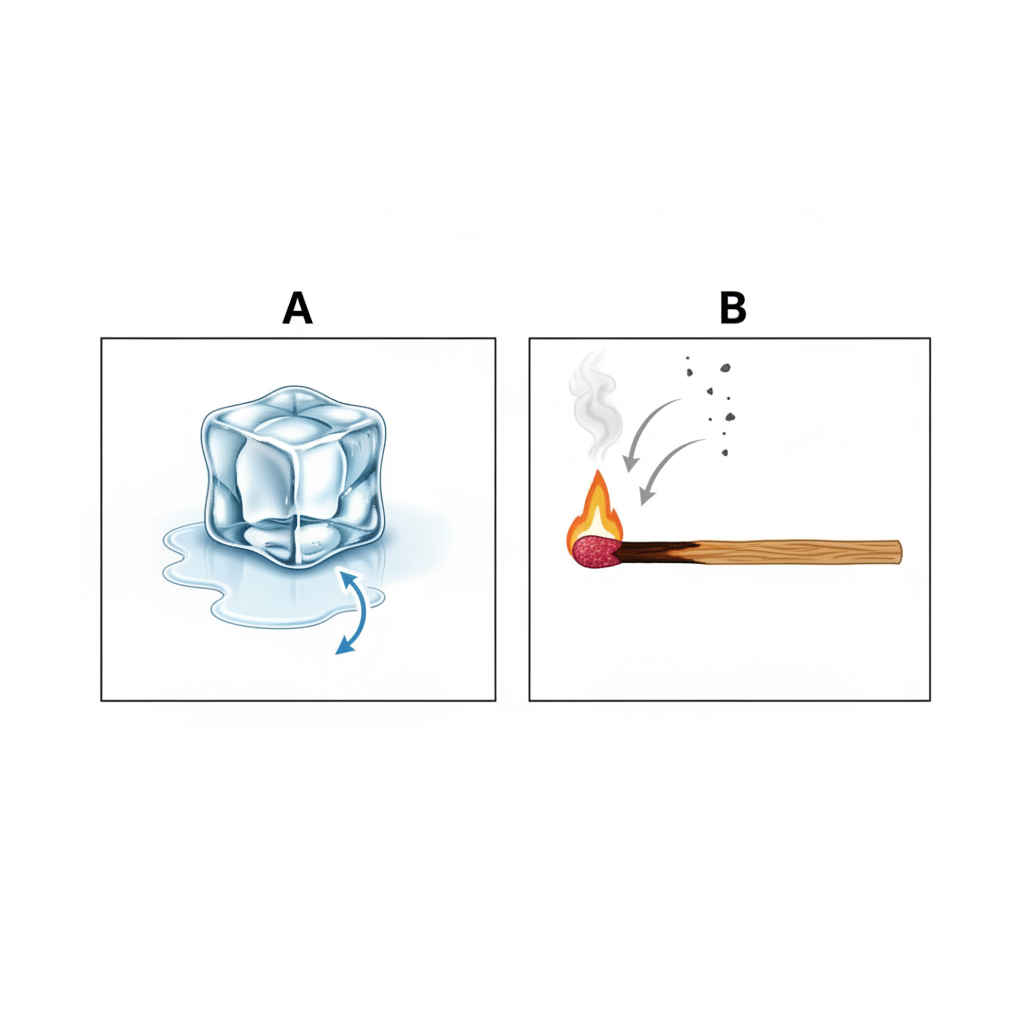
The diagram shows two changes.
Change A: An ice cube melts into liquid water.
Change B: A match burns, producing ash and smoke.
Change A: An ice cube melts into liquid water.
Change B: A match burns, producing ash and smoke.
a
Identify which change (A or B) is a physical change and which is a chemical change. Write your answer as: Physical change: [label], Chemical change: [label]. [1]
b
Explain why Change B is classified as a chemical change. [1]

Solutions
2QuestionInvestigating Changes in the LabAssessment Practice
4 marks~6 minCriterion C
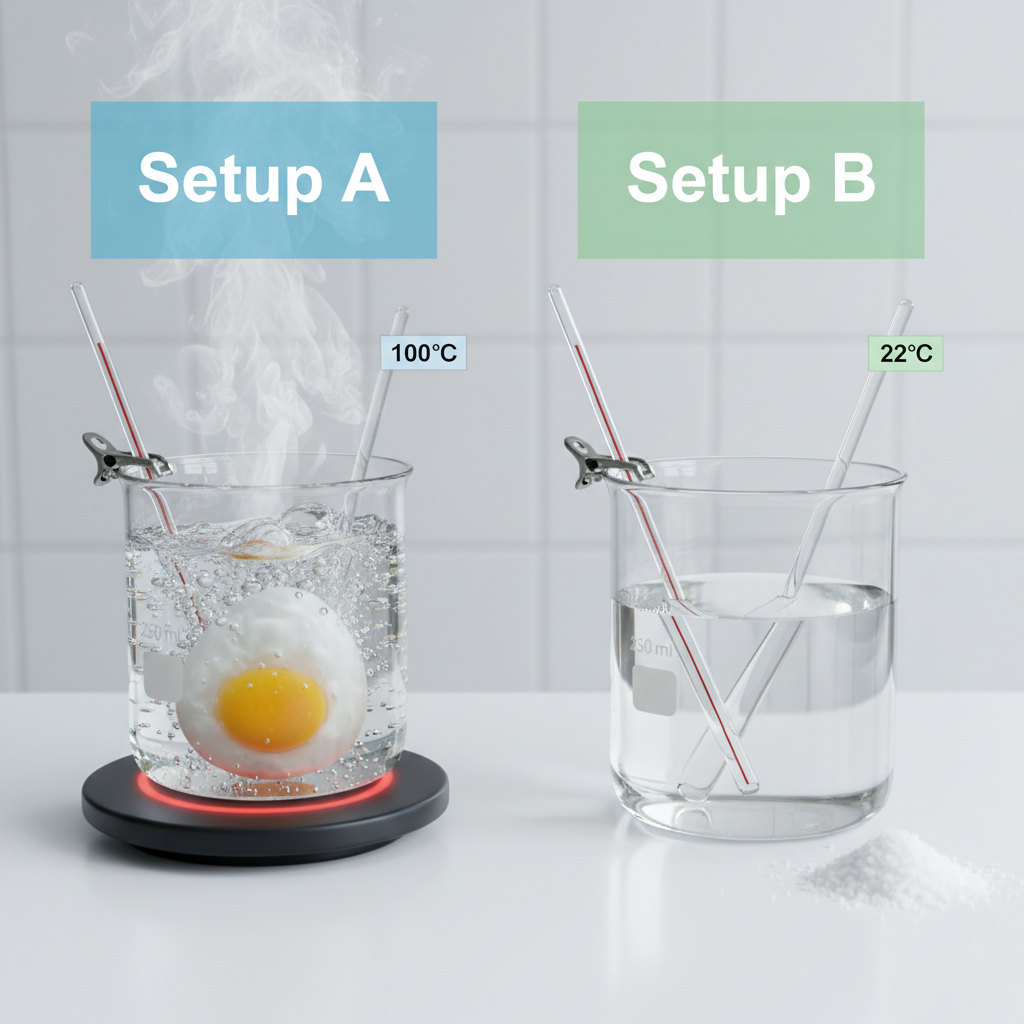
Two laboratory setups are described below.
Setup A: An egg is placed in a beaker of boiling water. The egg white changes from transparent to white and solid.
Setup B: Salt is stirred into water at room temperature. The salt grains dissolve to form a clear, colourless solution.
Setup A: An egg is placed in a beaker of boiling water. The egg white changes from transparent to white and solid.
Setup B: Salt is stirred into water at room temperature. The salt grains dissolve to form a clear, colourless solution.
a
Identify which setup demonstrates a chemical change. [1]
b
Describe two pieces of observable evidence from that setup that support your answer. [2]
c
A student claims the change in Setup B is also chemical because "something new is formed when salt dissolves." Explain why this claim is incorrect, using your understanding of physical and chemical changes. [1]
Solutions
3QuestionExamples of Reversible and Irreversible ChangesConcept Practice
2 marks~3 minCriterion B
A student heats 10 g of sugar at four temperatures — , , , and — for 2 minutes at each temperature. After heating, the sugar is cooled to see whether it returns to its original state.
a
Identify the independent variable and the dependent variable in this investigation. [1]
b
State one controlled variable and explain why keeping it constant makes this a fair test. [1]
Solutions
4QuestionDefinition and Comparison of Physical and Chemical ChangesAssessment Practice
6 marks~9 minCriterion D
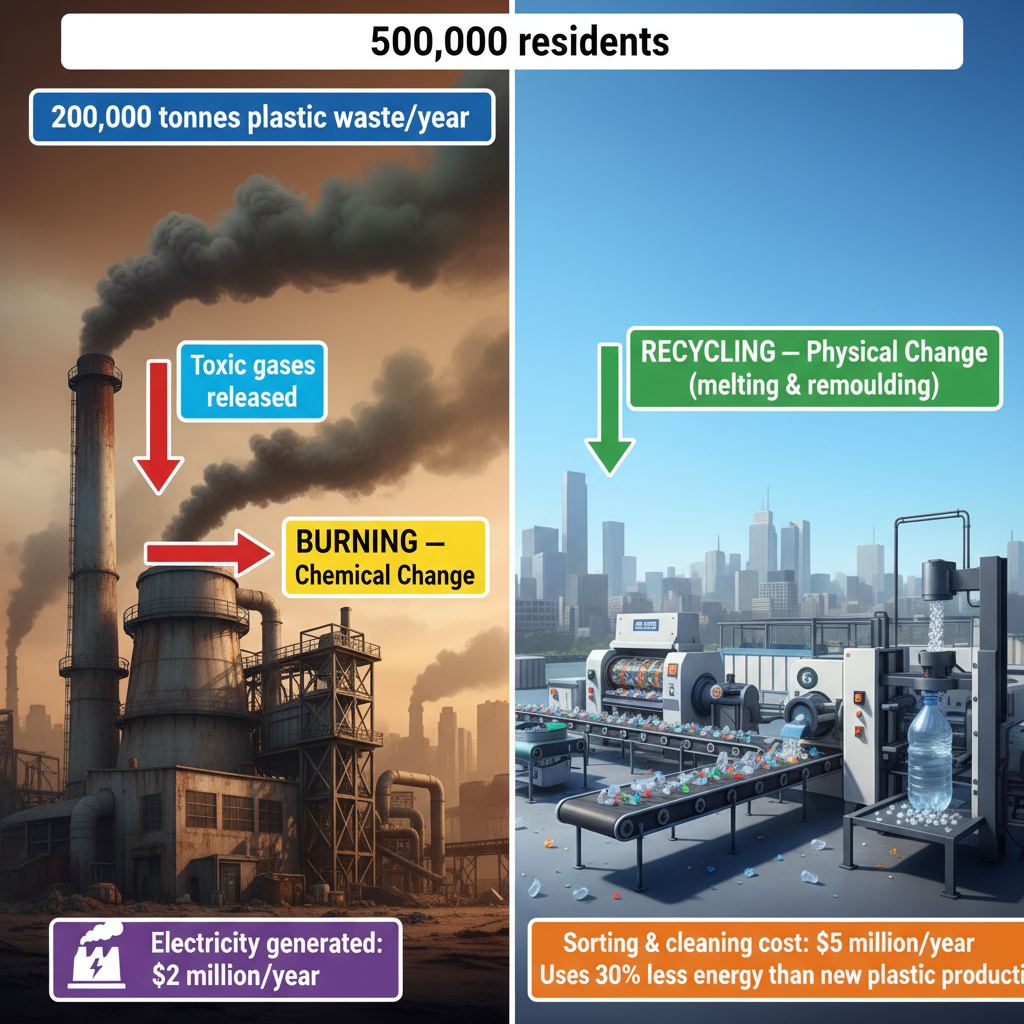
A city produces 200,000 tonnes of plastic waste each year. Currently, all plastic is incinerated, releasing toxic gases. A proposed alternative is recycling: melting and remoulding the plastic into new products. Recycling uses 30% less energy than producing new plastic, but costs 5 million dollars per year for sorting and cleaning. Incineration generates electricity worth 2 million dollars per year.
a
Compare the chemical change that occurs during incineration with the physical change that occurs during recycling. [2]
b
Explain two environmental benefits and one drawback of switching from incineration to recycling, using data from the scenario to support your answer. [3]
c
Analyse one limitation of the comparison you made in part (b). [1]
Solutions
That's every free question here — 4 of 83.
+79 more questions, plus Mock Papers & Worksheets, are waiting in Premium.