You're viewing free preview questions — 4 questions previewing here — subscribe to unlock 76 more, plus the Full Question Bank, Mock Papers & Worksheets.Upgrade
States of Matter and Particle Theory — Free MYP3 Sciences Practice Questions

1QuestionApplications of Particle Theory in Real LifeConcept Practice
2 marks~3 minCriterion A
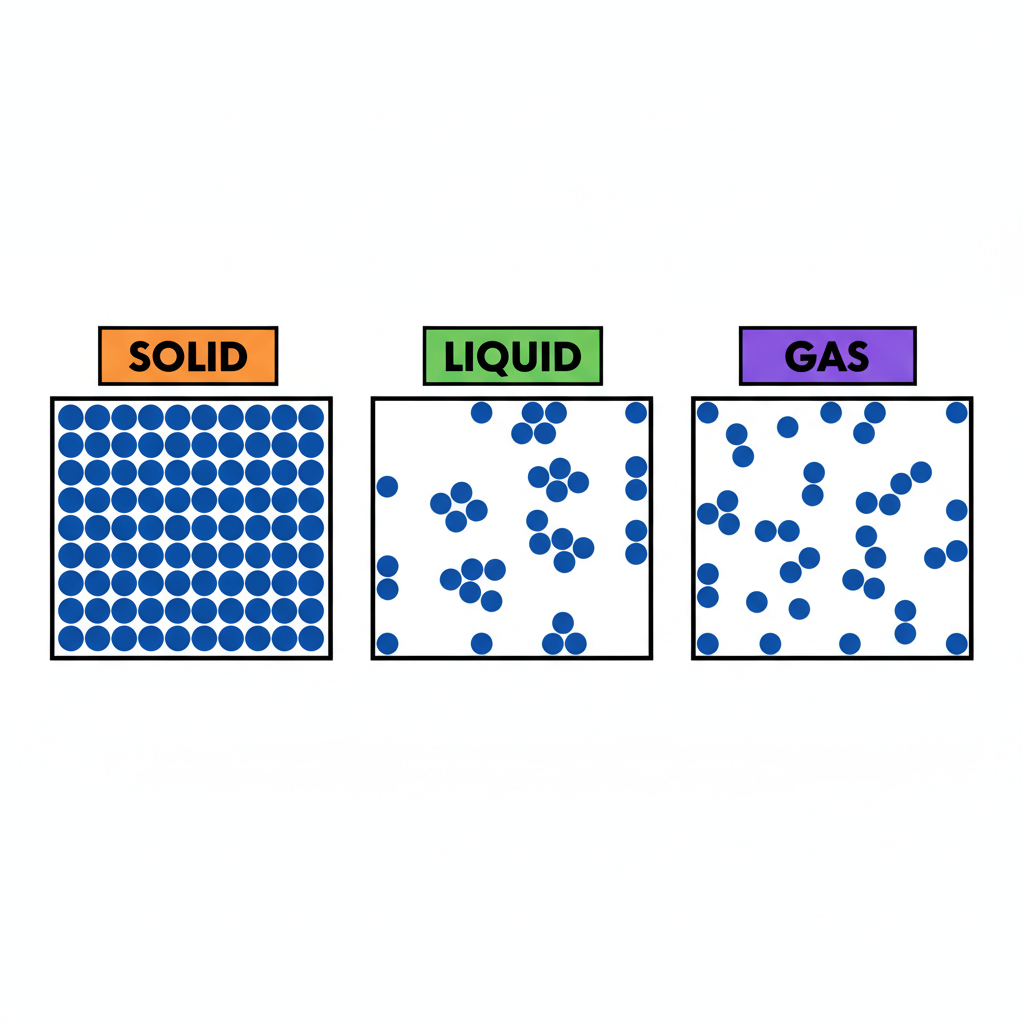
The diagram shows particle arrangements in three states of matter.
Describe the structural characteristics of particles in the solid state. [2]
Describe the structural characteristics of particles in the solid state. [2]

Solutions
2QuestionApplications of Particle Theory in Real LifeAssessment Practice
5 marks~8 minCriterion B
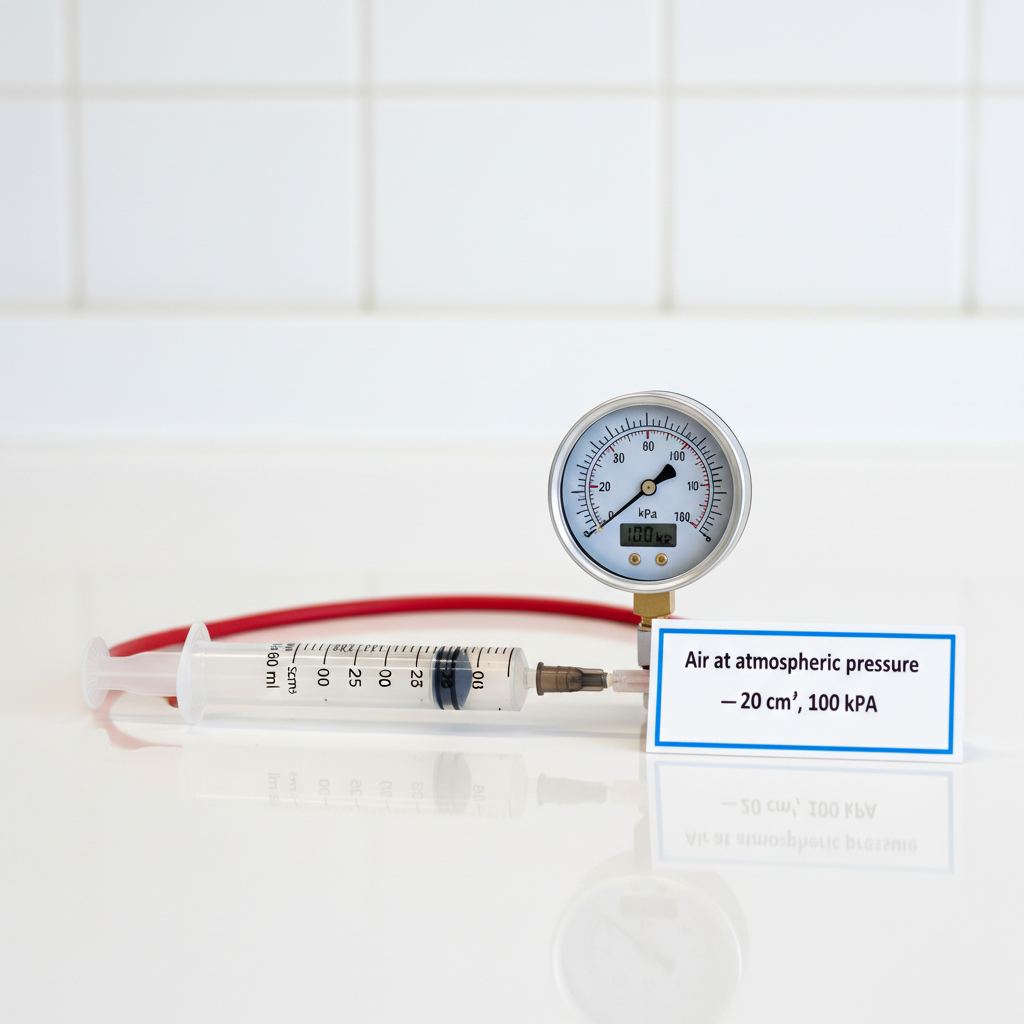
A student traps of air at in a syringe and pushes the plunger to different volumes, recording the pressure each time. Temperature remains constant throughout.
| Volume () | 20 | 15 | 10 | 8 | 5 |
|---|---|---|---|---|---|
| Pressure () | 100 | 133 | 200 | 250 | 400 |
a
Calculate the product for each of the five data points. [2]
b
Describe the relationship between pressure and volume shown by the data. [1]
c
Justify whether the data supports Boyle's Law. Use your results from (a) and appropriate scientific terminology in your answer. [2]
Solutions
3QuestionApplications of Particle Theory in Real LifeAssessment Practice
5 marks~8 minCriterion C
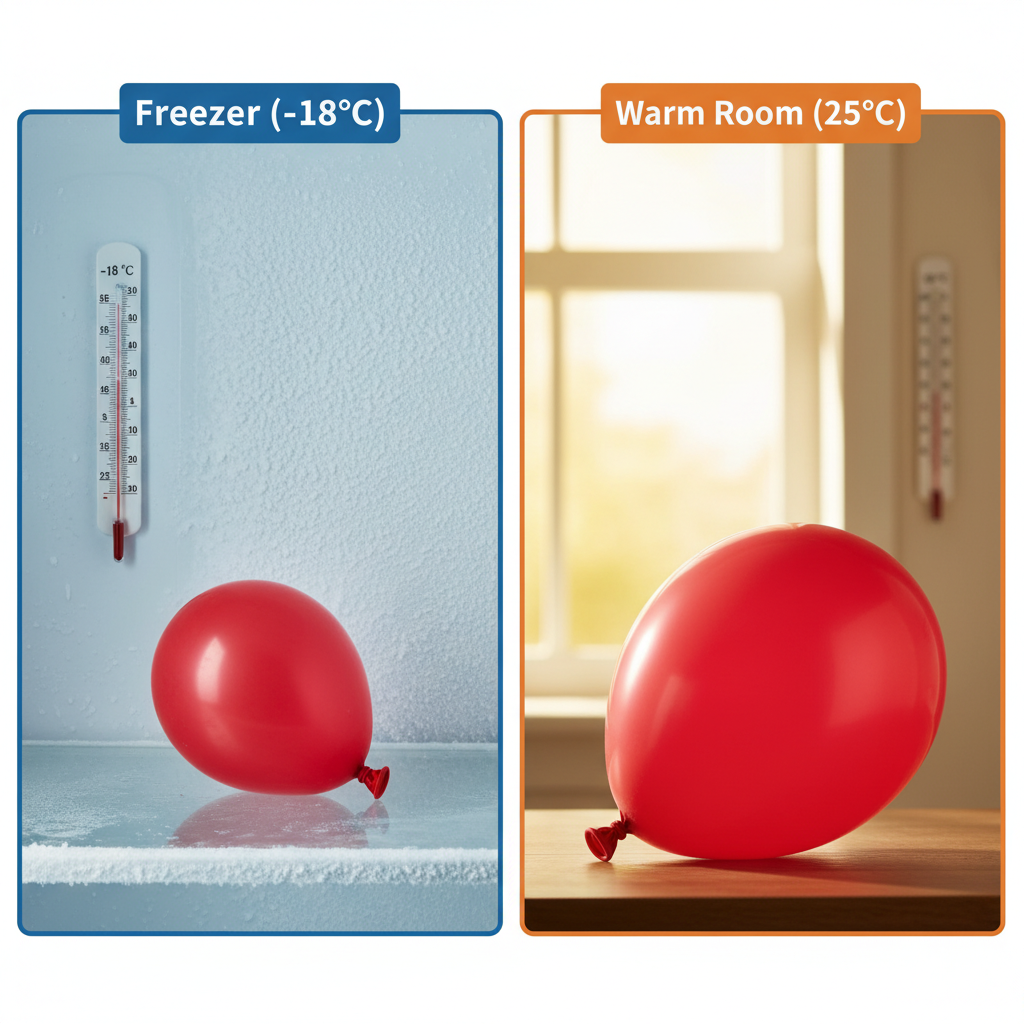
A sealed balloon is placed in a freezer and appears deflated. The same balloon is then moved to a warm room, where it appears inflated.
a
Describe the movement of air particles inside the balloon when it is in the freezer. [1]
b
Explain why the balloon inflates when moved from the freezer to the warm room. [2]
c
A student claims: "If the balloon is moved from the warm room into an even colder freezer than before, the balloon will shrink to a smaller size than it was originally." Analyse this claim using particle theory. [2]
Solutions
4QuestionApplications of Particle Theory in Real LifeAssessment Practice
8 marks~12 minCriterion D
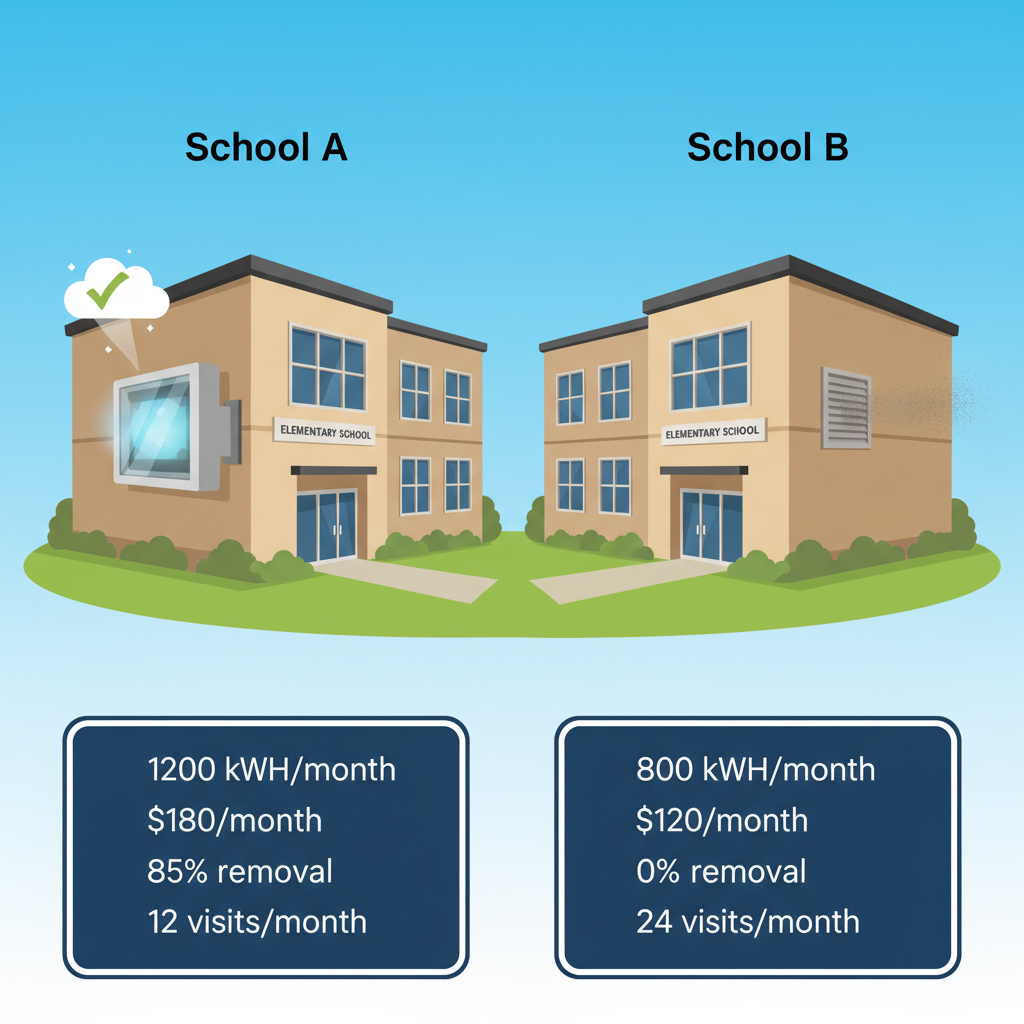
A city is piloting electrostatic precipitators — devices that use ionization to remove airborne particles — in one school.
School A (with precipitator): energy use 1200 kWh/month; cost 180 dollars/month; particle removal efficiency 85%; asthma-related visits 12 per month.
School B (without precipitator): energy use 800 kWh/month; cost 120 dollars/month; particle removal efficiency 0%; asthma-related visits 24 per month.
School A (with precipitator): energy use 1200 kWh/month; cost 180 dollars/month; particle removal efficiency 85%; asthma-related visits 12 per month.
School B (without precipitator): energy use 800 kWh/month; cost 120 dollars/month; particle removal efficiency 0%; asthma-related visits 24 per month.
a
Explain, using particle theory, how the precipitator removes particles from the air. [2]
b
Calculate the percentage change in asthma-related visits and the percentage change in energy use when the precipitator is installed. [2]
c
Analyse the data to decide whether the city should install precipitators in all schools. In your answer, refer to both the health data and the energy data, and identify one limitation of using this pilot study to make that decision. [4]
Solutions
That's every free question here — 4 of 80.
+76 more questions, plus Mock Papers & Worksheets, are waiting in Premium.