You're viewing free preview questions — 4 questions previewing here — subscribe to unlock 84 more, plus the Full Question Bank, Mock Papers & Worksheets.Upgrade
Reproductive Systems Introductory — Free MYP3 Sciences Practice Questions

1QuestionBasic Stages of Human ReproductionConcept Practice
2 marks~3 minCriterion A
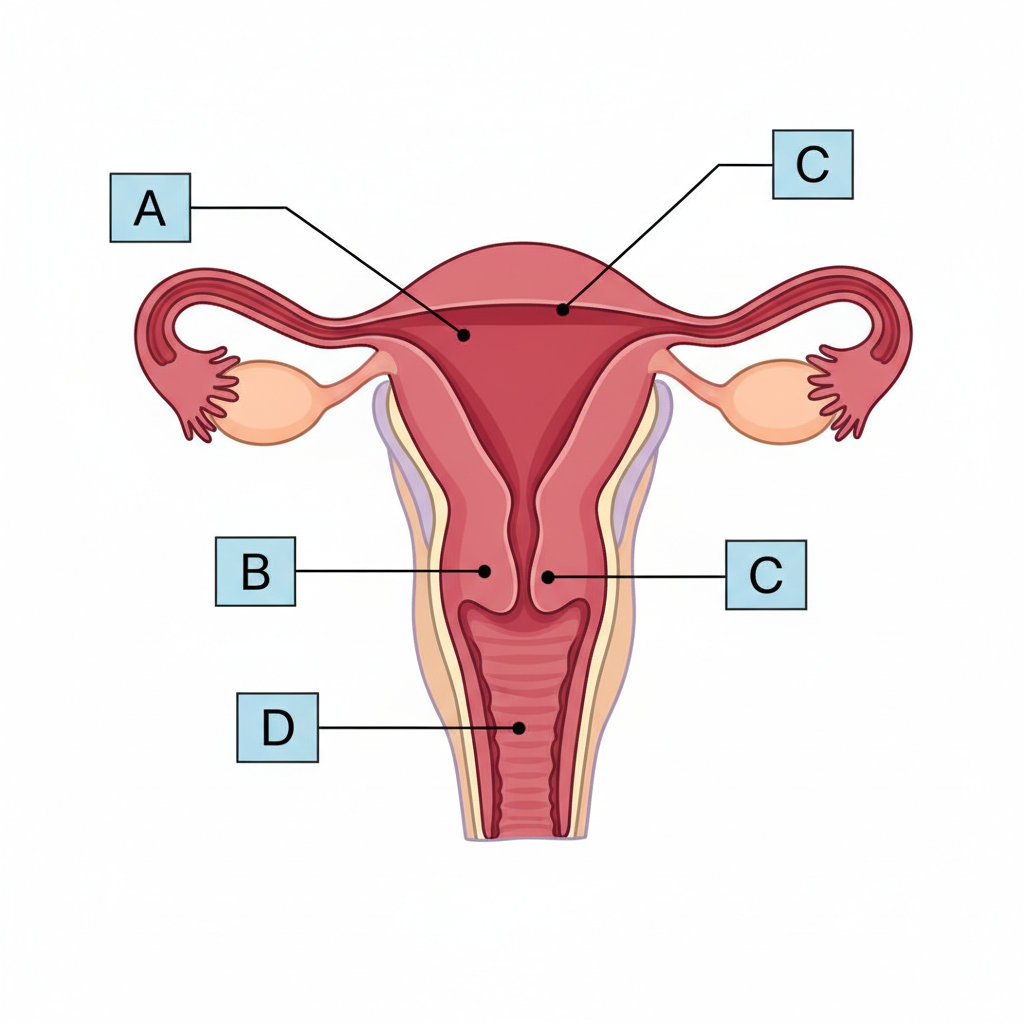
The diagram below shows the female reproductive system with four labeled structures: A (ovary), B (fallopian tube), C (uterus), and D (vagina).
a
Identify the letter that represents the structure where an egg is released during ovulation. [1]
b
Explain what happens to the egg immediately after it is released from that structure. [1]

Solutions
2QuestionImportance of Reproduction for Species ContinuityAssessment Practice
4 marks~6 minCriterion D
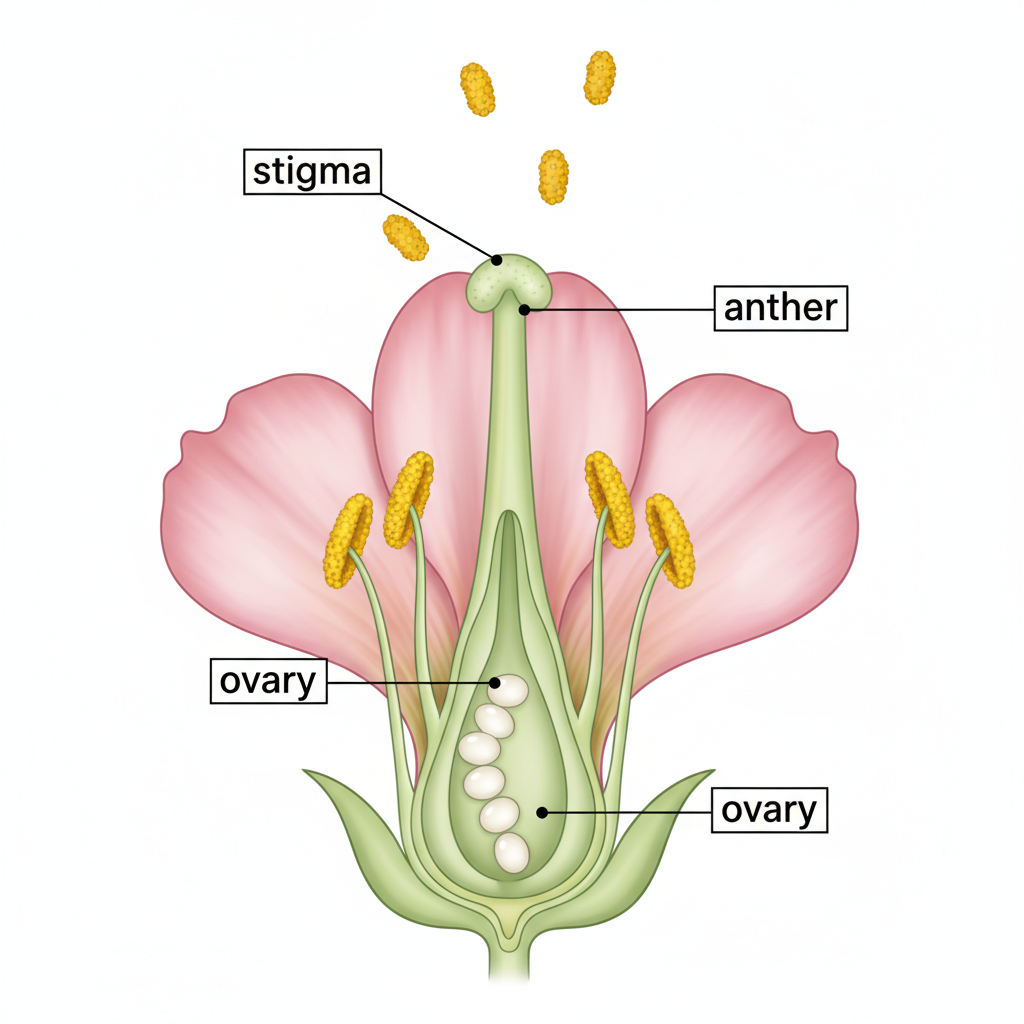
The diagram shows a flower with three labeled parts: stigma, anther, and ovary.
a
State the role of the anther in reproduction. [1]
b
Explain how the positions of the anther and stigma work together to allow pollination to occur. [2]
c
A plant species exists in two populations: one that relies only on self-pollination and one that relies only on cross-pollination. Analyse which population is more likely to survive a sudden change in environmental conditions, and justify your reasoning. [1]
Solutions
3QuestionBasic Stages of Human ReproductionConcept Practice
3 marks~5 minCriterion B
The table below shows the number of cells in a developing human embryo at various days after fertilization.
| Day (days after fertilization) | 1 | 2 | 3 | 4 |
|---|---|---|---|---|
| Number of cells | 1 | 2 | 4 | 8 |
a
Describe the trend in the number of cells shown in the table. [1]
b
Identify the biological process responsible for this trend. [1]
c
A student claims that by Day 5 the embryo will contain 16 cells. Using the data in the table, explain whether this claim is likely to be correct. [1]
Solutions
4QuestionImportance of Reproduction for Species ContinuityAssessment Practice
5 marks~8 minCriterion C
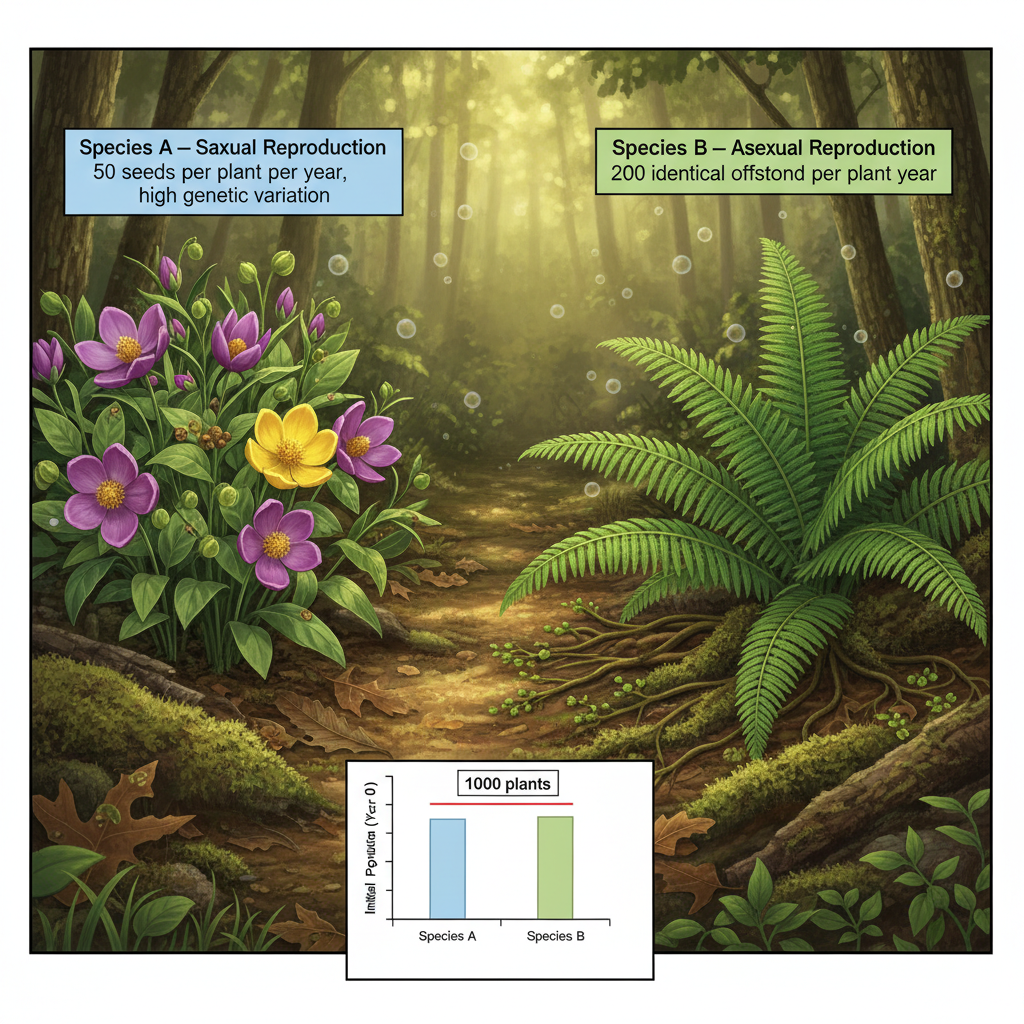
A scientist studied two plant species in a forest affected by a fungal disease. Species A reproduces sexually, producing 50 seeds per plant per year with high genetic variation. Species B reproduces asexually, producing 200 identical offspring per plant per year.
Survivors recorded over three years:
Survivors recorded over three years:
| Species A | Year 1 = 1000 | Year 2 = 750 | Year 3 = 600 |
|---|---|---|---|
| Species B | Year 1 = 1000 | Year 2 = 400 | Year 3 = 100 |
a
Calculate the percentage survival rate of each species from Year 1 to Year 2. [2]
b
Explain why Species A shows greater resistance to the fungal disease than Species B, despite producing fewer offspring. [2]
c
Using the data and your understanding of genetic variation, evaluate the claim: "Asexual reproduction is always better for species continuity because it produces more offspring faster." [1]
Solutions
That's every free question here — 4 of 88.
+84 more questions, plus Mock Papers & Worksheets, are waiting in Premium.