You're viewing free preview questions — 4 questions previewing here — subscribe to unlock 79 more, plus the Full Question Bank, Mock Papers & Worksheets.Upgrade
Respiratory and Circulatory Systems — Free MYP3 Sciences Practice Questions

1QuestionBlood Vessels Arteries Veins CapillariesConcept Practice
2 marks~3 minCriterion A
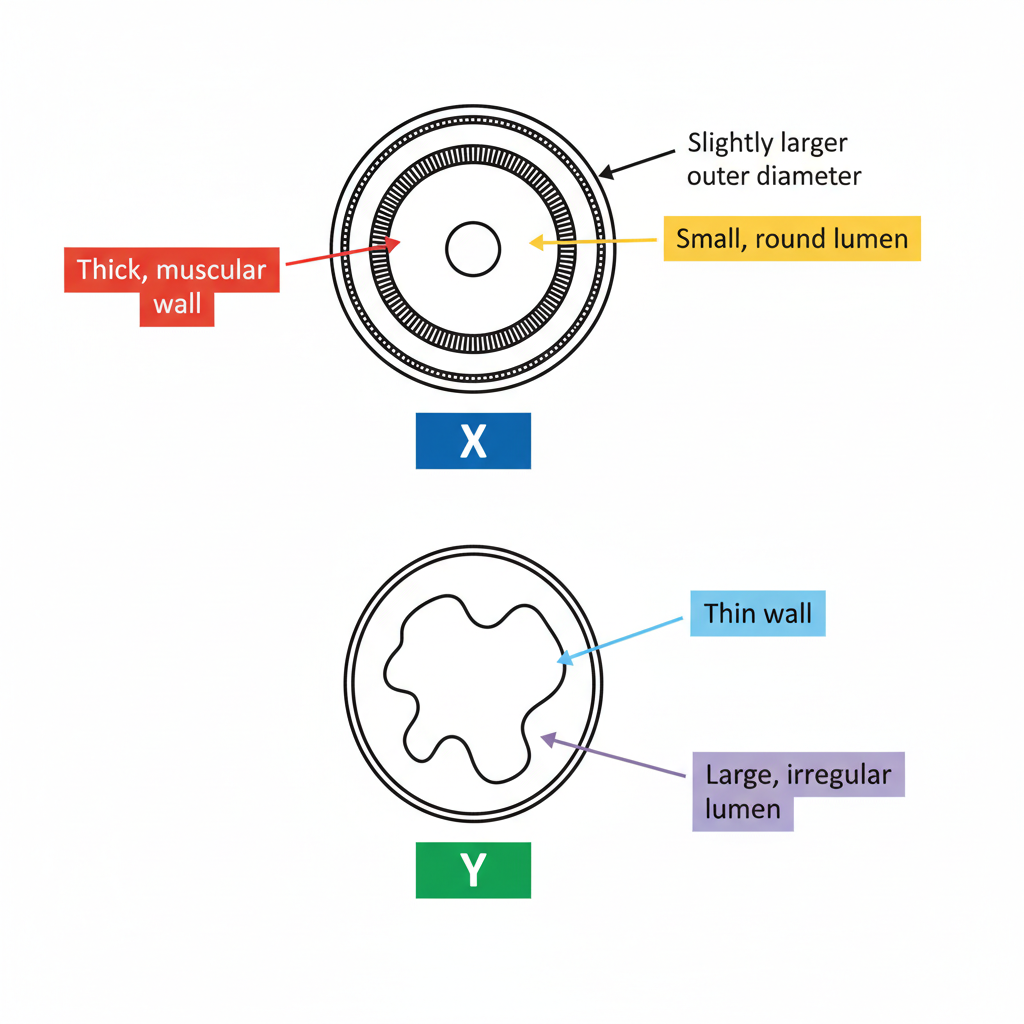
The diagram shows a cross-section of two blood vessels, labelled X and Y.
a
Identify which vessel is an artery. [1]
b
Describe one visible structural difference between vessel X and vessel Y shown in the cross-section. [1]

Solutions
2QuestionBlood Vessels Arteries Veins CapillariesAssessment Practice
6 marks~9 minCriterion C
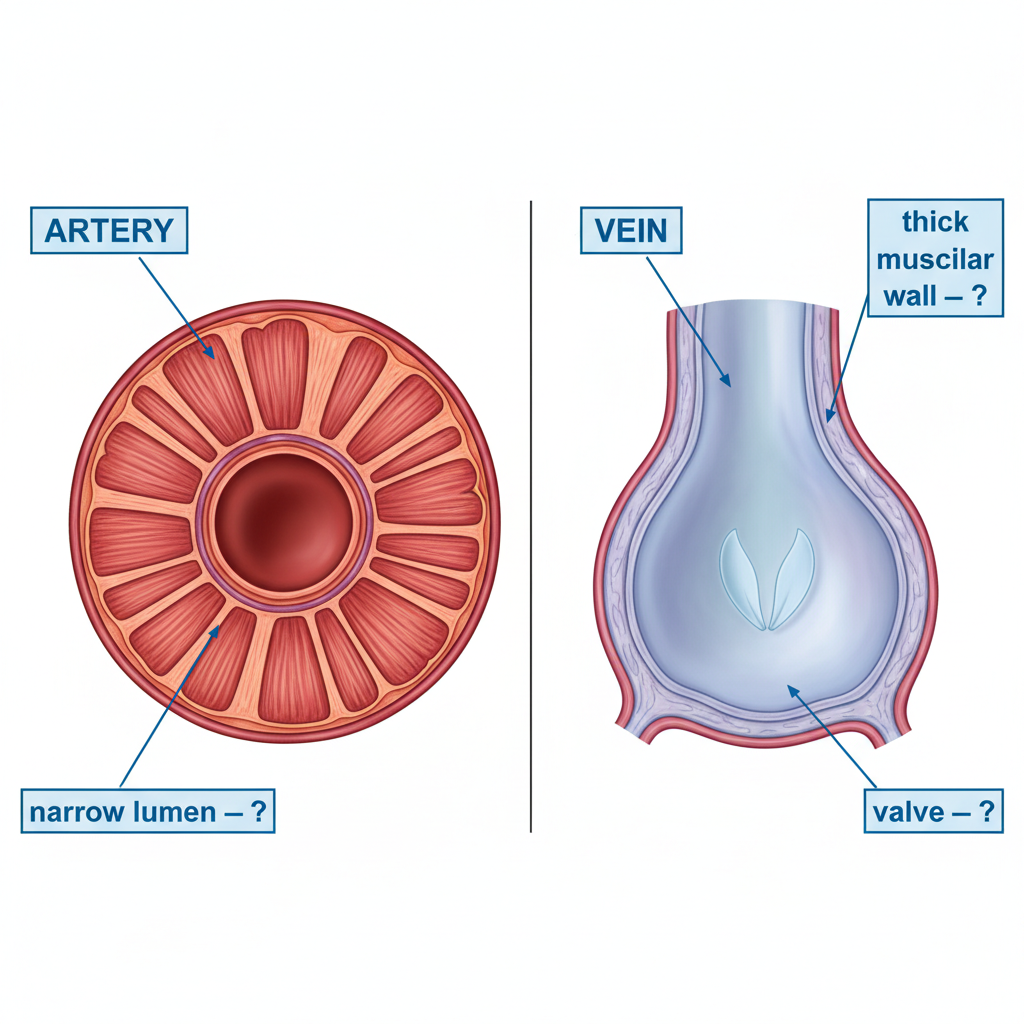
During exercise, blood flow to leg muscles increases while blood flow to the digestive system decreases. The structure of arteries and veins allows the body to redirect blood efficiently.
a
Describe two structural features of arteries that allow them to carry blood at high pressure to the leg muscles during exercise. [2]
b
Explain how the structure of veins helps return deoxygenated blood from the legs to the heart during exercise. [2]
c
A student uses a heart rate monitor during a 100-metre sprint and concludes that a higher heart rate means more blood is reaching the leg muscles. Analyse one reason why this conclusion may not be valid. [2]
Solutions
3QuestionBlood Vessels Arteries Veins CapillariesAssessment Practice
8 marks~12 minCriterion D
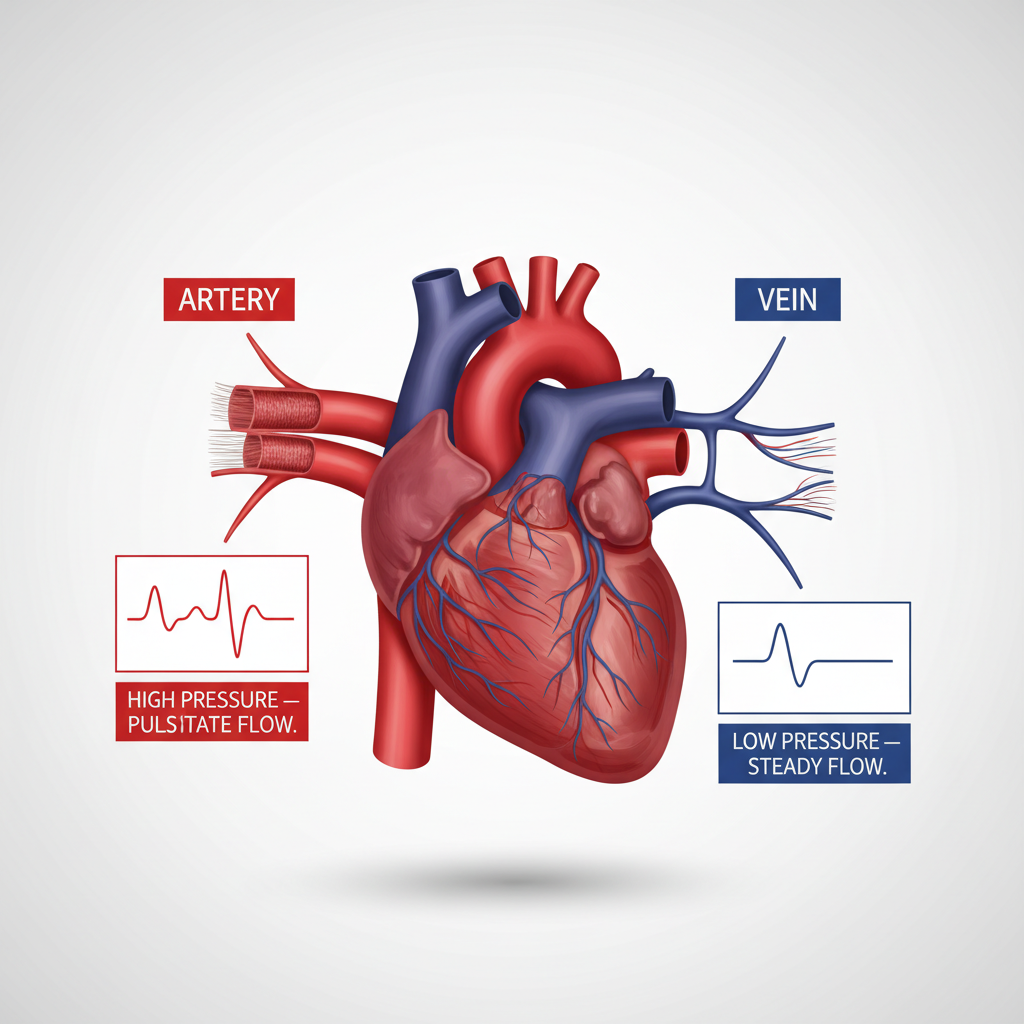
A biomedical engineering firm is developing a synthetic blood vessel for heart bypass surgery. The vessel must withstand high pressure and pulsatile (rhythmic) blood flow near the heart.
a
Compare the wall structure of arteries and veins. Give two structural differences in your answer. [2]
b
Explain why the synthetic vessel should be designed to mimic an artery rather than a vein. [2]
c
The firm plans to test the synthetic vessel on animals before human trials. Analyse the ethical implications of this decision, considering both animal welfare and the potential benefit to human health. [4]
Solutions
4QuestionGas Exchange in the AlveoliAssessment Practice
6 marks~9 minCriterion B
The table below shows the number of alveoli and the oxygen uptake rate for three mammal species.
| Species | Mouse | Rabbit | Human |
|---|---|---|---|
| Number of alveoli (millions) | 5 | 50 | 300 |
| Oxygen uptake rate (mL /min) | 12 | 100 | 600 |
a
Describe the relationship between the number of alveoli and the oxygen uptake rate. [2]
b
A cat has 200 million alveoli. Calculate its predicted oxygen uptake rate and explain how you used the data to reach your answer. [2]
c
The actual oxygen uptake rate for a cat is 400 mL /min. Compare this value with your prediction and analyse one biological reason that could account for a difference between predicted and actual values in any species. [2]
Solutions
That's every free question here — 4 of 83.
+79 more questions, plus Mock Papers & Worksheets, are waiting in Premium.