You're viewing free preview questions — 5 questions previewing here — subscribe to unlock 46 more, plus the Full Question Bank, Mock Papers & Worksheets.Upgrade
Cloning — Free MYP4 Biology Practice Questions

1QuestionReproductive Cloning TechniquesConcept Practice
3 marks~5 minCriterion C
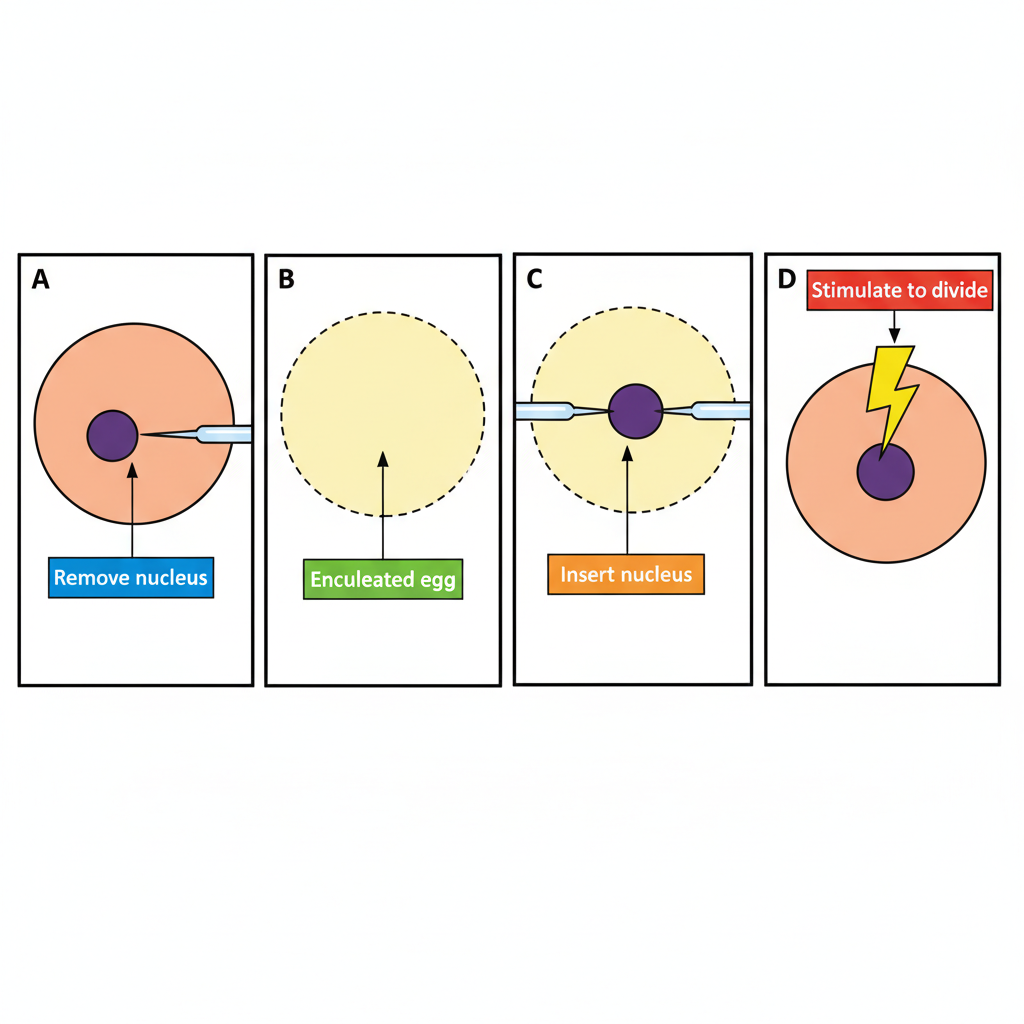
The diagram below shows four stages (A, B, C, D) of the somatic cell nuclear transfer (SCNT) process used in reproductive cloning. Stage A shows a somatic cell with its nucleus being removed. Stage B shows an enucleated egg cell. Stage C shows the somatic cell nucleus being inserted into the enucleated egg cell. Stage D shows the reconstructed egg cell being stimulated to divide.
Describe in your own words, using accurate biological terminology, what is happening at Stage A and Stage D. Your description should clearly explain the purpose of each stage in the cloning process.
Describe in your own words, using accurate biological terminology, what is happening at Stage A and Stage D. Your description should clearly explain the purpose of each stage in the cloning process.

Solutions
2QuestionCloning Efficiency and LimitationsAssessment Practice
3 marks~5 minCriterion A
Data
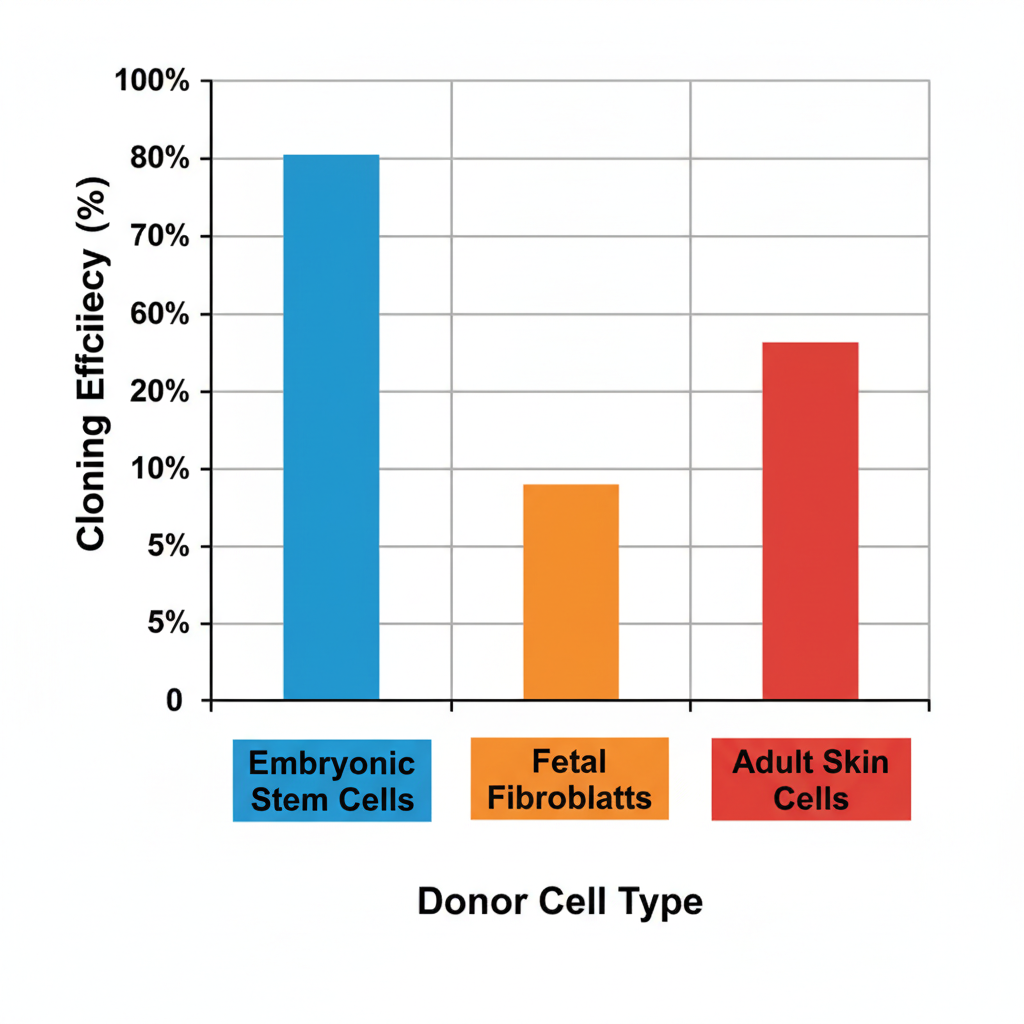
- Embryonic stem cells: ~80%- Fetal fibroblasts: ~20%
- Adult skin cells: ~5%
The bar graph below shows cloning efficiency (percentage of nuclear transfer attempts developing into live offspring) for three donor cell types used in somatic cell nuclear transfer (SCNT).
x-axis: Donor Cell Type (embryonic stem cells; fetal fibroblasts; adult skin cells)
y-axis: Cloning Efficiency (%) — scale 0 to 100
x-axis: Donor Cell Type (embryonic stem cells; fetal fibroblasts; adult skin cells)
y-axis: Cloning Efficiency (%) — scale 0 to 100
a
Describe the trend in cloning efficiency shown in the graph. [1]
b
Explain how the level of cell differentiation accounts for the differences in cloning efficiency between embryonic stem cells and adult skin cells. [1]
c
Analyse why adult skin cells produce a cloning efficiency of only ~5%, despite containing a complete copy of the organism's genome. [1]
Solutions
3QuestionTherapeutic Cloning and Stem CellsConcept Practice
3 marks~5 minCriterion A
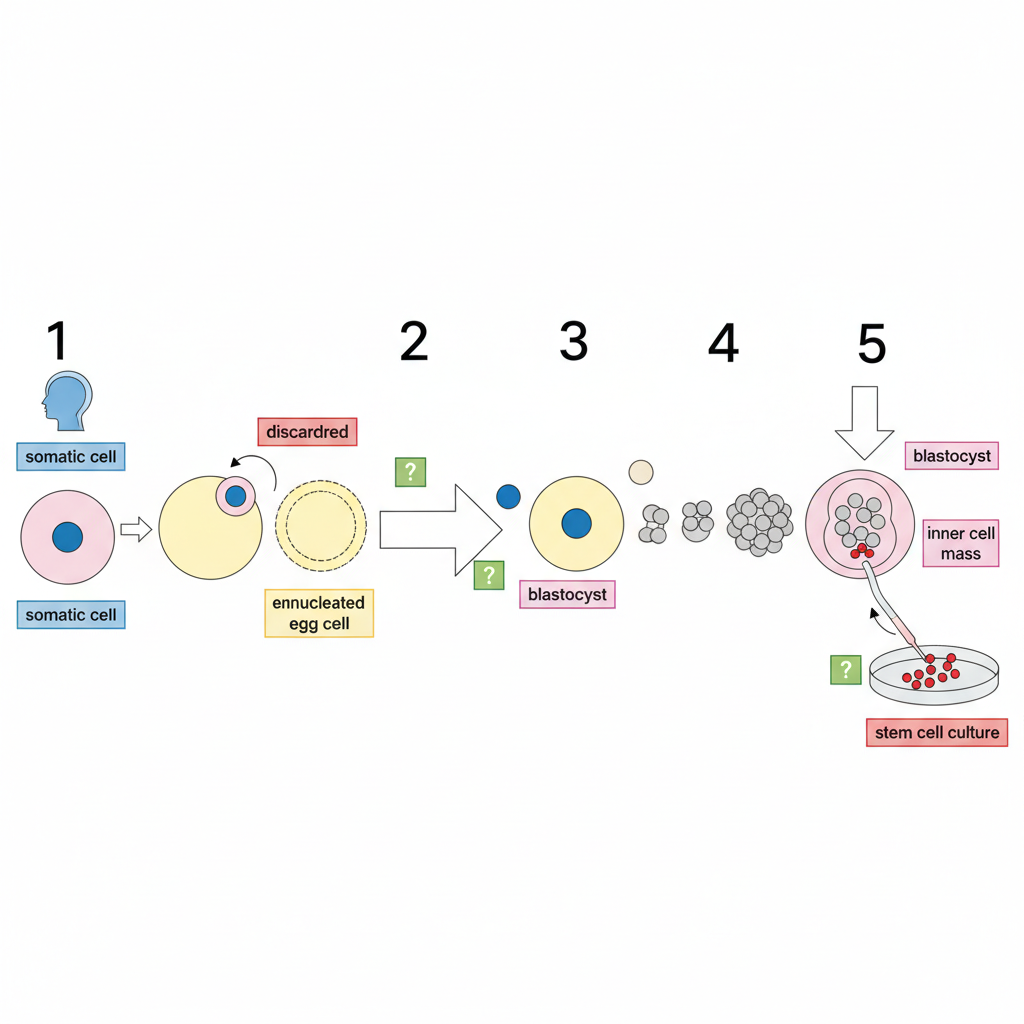
The diagram below shows the key steps of therapeutic cloning using somatic cell nuclear transfer (SCNT).
Step 1: A somatic cell is taken from a patient.
Step 2: An egg cell is obtained from a donor and its nucleus is removed (enucleated egg).
Step 3: The nucleus from the somatic cell is inserted into the enucleated egg cell.
Step 4: The egg cell is stimulated to divide and develops into a blastocyst.
Step 5: Stem cells are harvested from the inner cell mass of the blastocyst.
Step 1: A somatic cell is taken from a patient.
Step 2: An egg cell is obtained from a donor and its nucleus is removed (enucleated egg).
Step 3: The nucleus from the somatic cell is inserted into the enucleated egg cell.
Step 4: The egg cell is stimulated to divide and develops into a blastocyst.
Step 5: Stem cells are harvested from the inner cell mass of the blastocyst.
a
Identify the step in which the somatic cell nucleus is inserted into the enucleated egg cell. [1]
b
Explain why the stem cells harvested in Step 5 are genetically identical to the patient, not to the egg cell donor. [2]
Solutions
4QuestionCloning in Biodiversity ConservationAssessment Practice
3 marks~5 minCriterion C
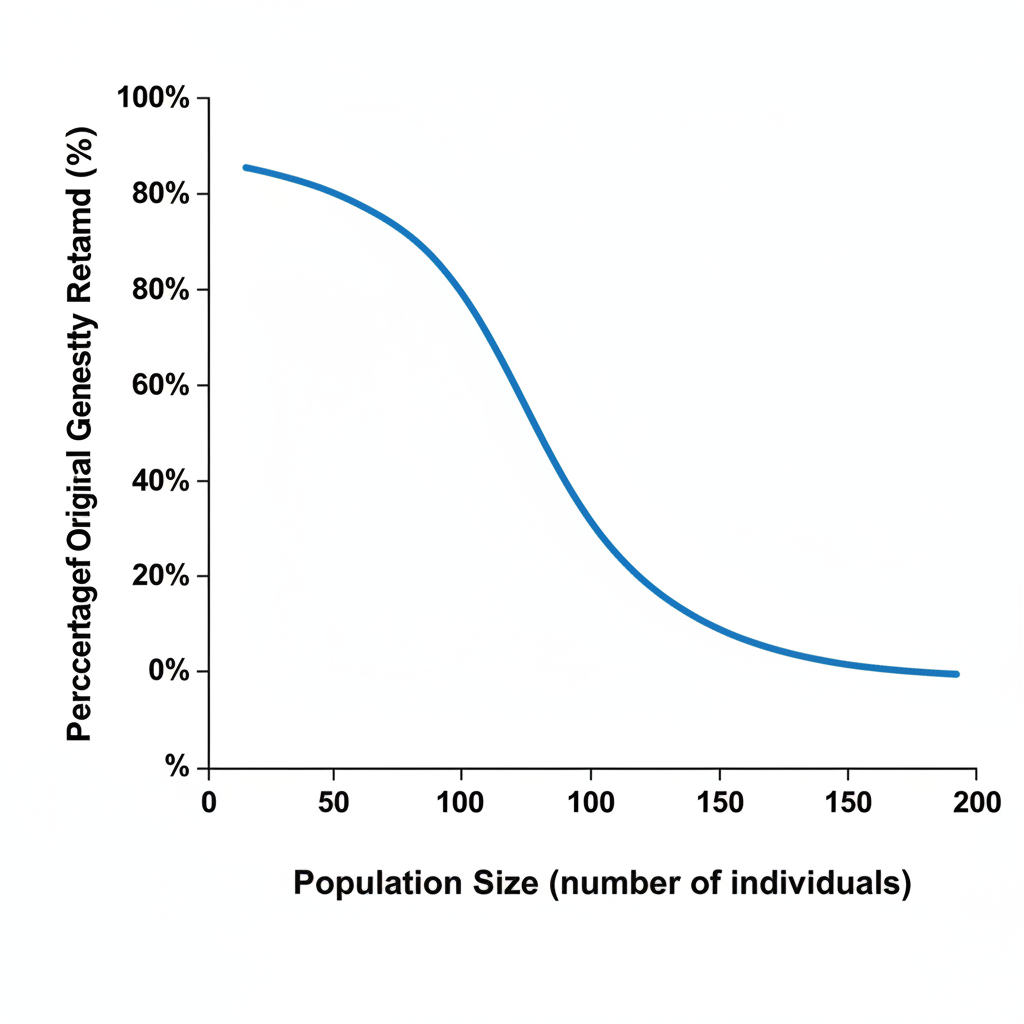
The graph below shows the percentage of original genetic diversity retained after three generations of captive breeding in black-footed ferrets, plotted against population size. A population of 10 individuals retains approximately 60% of original genetic diversity, while a population of 100 individuals retains approximately 95%.
a
Describe the trend shown in the graph. [1]
b
Explain why smaller populations lose genetic diversity faster than larger ones. [1]
c
Explain why genetic diversity loss is especially severe in a cloned population that begins with genetically identical individuals. [1]
Solutions
5QuestionCloning in Biodiversity ConservationAssessment Practice
5 marks~8 minCriterion D
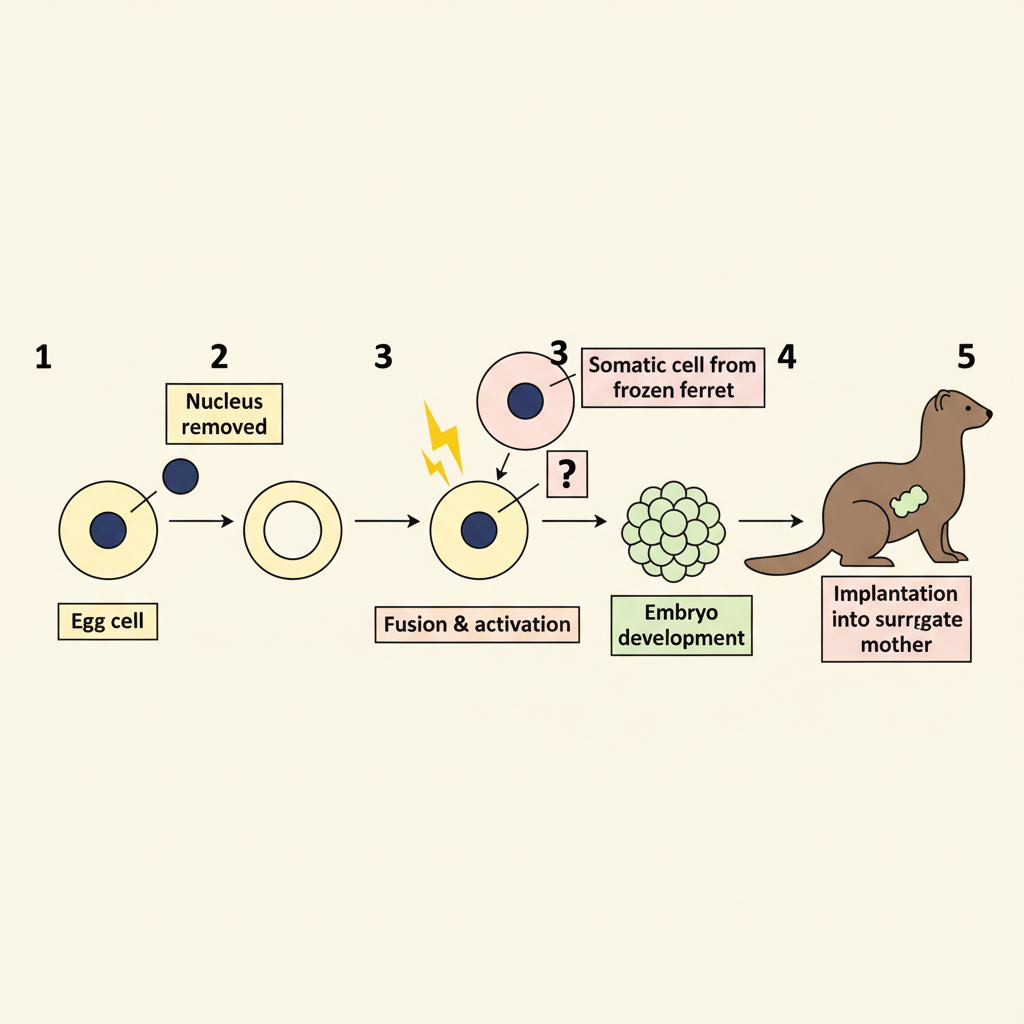
In 2020, scientists successfully cloned a black-footed ferret (Mustela nigripes) — one of North America's most endangered mammals — using a frozen somatic cell from a ferret that had died over 30 years earlier. The process involved the following steps:
(1) Enucleation of a donor egg cell
(2) Insertion of the somatic cell nucleus from the frozen ferret
(3) Fusion and activation of the reconstructed cell
(4) Development into an embryo
(5) Implantation into a surrogate mother
(1) Enucleation of a donor egg cell
(2) Insertion of the somatic cell nucleus from the frozen ferret
(3) Fusion and activation of the reconstructed cell
(4) Development into an embryo
(5) Implantation into a surrogate mother
a
Identify which step in the diagram represents nuclear transfer. [1]
b
Explain why the egg cell must be enucleated before the donor nucleus is inserted. [2]
c
Analyse how cloning from preserved cells of deceased individuals could affect the long-term survival prospects of a critically endangered population such as the black-footed ferret. [2]
Solutions
That's every free question here — 5 of 51.
+46 more questions, plus Mock Papers & Worksheets, are waiting in Premium.