You're viewing free preview questions — 5 questions previewing here — subscribe to unlock 67 more, plus the Full Question Bank, Mock Papers & Worksheets.Upgrade
Genetic modification — Free MYP4 Biology Practice Questions

1QuestionMedical Applications of Genetic ModificationConcept Practice
2 marks~3 minCriterion A
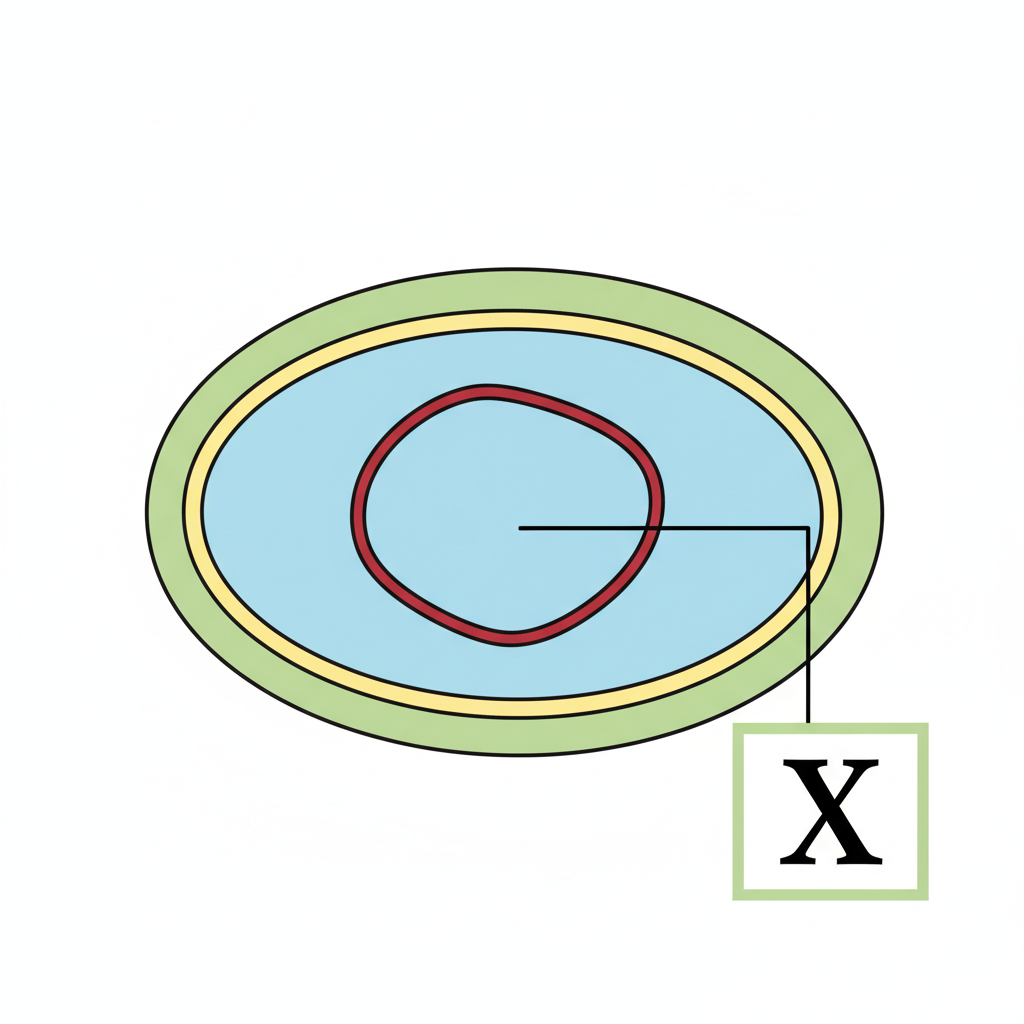
A genetically modified bacterium is used to manufacture human insulin for diabetic patients. The bacterium contains a small, circular piece of DNA, labelled X in the diagram, which has been introduced into the cell during the genetic modification process.
a
Identify structure X. [1]
b
Explain how structure X enables the bacterium to produce human insulin. [1]

Solutions
2QuestionCRISPR-Cas9 Gene Editing TechnologyAssessment Practice
3 marks~5 minCriterion A
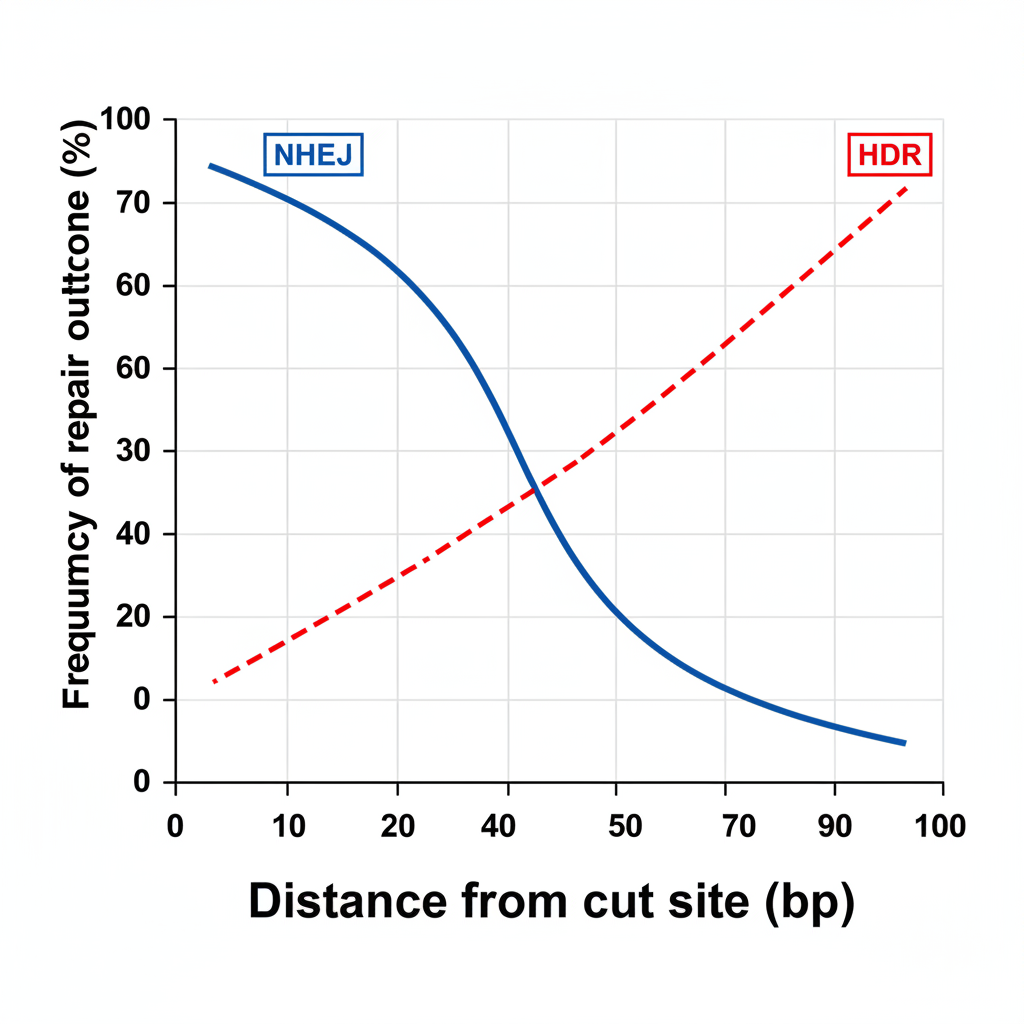
When CRISPR-Cas9 creates a double-strand break, the cell can repair it using either Non-Homologous End Joining (NHEJ) or Homology-Directed Repair (HDR). The graph below shows how the frequency of each pathway changes as the distance from the Cas9 cut site increases from 0 to 100 base pairs.
Explain the trend in DNA repair pathway choice as the distance from the Cas9 cut site increases. In your answer:
Explain the trend in DNA repair pathway choice as the distance from the Cas9 cut site increases. In your answer:
a
Describe the trend shown for both NHEJ and HDR frequencies. [1]
b
Explain why NHEJ frequency decreases as distance from the cut site increases. [1]
c
Explain why HDR frequency increases as distance from the cut site increases. [1]
Solutions
3QuestionGenetically Modified Crops and Agricultural ApplicationsConcept Practice
3 marks~5 minCriterion C
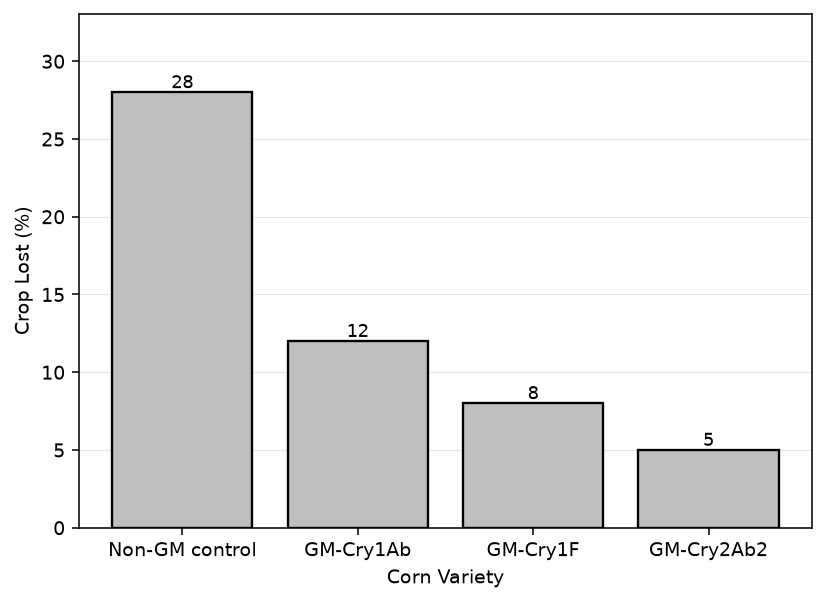
The bar chart below shows the percentage of crop lost to pests for four corn varieties grown under identical conditions.
Crop lost (%):
Non-GM control: 28%
GM-Cry1Ab: 12%
GM-Cry1F: 8%
GM-Cry2Ab2: 5%
Each GM variety has been engineered to express a different Bt protein (Cry1Ab, Cry1F, or Cry2Ab2).
Crop lost (%):
Non-GM control: 28%
GM-Cry1Ab: 12%
GM-Cry1F: 8%
GM-Cry2Ab2: 5%
Each GM variety has been engineered to express a different Bt protein (Cry1Ab, Cry1F, or Cry2Ab2).
a
State which GM variety provides the greatest reduction in crop loss compared to the non-GM control. [1]
b
Explain why all three GM varieties show lower pest damage than the non-GM control. [1]
c
Analyse what the differences in crop loss among the three GM varieties suggest about the Bt proteins they express. [1]
Solutions
4QuestionPest Resistance through Genetic EngineeringAssessment Practice
6 marks~9 minCriterion D
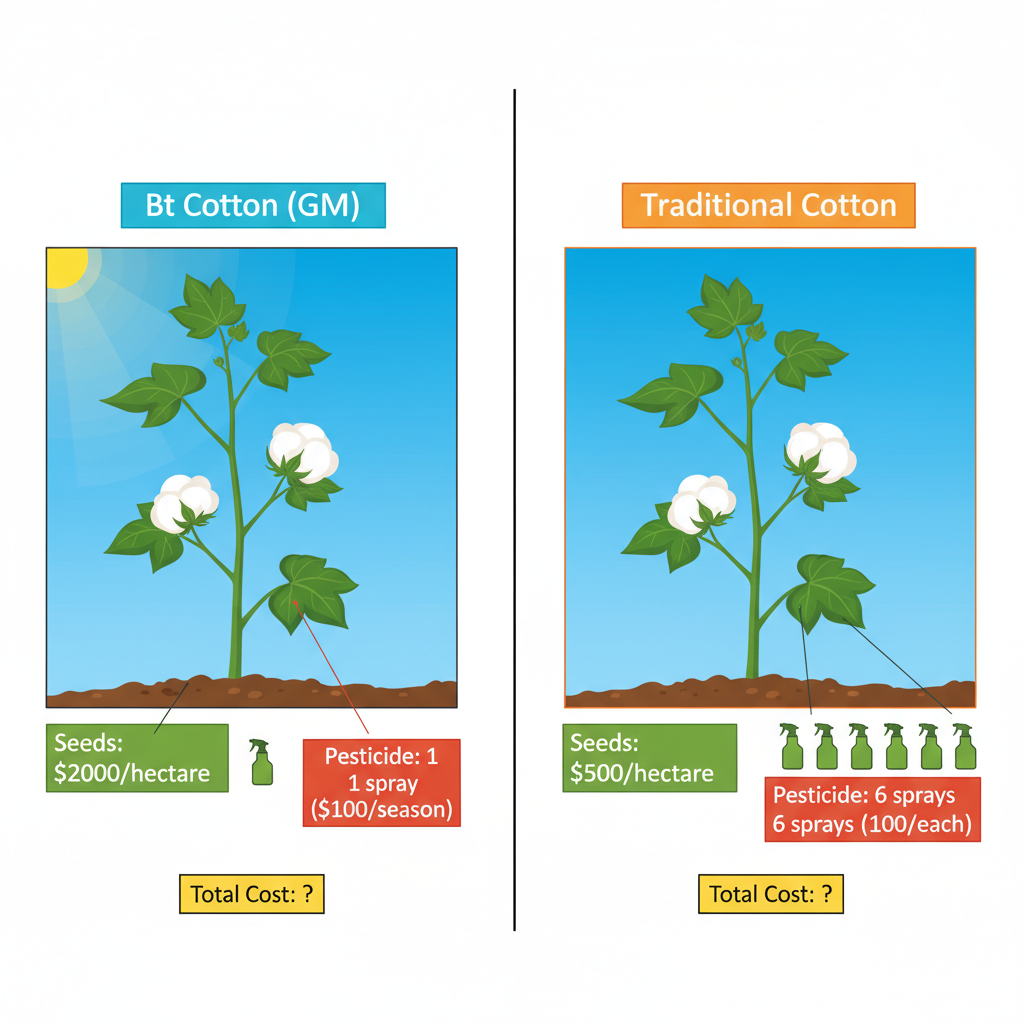
A farmer in India is choosing between Bt cotton, genetically modified to produce a toxin lethal to bollworm pests, and traditional cotton. The costs per hectare are:
Bt cotton seeds: 2000 dollars
Traditional cotton seeds: 500 dollars
Pesticide cost: 100 dollars per spray
Pesticide sprays per season — Bt cotton: 1 spray; traditional cotton: 6 sprays
Expected yield per hectare is identical for both varieties.
Bt cotton seeds: 2000 dollars
Traditional cotton seeds: 500 dollars
Pesticide cost: 100 dollars per spray
Pesticide sprays per season — Bt cotton: 1 spray; traditional cotton: 6 sprays
Expected yield per hectare is identical for both varieties.
a
Calculate the total cost per hectare for each cotton type and deduce which option is more cost-effective for the farmer. [2]
b
Discuss the ethical trade-offs between the farmer's short-term financial gain and the broader ecological consequences of adopting Bt cotton. [2]
c
Evaluate the limitations of using cost per hectare as the sole basis for this decision, identifying long-term biological and economic factors the calculation ignores. [2]
Solutions
5QuestionGene Transfer and Environmental ImpactAssessment Practice
6 marks~9 minCriterion D
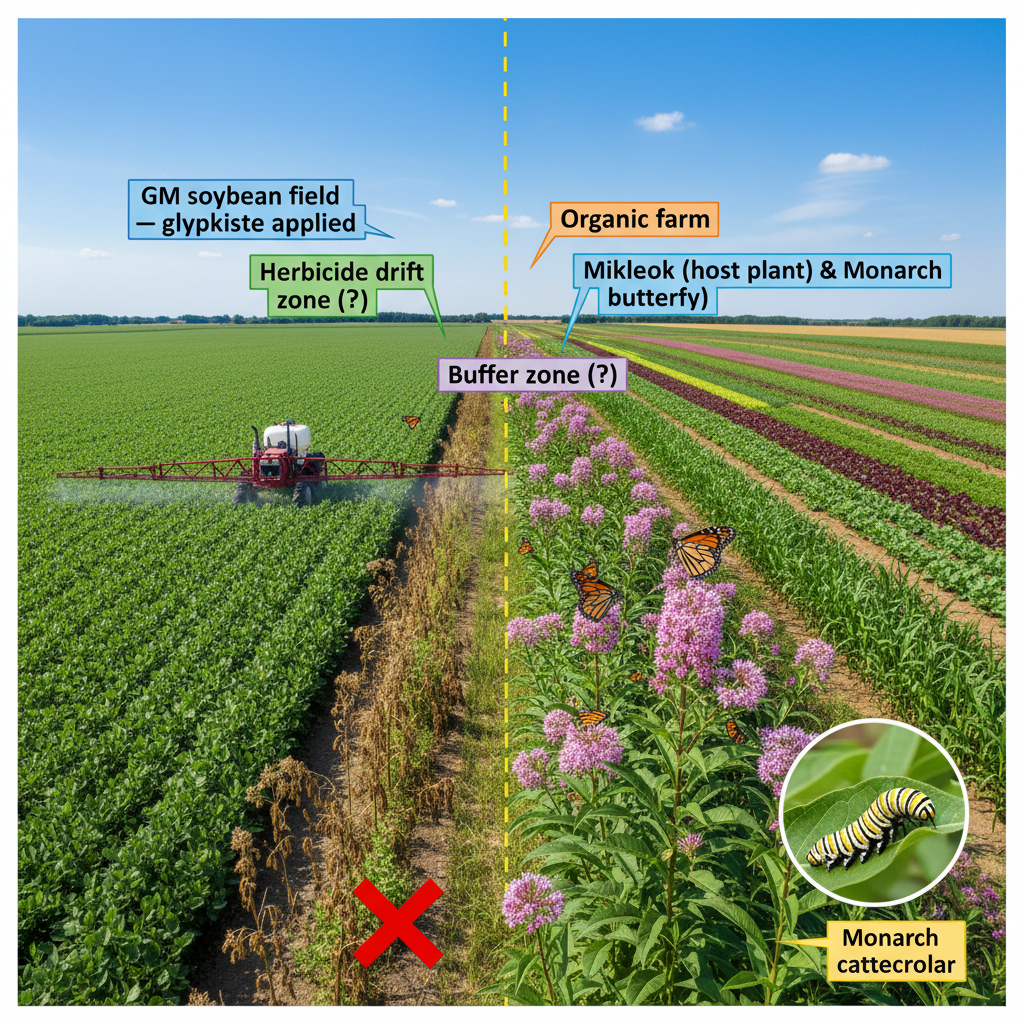
A Midwest farmer grows glyphosate-resistant GM soybeans, applying glyphosate broadly to eliminate competing weeds. Neighbouring organic farms report a sharp decline in monarch butterfly populations, attributed to the near-disappearance of milkweed — the sole larval host plant for monarchs — from field margins and surrounding land.
a
Identify two agricultural advantages of growing herbicide-tolerant GM soybeans. [2]
b
Explain how the widespread use of glyphosate on this farm could lead to the decline in monarch butterfly populations observed on neighbouring farms. [2]
c
Discuss the limitations of short-term field trials (1–3 years) for assessing the long-term environmental impact of herbicide-tolerant GM crops on ecosystems such as the one described. [2]
Solutions
That's every free question here — 5 of 72.
+67 more questions, plus Mock Papers & Worksheets, are waiting in Premium.