You're viewing free preview questions — 5 questions previewing here — subscribe to unlock 56 more, plus the Full Question Bank, Mock Papers & Worksheets.Upgrade
Genome mapping and application — Free MYP4 Biology Practice Questions

1QuestionHuman Genome Project OverviewConcept Practice
2 marks~3 minCriterion A
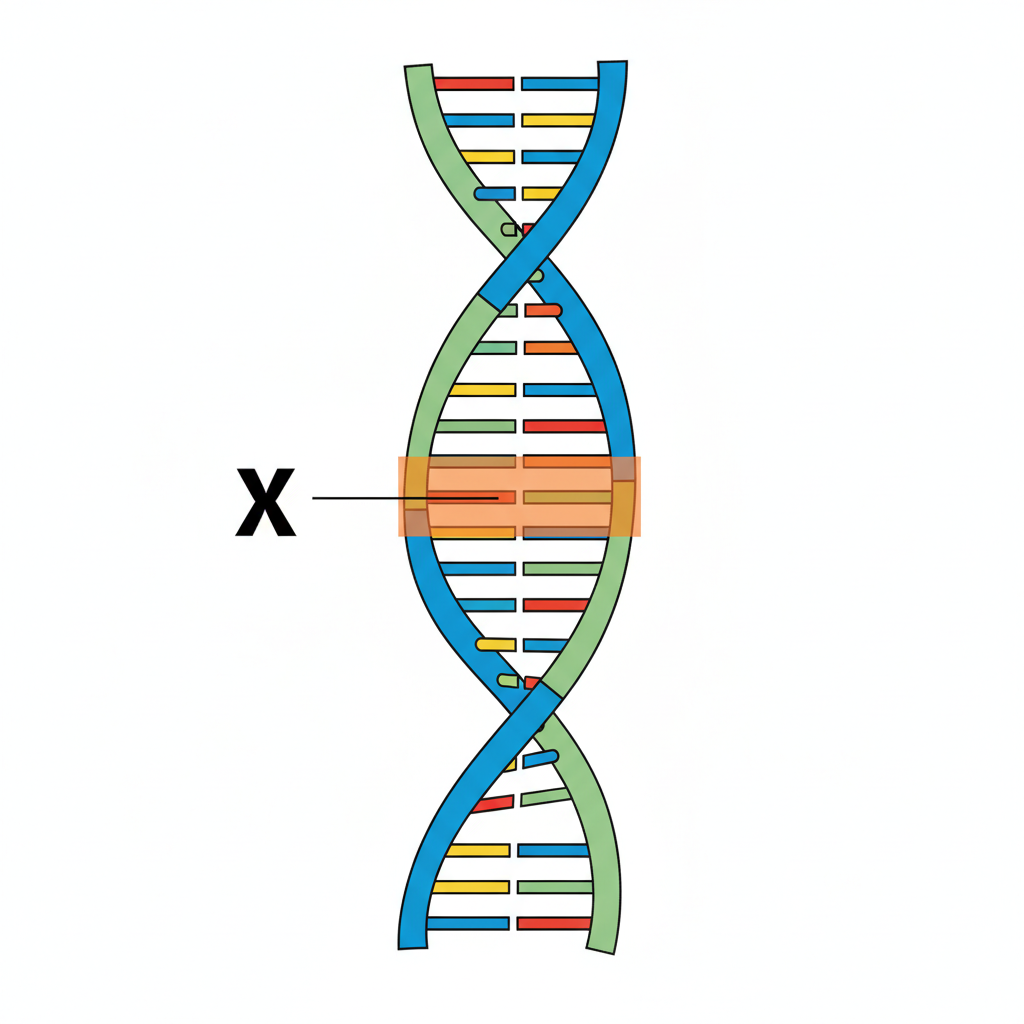
The diagram shows a DNA double helix with a highlighted region labelled X.
a
Identify the biological structure represented by X. [1]
b
Explain why mapping structures such as X was the central goal of the Human Genome Project. [1]

Solutions
2QuestionDNA Profiling in Forensic ScienceAssessment Practice
2 marks~3 minCriterion A
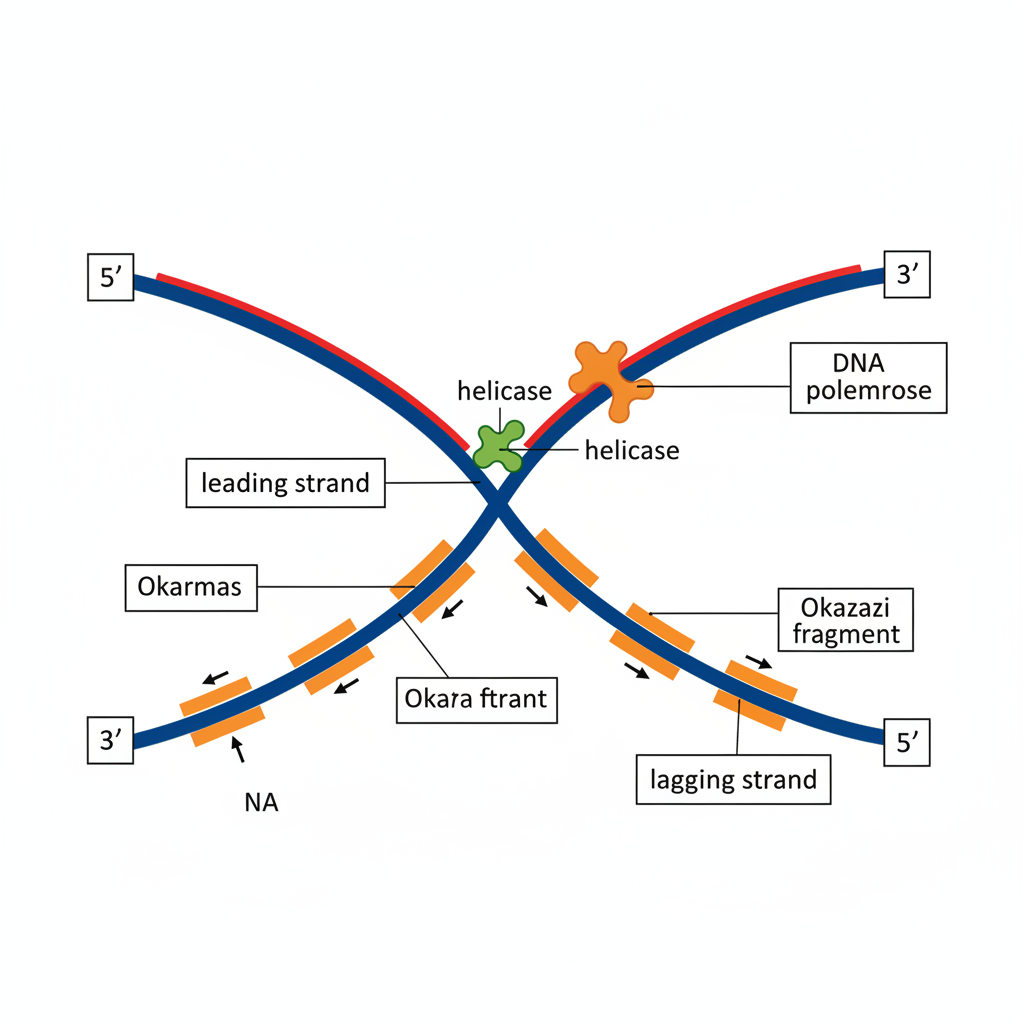
During DNA replication, a replication fork forms as the double helix is unwound.
The diagram below shows a replication fork with two template strands being copied simultaneously.
The diagram below shows a replication fork with two template strands being copied simultaneously.
a
State the role of helicase at the replication fork. [1]
b
Explain why DNA polymerase synthesises the lagging strand discontinuously, producing Okazaki fragments, while the leading strand is synthesised continuously. [1]
Solutions
3QuestionDNA Profiling in Forensic ScienceAssessment Practice
5 marks~8 minCriterion C
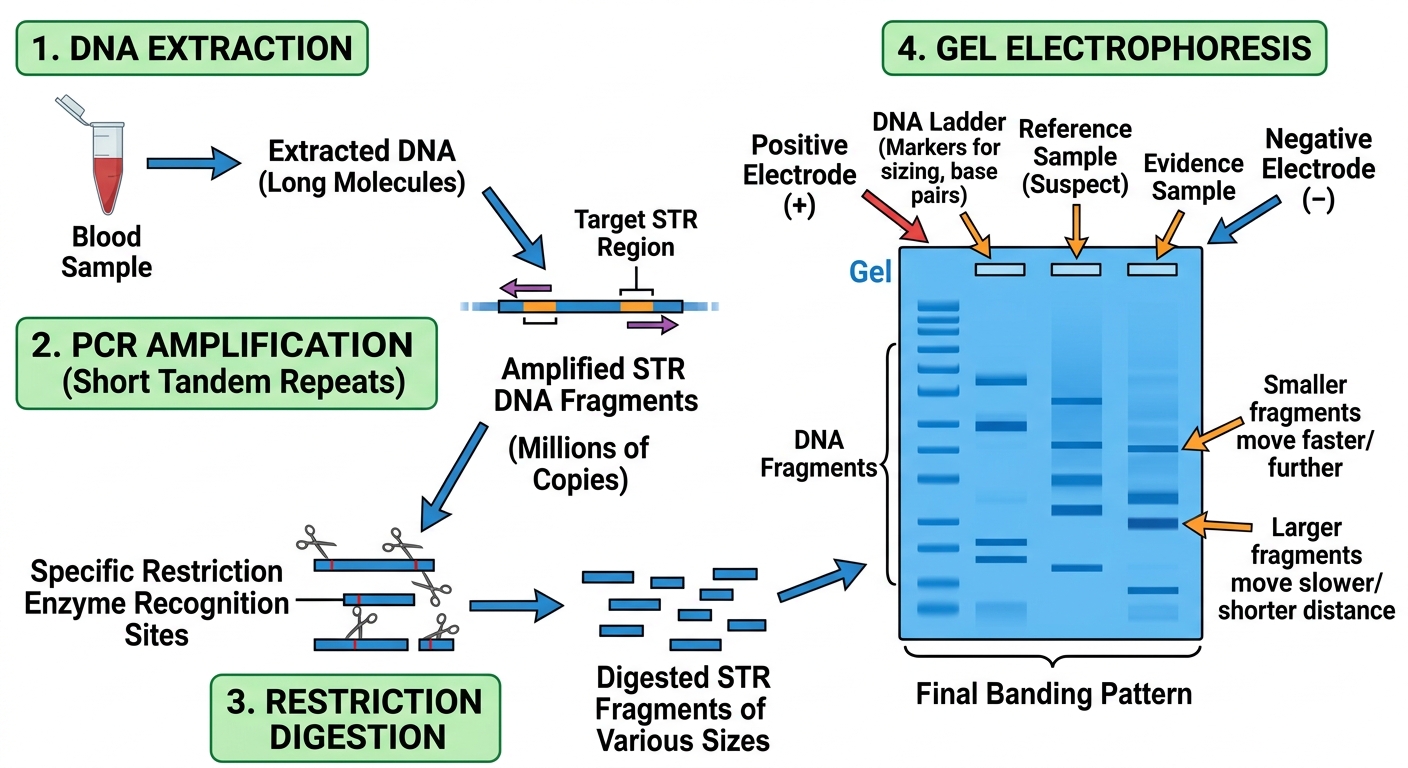
A forensic laboratory receives a blood sample from a crime scene. Technicians extract DNA, amplify specific short tandem repeat (STR) regions using PCR, digest the amplified DNA with restriction endonucleases, and separate the resulting fragments by gel electrophoresis. The diagram shows the gel result alongside a reference ladder.
A detective reviews the gel and states: "This profile directly shows the DNA sequence of the suspect."
A detective reviews the gel and states: "This profile directly shows the DNA sequence of the suspect."
a
State whether the detective's claim is correct and identify what the banding pattern actually represents. [1]
b
Explain the purpose of PCR amplification of STR regions and restriction digestion in producing the fragments seen on the gel. [2]
c
Evaluate the detective's claim by analysing how gel electrophoresis produces the final banding pattern and why this cannot reveal nucleotide sequence information. [2]
Solutions
4QuestionData Privacy and Risks in Genomic ResearchAssessment Practice
6 marks~9 minCriterion D
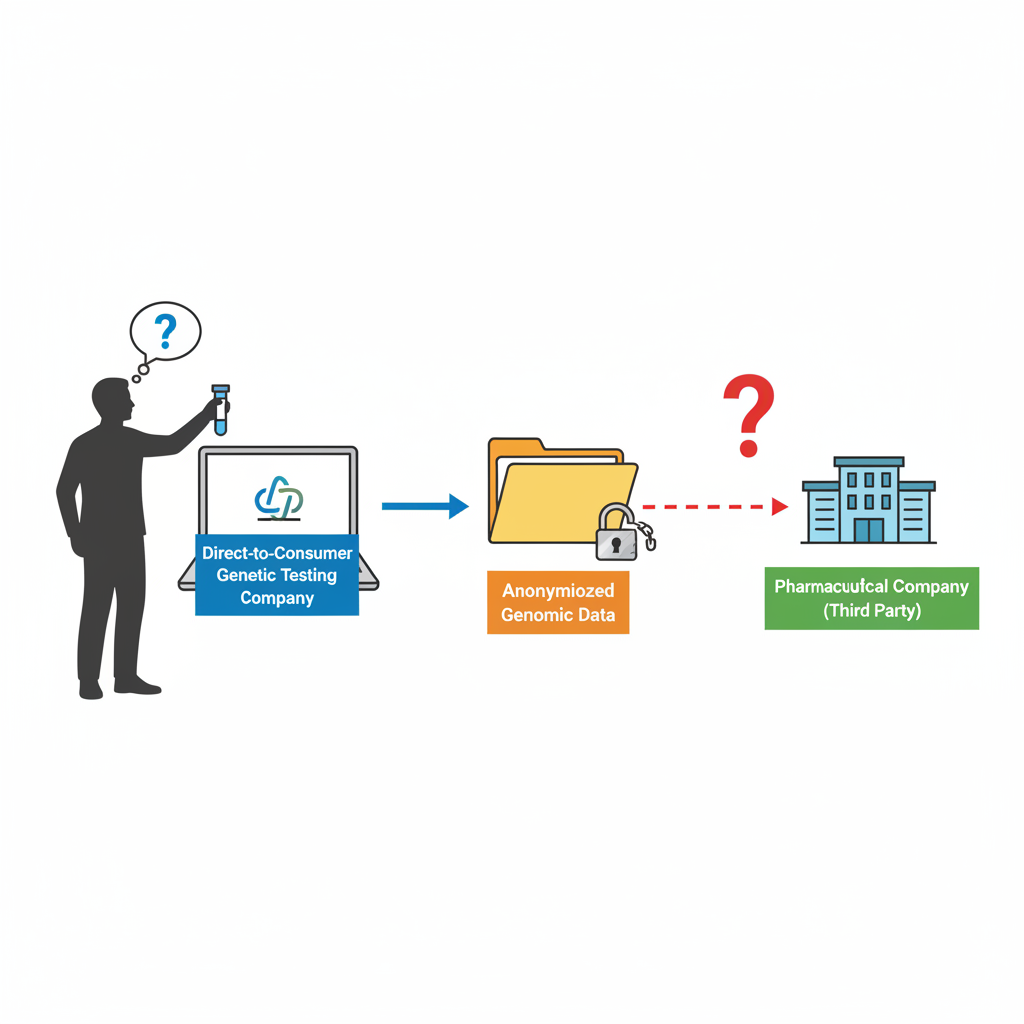
A user submits a DNA sample to a direct-to-consumer genetic testing company to learn about their ancestry. The privacy policy states that "anonymized genomic data may be shared with third parties for research purposes." The user later discovers their anonymized data was sold to a pharmaceutical company without their explicit consent.
a
Discuss the ethical implications of sharing anonymized genomic data without explicit consent, with reference to the principles of autonomy and informed consent. [2]
b
Explain why anonymized genomic data may still pose a risk of re-identification, using your knowledge of the properties of genomic data. [2]
c
Evaluate one measure that could be implemented to protect genomic privacy while still allowing beneficial research to proceed. [2]
Solutions
5QuestionData Privacy and Risks in Genomic ResearchAssessment Practice
8 marks~12 minCriterion D
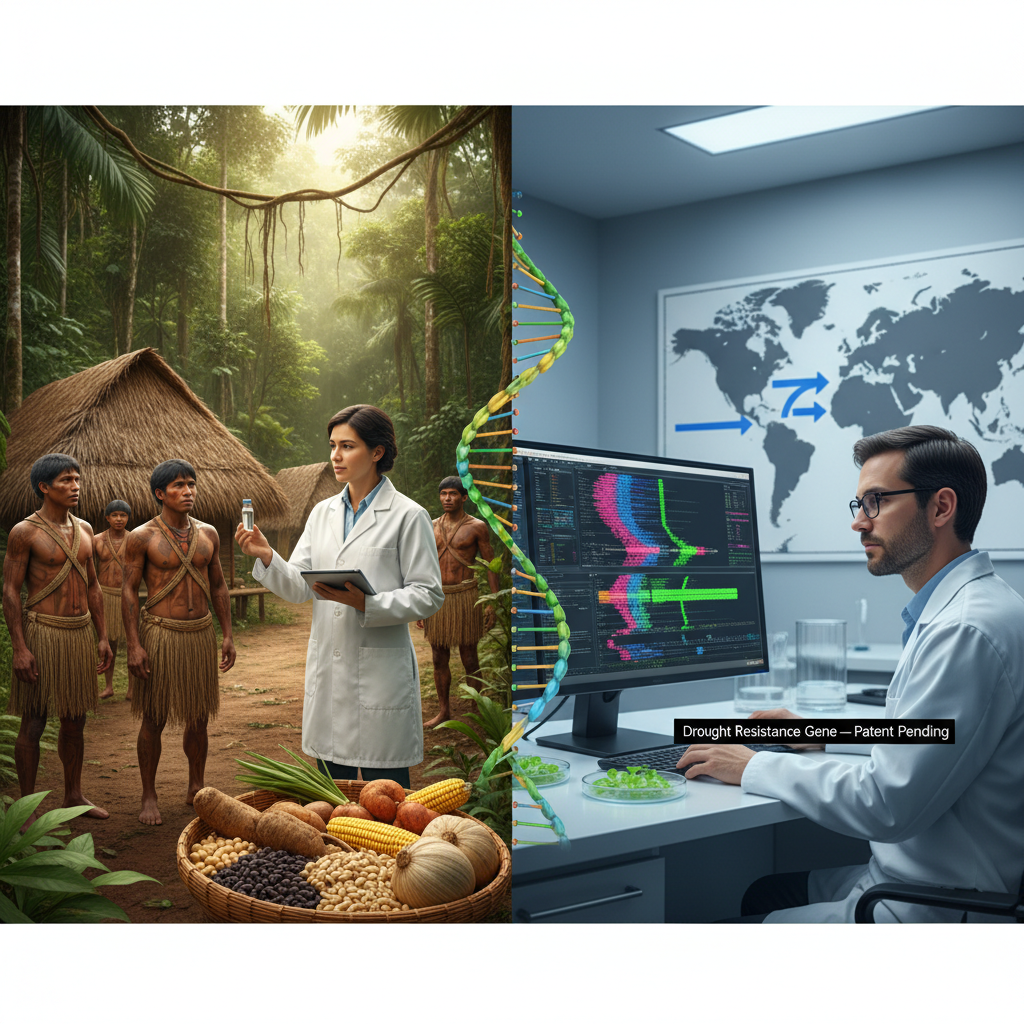
A multinational biotechnology company sequenced the genomes of an isolated indigenous Amazonian community without obtaining free, prior, and informed consent. Researchers identified a gene variant unique to this population that confers drought resistance in local crop plants. The company patented this gene and plans to develop drought-resistant crops for global sale, sharing no profits with the community. International agreements such as the Nagoya Protocol exist to regulate access to genetic resources and benefit-sharing, yet cases of biopiracy persist globally.
a
Explain the societal consequences for the indigenous community, focusing on cultural autonomy and benefit-sharing. [2]
b
Discuss the potential environmental effects of introducing genetically modified drought-resistant crops into global agriculture. [3]
c
Evaluate the effectiveness of the Nagoya Protocol in protecting vulnerable communities from biopiracy, identifying specific limitations that allow cases such as this to occur. [3]
Solutions
That's every free question here — 5 of 61.
+56 more questions, plus Mock Papers & Worksheets, are waiting in Premium.