You're viewing free preview questions — 6 questions previewing here — subscribe to unlock 54 more, plus the Full Question Bank, Mock Papers & Worksheets.Upgrade
Back

Classification and Diversity of Life — Free MYP4 Biology Practice Questions

Free questions

Open in full, with answers, mark scheme and examiner insights.

Question 1Criterion A · Band 3-4 · Easy · 5 marksrevisionprep.com

Kingdoms of life

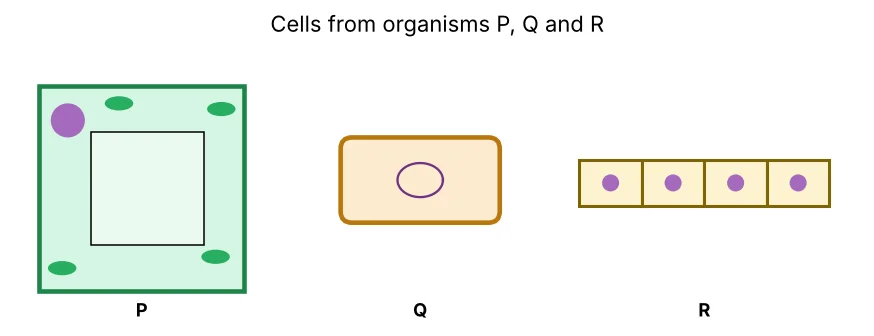
The diagram shows simplified cells from three organisms, P, Q and R.

P: cell wall, nucleus, chloroplasts and a large vacuole.
Q: cell wall and a loop of DNA free in the cytoplasm; no nucleus.
R: cell wall and nucleus, no chloroplasts; the cells form long threads.
Question diagram
(a)
Identify the kingdom to which each organism belongs. [3]Criterion A (ii) · Level 3-4
(b)
Explain why organism Q is described as a prokaryote. [2]Criterion A (i) · Level 3-4

revisionprep.com

Summary Answer

Not available for this question.

Model Answer

Not available for this question.

Marking Scheme

Not available for this question.

Examiner Insights

Not available for this question.

Question 2Criterion A · Band 3-4 · Easy · 5 marksrevisionprep.com

Binomial naming

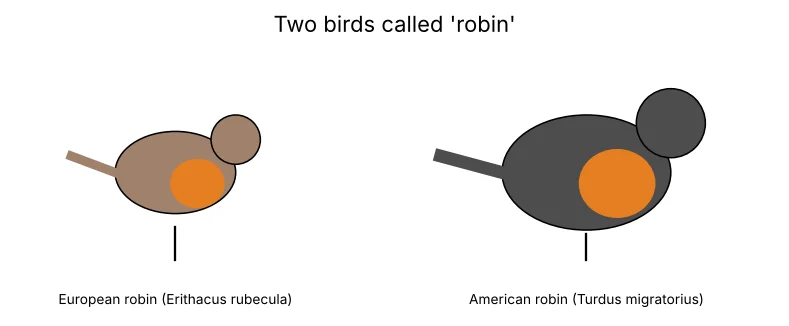
The diagram shows two birds that are both commonly called 'robin'. The European robin is Erithacus rubecula; the American robin is Turdus migratorius.
Question diagram
(a)
Explain why scientists use scientific names rather than common names. [2]Criterion A (ii) · Level 3-4
(b)
State, with a reason, whether the two robins belong to the same genus. [2]Criterion A (ii) · Level 3-4
(c)
Explain how scientific names help scientists working in different countries. [1]Criterion A (ii) · Level 3-4

revisionprep.com

Summary Answer

Not available for this question.

Model Answer

Not available for this question.

Marking Scheme

Not available for this question.

Examiner Insights

Not available for this question.

Question 3Criterion C + A · Band 3-6 · Medium · 6 marksrevisionprep.com

Kingdoms of life

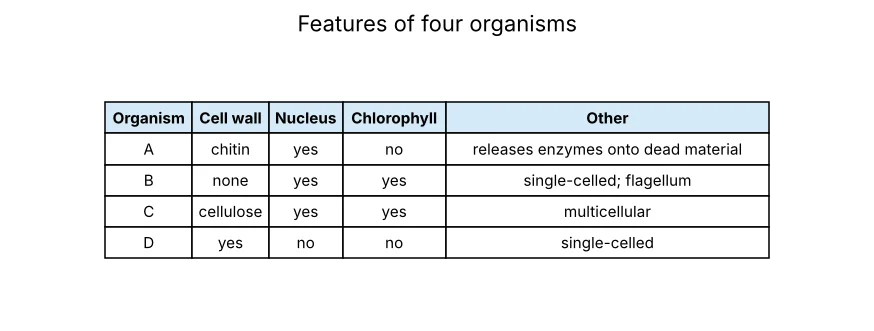
The table shows features of four organisms, A to D.

A: cell wall made of chitin; nucleus; no chlorophyll; feeds by releasing enzymes onto dead material
B: no cell wall; nucleus; single-celled; has chloroplasts and moves using a flagellum
C: cell wall made of cellulose; nucleus; chloroplasts; multicellular
D: cell wall; no nucleus; single-celled
Question diagram
(a)
Classify each organism into a kingdom. [4]Criterion C (ii) · Level 3-4
(b)
Organism B is Euglena. Explain why Euglena was hard to place in either the plant or the animal kingdom. [2]Criterion A (ii) · Level 5-6

revisionprep.com

Summary Answer

Not available for this question.

Model Answer

Not available for this question.

Marking Scheme

Not available for this question.

Examiner Insights

Not available for this question.

Question 4Criterion B · Band 3-6 · Medium · 8 marksrevisionprep.com

Unity and diversity in life forms

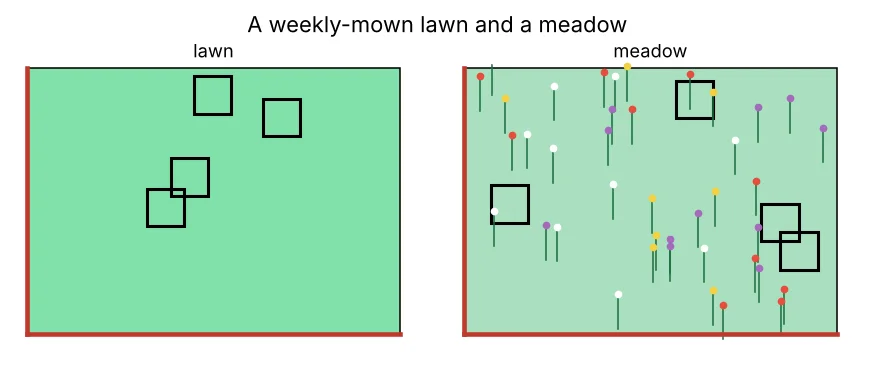
A student wants to compare the variety of plant species on a lawn that is mown every week with a meadow that is cut once a year. She has 0.5 m × 0.5 m quadrats, a tape measure and a plant identification key.
Question diagram
(a)
Write a research question for this investigation. [1]Criterion B (i) · Level 3-4
(b)
Formulate a hypothesis and explain it using scientific reasoning. [2]Criterion B (ii) · Level 5-6
(c)
Describe how the student would collect sufficient, unbiased data. [3]Criterion B (iii) · Level 5-6
(d)
Describe two safety or ethical points for this fieldwork. [2]Criterion B (iv) · Level 3-4

revisionprep.com

Summary Answer

Not available for this question.

Model Answer

Not available for this question.

Marking Scheme

Not available for this question.

Examiner Insights

Not available for this question.

Question 5Criterion D · Band 3-8 · Challenge · 7 marksrevisionprep.com

Binomial naming

Studies in several countries have found that a large share of fish sold in shops and restaurants is a different species from the one on the label. Laboratories can identify a fish from a small piece of its DNA.
(a)
Explain why a fish's scientific name is more reliable than the name used in the market. [2]Criterion D (i) · Level 3-4
(b)
Explain how a DNA test can show that a fish has been mislabelled. [2]Criterion D (i) · Level 5-6
(c)
Discuss the implications of requiring fish labels to include the scientific name, considering at least two perspectives. [3]Criterion D (ii) · Level 7-8

revisionprep.com

Summary Answer

Not available for this question.

Model Answer

Not available for this question.

Marking Scheme

Not available for this question.

Examiner Insights

Not available for this question.

Question 6Criterion A + C · Band 3-8 · Challenge · 9 marksrevisionprep.com

Dichotomous keys

The diagram shows six fish caught in a river survey and a key.

1. Has barbels (whiskers) near the mouth: go to 2. No barbels: go to 3.
2. Two barbels: gudgeon. Four barbels: barbel.
3. Spots on the body: trout. No spots: go to 4.
4. Red fins: roach. Fins not red: go to 5.
5. Spines on the back: stickleback. No spines: chub.
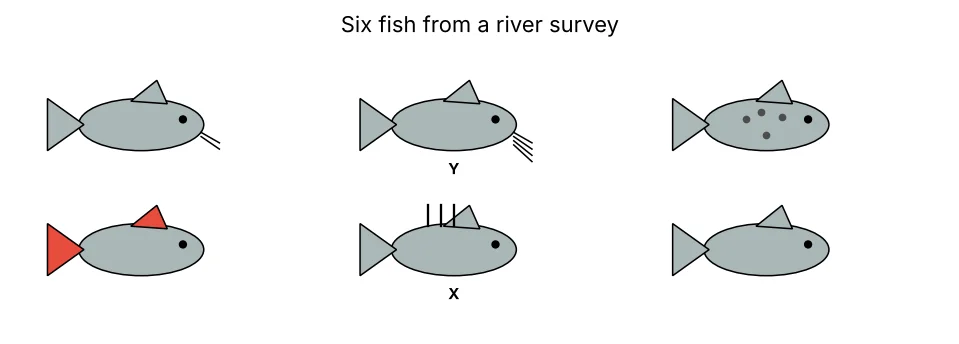
Question diagram
(a)
Use the key to identify fish X and fish Y. [2]Criterion C (ii) · Level 3-4
(b)
Explain why scientists use keys during field surveys. [2]Criterion A (ii) · Level 3-4
(c)
A fish is caught that has no barbels, no spots, red fins and spines on its back. Suggest how the key should be changed. [2]Criterion C (v) · Level 5-6
(d)
Two fish can look identical but belong to different species. Explain how this is possible and how scientists could tell them apart. [3]Criterion A (ii) · Level 7-8

revisionprep.com

Summary Answer

Not available for this question.

Model Answer

Not available for this question.

Marking Scheme

Not available for this question.

Examiner Insights

Not available for this question.

That's every free question here — 6 of 60.

+54 more questions, plus Mock Papers & Worksheets, are waiting in Premium.

Upgrade