You're viewing free preview questions — 6 questions previewing here — subscribe to unlock 67 more, plus the Full Question Bank, Mock Papers & Worksheets.Upgrade
Back

Evidence of Evolution — Free MYP4 Biology Practice Questions

Free questions

Open in full, with answers, mark scheme and examiner insights.

Question 1Criterion A · Band 1-2 · Easy · 3 marksrevisionprep.com

Fossil Record and Evolutionary History

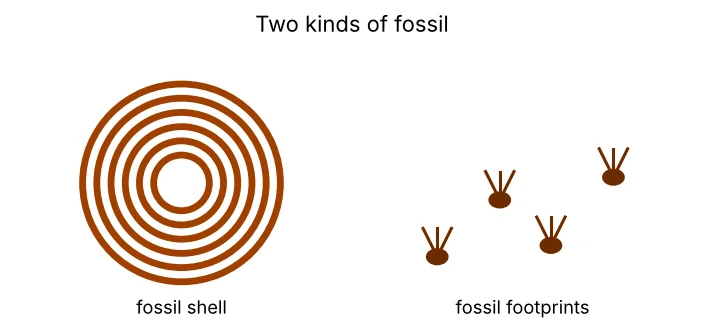
Palaeontologists use fossils as direct evidence of organisms that lived in the past.

The diagram shows two kinds of fossil.
Question diagram
(a)
State what is meant by a fossil. [1]Criterion A (i) · Level 1-2
(b)
Distinguish between a body fossil and a trace fossil, giving one example of each. [2]Criterion A (i) · Level 1-2

revisionprep.com

Summary Answer

Not available for this question.

Model Answer

Not available for this question.

Marking Scheme

Not available for this question.

Examiner Insights

Not available for this question.

Question 2Criterion A · Band 1-4 · Easy · 3 marksrevisionprep.com

Comparative Anatomy and Homologous Structures

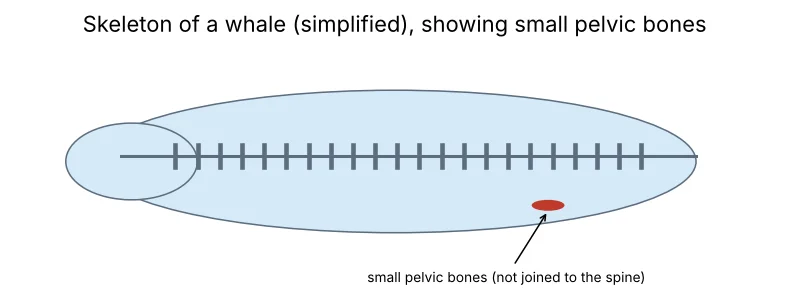
Some organisms have structures that are reduced in size and have little or no function. Examples include the pelvic bones of whales, the small hind-limb spurs of pythons and the coccyx (tail bone) of humans.

The diagram shows a whale skeleton with its small pelvic bones.
Question diagram
(a)
State the term used for structures like these. [1]Criterion A (i) · Level 1-2
(b)
Explain how the pelvic bones of whales provide evidence that whales evolved from four-legged ancestors. [2]Criterion A (ii) · Level 3-4

revisionprep.com

Summary Answer

Not available for this question.

Model Answer

Not available for this question.

Marking Scheme

Not available for this question.

Examiner Insights

Not available for this question.

Question 3Criterion B · Band 1-6 · Medium · 4 marksrevisionprep.com

Embryological Evidence of Evolution

A researcher compares photographs of fish, chicken and human embryos to look for structural similarities that are evidence of common ancestry.
(a)
Identify one variable that must be controlled when choosing which embryos to compare. [1]Criterion B (iii) · Level 1-2
(b)
Explain why this variable must be controlled. [1]Criterion B (iii) · Level 3-4
(c)
Embryos of different species develop at different speeds. Suggest how the researcher could make sure the embryos are at a comparable stage, and explain why this is better than using the time since fertilisation. [2]Criterion B (iii) · Level 5-6

revisionprep.com

Summary Answer

Not available for this question.

Model Answer

Not available for this question.

Marking Scheme

Not available for this question.

Examiner Insights

Not available for this question.

Question 4Criterion D + A · Band 3-6 · Medium · 6 marksrevisionprep.com

Biogeography and Species Distribution

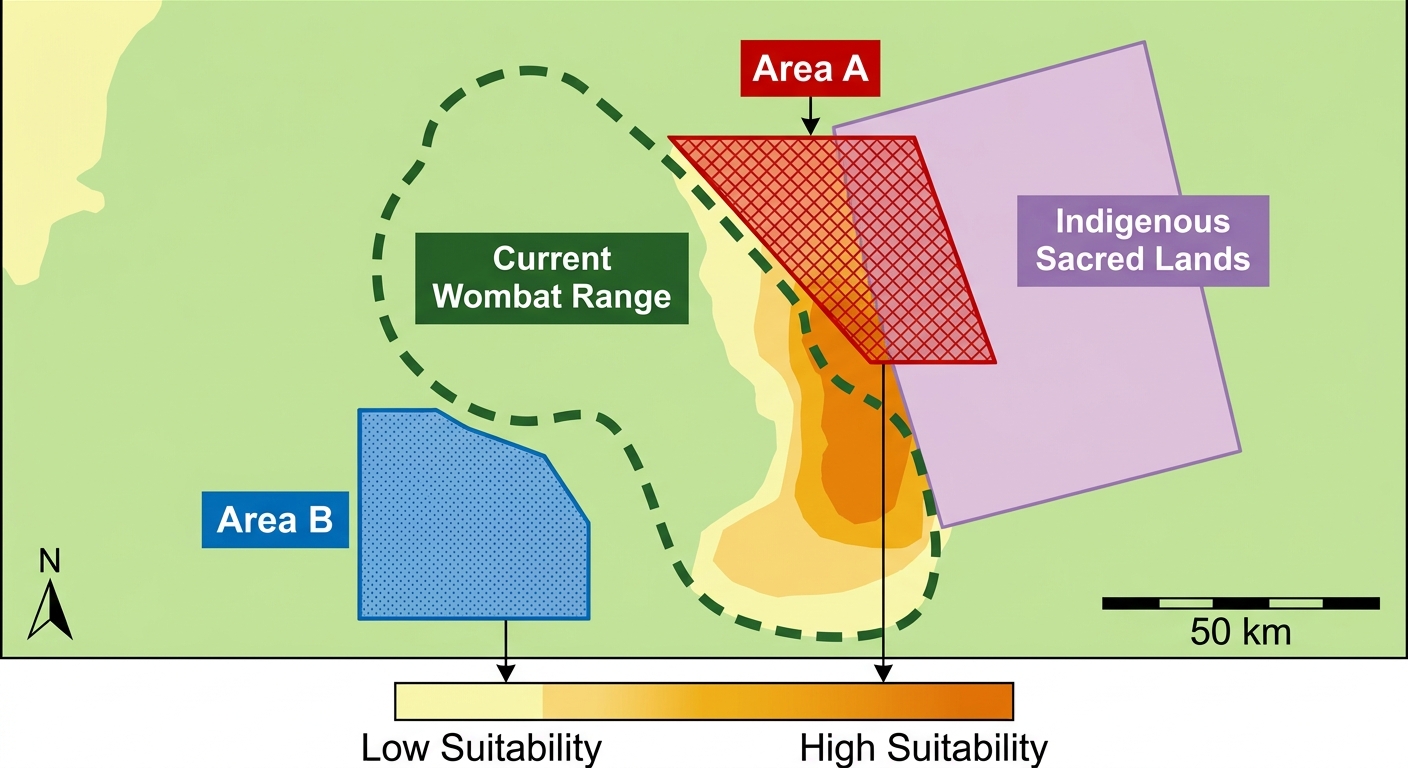
The northern hairy-nosed wombat is a critically endangered marsupial found only in Queensland, Australia. The map shows its current range, a computer prediction of habitat suitability, and two areas, A and B, proposed for a new population. Area A overlaps land that is sacred to an Indigenous community.
Question diagram
(a)
Using the map, give two reasons why Area A is predicted to be better habitat than Area B. [2]Criterion D (i) · Level 3-4
(b)
Explain why establishing a second population is important for a species found only in one small area. [1]Criterion A (ii) · Level 3-4
(c)
Discuss the implications of choosing Area A rather than Area B. Refer to ecological and cultural perspectives. [3]Criterion D (ii) · Level 5-6

revisionprep.com

Summary Answer

Not available for this question.

Model Answer

Not available for this question.

Marking Scheme

Not available for this question.

Examiner Insights

Not available for this question.

Question 5Criterion A + D · Band 1-8 · Challenge · 9 marksrevisionprep.com

Fossil Record and Evolutionary History
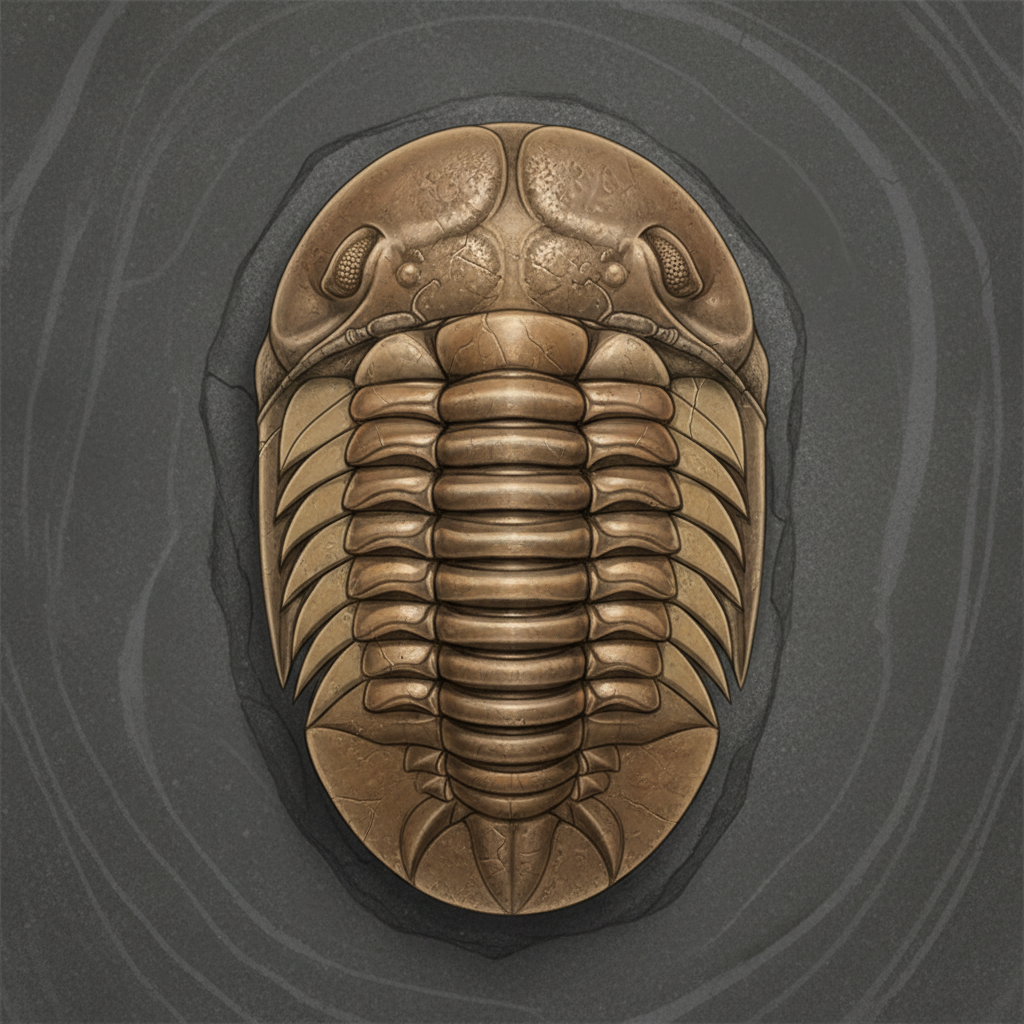
The photograph shows a fossil trilobite, an extinct marine arthropod with a hard exoskeleton. Trilobite fossils are found in rocks from about 521 to 252 million years old. Many individual trilobite species existed for only a few million years but lived in seas across large parts of the world.
Question diagram
(a)
State the type of fossil shown in the photograph. [1]Criterion A (i) · Level 1-2
(b)
Suggest why trilobites are far more common in the fossil record than the soft-bodied worms that lived in the same seas. [2]Criterion A (ii) · Level 3-4
(c)
Explain why a trilobite species with these features is useful as an index fossil for dating rock layers. [2]Criterion A (i) · Level 5-6
(d)
No trilobite fossils are found in rocks younger than 252 million years. State what this shows about trilobites. [1]

(e) Fossil trilobites are widely sold to collectors. Discuss the implications of allowing fossils to be sold commercially, considering at least two perspectives. [3]
Criterion A (iii) · Level 1-2

revisionprep.com

Summary Answer

Not available for this question.

Model Answer

Not available for this question.

Marking Scheme

Not available for this question.

Examiner Insights

Not available for this question.

Question 6Criterion C + A · Band 3-8 · Challenge · 8 marksrevisionprep.com

Molecular Evidence and DNA Analysis

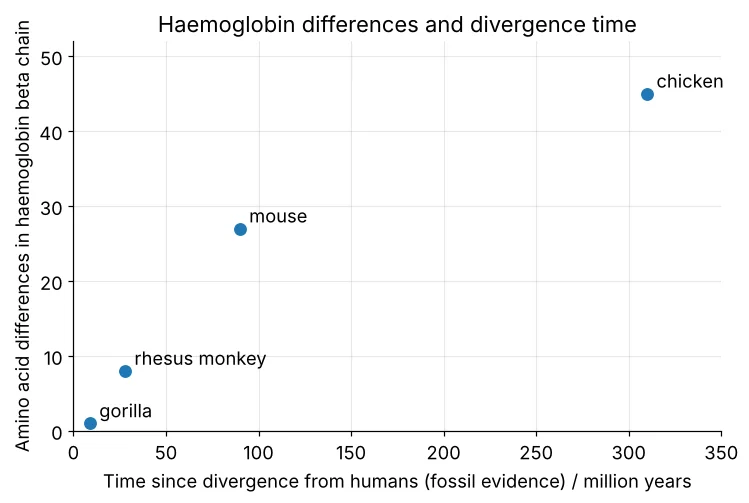
The data below show the number of amino acid differences between the beta chain of human haemoglobin and that of four other vertebrates, with divergence times from the fossil record.

Gorilla: 1 difference; 9 million years ago
Rhesus monkey: 8 differences; 28 million years ago
Mouse: 27 differences; 90 million years ago
Chicken: 45 differences; 310 million years ago

The graph shows these data.
Question diagram
(a)
Use the human and rhesus monkey data to calculate the rate of change of haemoglobin, in amino acid differences per million years. [2]Criterion C (i) · Level 3-4
(b)
Use your rate to estimate when the human and chicken lineages diverged. [2]Criterion C (i) · Level 5-6
(c)
Compare your estimate with the fossil date and suggest two reasons why they differ. [2]Criterion C (iii) · Level 7-8
(d)
Explain why biologists use molecular data such as these alongside the fossil record when working out evolutionary relationships. [2]Criterion A (ii) · Level 5-6

revisionprep.com

Summary Answer

Not available for this question.

Model Answer

Not available for this question.

Marking Scheme

Not available for this question.

Examiner Insights

Not available for this question.

That's every free question here — 6 of 73.

+67 more questions, plus Mock Papers & Worksheets, are waiting in Premium.

Upgrade