You're viewing free preview questions — 6 questions previewing here — subscribe to unlock 69 more, plus the Full Question Bank, Mock Papers & Worksheets.Upgrade
Back

Reproduction and Life Cycles — Free MYP4 Biology Practice Questions

Free questions

Open in full, with answers, mark scheme and examiner insights.

Question 1Criterion A · Band 1-4 · Easy · 3 marksrevisionprep.com

Asexual vs sexual reproduction

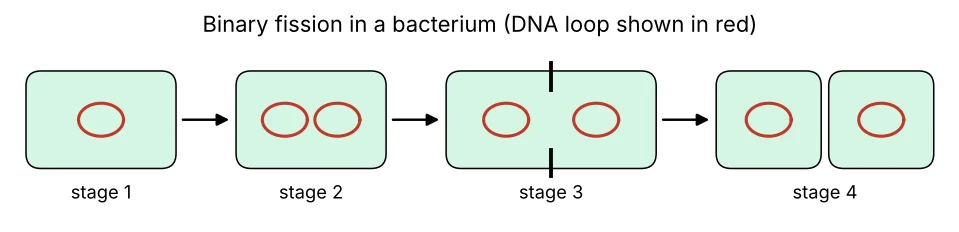
The diagram shows a bacterium reproducing by binary fission.
Question diagram
(a)
State whether binary fission is sexual or asexual reproduction. [1]Criterion A (i) · Level 1-2
(b)
Explain why the two cells produced are genetically identical. [2]Criterion A (ii) · Level 3-4

revisionprep.com

Summary Answer

Not available for this question.

Model Answer

Not available for this question.

Marking Scheme

Not available for this question.

Examiner Insights

Not available for this question.

Question 2Criterion A · Band 1-2 · Easy · 3 marksrevisionprep.com

Human reproductive systems and the menstrual cycle

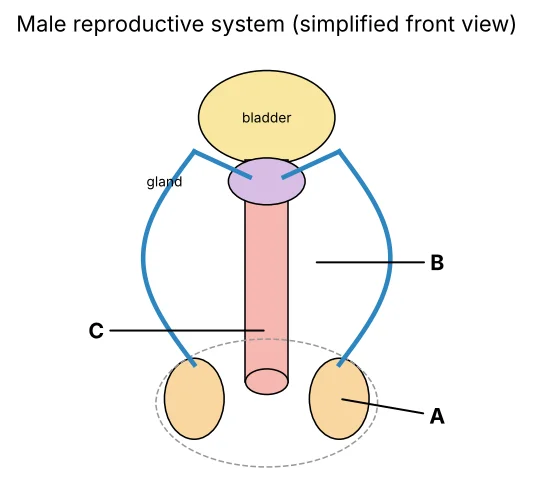
The diagram shows the human male reproductive system. Three structures are labelled A, B and C.

(a) Identify structures A, B and C. [3]
Question diagram

revisionprep.com

Summary Answer

Not available for this question.

Model Answer

Not available for this question.

Marking Scheme

Not available for this question.

Examiner Insights

Not available for this question.

Question 3Criterion A + D · Band 3-6 · Medium · 6 marksrevisionprep.com

Asexual vs sexual reproduction

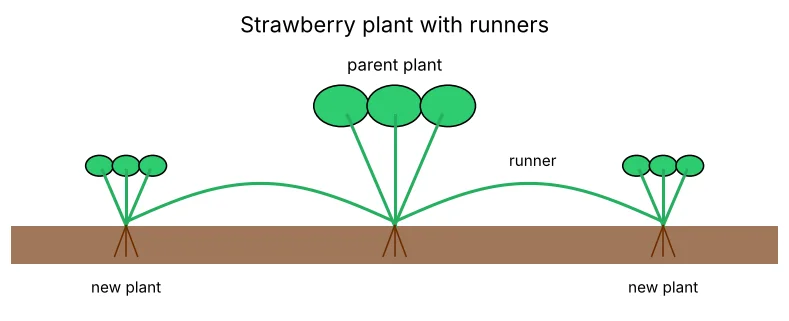
Strawberry plants grow long side shoots called runners. Where a runner touches the soil, a new plant grows roots and later separates from the parent. The diagram shows a strawberry plant with runners.
Question diagram
(a)
Describe how runners allow strawberry plants to reproduce. [2]Criterion A (i) · Level 3-4
(b)
Explain one advantage to a fruit farmer of growing new strawberry plants from runners. [2]Criterion D (i) · Level 3-4
(c)
Explain why a farm growing only plants from runners could lose its whole crop to a new disease. [2]Criterion A (iii) · Level 5-6

revisionprep.com

Summary Answer

Not available for this question.

Model Answer

Not available for this question.

Marking Scheme

Not available for this question.

Examiner Insights

Not available for this question.

Question 4Criterion B + A · Band 3-6 · Medium · 9 marksrevisionprep.com

Fertilization and development

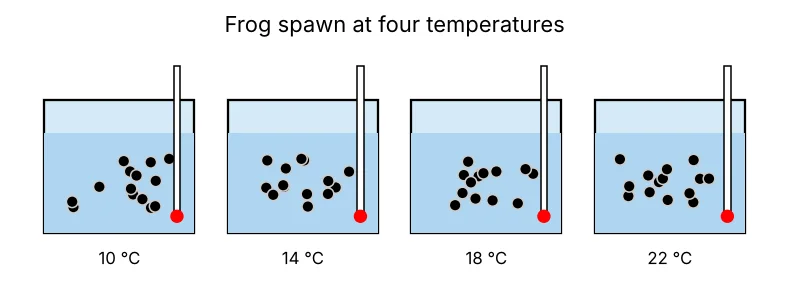
Frog eggs develop outside the mother, in water. A student wants to investigate how water temperature affects the time taken for frog eggs to hatch into tadpoles.
Question diagram
(a)
Formulate a hypothesis for this investigation, with scientific reasoning. [2]Criterion B (ii) · Level 5-6
(b)
Describe how the student should control variables and collect sufficient data. [3]Criterion B (iii) · Level 5-6
(c)
Describe one ethical consideration and how to address it. [2]Criterion B (iv) · Level 3-4
(d)
Explain why development stops completely at very high temperatures. [2]Criterion A (ii) · Level 3-4

revisionprep.com

Summary Answer

Not available for this question.

Model Answer

Not available for this question.

Marking Scheme

Not available for this question.

Examiner Insights

Not available for this question.

Question 5Criterion C + A · Band 3-8 · Challenge · 9 marksrevisionprep.com

Flowering plants: pollination, fertilization, seed dispersal

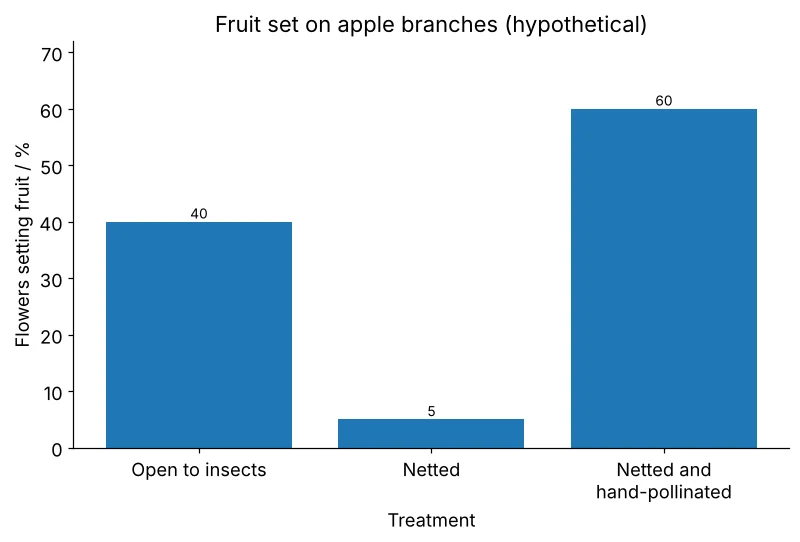
Scientists investigated pollination in apple trees. On each of 10 trees they treated three branches of flowers differently and recorded the percentage of flowers that developed into fruit (hypothetical data).

Open to insects: 40%
Covered with fine nets (no insects): 5%
Covered, then hand-pollinated with pollen from another variety: 60%
Question diagram
(a)
Compare the results for the open and netted branches. [2]Criterion C (ii) · Level 3-4
(b)
Suggest why a few flowers on the netted branches still produced fruit. [2]Criterion C (ii) · Level 5-6
(c)
Explain why the hand-pollinated branches set more fruit than the open branches. [2]Criterion A (ii) · Level 3-4
(d)
Evaluate whether the investigation shows that apple trees depend on insects for pollination. [3]Criterion C (iii) · Level 7-8

revisionprep.com

Summary Answer

Not available for this question.

Model Answer

Not available for this question.

Marking Scheme

Not available for this question.

Examiner Insights

Not available for this question.

Question 6Criterion D + A · Band 3-8 · Challenge · 8 marksrevisionprep.com

Life cycles

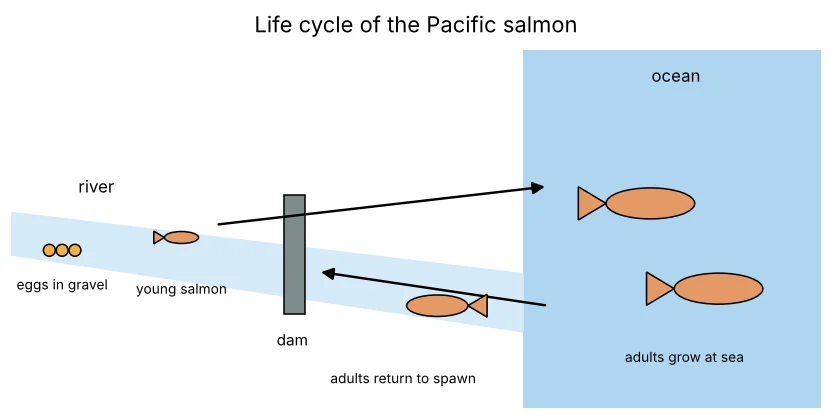
The diagram shows the life cycle of the Pacific salmon. Salmon hatch in rivers, swim to the sea where they grow for several years, and then return to the river where they hatched to spawn (release eggs and sperm), after which they die. Many rivers have dams that block the salmon's route.
Question diagram
(a)
Describe the life cycle of the Pacific salmon. [2]Criterion A (i) · Level 3-4
(b)
Explain why dams reduce salmon populations. [2]Criterion D (i) · Level 3-4
(c)
Discuss whether old dams should be removed to help salmon, considering at least two perspectives. [4]Criterion D (ii) · Level 7-8

revisionprep.com

Summary Answer

Not available for this question.

Model Answer

Not available for this question.

Marking Scheme

Not available for this question.

Examiner Insights

Not available for this question.

That's every free question here — 6 of 75.

+69 more questions, plus Mock Papers & Worksheets, are waiting in Premium.

Upgrade