You're viewing free preview questions — 6 questions previewing here — subscribe to unlock 227 more, plus the Full Question Bank, Mock Papers & Worksheets.Upgrade
Back

Pathogens and Communicable Disease — Free MYP4 Biology Practice Questions

Free questions

Open in full, with answers, mark scheme and examiner insights.

Question 1Criterion A · Band 1-2 · Easy · 2 marksrevisionprep.com

Structure and Characteristics of Bacteria (Ex: Cholera)
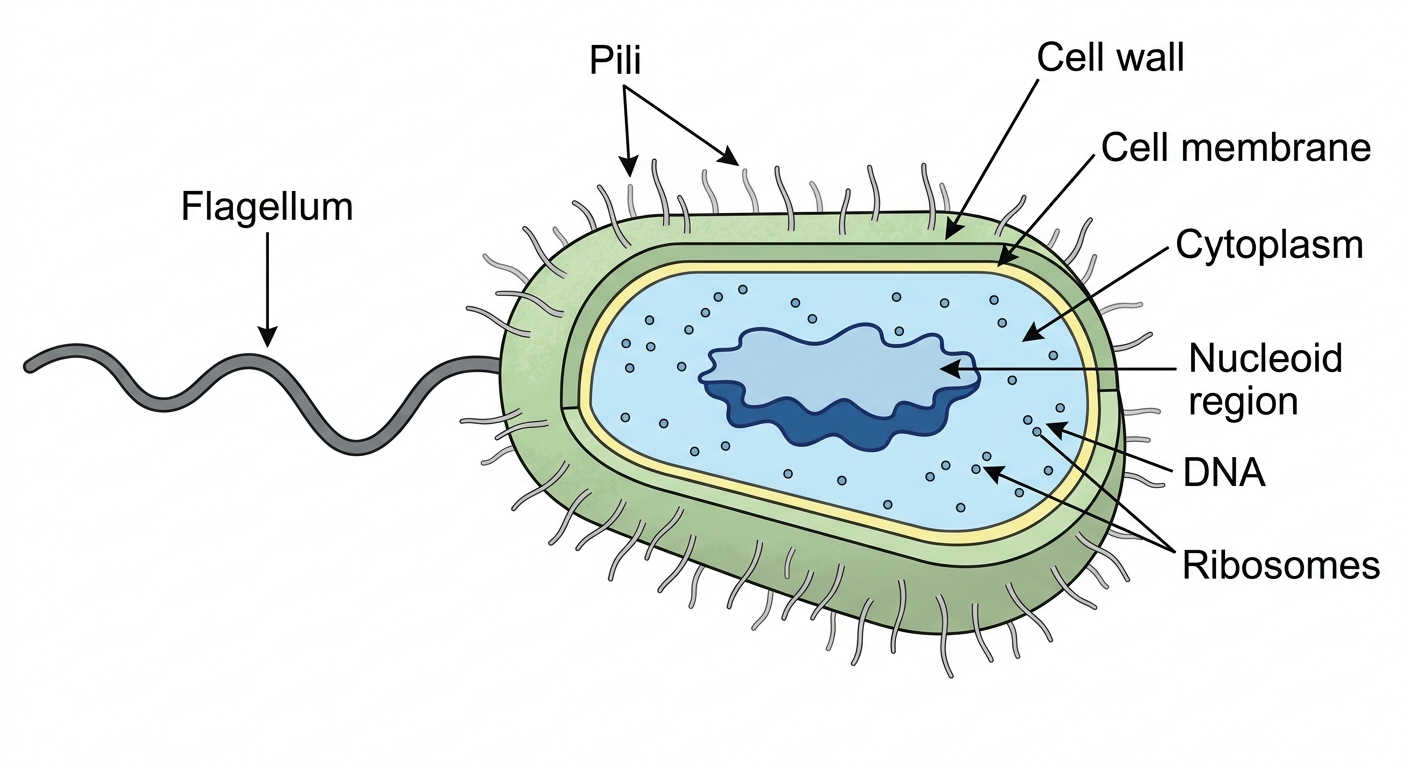
The diagram shows a bacterial cell. The contents of the small intestine are often more dilute than the cytoplasm of bacterial cells.
Question diagram
(a)
Name the substance that makes up the bacterial cell wall. [1]Criterion A (i) · Level 1-2
(b)
Using the diagram, identify the structure that controls which substances enter and leave the cell. [1]Criterion A (i) · Level 1-2

revisionprep.com

Summary Answer

Not available for this question.

Model Answer

Not available for this question.

Marking Scheme

Not available for this question.

Examiner Insights

Not available for this question.

Question 2Criterion A · Band 1-4 · Easy · 4 marksrevisionprep.com

Prevention Methods

The photograph shows surgeons operating in a hospital theatre.
Question diagram
(a)
Identify two precautions visible in the photograph that reduce the risk of infection during surgery. [2]Criterion A (i) · Level 1-2
(b)
Explain why surgical patients are at greater risk from bacteria such as Staphylococcus aureus than healthy people. [2]Criterion A (ii) · Level 3-4

revisionprep.com

Summary Answer

Not available for this question.

Model Answer

Not available for this question.

Marking Scheme

Not available for this question.

Examiner Insights

Not available for this question.

Question 3Criterion A · Band 3-6 · Medium · 5 marksrevisionprep.com

Modes of Transmission of Pathogens

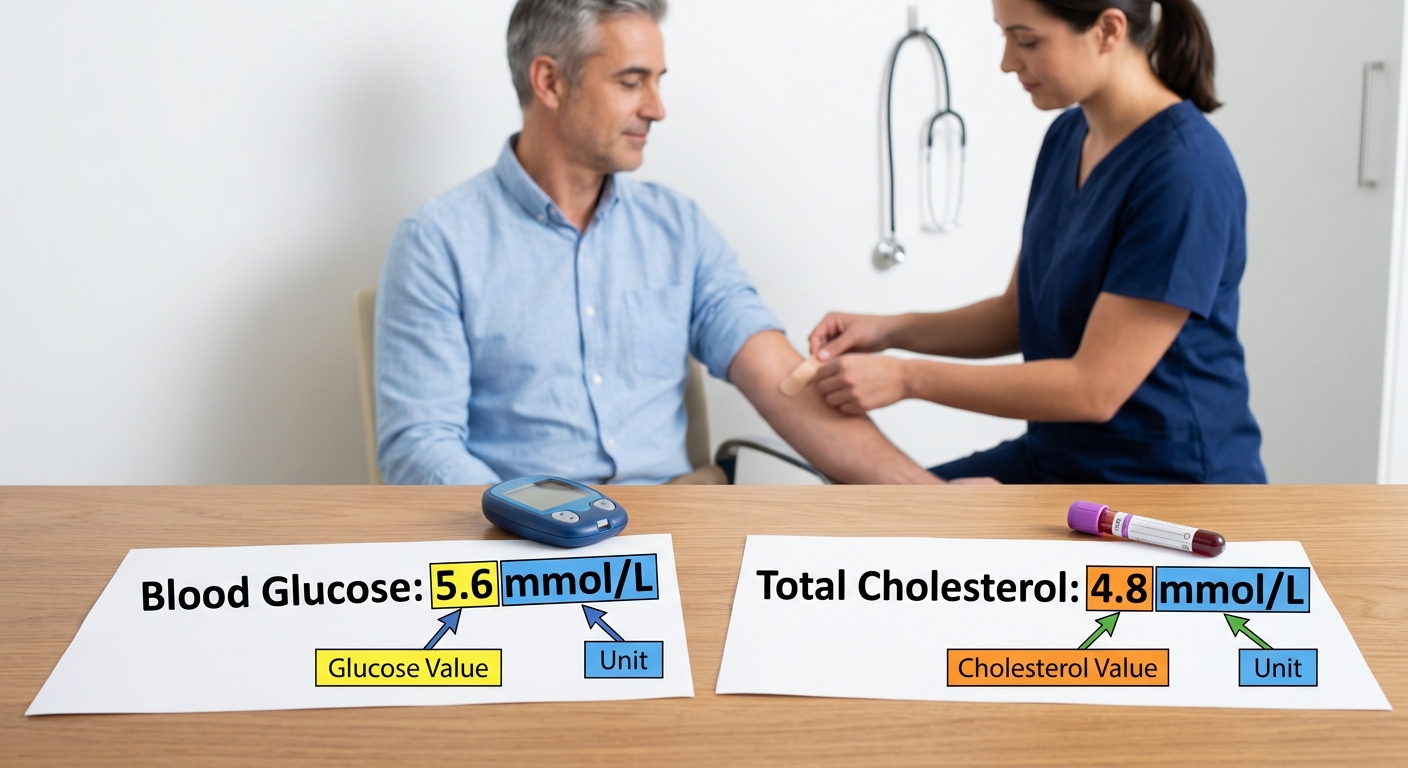
Adults over 40 are offered screening tests at a health centre. The image shows the results for one man, taken after he had not eaten for 10 hours. The centre uses these ranges:
Fasting blood glucose: below 5.6 mmol/L normal; 5.6 to 6.9 mmol/L raised (prediabetes); 7.0 mmol/L or above possible diabetes.
Total cholesterol: below 5.0 mmol/L desirable; 5.0 mmol/L or above high.
Question diagram
(a)
Classify each of the man's results using the ranges given. [2]Criterion A (ii) · Level 3-4
(b)
Explain how screening for type 2 diabetes differs from screening for tuberculosis in what the test detects. [2]Criterion A (i) · Level 3-4
(c)
Suggest why the man is advised to repeat the glucose test on another day. [1]Criterion A (iii) · Level 5-6

revisionprep.com

Summary Answer

Not available for this question.

Model Answer

Not available for this question.

Marking Scheme

Not available for this question.

Examiner Insights

Not available for this question.

Question 4Criterion C · Band 3-6 · Medium · 6 marksrevisionprep.com

Pathogen-Host Interactions

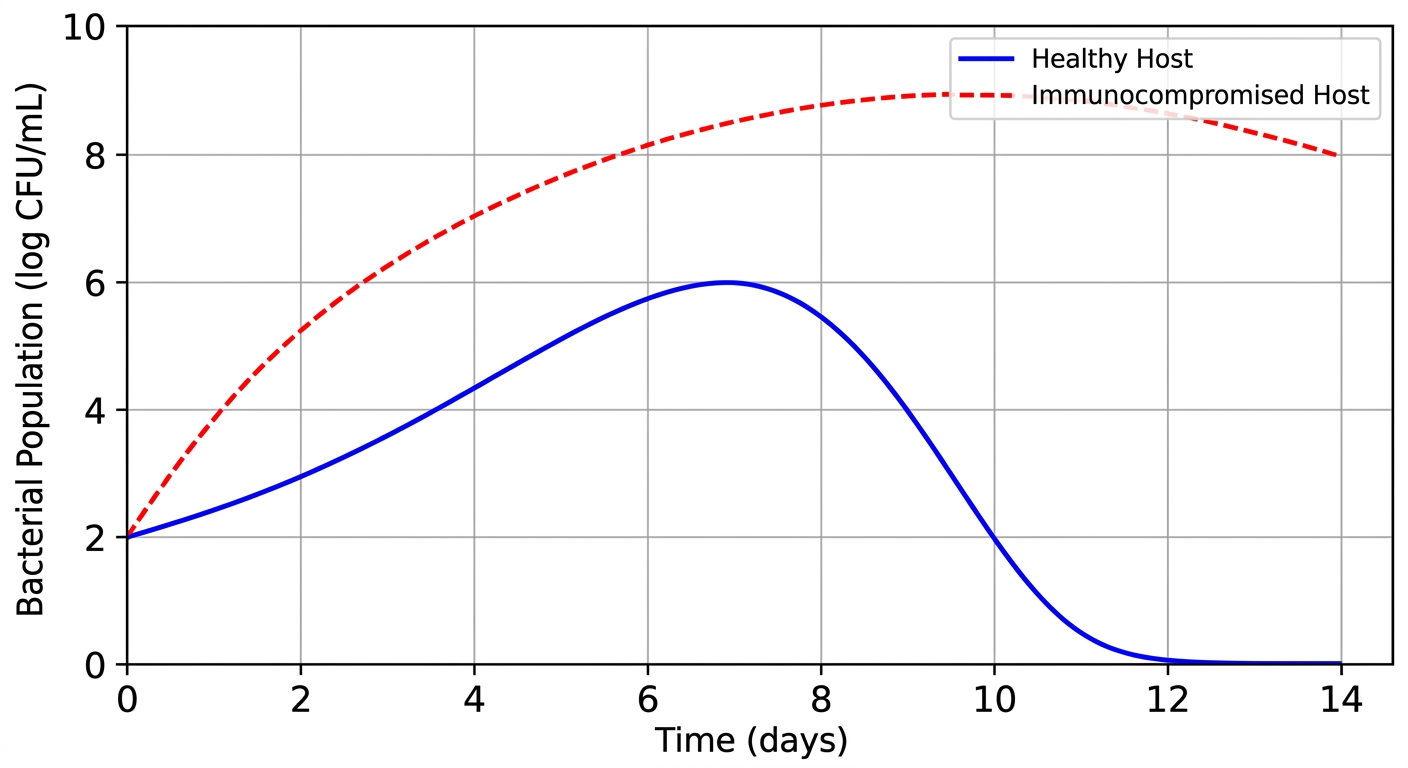
The graph shows the number of bacteria (on a log scale) in the blood of two people infected with the same bacterium: one with a healthy immune system and one whose immune system is weakened (immunocompromised).
Question diagram
(a)
Describe the changes in the bacterial population in the healthy host over the 14 days. [2]Criterion C (ii) · Level 3-4
(b)
Explain why the population in the healthy host falls after day 7. [2]Criterion C (ii) · Level 5-6
(c)
Explain the difference between the two hosts. [2]Criterion C (ii) · Level 5-6

revisionprep.com

Summary Answer

Not available for this question.

Model Answer

Not available for this question.

Marking Scheme

Not available for this question.

Examiner Insights

Not available for this question.

Question 5Criterion D · Band 3-8 · Challenge · 6 marksrevisionprep.com

Types of pathogens: bacteria, viruses, fungi, protists and parasites
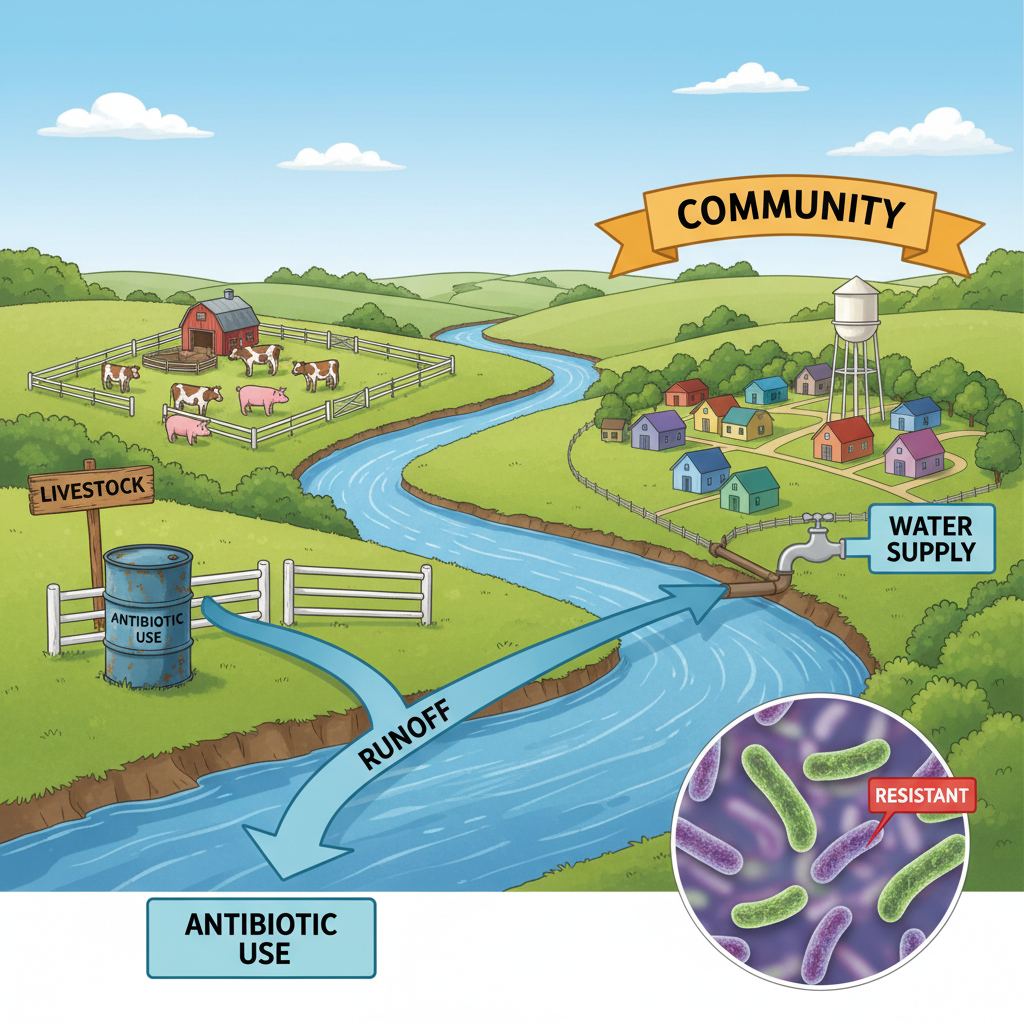
The illustration shows antibiotics used on a livestock farm being washed into a river that supplies drinking water to a nearby community. Water samples now contain increasing numbers of antibiotic-resistant bacteria.
Question diagram
(a)
Explain one health risk to the community from resistant bacteria in the water supply. [2]Criterion D (i) · Level 3-4
(b)
Discuss who should be responsible for reducing this risk: the farmer, the government or the water company. Justify your conclusion. [4]Criterion D (ii), D (iii) · Level 7-8

revisionprep.com

Summary Answer

Not available for this question.

Model Answer

Not available for this question.

Marking Scheme

Not available for this question.

Examiner Insights

Not available for this question.

Question 6Criterion B · Band 3-8 · Challenge · 7 marksrevisionprep.com

Structure and Replication of Viruses (Ex: Flu)

Bacteriophages infect bacteria. When phages are added to a 'lawn' of bacteria growing on an agar plate, each phage that infects a cell destroys the bacteria around it, leaving a clear spot called a plaque. Counting plaques shows how many active phages were present. A student wants to investigate how temperature affects the ability of phages to infect bacteria. A phage suspension can be kept at a chosen temperature for 10 minutes before being added to a plate.
(a)
Formulate a hypothesis for this investigation and explain it using your knowledge of virus structure. [2]Criterion B (ii) · Level 5-6
(b)
Explain how the independent variable will be changed, how the dependent variable will be measured, and how two variables will be controlled. [4]Criterion B (iii) · Level 7-8
(c)
Suggest one safety precaution for this investigation. [1]Criterion B (iv) · Level 3-4

revisionprep.com

Summary Answer

Not available for this question.

Model Answer

Not available for this question.

Marking Scheme

Not available for this question.

Examiner Insights

Not available for this question.

That's every free question here — 6 of 233.

+227 more questions, plus Mock Papers & Worksheets, are waiting in Premium.

Upgrade