You're viewing free preview questions — 5 questions previewing here — subscribe to unlock 214 more, plus the Full Question Bank, Mock Papers & Worksheets.Upgrade
Pathogens (Bacteria, Viruses) — Free MYP4 Biology Practice Questions

1QuestionPathogen-Host InteractionsConcept Practice
2 marks~3 minCriterion D
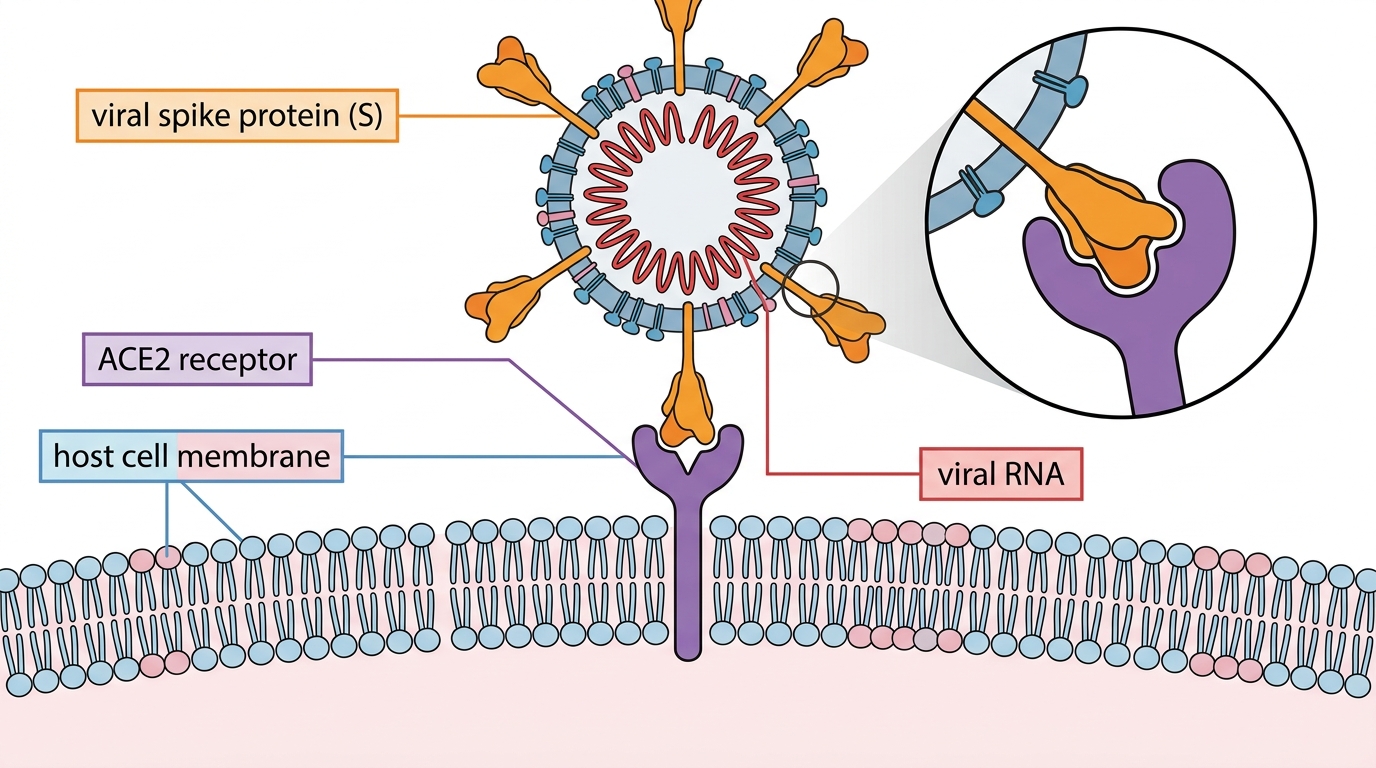
During the COVID-19 pandemic, scientists determined that the SARS-CoV-2 spike protein binds specifically to ACE2 receptors on human respiratory cells. This structural knowledge was used to develop mRNA vaccines, which instruct host cells to produce harmless spike proteins, triggering an immune response without infection.
a
Outline one real-world application that directly uses knowledge of viral spike protein–host receptor binding. [1]
b
Identify one ethical issue arising from the application you described in (a). [1]

Solutions
2QuestionStructure and Replication of Viruses (Ex: Flu)Assessment Practice
4 marks~6 minCriterion A
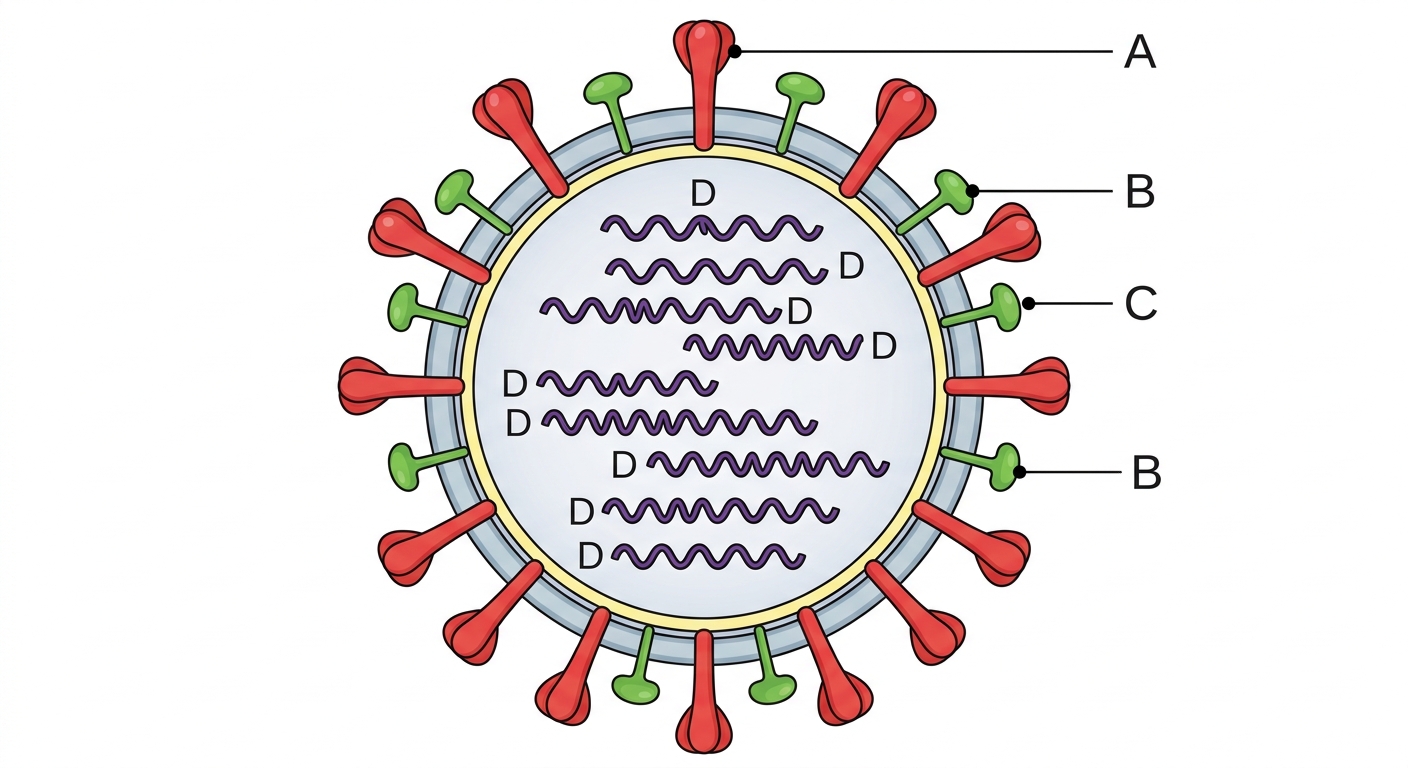
The diagram shows the structure of the influenza virus with four labelled parts: A) Hemagglutinin (HA) spikes, B) Neuraminidase (NA) spikes, C) Lipid envelope, D) RNA segments.
(a) State the role of hemagglutinin spikes (Label A) in viral infection. [1]
(b) Explain how neuraminidase spikes (Label B) and the lipid envelope (Label C) each contribute to a different stage of the viral life cycle. [2]
(c) Analyse how the segmented RNA (Label D) of influenza, compared with a non-segmented viral genome, could increase the rate at which new viral strains emerge in a human population. [1]
(a) State the role of hemagglutinin spikes (Label A) in viral infection. [1]
(b) Explain how neuraminidase spikes (Label B) and the lipid envelope (Label C) each contribute to a different stage of the viral life cycle. [2]
(c) Analyse how the segmented RNA (Label D) of influenza, compared with a non-segmented viral genome, could increase the rate at which new viral strains emerge in a human population. [1]
Solutions
3QuestionClassification of PathogensConcept Practice
2 marks~3 minCriterion A
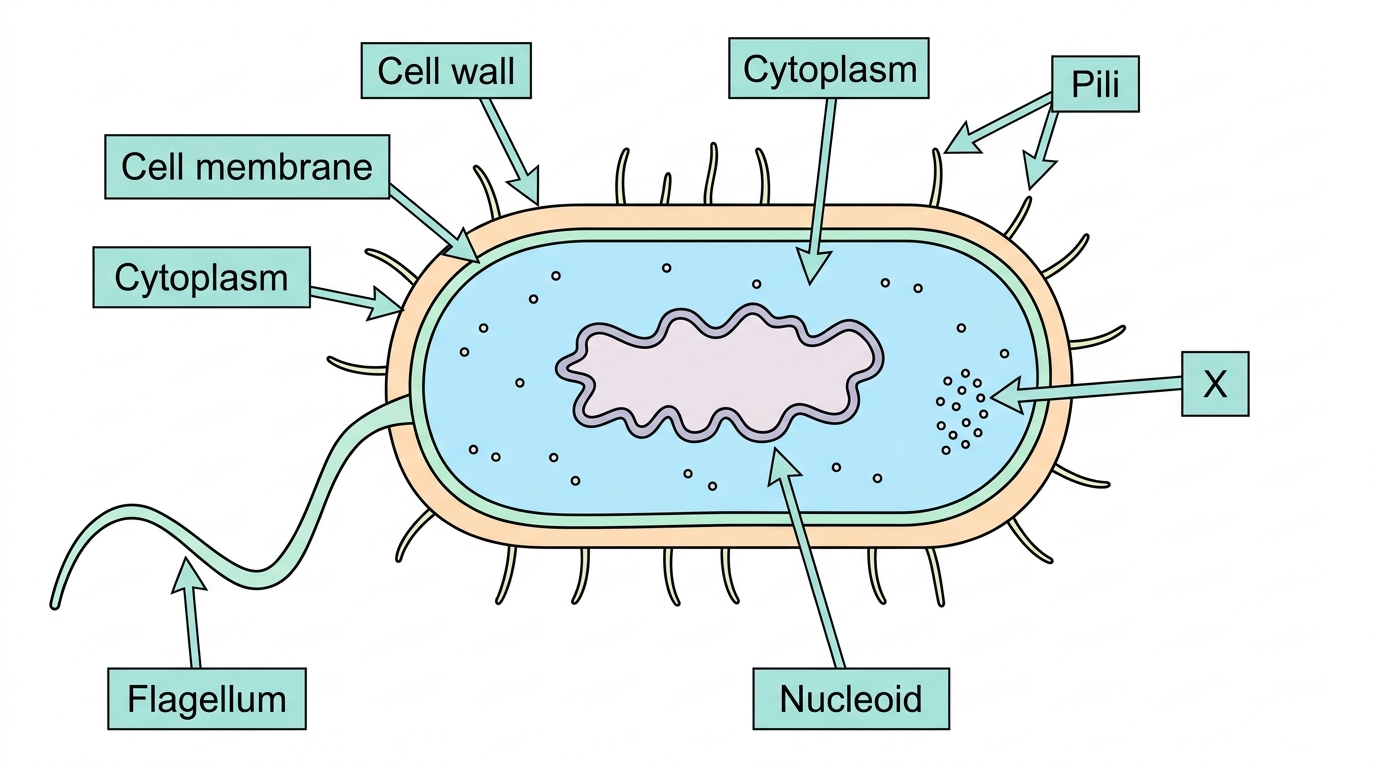
The diagram below shows a bacterial cell with several structures labelled.
a
Identify the structure labelled X. [1]
b
Explain one reason why structure X is essential for bacterial survival. [1]
Solutions
4QuestionPathogens: Bacteria, Viruses, Fungi, and ParasitesAssessment Practice
4 marks~6 minCriterion C
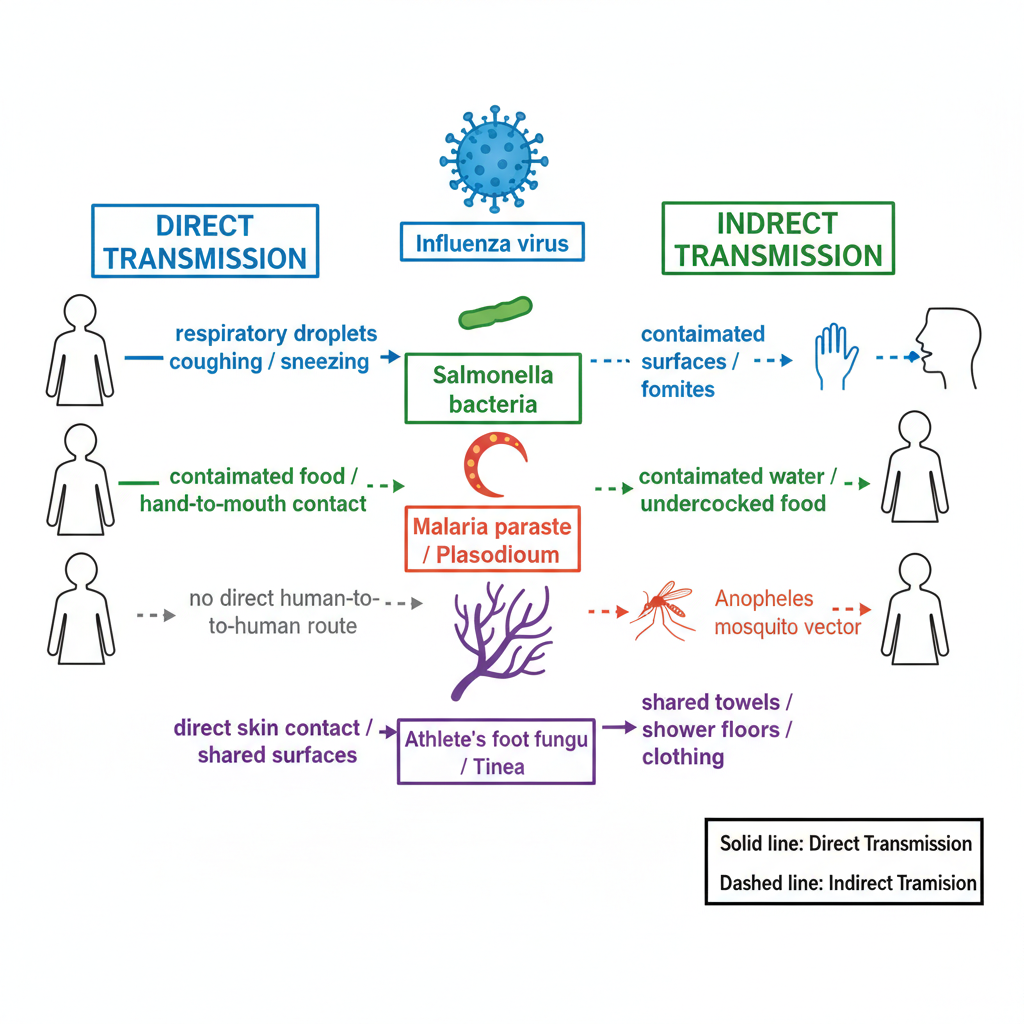
The diagram shows four pathogens and their transmission routes: influenza virus (respiratory droplets), norovirus (contaminated food/water), MRSA (direct skin contact), and malaria parasite (mosquito vector).
a
State the difference between direct and indirect transmission of a pathogen. [1]
b
Describe how influenza virus is transmitted from an infected person to an uninfected person. [1]
c
Evaluate the effectiveness of handwashing as a public health measure by analysing which transmission routes shown in the diagram it would interrupt and which it would not. [2]
Solutions
5QuestionPathogen-Host InteractionsConcept Practice
3 marks~5 minCriterion C
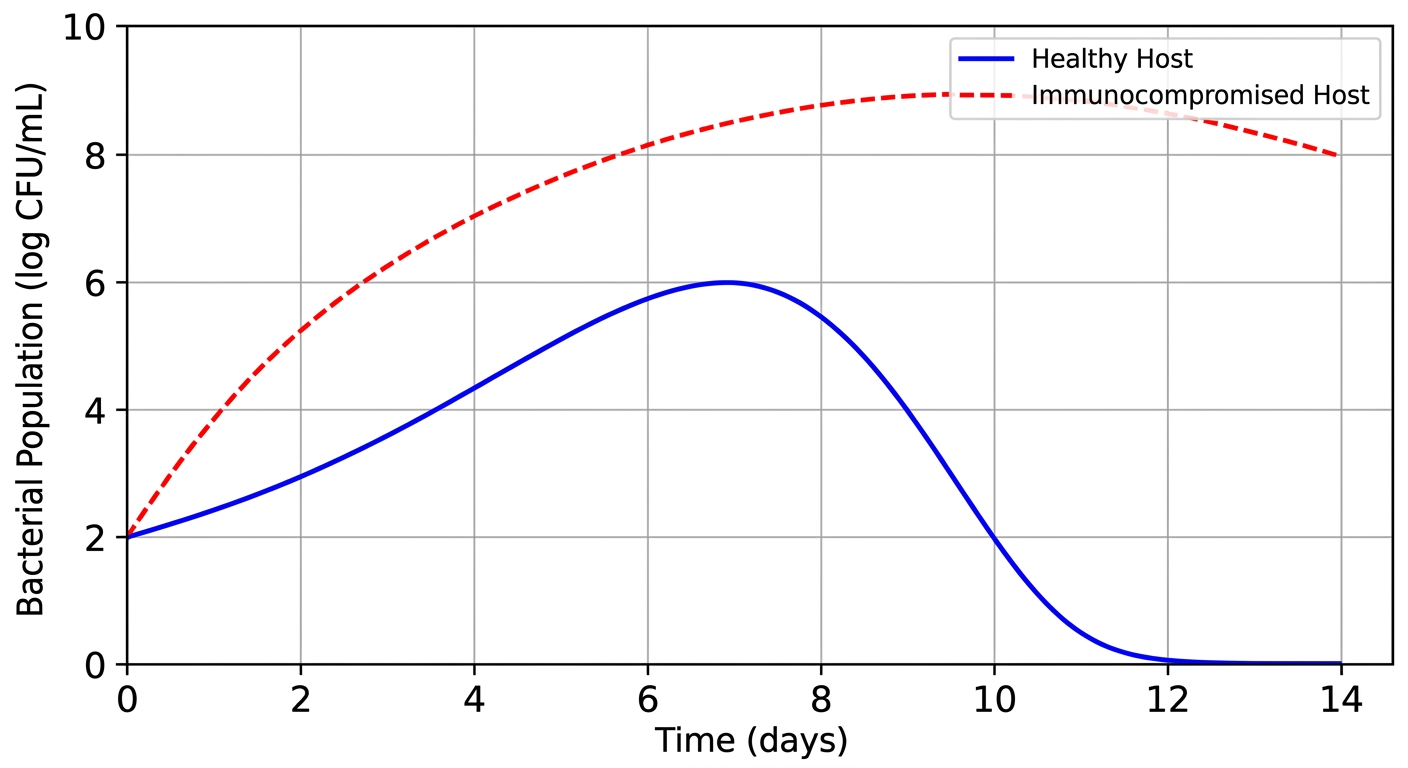
The graph below shows the population of a bacterial pathogen over 14 days in two hosts: one with a healthy immune system and one who is immunocompromised. In the healthy host, the bacterial population peaks at day 4 then declines to near zero by day 10. In the immunocompromised host, the population rises continuously throughout the 14-day period.
a
Identify the trend shown by the bacterial population in the healthy host between day 4 and day 10. [1]
b
Explain why the bacterial population follows a different trend in the immunocompromised host compared with the healthy host. [1]
c
Analyse what the comparison between the two curves suggests about the relationship between the effectiveness of the immune response and the rate of bacterial population growth. [1]
Solutions
That's every free question here — 5 of 219.
+214 more questions, plus Mock Papers & Worksheets, are waiting in Premium.