You're viewing free preview questions — 5 questions previewing here — subscribe to unlock 109 more, plus the Full Question Bank, Mock Papers & Worksheets.Upgrade
Immune System and Diseases — Free MYP4 Biology Practice Questions

1QuestionComponents of the Immune SystemConcept Practice
3 marks~5 minCriterion A
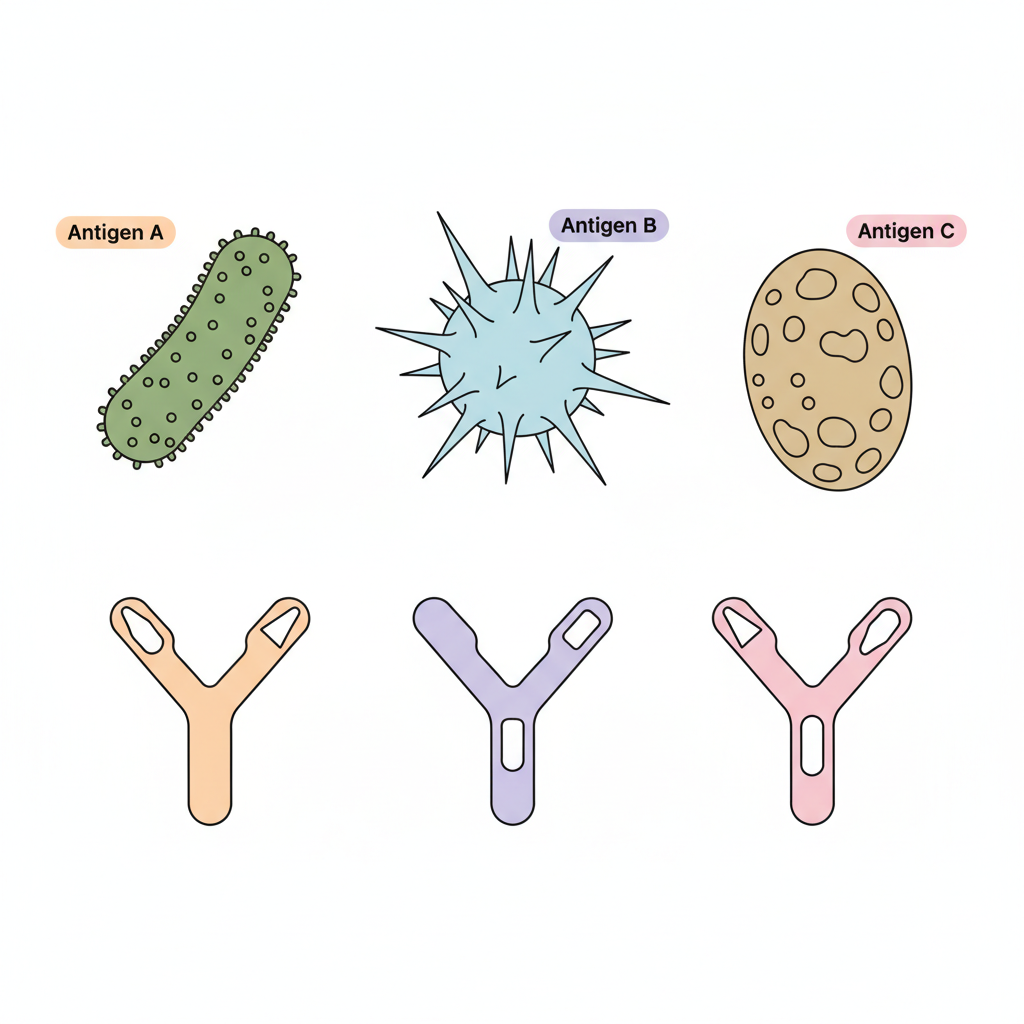
The diagram shows three pathogens — a bacterium, a virus, and a fungus — each displaying differently shaped surface antigens. Three antibodies (A, B, and C), each with a distinct binding site, are also shown.
a
Match each antibody to the pathogen it binds to. [1]
b
Explain how the shape of an antibody's binding site determines which antigen it can bind to. Use the terms "complementary shape" and "lock and key" in your answer. [1]
c
A mutated virus produces antigens with a slightly altered shape. Explain why existing antibodies produced against the original virus may no longer be effective against the mutated strain. [1]

Solutions
2QuestionRole of White Blood CellsAssessment Practice
2 marks~3 minCriterion C
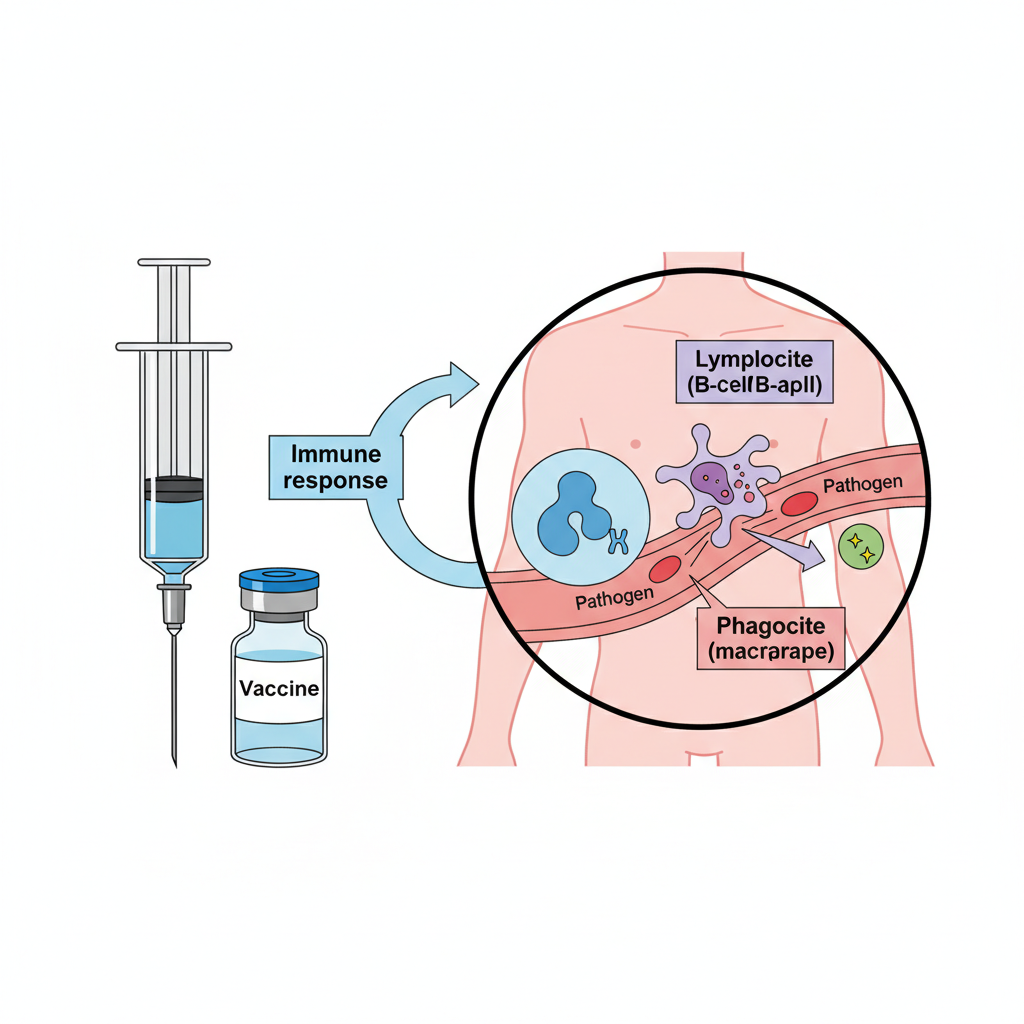
Following the introduction of the measles–mumps–rubella (MMR) vaccine, measles cases fell by over 99% in many countries, yet outbreaks still occur in under-vaccinated communities.
a
Explain how white blood cells produce long-term protection after MMR vaccination. [1]
b
Identify one ethical issue raised by mandatory childhood vaccination programmes and explain why it is ethically significant. [1]
Solutions
3QuestionVaccination and ImmunityAssessment Practice
6 marks~9 minCriterion D
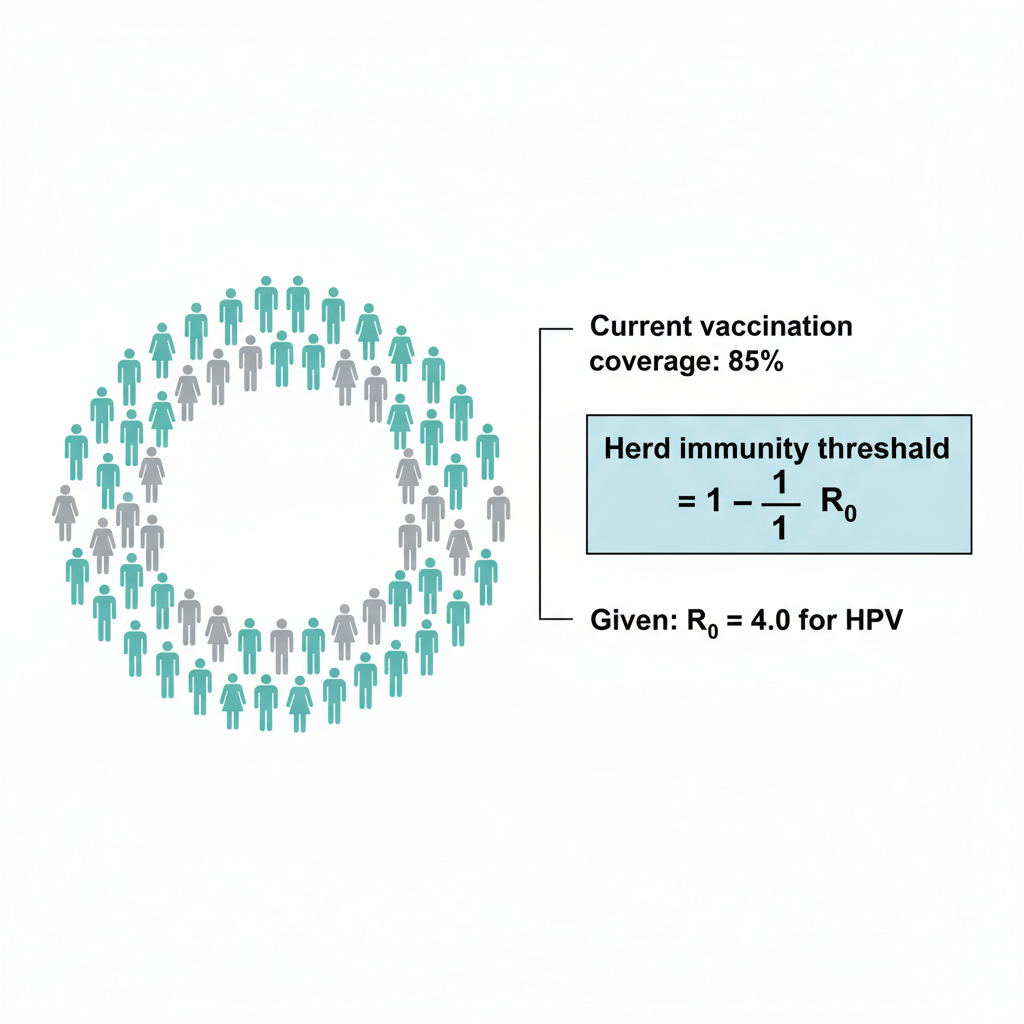
A public health official is reviewing HPV vaccination policy. The basic reproduction number () for HPV is 4.0. Currently, 85% of the target age group is vaccinated. The herd immunity threshold is given by:
a
Calculate the herd immunity threshold for HPV. Express your answer as a percentage. [2]
b
The community's current vaccination coverage is 85%. Deduce whether the community has achieved herd immunity against HPV, using your answer from part (a). [2]
c
Some parents refuse vaccination, citing personal freedom and uncertainty about long-term effects. Discuss the ethical tension between individual autonomy and community protection, considering the impact of vaccine refusal on immunocompromised individuals who cannot be fully protected by vaccination. [2]
Solutions
4QuestionRole of White Blood CellsAssessment Practice
6 marks~9 minCriterion D
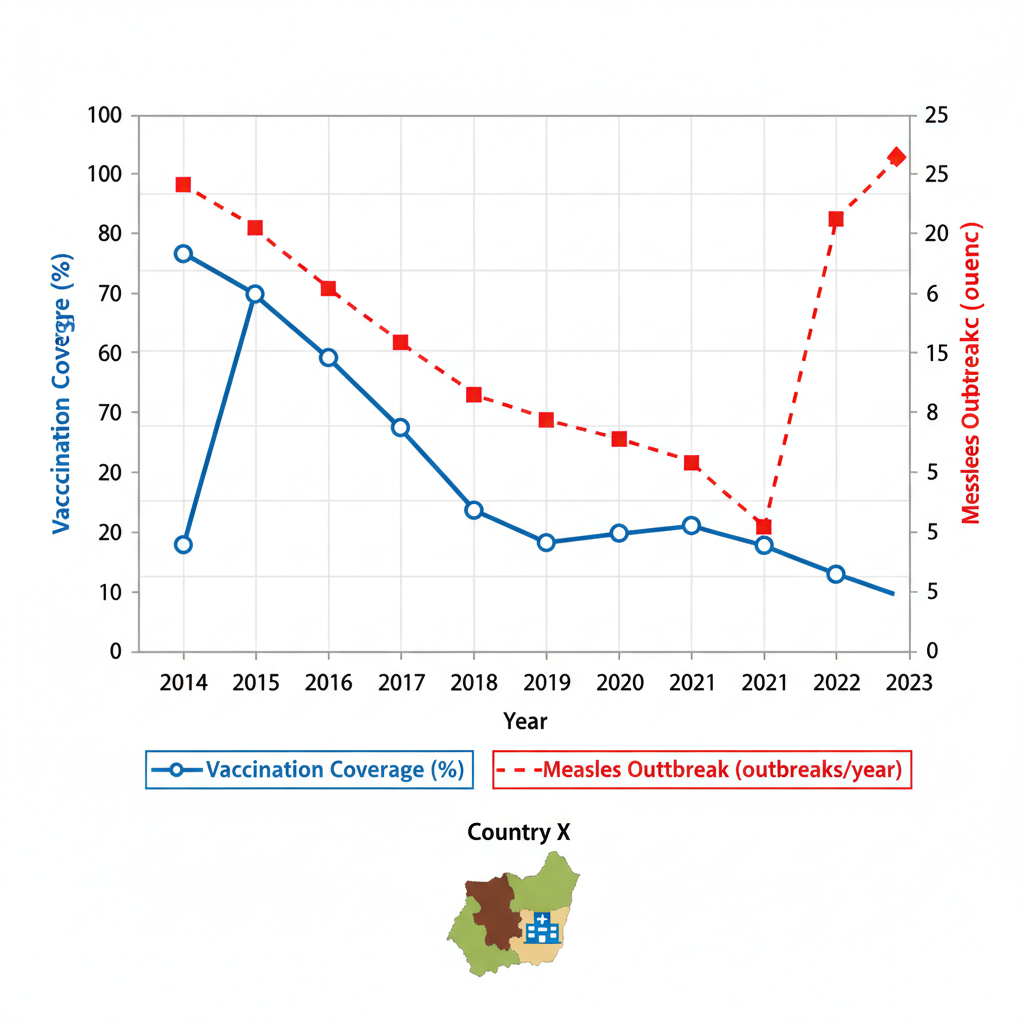
A low-income country's Ministry of Health is considering reducing measles vaccination funding to reallocate resources to other priorities. Epidemiological data collected over ten years is shown below.
| Year | 2014 | 2015 | 2016 | 2017 | 2018 | 2019 | 2020 | 2021 | 2022 | 2023 |
|---|---|---|---|---|---|---|---|---|---|---|
| Vaccination coverage (%) | 85 | 83 | 80 | 75 | 70 | 65 | 60 | 55 | 50 | 45 |
| Measles outbreak frequency (outbreaks/year) | 2 | 3 | 4 | 6 | 8 | 10 | 12 | 15 | 18 | 22 |
a
Analyse the relationship between vaccination coverage and measles outbreak frequency shown in the data. [2]
b
Explain how vaccination stimulates memory B-cells and memory T-cells, and connect this mechanism to the concept of herd immunity for measles. [2]
c
Evaluate the long-term societal consequences of continuing to reduce vaccination coverage in this country, considering population density, healthcare infrastructure, and at least one environmental factor affecting vaccine delivery. [2]
Solutions
5QuestionImmune Response MechanismsAssessment Practice
8 marks~12 minCriterion A
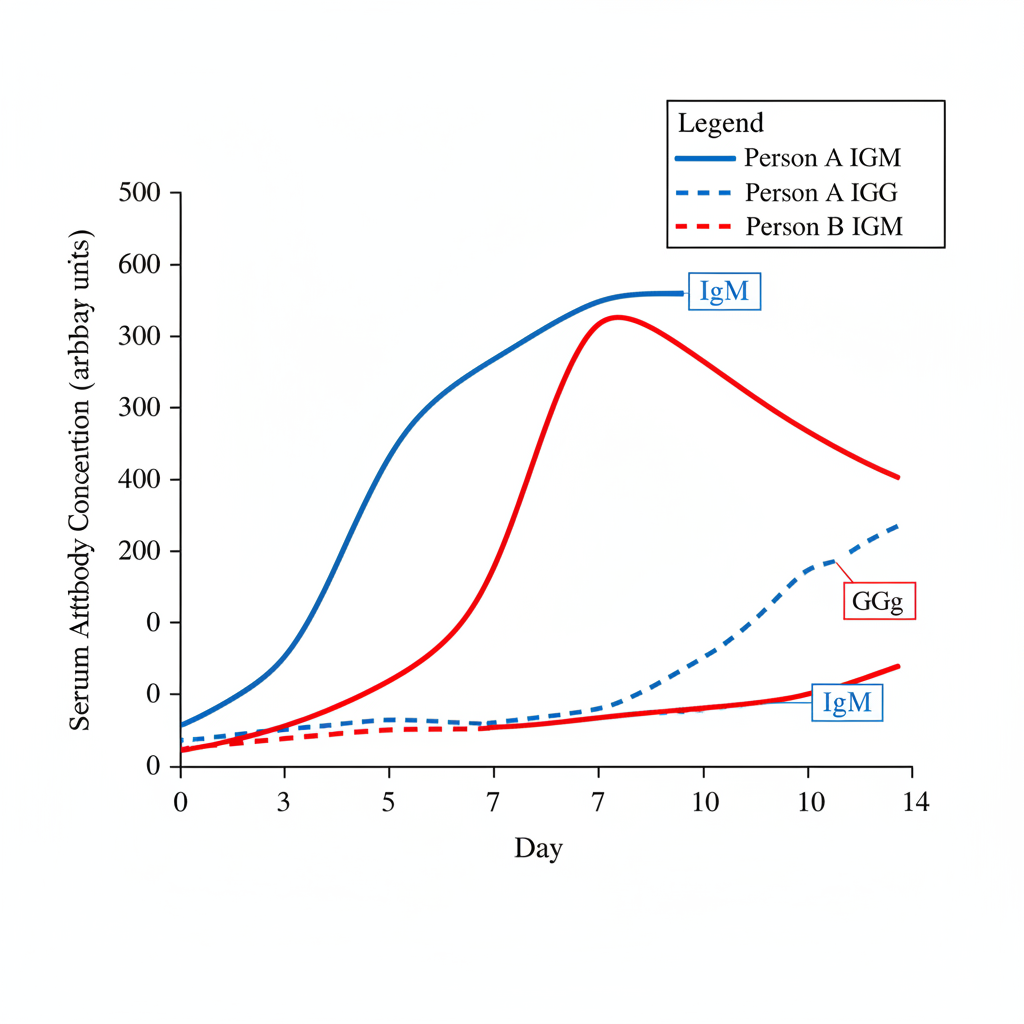
Two individuals are infected with the same pathogen on Day 0. Person A was vaccinated against this pathogen two years ago; Person B has had no prior exposure. Their serum antibody concentrations (arbitrary units) over 14 days are shown below.
| Day | 0 | 3 | 5 | 7 | 10 | 14 |
|---|---|---|---|---|---|---|
| Person A IgM | 0 | 5 | 40 | 100 | 60 | 20 |
| Person A IgG | 0 | 2 | 80 | 300 | 500 | 450 |
| Person B IgM | 0 | 0 | 10 | 80 | 200 | 150 |
| Person B IgG | 0 | 0 | 5 | 20 | 50 | 100 |
a
Describe the pattern of antibody class switching from IgM to IgG in Person A and in Person B. [2]
b
Deduce which individual is likely to experience a shorter and less severe illness, using the data to support your reasoning. [2]
c
Justify the difference in immune responses between Person A and Person B by discussing the roles of memory B cells and naive B cells, and evaluate how each response affects the ability to control the infection. [4]
Solutions
That's every free question here — 5 of 114.
+109 more questions, plus Mock Papers & Worksheets, are waiting in Premium.