You're viewing free preview questions — 6 questions previewing here — subscribe to unlock 59 more, plus the Full Question Bank, Mock Papers & Worksheets.Upgrade
Back

Muscular System — Free MYP4 Biology Practice Questions

Free questions

Open in full, with answers, mark scheme and examiner insights.

Question 1Criterion A · Band 1-4 · Easy · 4 marksrevisionprep.com

Types of muscles

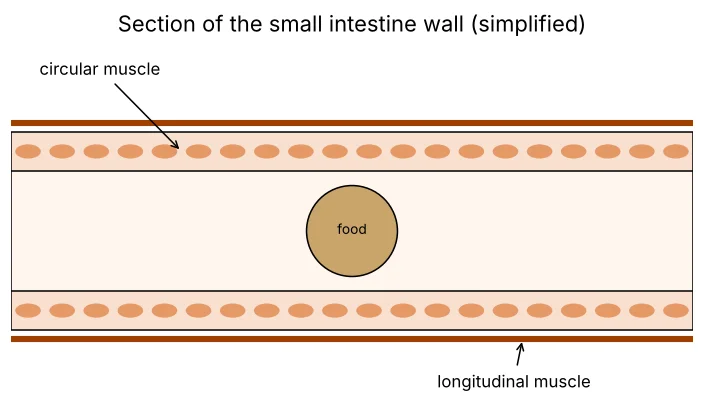
Food is moved along the small intestine by peristalsis. The wall of the intestine contains two layers of smooth muscle: an inner circular layer and an outer longitudinal layer.

The diagram shows a section of the intestine wall.
Question diagram
(a)
State why peristalsis continues while a person is asleep. [1]Criterion A (i) · Level 1-2
(b)
Describe how the two muscle layers push a ball of food along the intestine. [3]Criterion A (ii) · Level 3-4

revisionprep.com

Summary Answer

Not available for this question.

Model Answer

Not available for this question.

Marking Scheme

Not available for this question.

Examiner Insights

Not available for this question.

Question 2Criterion A + C · Band 3-4 · Easy · 4 marksrevisionprep.com

Muscle contraction and antagonistic pairs
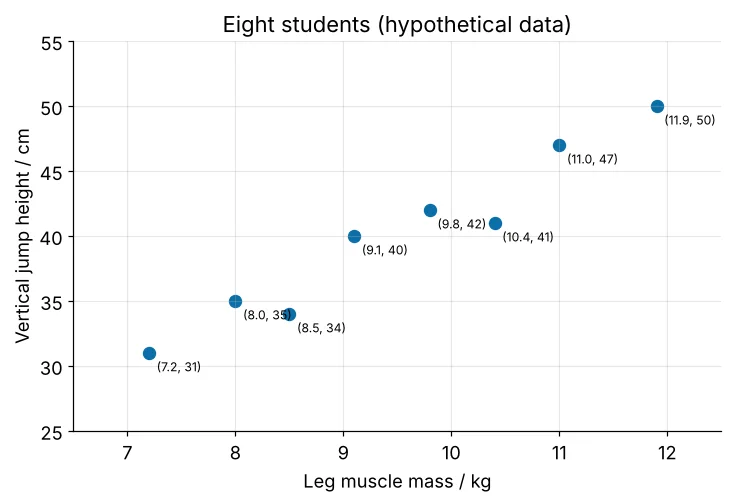
A PE teacher measured the leg muscle mass (from a body scan) and the vertical jump height of eight students. The graph shows the results (hypothetical data).
Question diagram
(a)
Describe the relationship shown by the graph. [2]Criterion C (ii) · Level 3-4
(b)
Explain why students with more leg muscle can usually jump higher. [2]Criterion A (ii) · Level 3-4

revisionprep.com

Summary Answer

Not available for this question.

Model Answer

Not available for this question.

Marking Scheme

Not available for this question.

Examiner Insights

Not available for this question.

Question 3Criterion B · Band 1-6 · Medium · 6 marksrevisionprep.com

Muscle contraction and antagonistic pairs

A student builds a model arm from two strips of wood joined by a hinge (the elbow). A string represents the biceps tendon: one end is tied to the forearm strip and the other runs up to a newton-meter fixed above the upper arm. A 200 g mass hangs from the end of the forearm. She can tie the string at different distances from the hinge.
(a)
State a research question for an investigation using this model. [1]Criterion B (i) · Level 1-2
(b)
Formulate a hypothesis and explain it using scientific reasoning. [2]Criterion B (ii) · Level 5-6
(c)
Explain how she should manipulate the independent variable and control two other variables. [3]Criterion B (iii) · Level 5-6

revisionprep.com

Summary Answer

Not available for this question.

Model Answer

Not available for this question.

Marking Scheme

Not available for this question.

Examiner Insights

Not available for this question.

Question 4Criterion A + D · Band 5-6 · Medium · 8 marksrevisionprep.com

Muscles and other systems (circulatory, nervous)
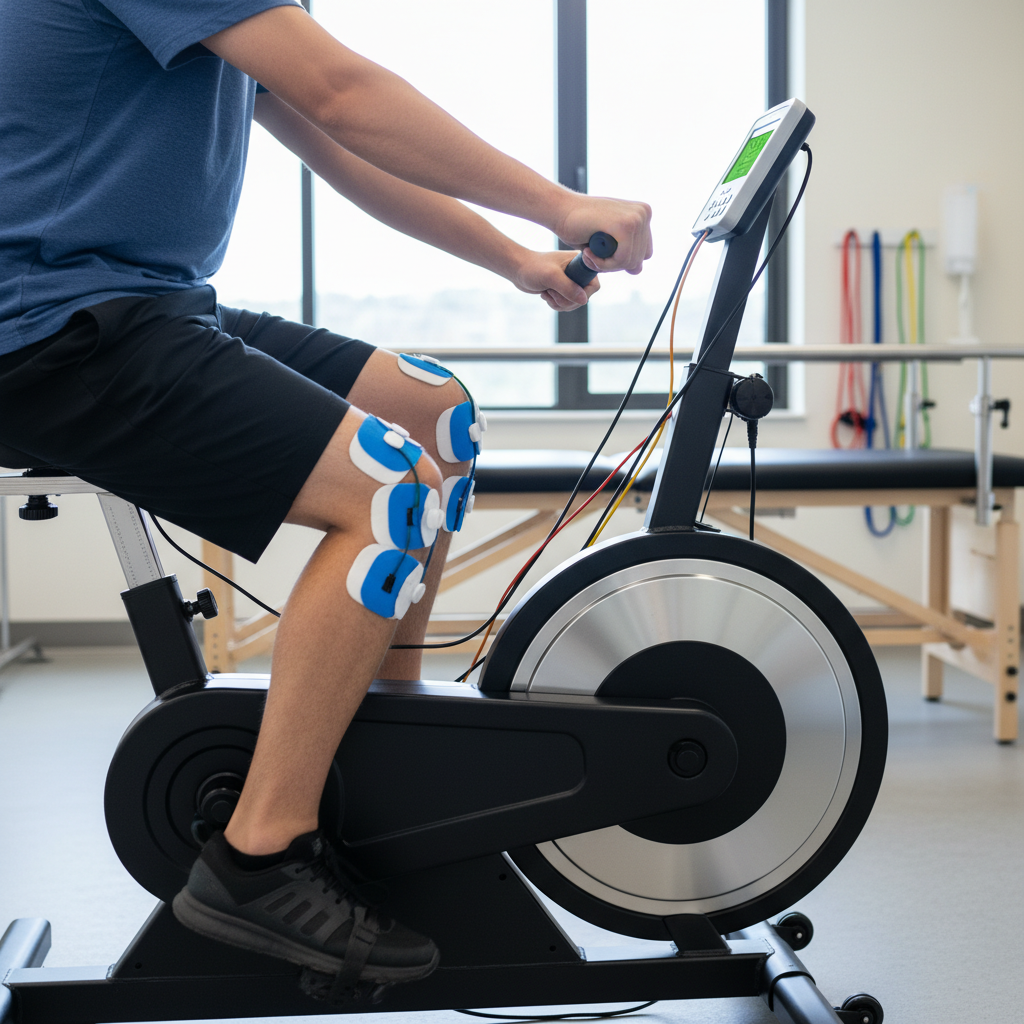
The photograph shows a patient with a spinal cord injury using a functional electrical stimulation (FES) bike. Electrodes on the skin over his thigh muscles deliver electrical pulses that make the muscles contract in turn, so his legs turn the pedals.
Question diagram
(a)
Explain how FES cycling benefits the patient's circulatory system as well as his muscles. [3]Criterion A (ii) · Level 5-6
(b)
The pulses are timed so that the quadriceps and the hamstrings never contract at the same moment. Suggest why. [1]Criterion A (iii) · Level 5-6
(c)
Discuss two implications of making FES bikes available in every community health centre. [4]Criterion D (ii), D (iii) · Level 5-6

revisionprep.com

Summary Answer

Not available for this question.

Model Answer

Not available for this question.

Marking Scheme

Not available for this question.

Examiner Insights

Not available for this question.

Question 5Criterion C · Band 3-8 · Challenge · 9 marksrevisionprep.com

Types of muscles

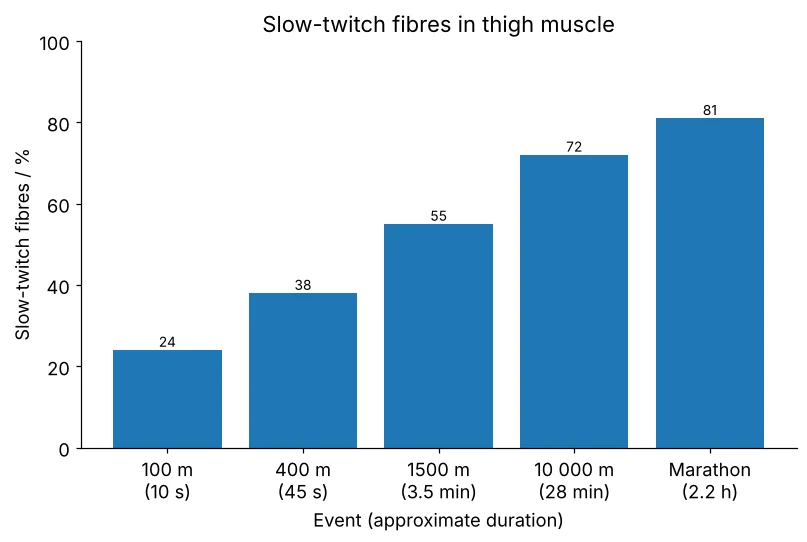
Muscle samples (biopsies) were taken from the thigh muscle of five athletes, and the percentage of slow-twitch fibres in each sample was measured.

The graph shows the results.
Question diagram
(a)
Calculate the percentage of fast-twitch fibres in the 400 m runner and in the marathon runner. [2]Criterion C (i) · Level 3-4
(b)
Describe the relationship between event duration and the percentage of slow-twitch fibres. [2]Criterion C (ii) · Level 3-4
(c)
Explain this relationship using scientific reasoning. [2]Criterion C (ii) · Level 5-6
(d)
A coach concludes that "training for long races turns fast-twitch fibres into slow-twitch fibres". Evaluate whether these data support his conclusion. [3]Criterion C (iii) · Level 7-8

revisionprep.com

Summary Answer

Not available for this question.

Model Answer

Not available for this question.

Marking Scheme

Not available for this question.

Examiner Insights

Not available for this question.

Question 6Criterion D + A · Band 3-8 · Challenge · 8 marksrevisionprep.com

Muscle disorders and injuries

The image shows an older woman using a powered exoskeleton, and a pile of electronic waste. Sarcopenia is the gradual loss of muscle mass and strength with age, affecting many adults over 60. A powered exoskeleton uses motors and batteries to help the wearer stand and walk.
Question diagram
(a)
Explain why loss of muscle mass increases the risk of falls in older people. [2]Criterion A (iii) · Level 3-4
(b)
Explain how an exoskeleton helps to solve this problem. [2]Criterion D (i) · Level 3-4
(c)
Discuss the benefits of exoskeletons in elderly care against their environmental impact, and suggest one way to reduce that impact. [4]Criterion D (ii), D (iii) · Level 7-8

revisionprep.com

Summary Answer

Not available for this question.

Model Answer

Not available for this question.

Marking Scheme

Not available for this question.

Examiner Insights

Not available for this question.

That's every free question here — 6 of 65.

+59 more questions, plus Mock Papers & Worksheets, are waiting in Premium.

Upgrade