You're viewing free preview questions — 6 questions previewing here — subscribe to unlock 89 more, plus the Full Question Bank, Mock Papers & Worksheets.Upgrade
Back

Nervous systems — Free MYP4 Biology Practice Questions

Free questions

Open in full, with answers, mark scheme and examiner insights.

Question 1Criterion A · Band 1-4 · Easy · 4 marksrevisionprep.com

Central and Peripheral Nervous System

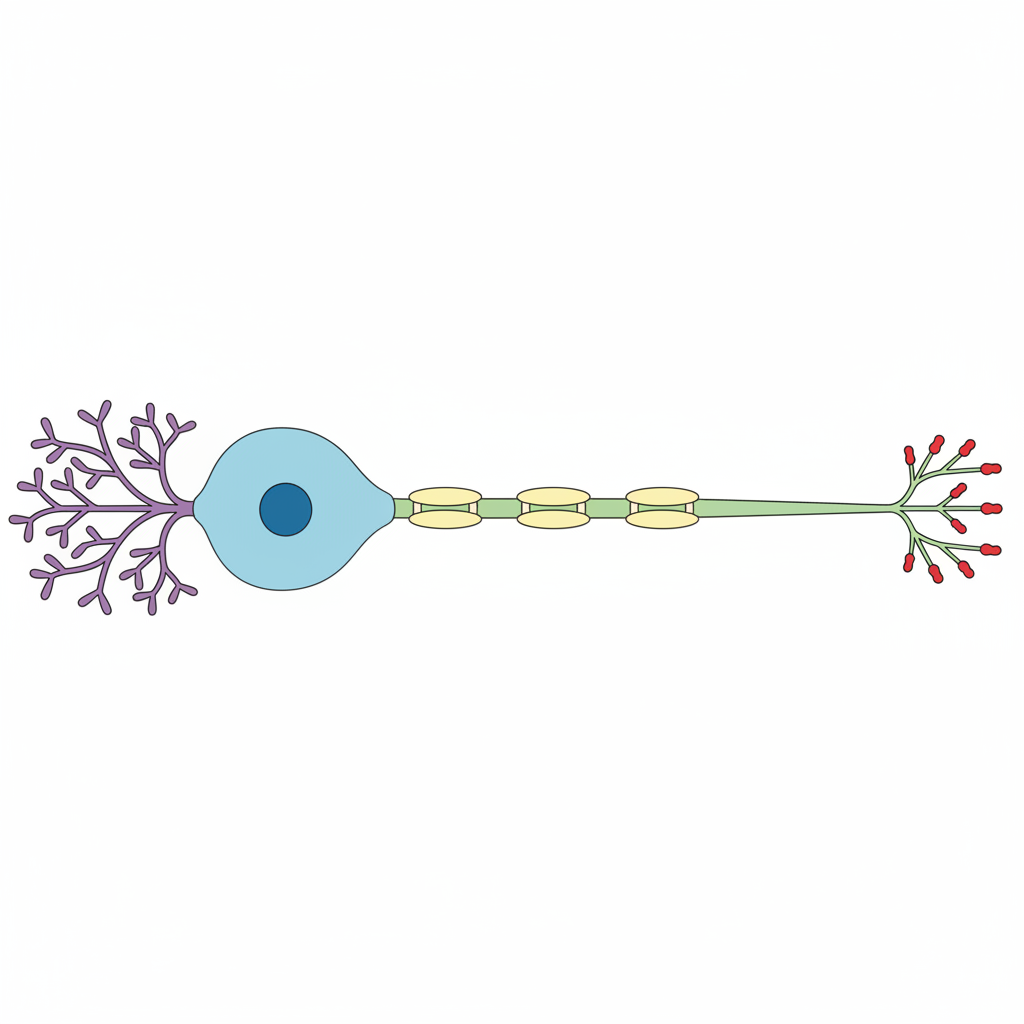
The diagram shows one type of neurone (not to scale).
Question diagram
(a)
Identify the type of neurone shown, giving one feature from the diagram that supports your answer. [2]Criterion A (iii) · Level 3-4
(b)
Name the part of the nervous system (CNS or PNS) in which the cell body of this neurone is found, and the structure on which its axon ends. [2]Criterion A (i) · Level 1-2

revisionprep.com

Summary Answer

Not available for this question.

Model Answer

Not available for this question.

Marking Scheme

Not available for this question.

Examiner Insights

Not available for this question.

Question 2Criterion B + C · Band 1-4 · Easy · 3 marksrevisionprep.com

Neurones and nerve impulses

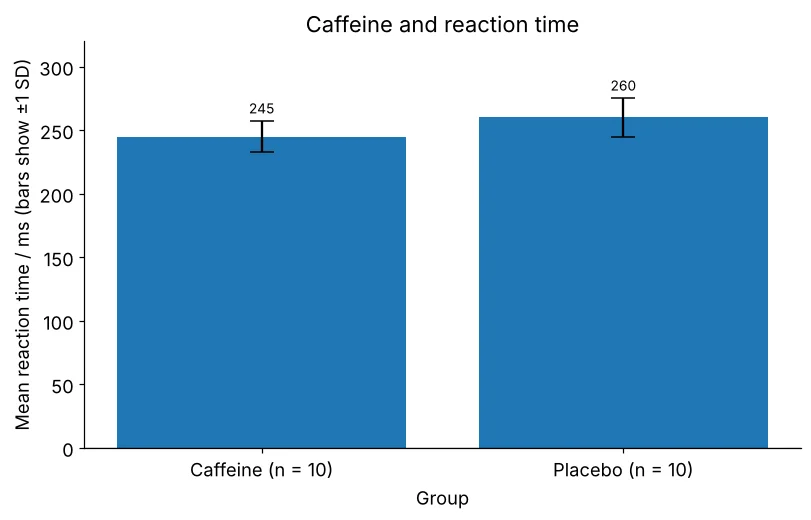
A researcher hypothesised that caffeine speeds up transmission at synapses. Twenty volunteers were randomly given either a drink with 200 mg of caffeine or an identical-looking drink with none (placebo). Visual reaction time was tested 30 minutes later.

Caffeine group (n = 10): mean 245 ms; standard deviation 12 ms
Placebo group (n = 10): mean 260 ms; standard deviation 15 ms

The graph shows these data.
Question diagram
(a)
State what the means suggest about the effect of caffeine. [1]Criterion C (ii) · Level 1-2
(b)
Explain why a placebo drink was used. [2]Criterion B (iii) · Level 3-4

revisionprep.com

Summary Answer

Not available for this question.

Model Answer

Not available for this question.

Marking Scheme

Not available for this question.

Examiner Insights

Not available for this question.

Question 3Criterion A + C · Band 3-6 · Medium · 6 marksrevisionprep.com

Reflex Arcs and Response to Stimuli

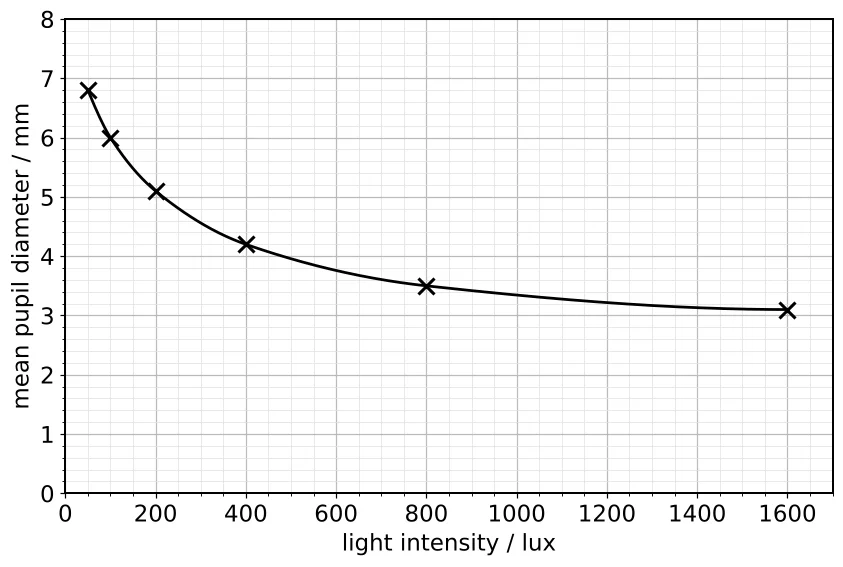
Five volunteers sat in a room where the light intensity was changed. The graph shows the mean pupil diameter at each light intensity.
Question diagram
(a)
Describe the relationship shown by the graph. [2]Criterion C (ii) · Level 3-4
(b)
Use the graph to determine the light intensity at which the mean pupil diameter is 4.5 mm. [1]Criterion C (i) · Level 3-4
(c)
Explain the change in pupil diameter using your knowledge of the pupil reflex. [3]Criterion A (i) · Level 5-6

revisionprep.com

Summary Answer

Not available for this question.

Model Answer

Not available for this question.

Marking Scheme

Not available for this question.

Examiner Insights

Not available for this question.

Question 4Criterion A + C · Band 1-6 · Medium · 4 marksrevisionprep.com

The nervous system and other body systems

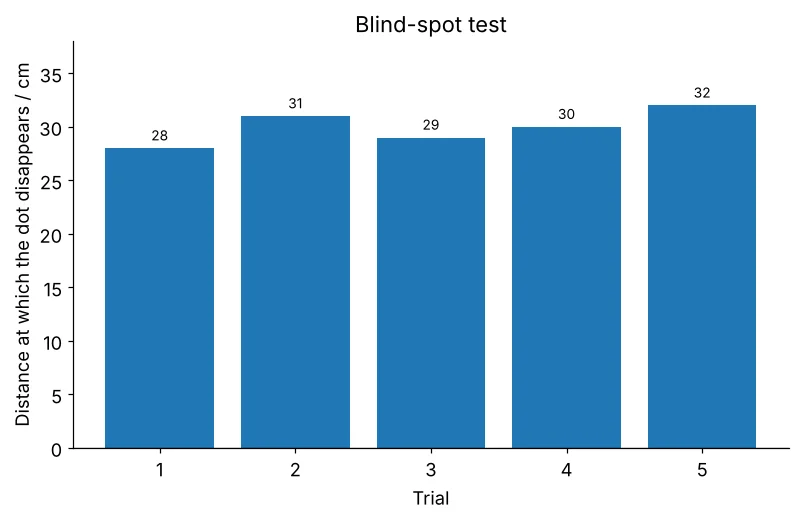
In a blind-spot test, a student covers the left eye and looks with the right eye at a cross on a card, while slowly moving the card towards the face. At a certain distance a dot printed to the right of the cross disappears. The distances in five trials were 28, 31, 29, 30 and 32 cm.

The graph shows these data.
Question diagram
(a)
Calculate the mean distance at which the dot disappeared. [2]Criterion C (i) · Level 1-2
(b)
Explain why the dot disappears at this distance, using your knowledge of the retina and the optic nerve. [2]Criterion A (i) · Level 5-6

revisionprep.com

Summary Answer

Not available for this question.

Model Answer

Not available for this question.

Marking Scheme

Not available for this question.

Examiner Insights

Not available for this question.

Question 5Criterion D + C · Band 3-8 · Challenge · 8 marksrevisionprep.com

Structure and Function of the Nervous System

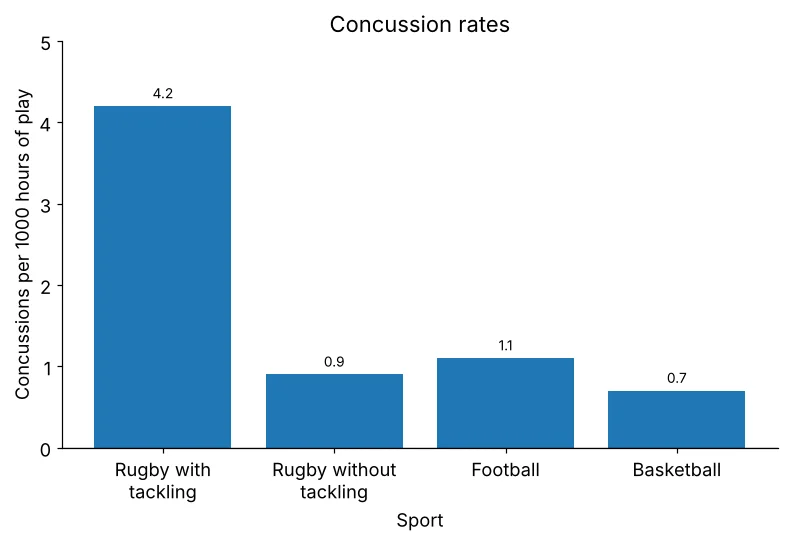
A school is deciding whether to remove tackling from rugby for students under 16. Concussion is a brain injury caused by a blow that shakes the brain inside the skull; it can stretch and damage axons. The data below show concussion rates recorded in school sport.

Rugby with tackling: 4.2 concussions per 1000 hours of play
Rugby without tackling: 0.9 per 1000 hours
Football (soccer): 1.1 per 1000 hours
Basketball: 0.7 per 1000 hours

The graph shows these data.
Question diagram
(a)
Calculate the percentage decrease in the concussion rate when tackling is removed from rugby. [2]Criterion C (i) · Level 3-4
(b)
Explain why damage to axons in the brain can have long-lasting effects. [2]Criterion D (i) · Level 3-4
(c)
Discuss whether the school should remove tackling from rugby for students under 16. [4]Criterion D (ii) · Level 7-8

revisionprep.com

Summary Answer

Not available for this question.

Model Answer

Not available for this question.

Marking Scheme

Not available for this question.

Examiner Insights

Not available for this question.

Question 6Criterion C + A · Band 1-8 · Challenge · 10 marksrevisionprep.com

Nervous system disorders

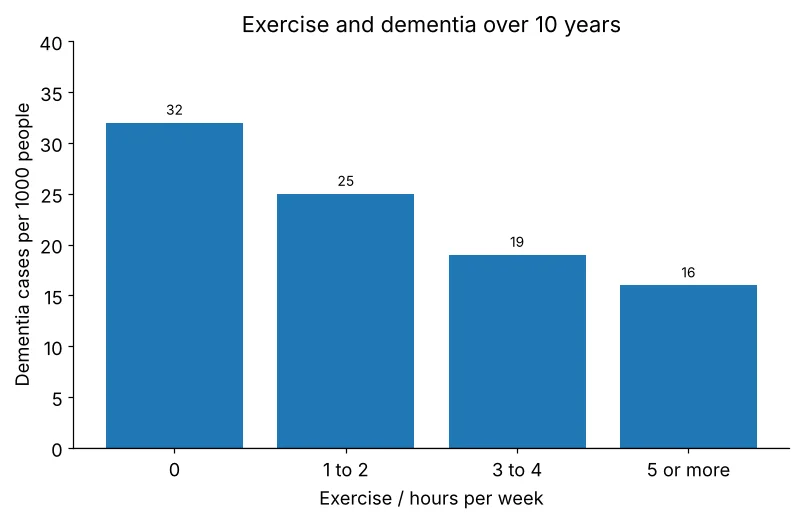
A 10-year study followed 4000 adults aged 60 and over. The data below show the number who developed dementia per 1000 people, grouped by how much exercise they reported at the start.

0 hours per week: 32
1 to 2 hours per week: 25
3 to 4 hours per week: 19
5 or more hours per week: 16

The graph shows these data.
Question diagram
(a)
State the relationship shown by the data. [1]Criterion C (ii) · Level 1-2
(b)
Calculate the percentage reduction in dementia cases for people exercising 5 or more hours per week compared with 0 hours. [2]Criterion C (i) · Level 3-4
(c)
Suggest a biological reason why exercise might protect the brain. [2]Criterion A (ii) · Level 5-6
(d)
Evaluate the claim that 'exercise prevents dementia', using the study. [3]

(e) Outline how a study could be designed to test whether exercise itself reduces the risk of dementia. [2]
Criterion C (iii) · Level 5-6

revisionprep.com

Summary Answer

Not available for this question.

Model Answer

Not available for this question.

Marking Scheme

Not available for this question.

Examiner Insights

Not available for this question.

That's every free question here — 6 of 95.

+89 more questions, plus Mock Papers & Worksheets, are waiting in Premium.

Upgrade