You're viewing free preview questions — 4 questions previewing here — subscribe to unlock 75 more, plus the Full Question Bank, Mock Papers & Worksheets.Upgrade
Neutralization Reactions — Free MYP4 Chemistry Practice Questions

1QuestionDefinition and Real-Life Examples of NeutralizationConcept Practice
2 marks~3 minCriterion A
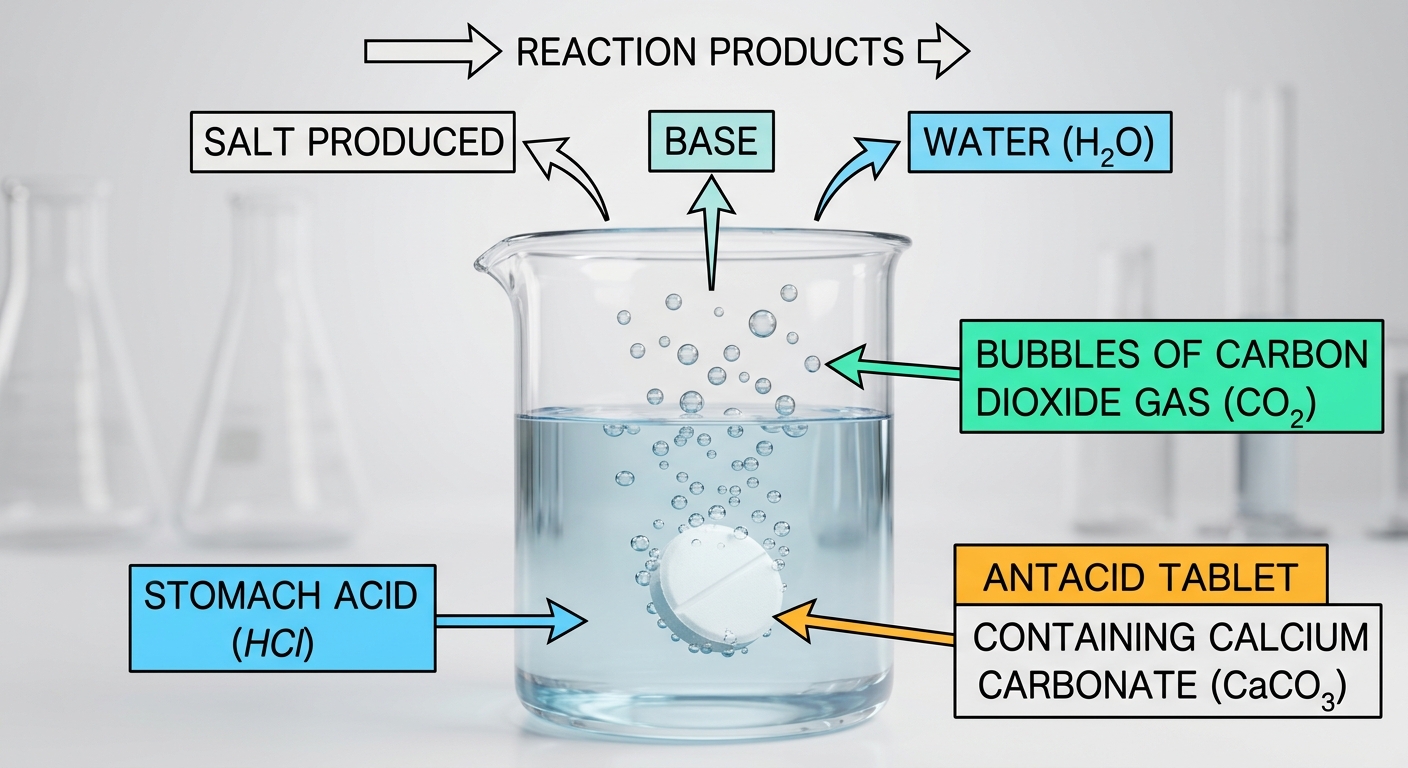
An antacid tablet containing calcium carbonate () is added to a beaker of stomach acid (hydrochloric acid, ). The tablet dissolves, releasing bubbles of carbon dioxide gas ().
a
Identify the base in this neutralization reaction. [1]
b
Identify the salt produced in this neutralization reaction. [1]

Solutions
2QuestionpH Changes During NeutralizationAssessment Practice
2 marks~3 minCriterion D
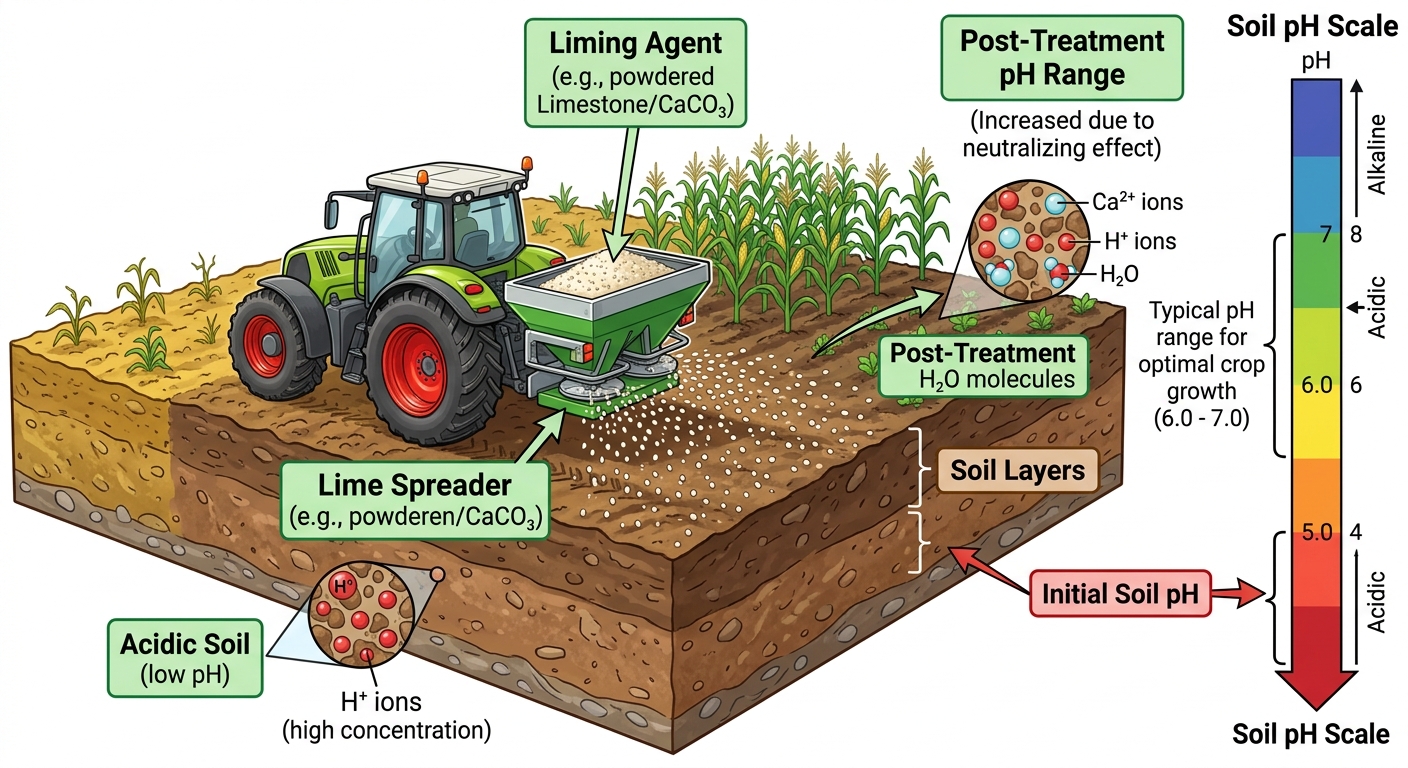
In many regions, agricultural soils become acidic due to rainfall and fertiliser use, reducing crop yields. A farmer tests the soil and finds a pH of 4.5. She applies calcium hydroxide, , to raise the soil pH toward the optimal range of 6.0–7.0 for most crops.
a
Explain how applying to acidic soil raises its pH, referring to the neutralization reaction that occurs. [1]
b
Identify one environmental risk of over-applying to agricultural soil, and explain the chemical or ecological mechanism by which this risk arises. [1]
Solutions
3QuestionWord and Symbol Equations for NeutralizationConcept Practice
3 marks~5 minCriterion B
Four neutralization reactions and their salt products are shown below.
| Acid: hydrochloric acid () | Base: sodium hydroxide () | Salt: sodium chloride |
|---|---|---|
| Acid: sulfuric acid () | Base: potassium hydroxide () | Salt: potassium sulfate |
| Acid: nitric acid () | Base: calcium hydroxide () | Salt: calcium nitrate |
| Acid: phosphoric acid () | Base: sodium hydroxide () | Salt: sodium phosphate |
a
Identify the pattern used to name the salts produced in neutralization reactions. [1]
b
Deduce the name of the salt formed when hydrobromic acid () reacts with magnesium hydroxide (). [1]
c
Construct the word equation for the neutralization reaction between hydrobromic acid and magnesium hydroxide. [1]
Solutions
4QuestionWord and Symbol Equations for NeutralizationAssessment Practice
5 marks~8 minCriterion C
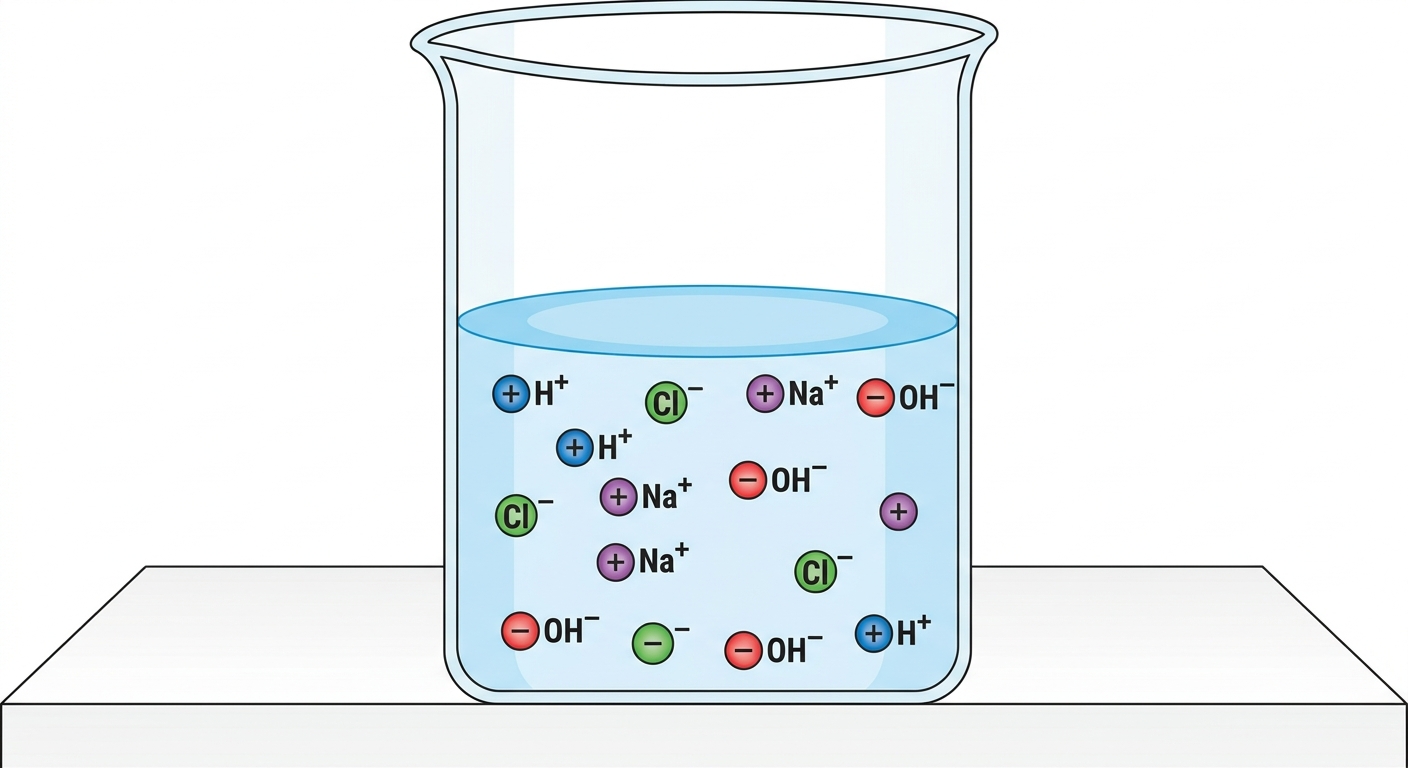
A student mixes hydrochloric acid () with sodium hydroxide () solution in a beaker. The mixture contains freely moving , , , and ions before the reaction occurs.
a
Construct the balanced word equation for the reaction between hydrochloric acid and sodium hydroxide. [1]
b
Construct the balanced symbol equation for this reaction, including state symbols. [2]
c
The student claims that the ionic equation represents every neutralization reaction between a strong acid and a strong alkali, not just this one. Evaluate this claim. [2]
Solutions
That's every free question here — 4 of 79.
+75 more questions, plus Mock Papers & Worksheets, are waiting in Premium.