You're viewing free preview questions — 6 questions previewing here — subscribe to unlock 79 more, plus the Full Question Bank, Mock Papers & Worksheets.Upgrade
Back

Properties of Acids and Bases — Free MYP4 Chemistry Practice Questions

Free questions

Open in full, with answers, mark scheme and examiner insights.

Question 1Criterion A · Band 1-4 · Easy · 3 marksrevisionprep.com

Conductivity of Acidic and Basic Solutions
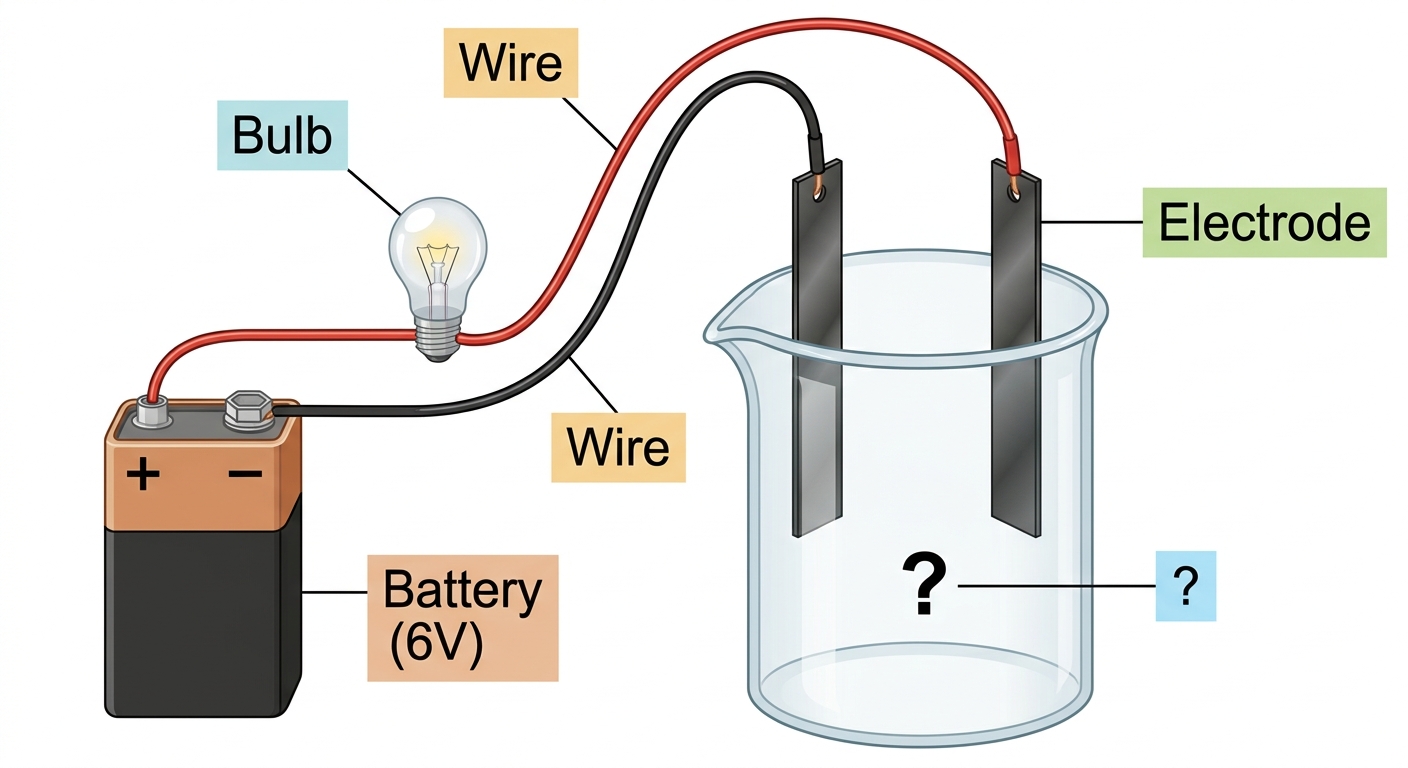
The diagram shows apparatus for testing whether a liquid conducts electricity. The beaker is filled with each liquid in turn.
Question diagram
(a)
Identify the parts of the apparatus that must be dipped into each liquid. [1]Criterion A (i) · Level 1-2
(b)
Dilute hydrochloric acid lights the bulb but ethanol does not. Explain this difference. [2]Criterion A (ii) · Level 3-4

revisionprep.com

Summary Answer

Not available for this question.

Model Answer

Not available for this question.

Marking Scheme

Not available for this question.

Examiner Insights

Not available for this question.

Question 2Criterion A · Band 1-4 · Easy · 7 marksrevisionprep.com

Acids and alkalis in terms of H⁺ and OH⁻ ions; bases vs alkalis
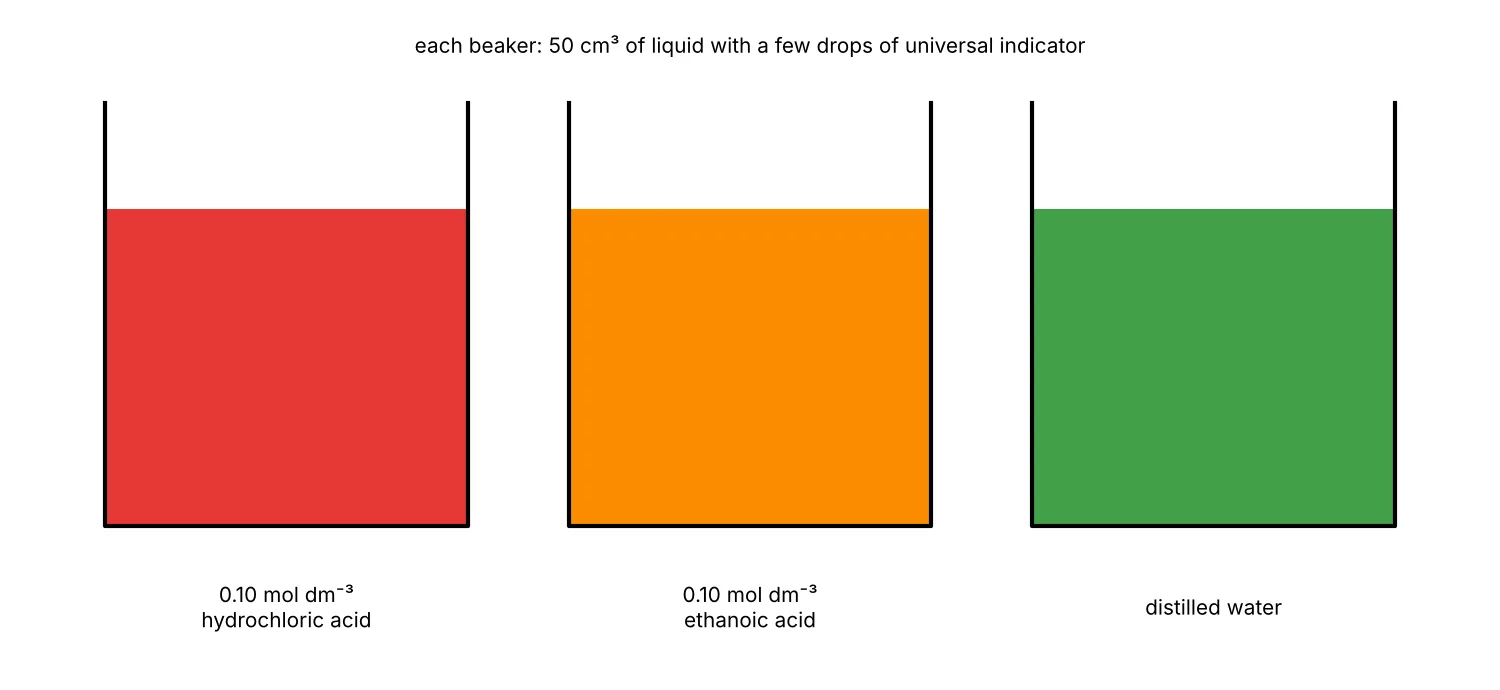
The diagram shows three beakers. Each contains 50 cm³ of liquid with a few drops of universal indicator: 0.1 mol dm⁻³ hydrochloric acid, 0.1 mol dm⁻³ ethanoic acid and distilled water.
Question diagram
(a)
State the approximate pH shown in each beaker. [2]Criterion A (i) · Level 1-2
(b)
Explain, in terms of ionisation, why the two acids have different pH values although they have the same concentration. [3]Criterion A (ii) · Level 3-4
(c)
A student says the ethanoic acid must be more dilute than the hydrochloric acid. Explain why the student is wrong. [2]Criterion A (iii) · Level 3-4

revisionprep.com

Summary Answer

Not available for this question.

Model Answer

Not available for this question.

Marking Scheme

Not available for this question.

Examiner Insights

Not available for this question.

Question 3Criterion C + A · Band 3-6 · Medium · 5 marksrevisionprep.com

Physical and Chemical Properties of Bases
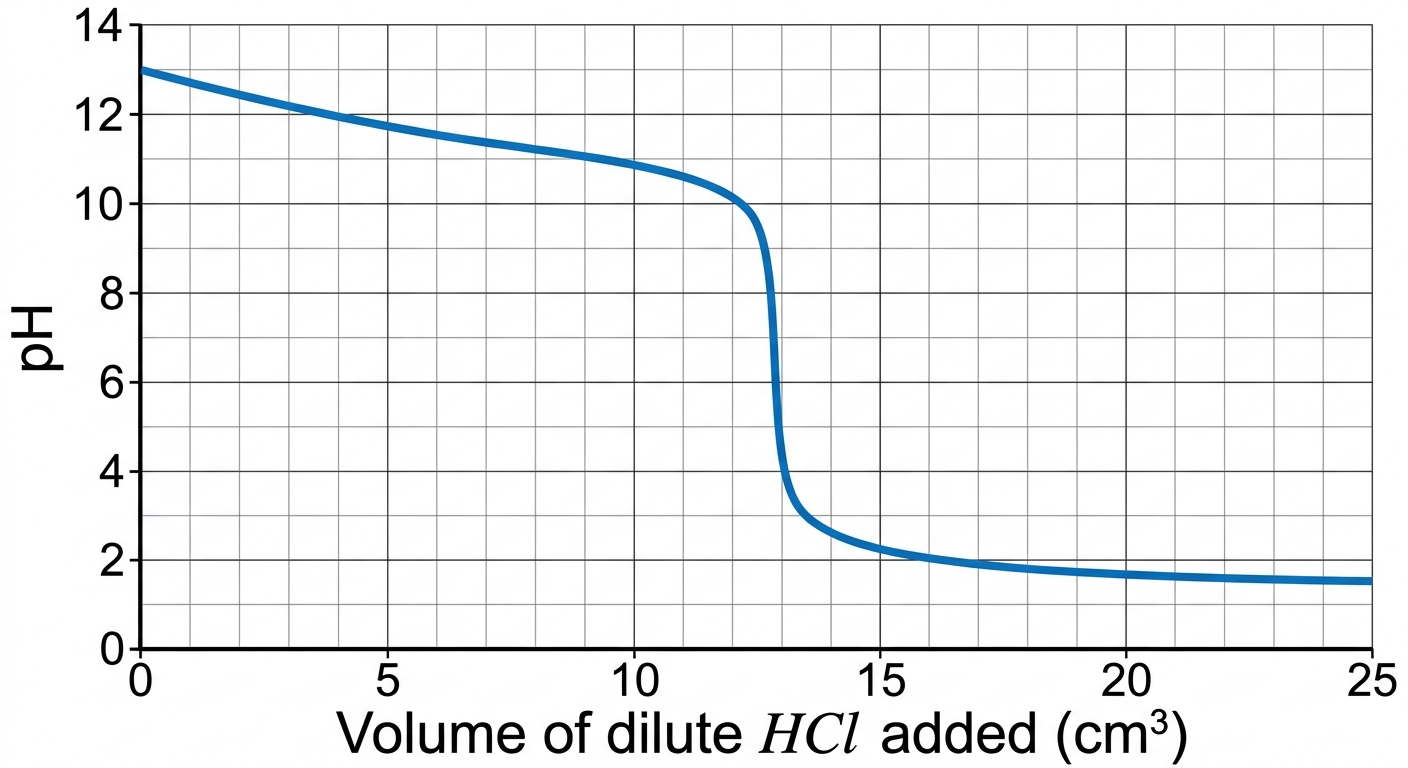
Dilute hydrochloric acid is added from a burette to 25 cm³ of sodium hydroxide solution. The graph shows how the pH changes.
Question diagram
(a)
Determine the volume of acid needed to neutralise the sodium hydroxide. [1]Criterion C (i) · Level 3-4
(b)
Explain why the pH falls very sharply near this volume. [2]Criterion A (ii) · Level 5-6
(c)
Phenolphthalein is pink above about pH 9 and colourless below it. Predict its colour after 5 cm³ and after 20 cm³ of acid have been added. [2]Criterion C (ii) · Level 5-6

revisionprep.com

Summary Answer

Not available for this question.

Model Answer

Not available for this question.

Marking Scheme

Not available for this question.

Examiner Insights

Not available for this question.

Question 4Criterion A · Band 1-6 · Medium · 7 marksrevisionprep.com

Common Examples and Uses of Acids and Bases
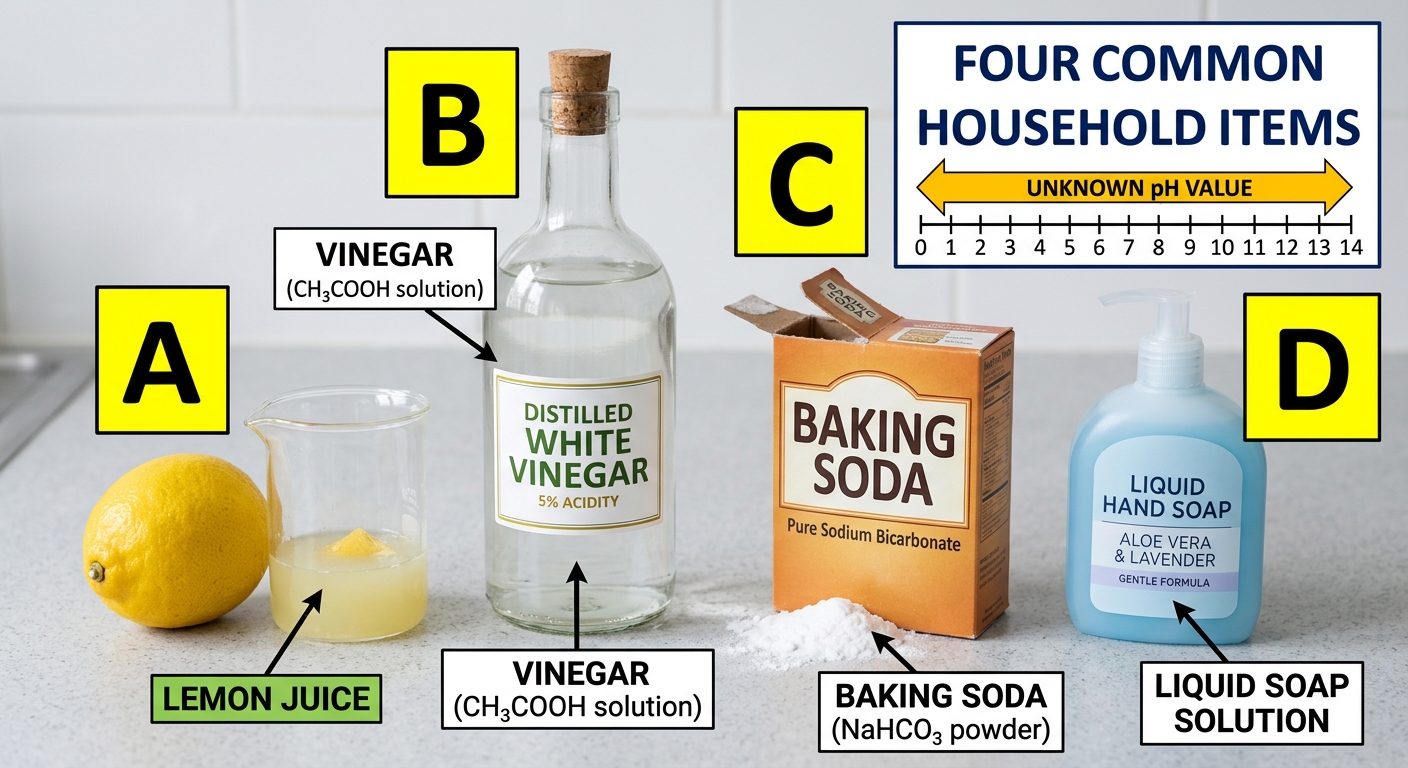
The photograph shows four household items, A to D.
Question diagram
(a)
State which items are acidic and which are alkaline. [2]Criterion A (i) · Level 1-2
(b)
Predict the colour of universal indicator in a solution of item B and of item C. [2]Criterion A (ii) · Level 3-4
(c)
A bee sting injects an acidic liquid and a wasp sting injects an alkaline liquid. Explain which item could be used to ease each sting. [3]Criterion A (iii) · Level 5-6

revisionprep.com

Summary Answer

Not available for this question.

Model Answer

Not available for this question.

Marking Scheme

Not available for this question.

Examiner Insights

Not available for this question.

Question 5Criterion D + A · Band 3-8 · Challenge · 10 marksrevisionprep.com

Physical and Chemical Properties of Acids
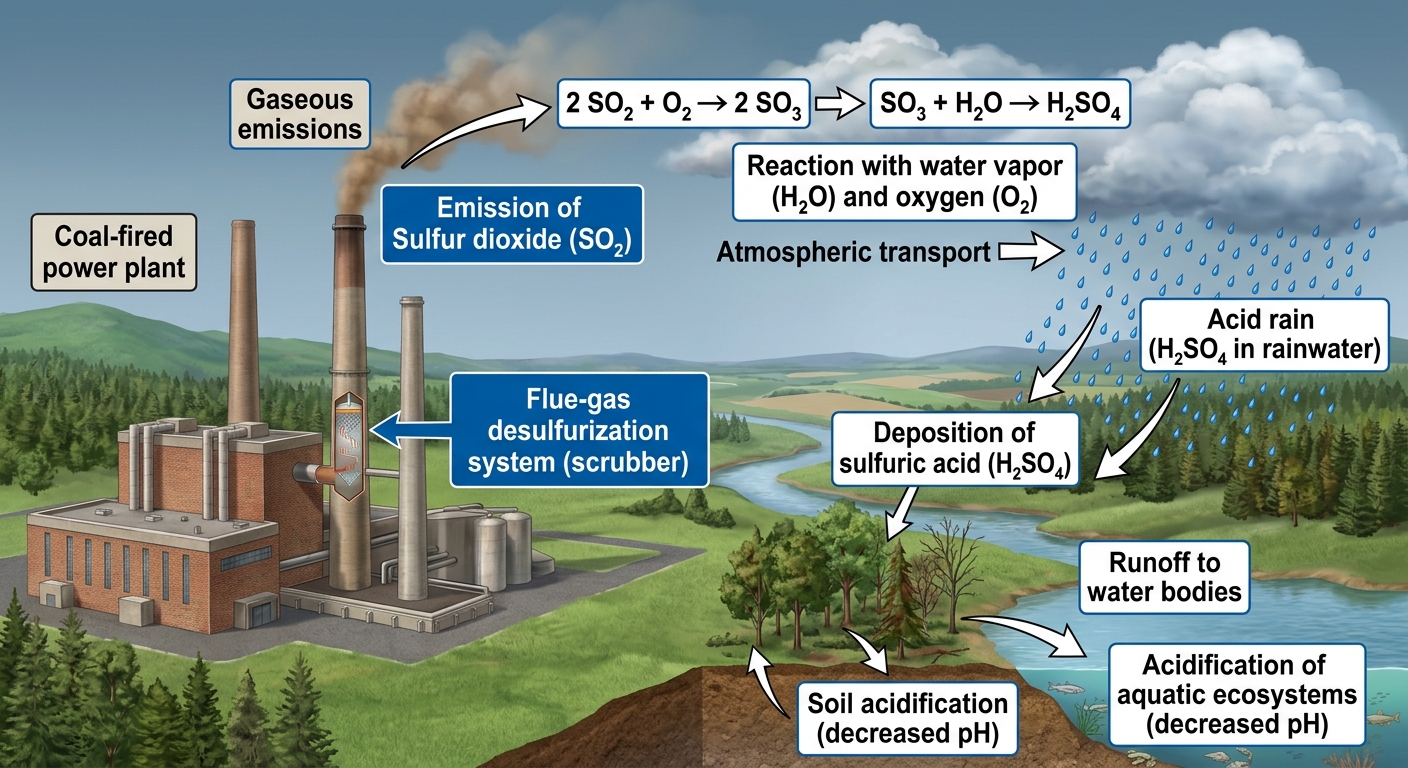
The diagram shows how sulfur dioxide from a coal-fired power station forms acid rain, and where a flue-gas desulfurisation unit (a 'scrubber') is fitted. In the scrubber, the waste gases pass through wet powdered limestone, which removes up to 95% of the sulfur dioxide.
Question diagram
(a)
Explain why sulfur dioxide is described as an acidic oxide. [2]Criterion A (i) · Level 3-4
(b)
Explain why limestone can remove sulfur dioxide from the waste gases. [2]Criterion A (ii) · Level 5-6
(c)
Describe two effects of acid deposition shown in the diagram. [2]Criterion D (ii) · Level 3-4
(d)
Evaluate fitting scrubbers to coal power stations compared with replacing them with wind or solar power. [4]Criterion D (ii) · Level 7-8

revisionprep.com

Summary Answer

Not available for this question.

Model Answer

Not available for this question.

Marking Scheme

Not available for this question.

Examiner Insights

Not available for this question.

Question 6Criterion B + A · Band 5-8 · Challenge · 12 marksrevisionprep.com

Laboratory Safety When Handling Acids and Bases

A school wants to choose the best powder for its acid spill kits. A student will compare sodium hydrogencarbonate, sodium carbonate and calcium carbonate by adding each to 20 cm³ of 1.0 mol dm⁻³ hydrochloric acid (a model spill).
(a)
Formulate a testable hypothesis about which powder is best, with a scientific reason. [3]Criterion B (ii) · Level 5-6
(b)
Explain which variable will be changed, what will be measured to judge 'best', and two variables that must be controlled. [3]Criterion B (iii) · Level 5-6
(c)
Design a safe method that collects sufficient, reliable data. [4]Criterion B (iv) · Level 7-8
(d)
Explain why a solid weak base is better for spills than a solution of an alkali such as sodium hydroxide. [2]Criterion A (iii) · Level 5-6

revisionprep.com

Summary Answer

Not available for this question.

Model Answer

Not available for this question.

Marking Scheme

Not available for this question.

Examiner Insights

Not available for this question.

That's every free question here — 6 of 85.

+79 more questions, plus Mock Papers & Worksheets, are waiting in Premium.

Upgrade