RevisionPrep
Log inGo Premium

Chemistry

Free Version

Bonding, Equations and Chemical Reactions

6 subtopics · 517 exam-style questions

“Pick a subtopic to start practising.”
Ionic Covalent and Metallic BondingChemical Formulas and EquationsBalancing Equations and Conservation of MassTypes of ReactionsReactivity series and displacementRedox, electrolysis and cells

Sample questions from Bonding, Equations and Chemical Reactions

  1. Types of Reactions[4 marks]
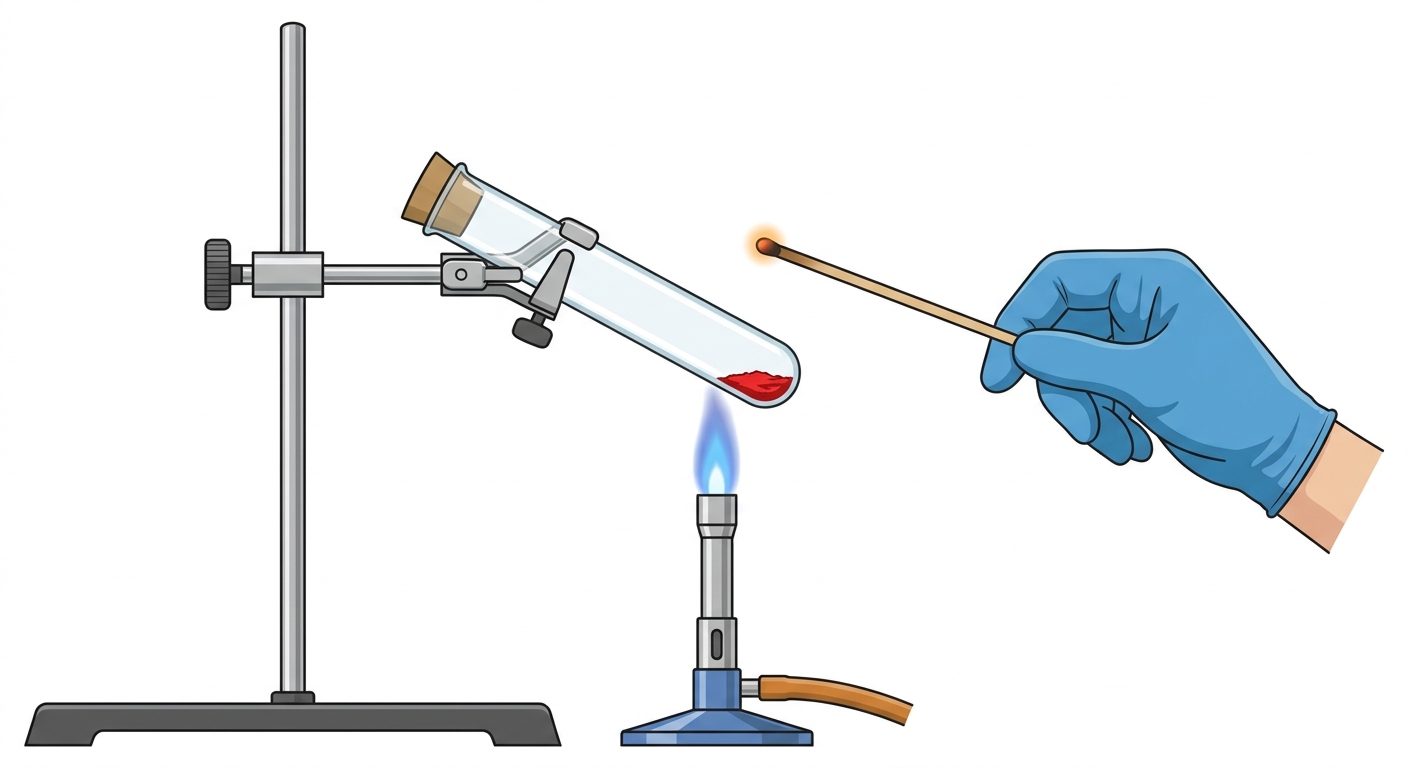
    In 1774 Joseph Priestley heated red mercury(II) oxide, HgO, and collected a gas that made a glowing splint burst into flame. The diagram shows the same reaction carried out in a test tube. Silvery droplets collect on the cooler part of the tube.

    (a) Identify the two products of this reaction. [1]

    (b) Write a balanced equation, with state symbols, for this reaction. [2]

    (c) Suggest why this reaction is now carried out only as a teacher demonstration in a fume cupboard. [1]
    Diagram for a Types of Reactions practice questionPractise this subtopic
  2. Reactivity series and displacement[4 marks]
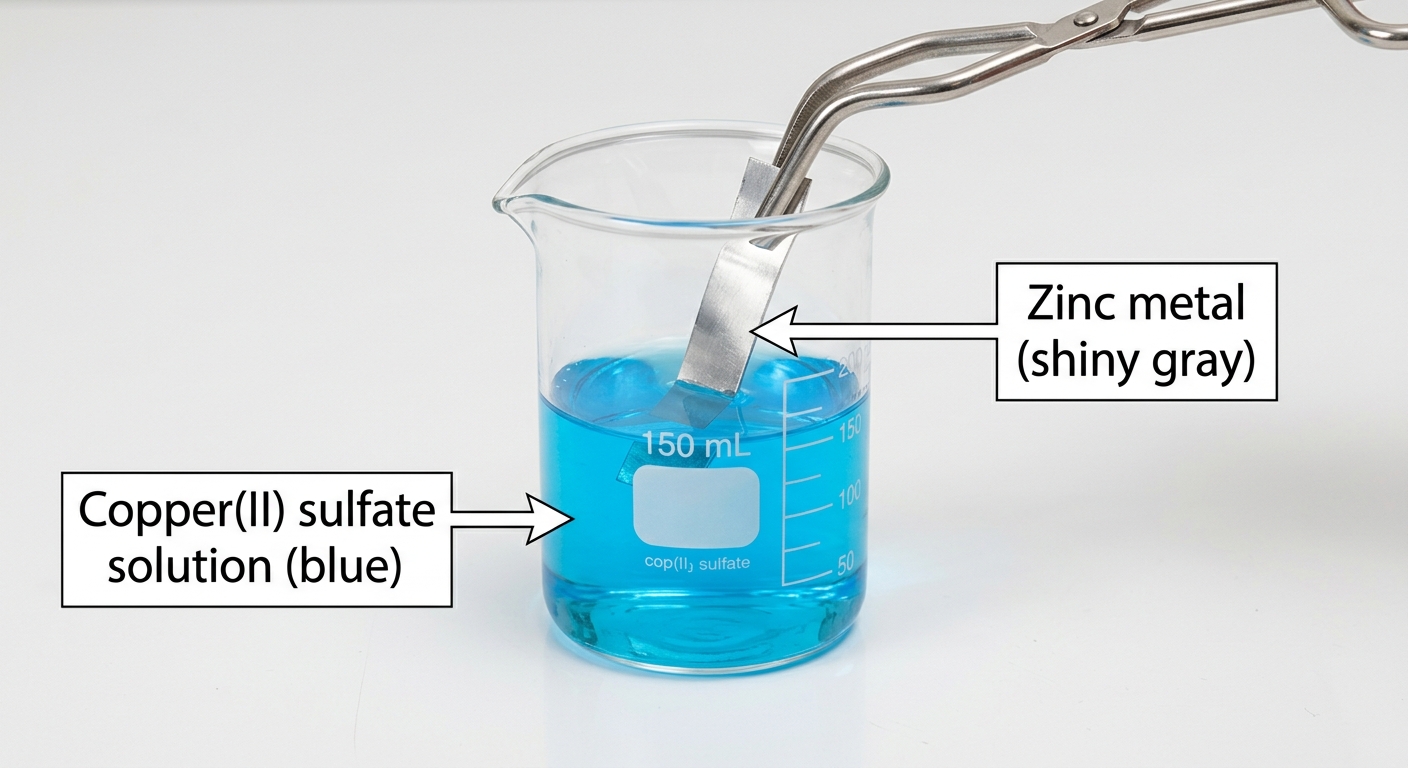
    A student places a strip of zinc metal into a solution of copper(II) sulfate. Within minutes, a reddish-brown solid coats the zinc surface and the blue colour of the solution fades.

    (a) State the name of this reaction type. [1]

    (b) Deduce which metal is more reactive, and write the balanced ionic equation for the reaction. [1]

    (c) Explain why the reddish-brown solid forms and why the blue colour fades, using the reactivity series and electron transfer. [2]
    Diagram for a Reactivity series and displacement practice questionPractise this subtopic
  3. Ionic Covalent and Metallic Bonding[5 marks]
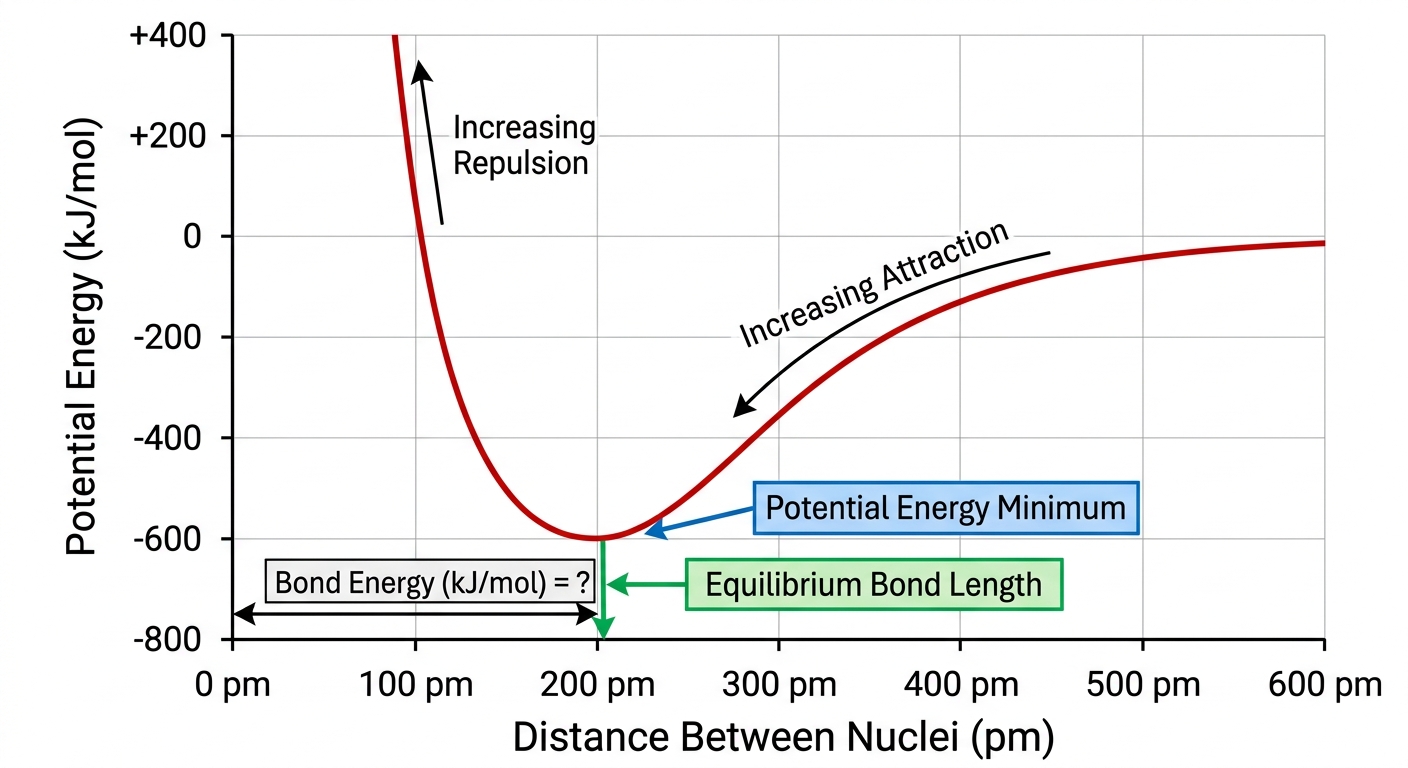
    The graph shows how the potential energy of a sodium ion, Na+\text{Na}^{+}, and a chloride ion, Cl−\text{Cl}^{-}, changes as the distance between their nuclei changes. The ions start far apart (right-hand side) and move closer together.

    (a) Use the graph to state the distance between the nuclei at which the potential energy is lowest. [1]

    (b) Use the graph to estimate the energy released as the ions move from far apart to this distance. [1]

    (c) Explain why the potential energy decreases as the ions move from 600 pm to the distance in (a). [2]

    (d) Suggest why the potential energy rises steeply when the nuclei are closer than about 150 pm. [1]
    Diagram for a Ionic Covalent and Metallic Bonding practice questionPractise this subtopic
  4. Chemical Formulas and Equations[4 marks]
    A coil of copper wire is placed in colourless silver nitrate solution. After an hour, grey crystals of silver have grown on the wire and the solution has turned blue because copper(II) nitrate has formed. Silver ions are Ag+\mathrm{Ag^{+}}, copper(II) ions are Cu2+\mathrm{Cu^{2+}} and nitrate ions are NO3−\mathrm{NO_{3}^{-}}.

    (a) Write down the word equation for this reaction. [1]

    (b) Deduce the balanced symbol equation, including state symbols. [2]

    (c) State one observation which shows that a new substance has formed. [1]
    Practise this subtopic
  5. Balancing Equations and Conservation of Mass[7 marks]
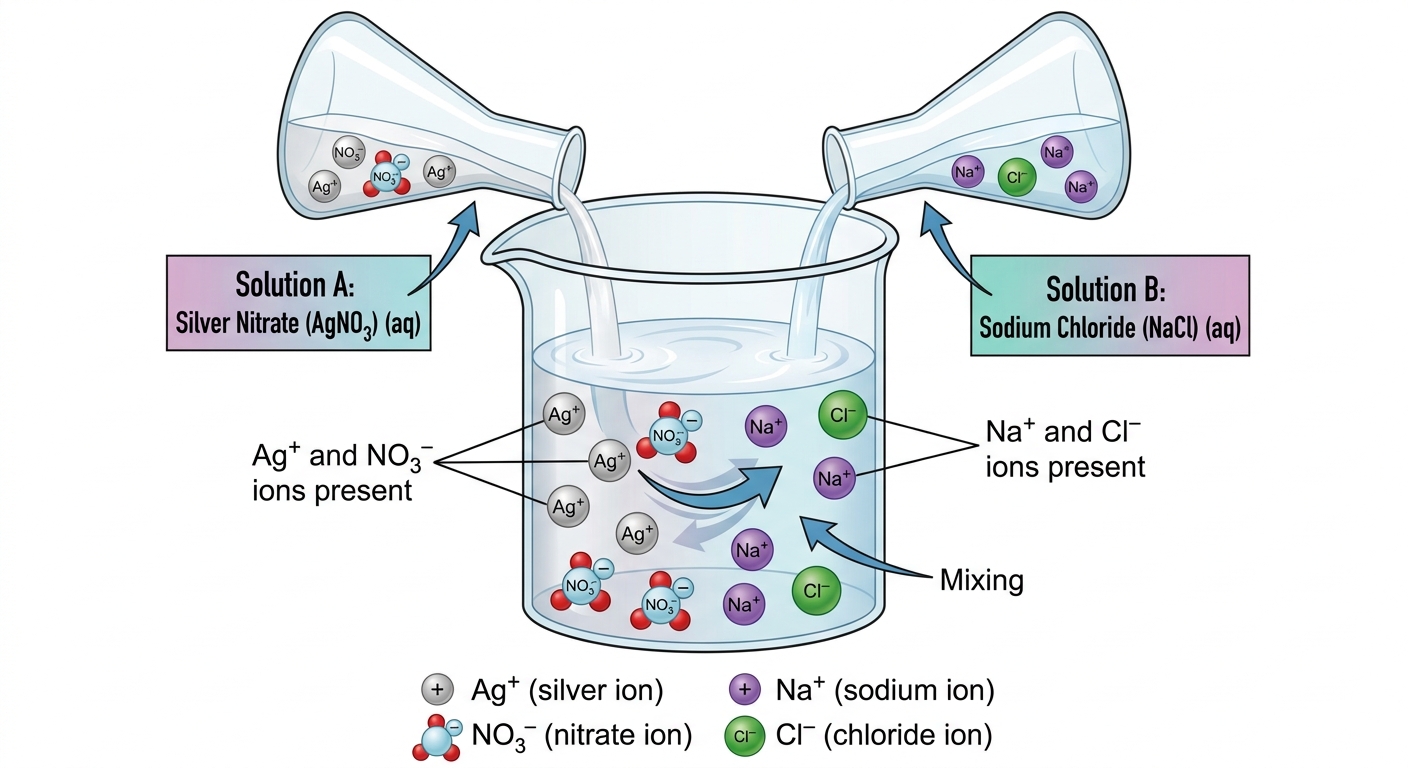
    The diagram shows silver nitrate solution and sodium chloride solution being mixed, and the ions present in each. Silver chloride is insoluble; sodium nitrate is soluble.

    Relative formula masses: AgNO3\mathrm{AgNO_{3}} = 170, AgCl = 143.5.

    (a) Predict the formula of the precipitate. [1]

    (b) Write the balanced equation, with state symbols, for the reaction. [2]

    (c) Identify the spectator ions, and write the ionic equation for the reaction. [2]

    (d) Calculate the mass of precipitate formed from 1.70 g of silver nitrate with excess sodium chloride. [2]
    Diagram for a Balancing Equations and Conservation of Mass practice questionPractise this subtopic
  6. Redox, electrolysis and cells[8 marks]
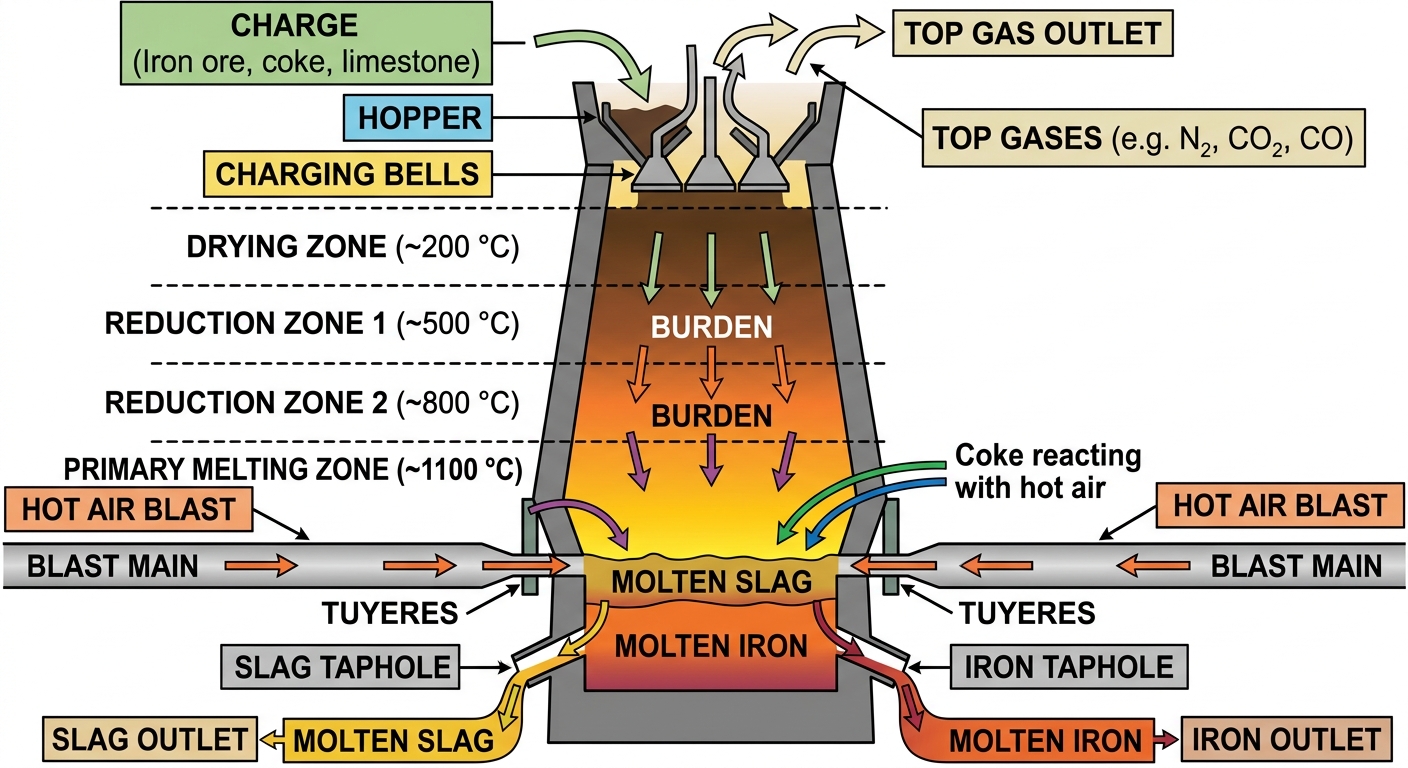
    The diagram shows a blast furnace used to extract iron from iron ore (haematite, Fe₂O₃). Coke, iron ore and limestone are added at the top; hot air is blown in near the bottom.

    (a) Write a balanced equation for the reduction of iron(III) oxide by carbon monoxide. [2]

    (b) Identify the reducing agent in this reaction and explain your answer in terms of oxygen. [2]

    (c) Write equations to show how carbon monoxide is formed from coke in the furnace. [2]

    (d) Explain why limestone is added to the furnace. [2]
    Diagram for a Redox, electrolysis and cells practice questionPractise this subtopic

Every question, revision note and worksheet for Bonding, Equations and Chemical Reactions — with Premium.

Unlock Full Access