You're viewing free preview questions — 4 questions previewing here — subscribe to unlock 77 more, plus the Full Question Bank, Mock Papers & Worksheets.Upgrade
Combustion of fuels and pollutant formation — Free MYP4 Chemistry Practice Questions

1QuestionComplete vs incomplete combustionConcept Practice
3 marks~5 minCriterion A
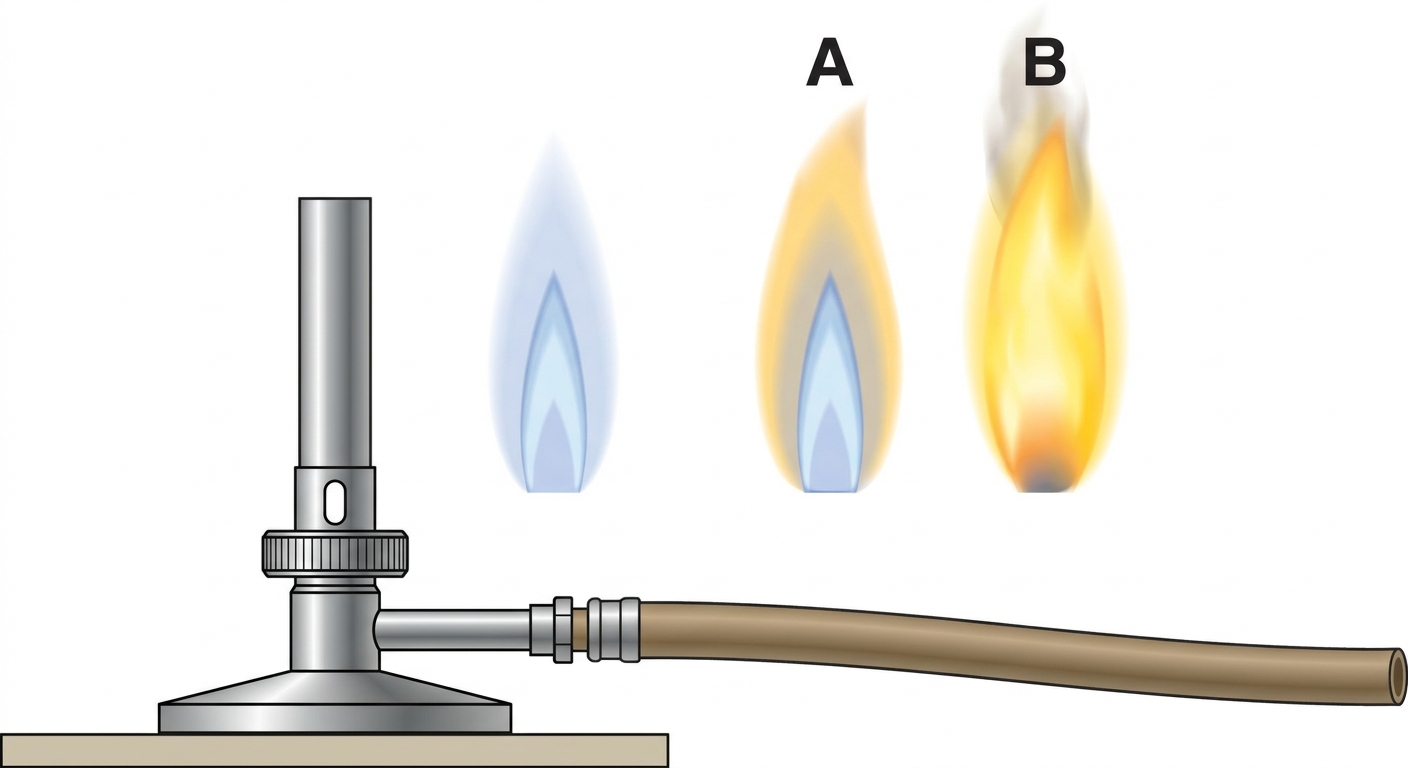
A Bunsen burner produces two distinct flames depending on the position of the air hole: Flame A (air hole open, blue flame) and Flame B (air hole closed, yellow flame). The fuel burned is methane ().
a
Identify which flame represents complete combustion. [1]
b
Explain why Flame A and Flame B produce different combustion products, referring to oxygen availability and the specific products formed in each case. [2]

Solutions
2QuestionFormation of carbon monoxide and sootAssessment Practice
5 marks~8 minCriterion C
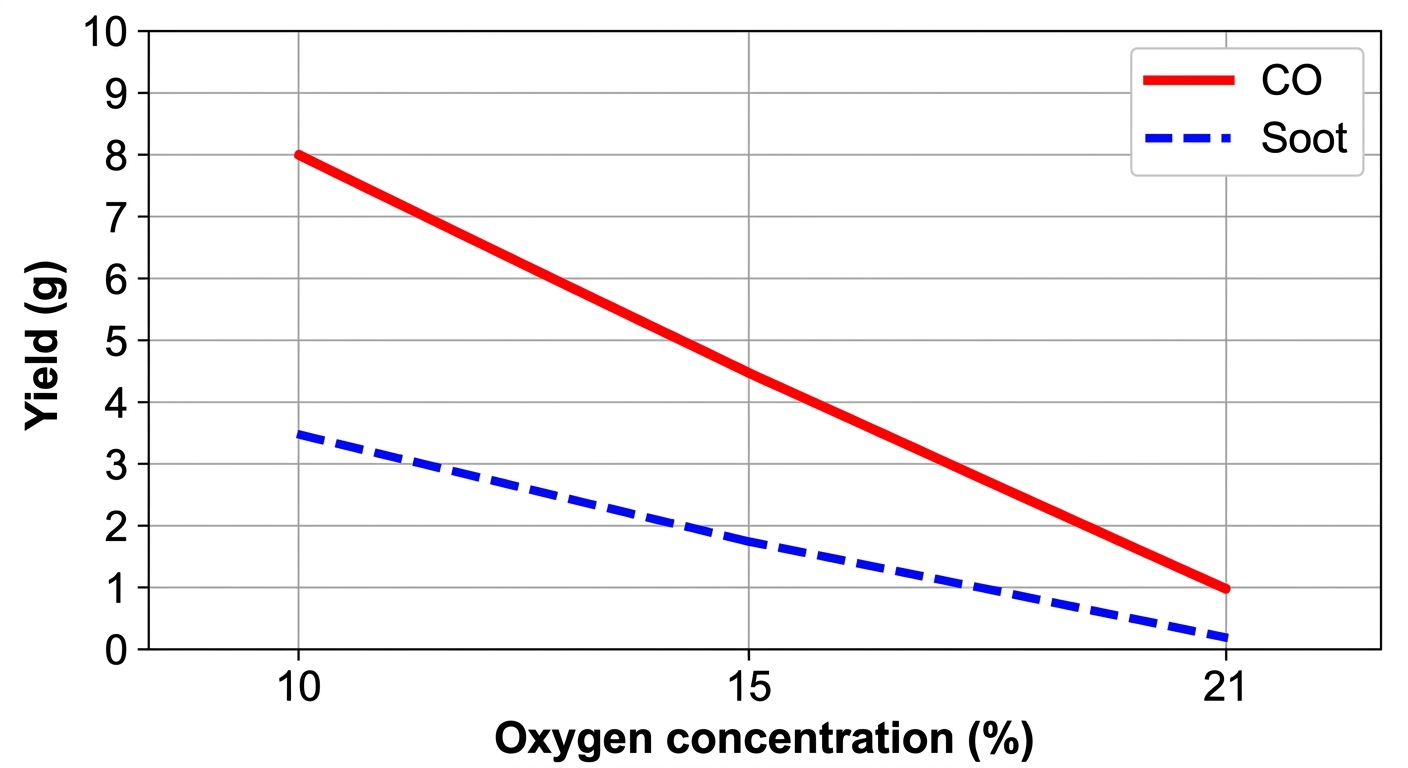
A student burns methane () in a sealed chamber at three oxygen concentrations. The measured yields of carbon monoxide () and soot are recorded below.
| Oxygen concentration (percent) | 10 | 15 | 21 |
|---|---|---|---|
| yield (g) | 8.0 | 4.5 | 1.0 |
| Soot yield (g) | 3.5 | 1.8 | 0.2 |
a
Describe the trend shown in the data for both and soot yields as oxygen concentration increases from 10 percent to 21 percent. [1]
b
Write a balanced chemical equation for the complete combustion of methane, then write one equation showing an incomplete combustion pathway that produces only. Use these equations to explain why lower oxygen concentration favours and soot formation. [2]
c
Evaluate whether the data support the hypothesis that insufficient oxygen increases and soot formation. In your answer, identify one specific limitation of this experiment and justify how it affects confidence in the conclusion. [2]
Solutions
3QuestionComplete vs incomplete combustionConcept Practice
2 marks~3 minCriterion B
Four trials of burning methane () are conducted, each using 5.0 g of fuel. The oxygen-to-fuel ratio is varied across trials.
| Trial | 1 | 2 | 3 | 4 |
|---|---|---|---|---|
| Oxygen-to-fuel ratio | 1.5:1 | 2.0:1 | 2.5:1 | 3.0:1 |
| Flame colour | yellow | orange-yellow | blue-yellow | blue |
| Soot produced | heavy | moderate | slight | none |
a
Deduce the relationship between oxygen-to-fuel ratio and soot production shown by these results. [1]
b
Identify the controlled variable and the manipulated variable in this experiment. [1]
Solutions
4QuestionHydrocarbon fuels (fossil fuels vs biofuels)Assessment Practice
6 marks~9 minCriterion D
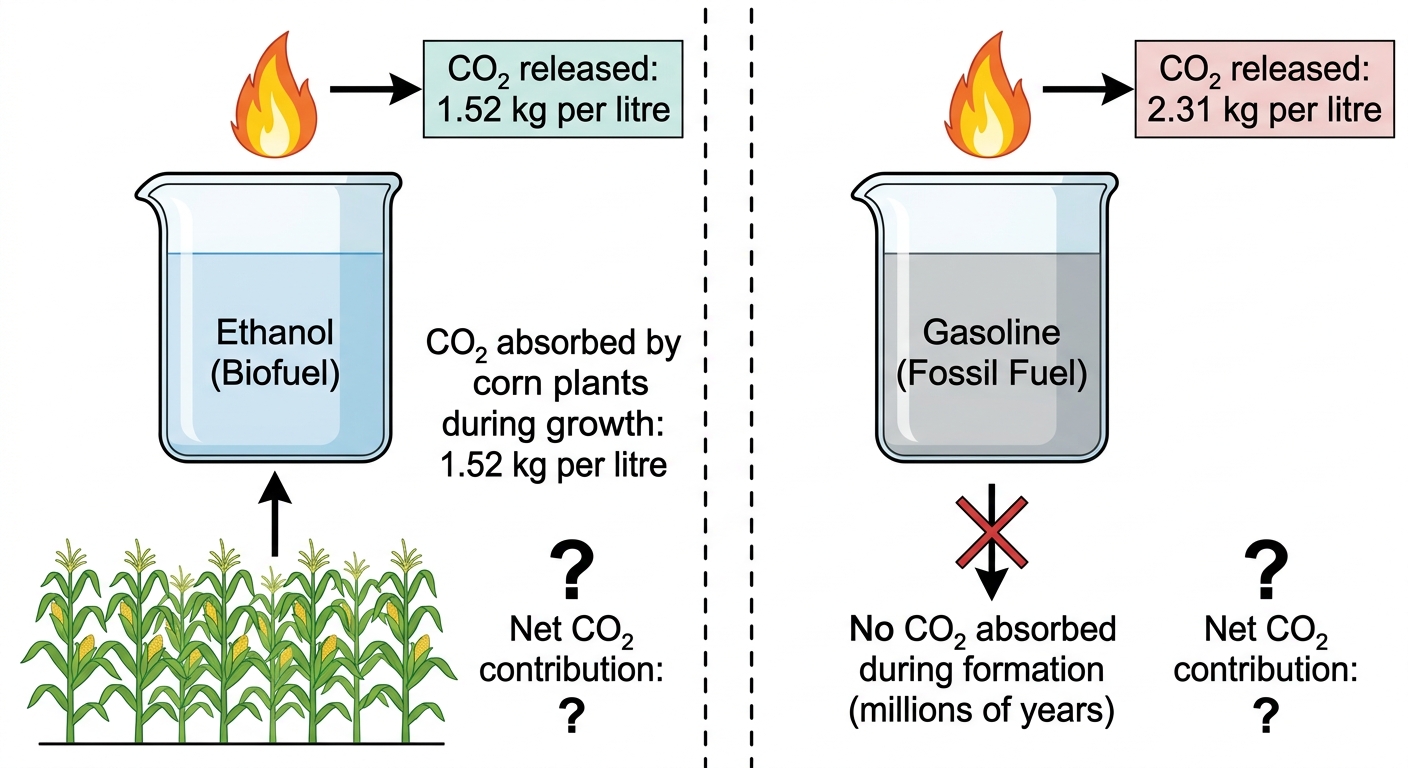
A student compares corn-based ethanol (biofuel) and gasoline (fossil fuel) as transport fuels.
Data per litre of fuel:
CO released on combustion — ethanol: 1.52 kg; gasoline: 2.31 kg
CO absorbed during production — ethanol (corn growth): 1.52 kg; gasoline: 0 kg
Data per litre of fuel:
CO released on combustion — ethanol: 1.52 kg; gasoline: 2.31 kg
CO absorbed during production — ethanol (corn growth): 1.52 kg; gasoline: 0 kg
a
Calculate the net CO contribution (CO released − CO absorbed) per litre for each fuel. Show your working. [2]
b
Deduce which fuel has the smaller net impact on atmospheric CO levels. Use your calculated values to support your reasoning. [2]
c
Analyse one limitation of using only combustion CO data to compare the overall environmental impact of these two fuels. [2]
Solutions
That's every free question here — 4 of 81.
+77 more questions, plus Mock Papers & Worksheets, are waiting in Premium.