You're viewing free preview questions — 4 questions previewing here — subscribe to unlock 82 more, plus the Full Question Bank, Mock Papers & Worksheets.Upgrade
Composition of the Atmosphere — Free MYP4 Chemistry Practice Questions

1QuestionLayers of the atmosphere (troposphere, stratosphere, etc.)Concept Practice
2 marks~3 minCriterion A
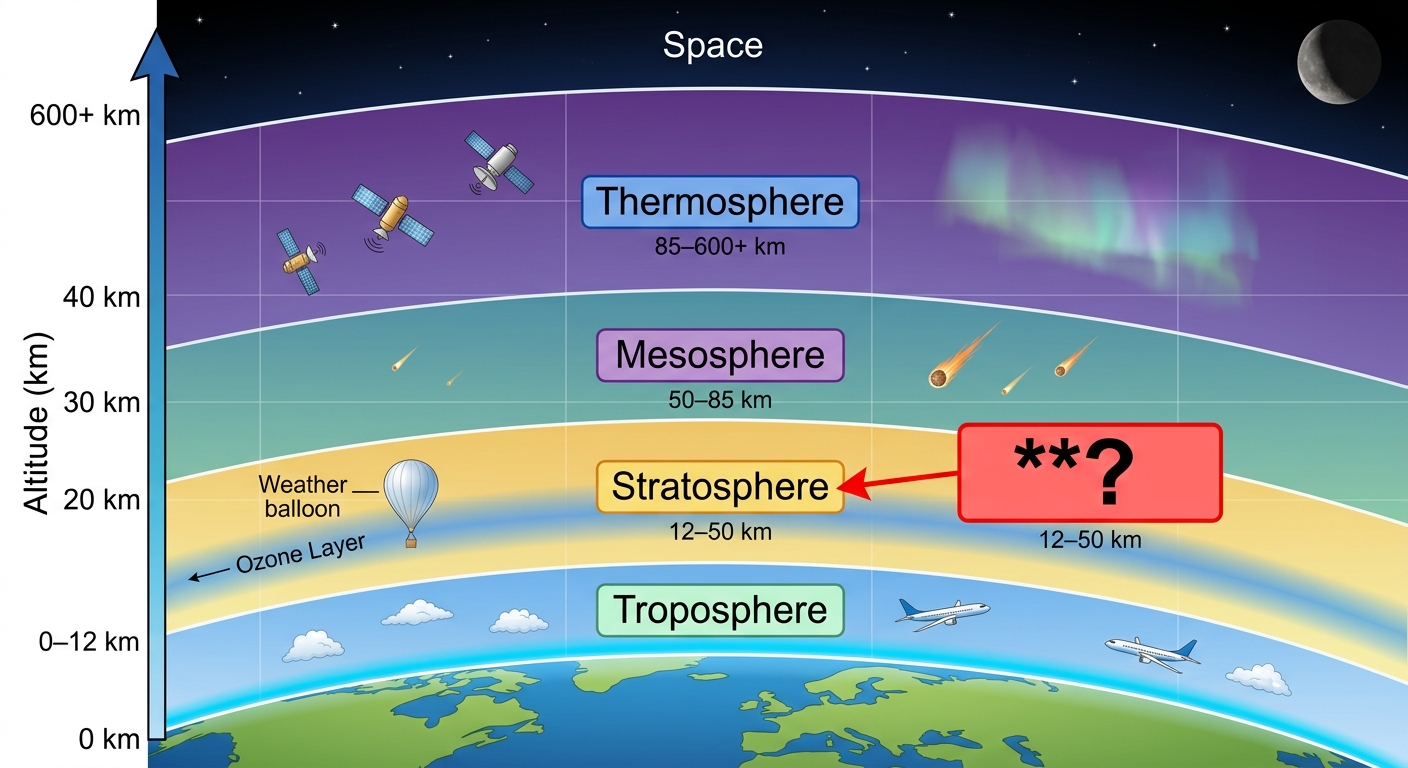
The diagram below shows a vertical cross-section of Earth's atmosphere.
Troposphere: 0–12 km
?: 12–50 km
Mesosphere: 50–85 km
Thermosphere: 85–600 km
Troposphere: 0–12 km
?: 12–50 km
Mesosphere: 50–85 km
Thermosphere: 85–600 km
a
Identify the atmospheric layer indicated by the question mark. [1]
b
The layer you identified in (a) shows an unusual temperature profile compared with the troposphere. Explain why temperature increases with altitude in this layer. [1]

Solutions
2QuestionRole of oxygen in respiration and combustionAssessment Practice
2 marks~3 minCriterion D
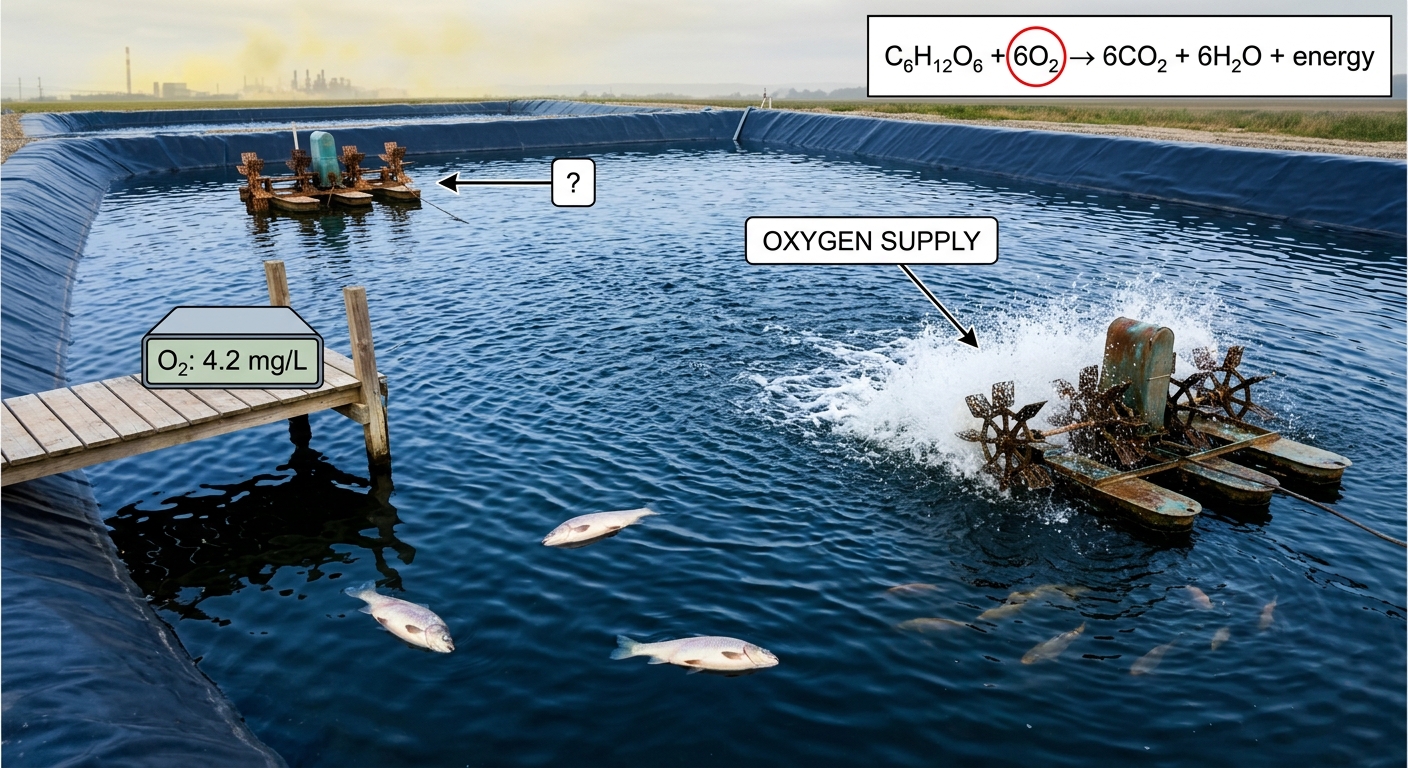
Wastewater treatment plants use aeration systems to supply oxygen to aerobic bacteria, which decompose organic pollutants through cellular respiration. Monitoring dissolved oxygen (DO) levels is critical to maintaining this process.
a
Outline one real-world application of oxygen's role in aerobic respiration in wastewater treatment. [1]
b
Discuss one environmental impact that could result if dissolved oxygen levels in the treatment system fall below the threshold required for aerobic respiration. [1]
Solutions
3QuestionRole of oxygen in respiration and combustionAssessment Practice
5 marks~8 minCriterion C
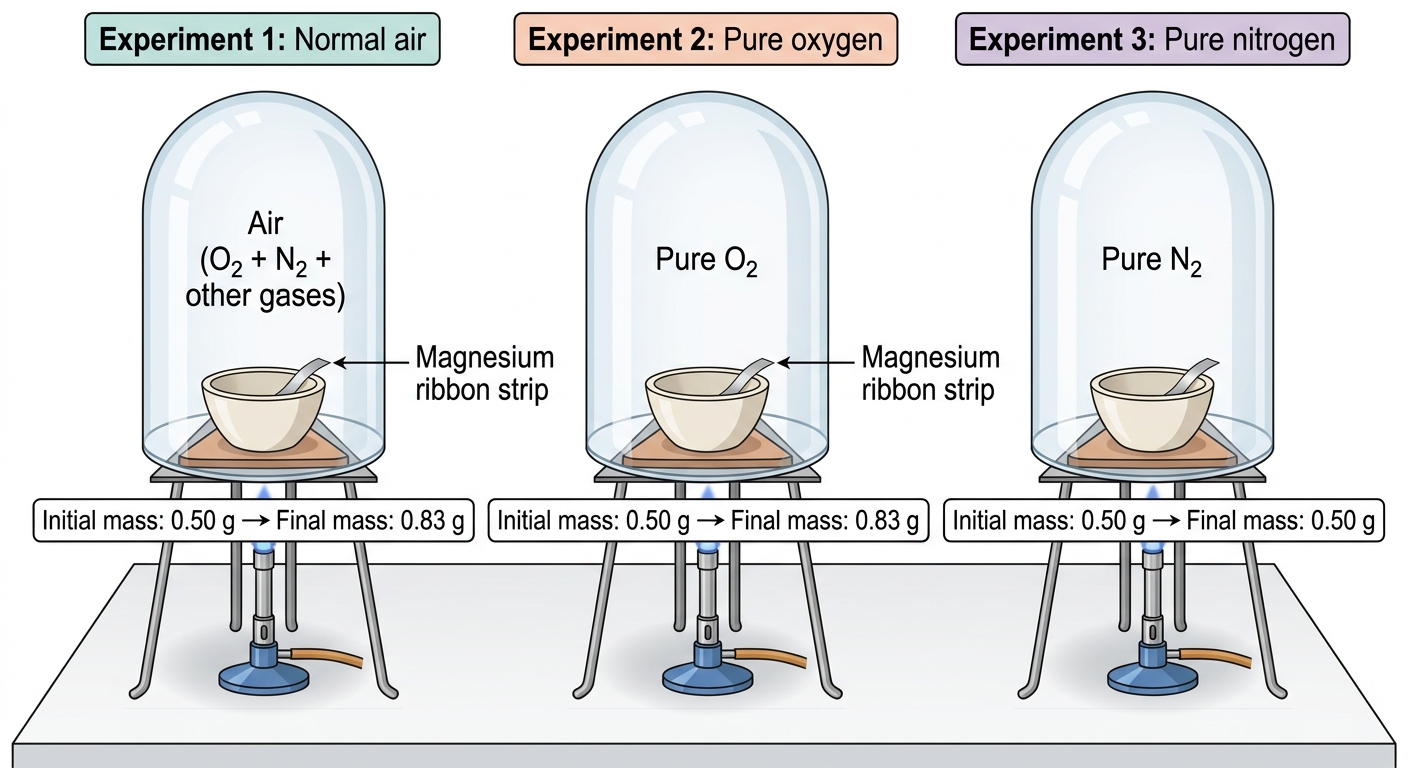
A student investigates the hypothesis: Oxygen is required for combustion. Three experiments each use a 0.50 g strip of magnesium ribbon burned in different atmospheres; the mass of solid product is recorded after burning.
| Experiment 1 (normal air) | initial mass = 0.50 g | final mass = 0.83 g |
|---|---|---|
| Experiment 2 (pure oxygen) | initial mass = 0.50 g | final mass = 0.83 g |
| Experiment 3 (pure nitrogen) | initial mass = 0.50 g | final mass = 0.50 g |
a
Calculate the mass gain in Experiment 1 and write the balanced equation for the reaction that produced this gain. [2]
b
Explain why Experiments 1 and 2 produce identical final masses, yet Experiment 3 shows no mass change. [2]
c
Evaluate whether the three experiments together support or refute the hypothesis, identifying the specific role of oxygen in the combustion of magnesium. [1]
Solutions
4QuestionVariable components (water vapor, pollutants)Assessment Practice
2 marks~3 minCriterion B
A student uses silica gel to absorb water vapour from sealed containers at five different humidity levels. The results are recorded below.
| Humidity (\%) | 30 | 40 | 50 | 60 | 70 |
|---|---|---|---|---|---|
| Mass of water absorbed (g) | 1.2 | 1.6 | 2.0 | 2.4 | 2.8 |
a
Deduce the relationship between humidity and the mass of water absorbed by the silica gel. [1]
b
A weather station reports that high indoor humidity accelerates corrosion of metal equipment. Using the pattern in the data, predict the mass of water absorbed at 80\% humidity, and explain whether silica gel would be an effective control measure in this context. [1]
Solutions
That's every free question here — 4 of 86.
+82 more questions, plus Mock Papers & Worksheets, are waiting in Premium.