You're viewing free preview questions — 4 questions previewing here — subscribe to unlock 86 more, plus the Full Question Bank, Mock Papers & Worksheets.Upgrade
Alcohols — Free MYP4 Chemistry Practice Questions

1QuestionCombustion of alcoholsConcept Practice
2 marks~3 minCriterion A
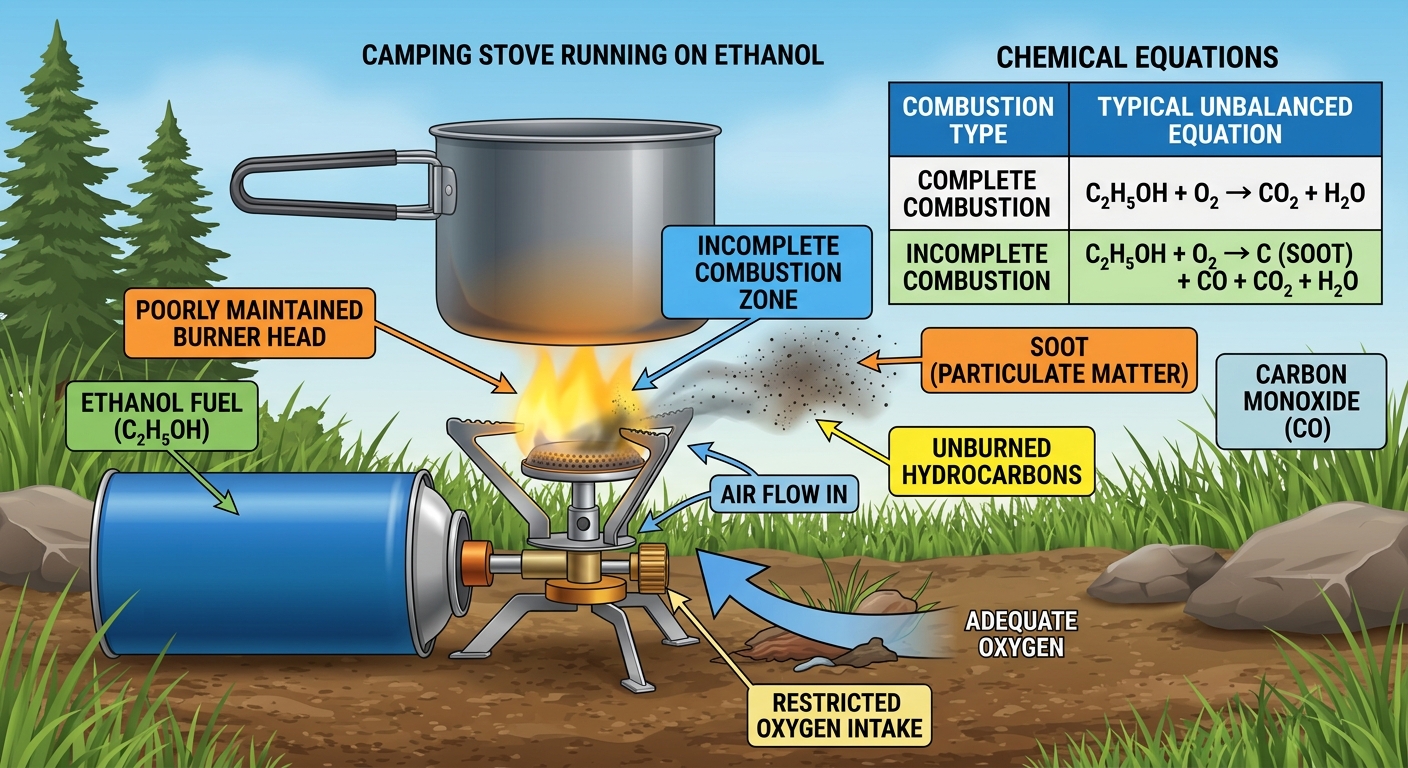
A hiker uses a poorly maintained camping stove burning ethanol in an enclosed tent. The stove produces a yellow, flickering flame.
a
Identify one product of incomplete combustion of ethanol that is not produced during complete combustion. [1]
b
Explain one environmental impact of releasing this product into the atmosphere. [1]

Solutions
2QuestionNaming alcohols (IUPAC)Assessment Practice
2 marks~3 minCriterion D
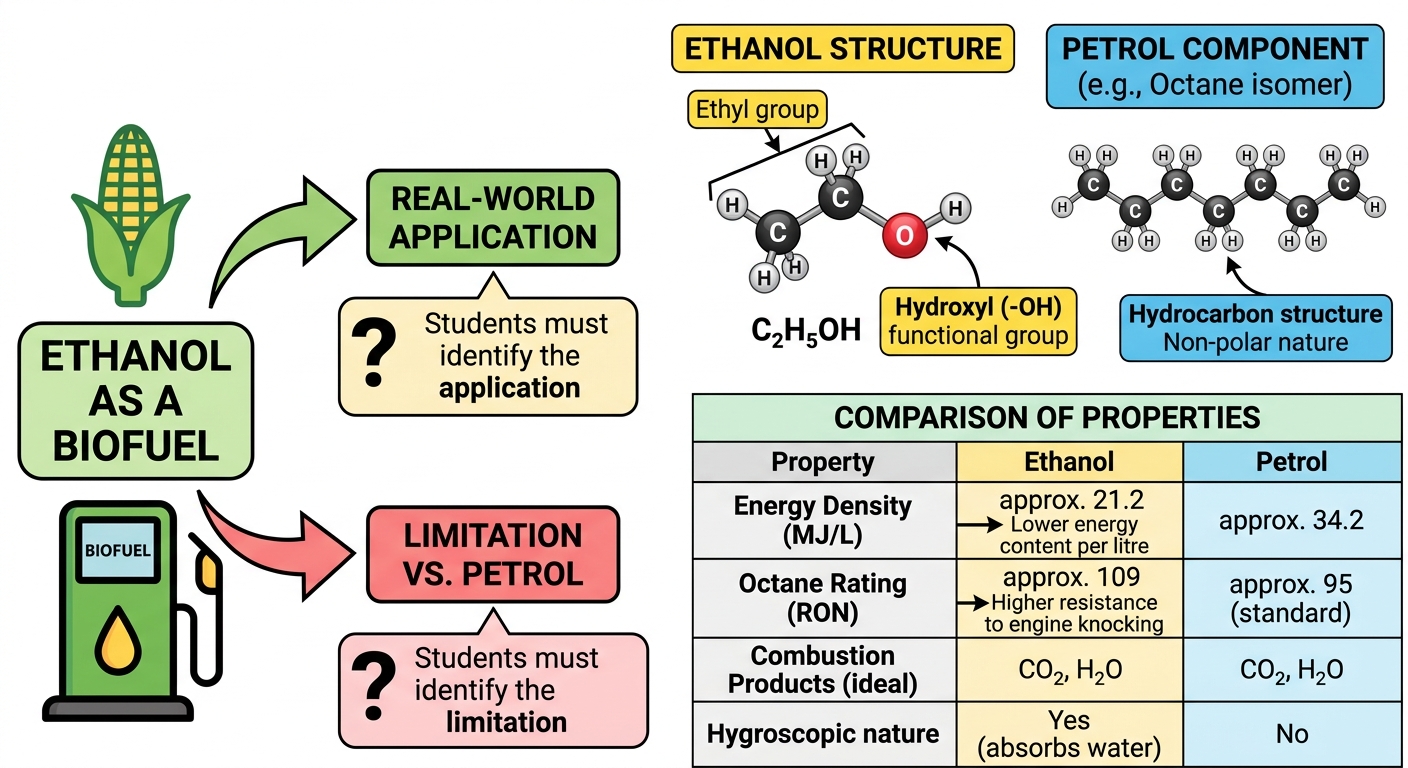
Brazil blends ethanol () with petrol to power vehicles, reducing dependence on fossil fuels.
a
Explain one reason why ethanol is considered a more sustainable fuel than petrol. [1]
b
Explain one limitation of using ethanol instead of petrol in vehicles, linking your answer to the chemical structure of . [1]
Solutions
3QuestionOxidation (basic concept)Assessment Practice
5 marks~8 minCriterion C
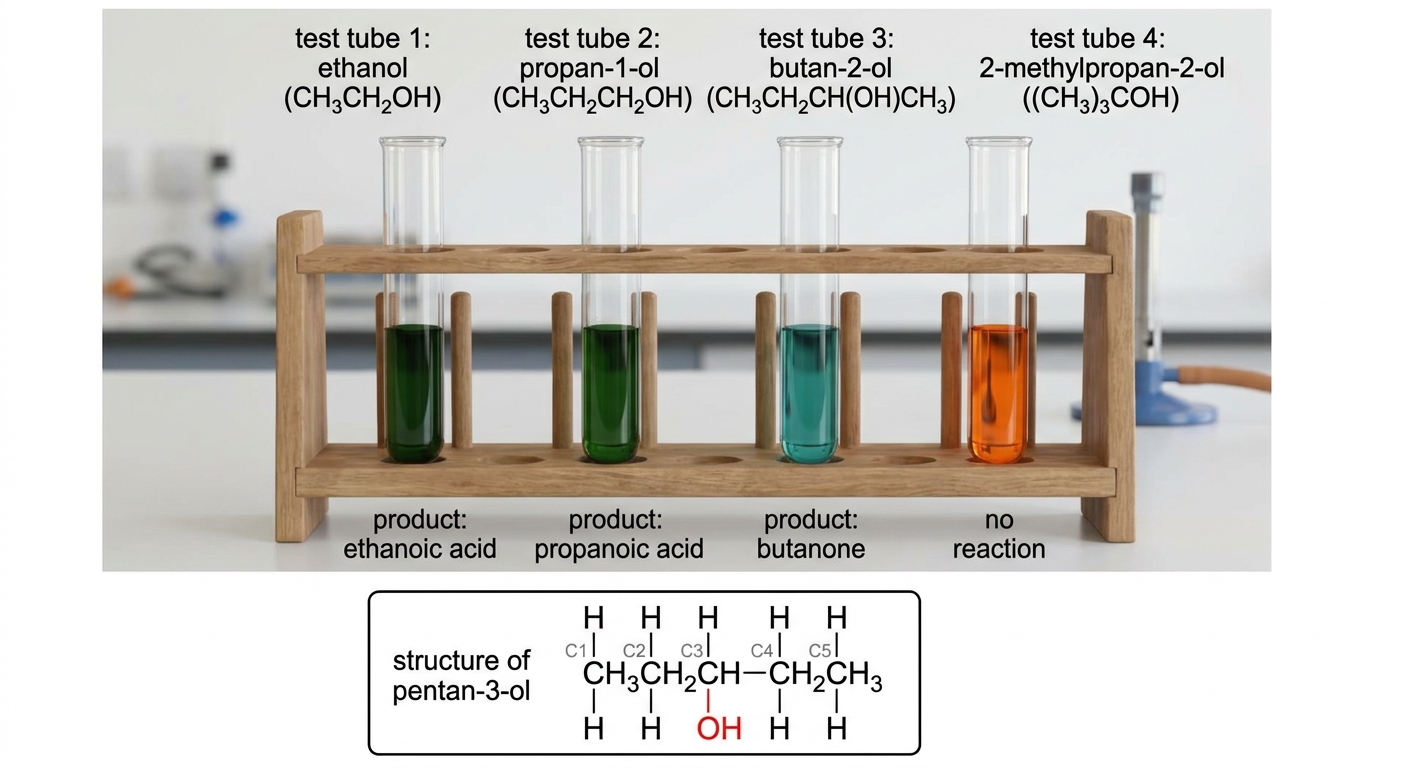
When four alcohols are heated with acidified potassium dichromate (), the following products are obtained:
| Alcohol | ethanol () | Product: ethanoic acid |
|---|---|---|
| Alcohol | propan-1-ol () | Product: propanoic acid |
| Alcohol | butan-2-ol () | Product: butanone |
| Alcohol | 2-methylpropan-2-ol () | Product: no reaction |
a
Deduce the relationship between the class of alcohol (primary, secondary, or tertiary) and the type of product formed. [2]
b
Justify the prediction that pentan-3-ol () produces a single organic product when treated with acidified potassium dichromate, by explaining how the number of hydrogen atoms on the carbon bearing the group determines both the product type and why no further oxidation occurs. [3]
Solutions
4QuestionNaming alcohols (IUPAC)Assessment Practice
6 marks~9 minCriterion B
The table below summarises four alcohols and their reactions with acidified potassium dichromate () under reflux.
Alcohol — Structure — Product after reflux
ethanol — — ethanoic acid
propan-1-ol — — propanoic acid
butan-2-ol — — butanone
2-methylpropan-2-ol — — no reaction
Alcohol — Structure — Product after reflux
ethanol — — ethanoic acid
propan-1-ol — — propanoic acid
butan-2-ol — — butanone
2-methylpropan-2-ol — — no reaction
a
Deduce the relationship between the classification of an alcohol (primary, secondary, or tertiary) and the type of product formed when reacted with acidified under reflux. [2]
b
Predict the organic product(s) formed when pentan-1-ol and pentan-3-ol are each reacted with acidified under reflux. [2]
c
Justify why tertiary alcohols cannot be oxidised under these conditions, while primary alcohols undergo two successive oxidation steps, by analysing the role of hydrogen atoms on the carbon bearing the group. [2]
Solutions
That's every free question here — 4 of 90.
+86 more questions, plus Mock Papers & Worksheets, are waiting in Premium.