You're viewing free preview questions — 4 questions previewing here — subscribe to unlock 157 more, plus the Full Question Bank, Mock Papers & Worksheets.Upgrade
Hydrocarbons — Free MYP4 Chemistry Practice Questions

1QuestionCombustion reactions / Environmental ImpactConcept Practice
2 marks~3 minCriterion A
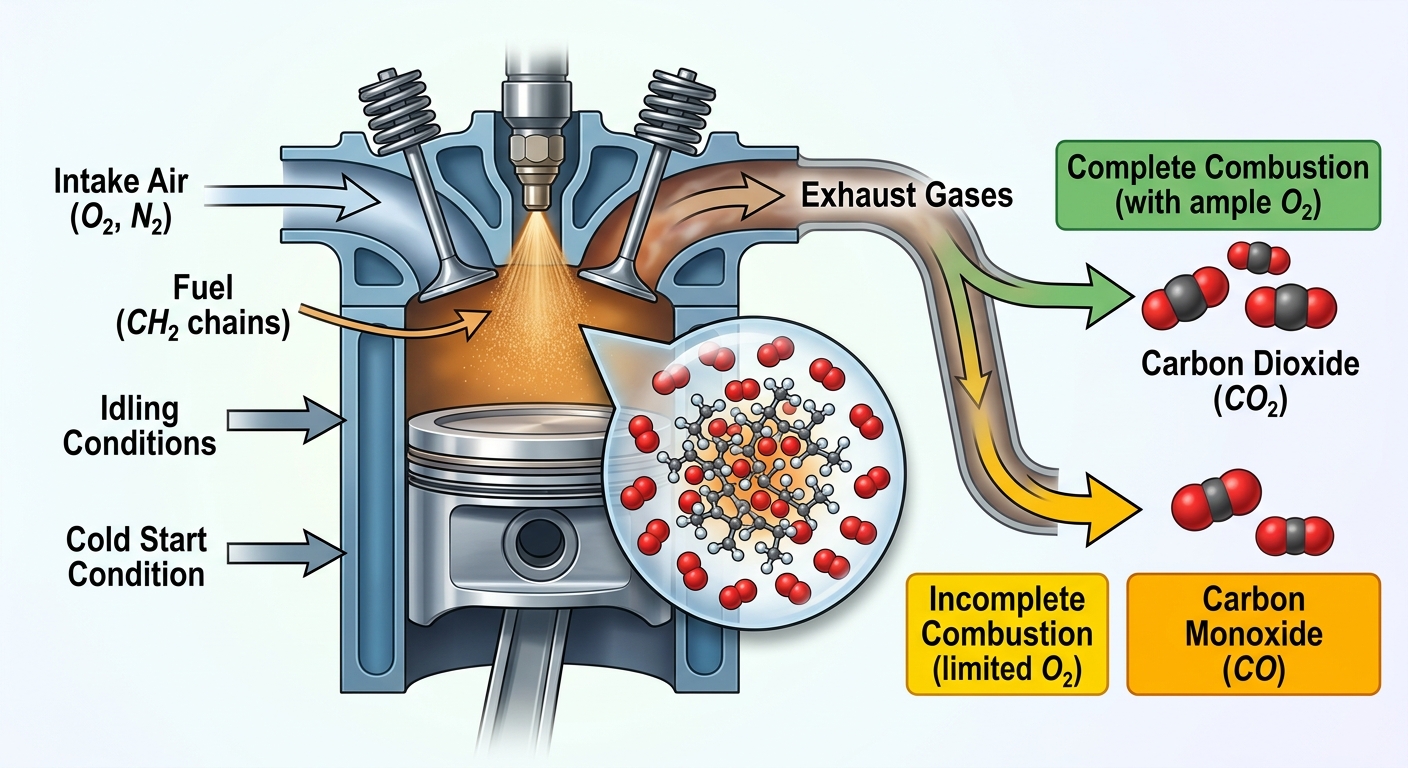
In cities with heavy traffic, incomplete combustion of fuel in car engines produces carbon monoxide () rather than carbon dioxide (). During idling or cold starts, engines run at lower temperatures with fuel-rich mixtures.
a
State one difference between complete and incomplete combustion of a hydrocarbon fuel. [1]
b
Explain how idling or cold-start driving conditions lead to increased production of rather than . [1]

Solutions
2QuestionCombustion reactions / Environmental ImpactAssessment Practice
3 marks~5 minCriterion D
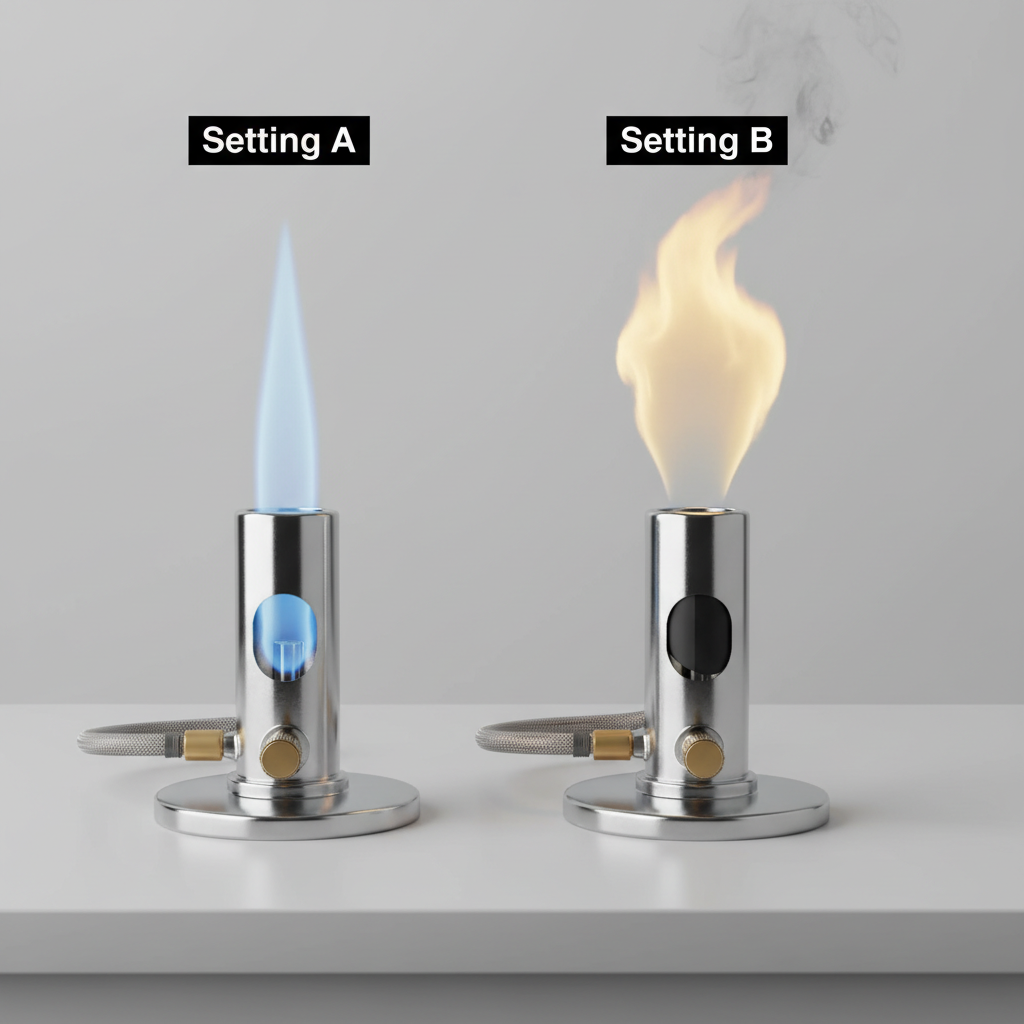
A Bunsen burner can produce two flame types. Setting A has the air hole fully open, producing a blue flame. Setting B has the air hole partially closed, producing a yellow, smoky flame. The fuel burned is methane ().
a
State the products of combustion for each setting and explain why different products are formed. [2]
b
A city authority is considering banning the use of equipment that produces Setting B-type combustion in indoor workshops. Evaluate whether this decision is justified, using evidence from the chemistry of incomplete combustion. [1]
Solutions
3QuestionAlkanes Single bonds and saturationAssessment Practice
5 marks~8 minCriterion C
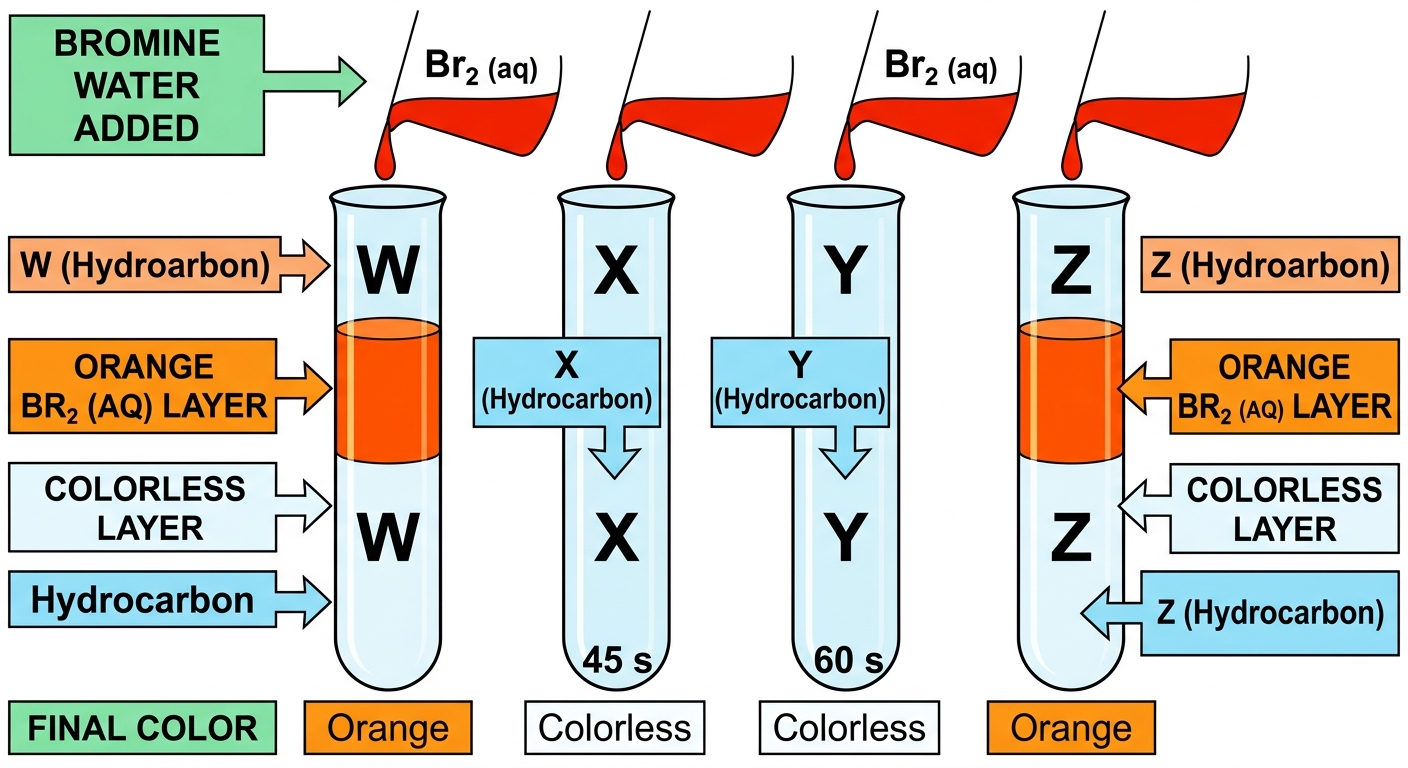
Four hydrocarbons — W, X, Y, and Z — were tested with bromine water under identical conditions.
One hydrocarbon is an alkane, one is an alkene, and two are unidentified. A student proposes the hypothesis: "All hydrocarbons containing only single bonds will not decolourise bromine water."
| Decolourisation time (s) | W: no decolourisation | X: 45 | Y: 60 | Z: no decolourisation |
|---|---|---|---|---|
| Final colour | W: orange | X: colourless | Y: colourless | Z: orange |
One hydrocarbon is an alkane, one is an alkene, and two are unidentified. A student proposes the hypothesis: "All hydrocarbons containing only single bonds will not decolourise bromine water."
a
State what the bromine water test indicates about the bonding in hydrocarbons X and Y. [1]
b
Deduce which hydrocarbon — W or Z — is more likely to be the alkane, and justify your reasoning using the experimental data. [2]
c
Evaluate the student's hypothesis. In your evaluation, identify one limitation of using this dataset alone to fully support the hypothesis. [2]
Solutions
4QuestionUses of hydrocarbons (fuels, plastics)Assessment Practice
6 marks~9 minCriterion B
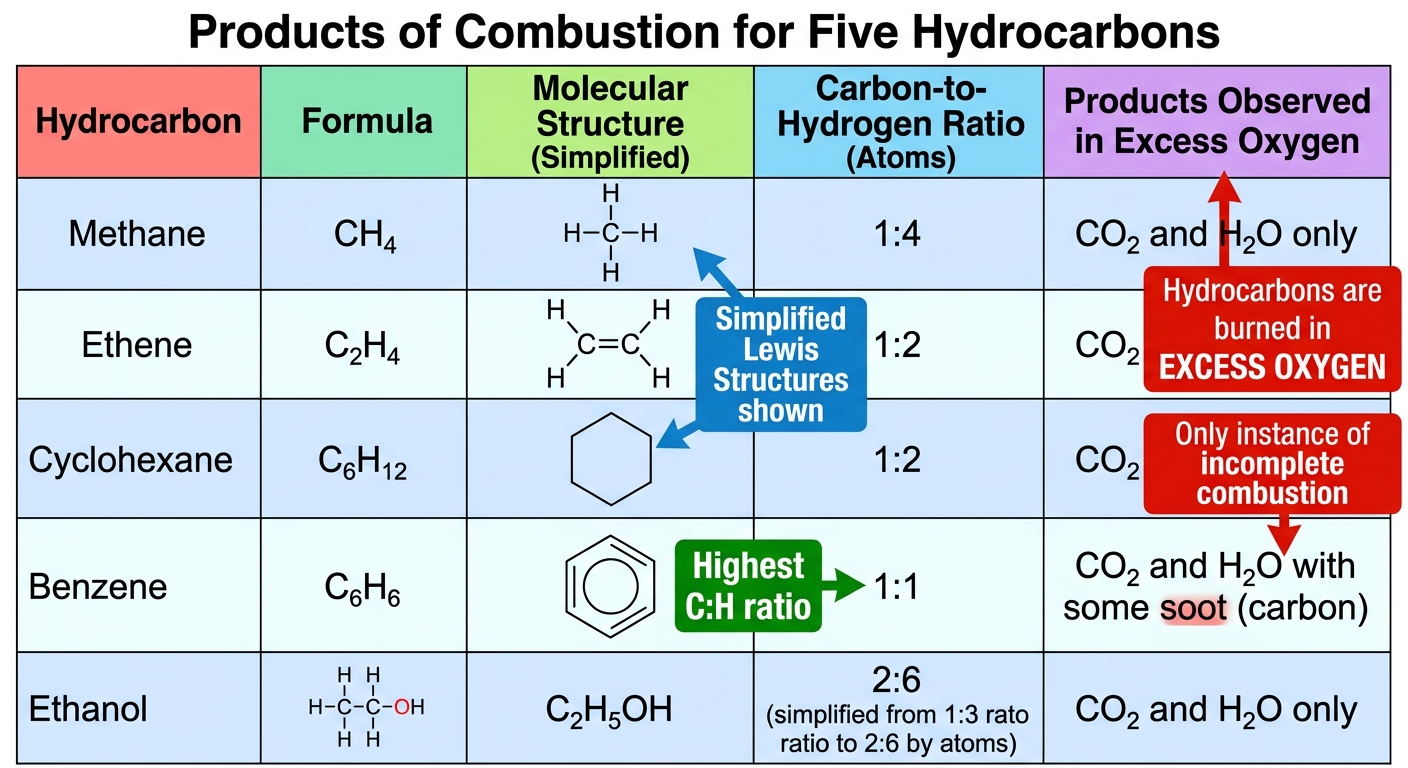
When five hydrocarbons are burned in excess oxygen, the following results are observed.
Hydrocarbon — C:H atomic ratio — Combustion products
Methane () — 1:4 — and only
Ethene () — 1:2 — and only
Cyclohexane () — 1:2 — and only
Benzene () — 1:1 — , , and soot
Ethanol () — 1:3 — and only
Hydrocarbon — C:H atomic ratio — Combustion products
Methane () — 1:4 — and only
Ethene () — 1:2 — and only
Cyclohexane () — 1:2 — and only
Benzene () — 1:1 — , , and soot
Ethanol () — 1:3 — and only
a
Identify the pattern linking the C:H atomic ratio to the tendency to produce soot during combustion. Support your answer with evidence from the data. [2]
b
Propyne has the molecular formula . Deduce whether propyne would produce soot when burned in excess oxygen, and explain your reasoning using the pattern identified in part (a). [2]
c
Justify why a higher C:H ratio increases the likelihood of incomplete combustion. Your answer must refer to oxygen demand per carbon atom and to the relative strengths of , , , and bonds. [2]
Solutions
That's every free question here — 4 of 161.
+157 more questions, plus Mock Papers & Worksheets, are waiting in Premium.