You're viewing free preview questions — 4 questions previewing here — subscribe to unlock 114 more, plus the Full Question Bank, Mock Papers & Worksheets.Upgrade
Introduction to Organic Compounds — Free MYP4 Chemistry Practice Questions

1QuestionCovalent bonding in organic moleculesConcept Practice
2 marks~3 minCriterion A
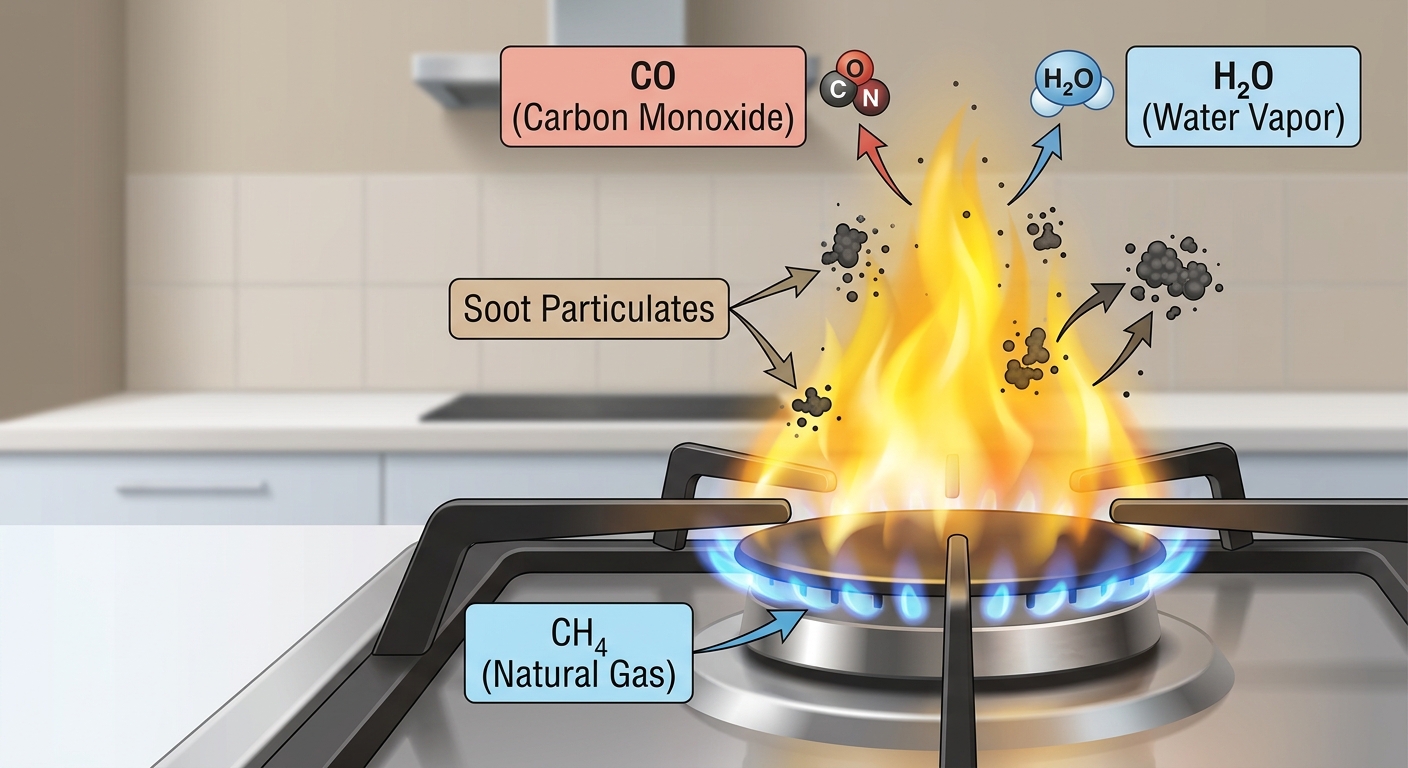
A poorly maintained gas stove produces a yellow, sooty flame, indicating incomplete combustion of methane ().
Explain one environmental impact of the incomplete combustion of methane. [2]
Explain one environmental impact of the incomplete combustion of methane. [2]

Solutions
2QuestionBasic classification like Aliphatic compounds and Aromatic compounds (basic idea only)Assessment Practice
2 marks~3 minCriterion D
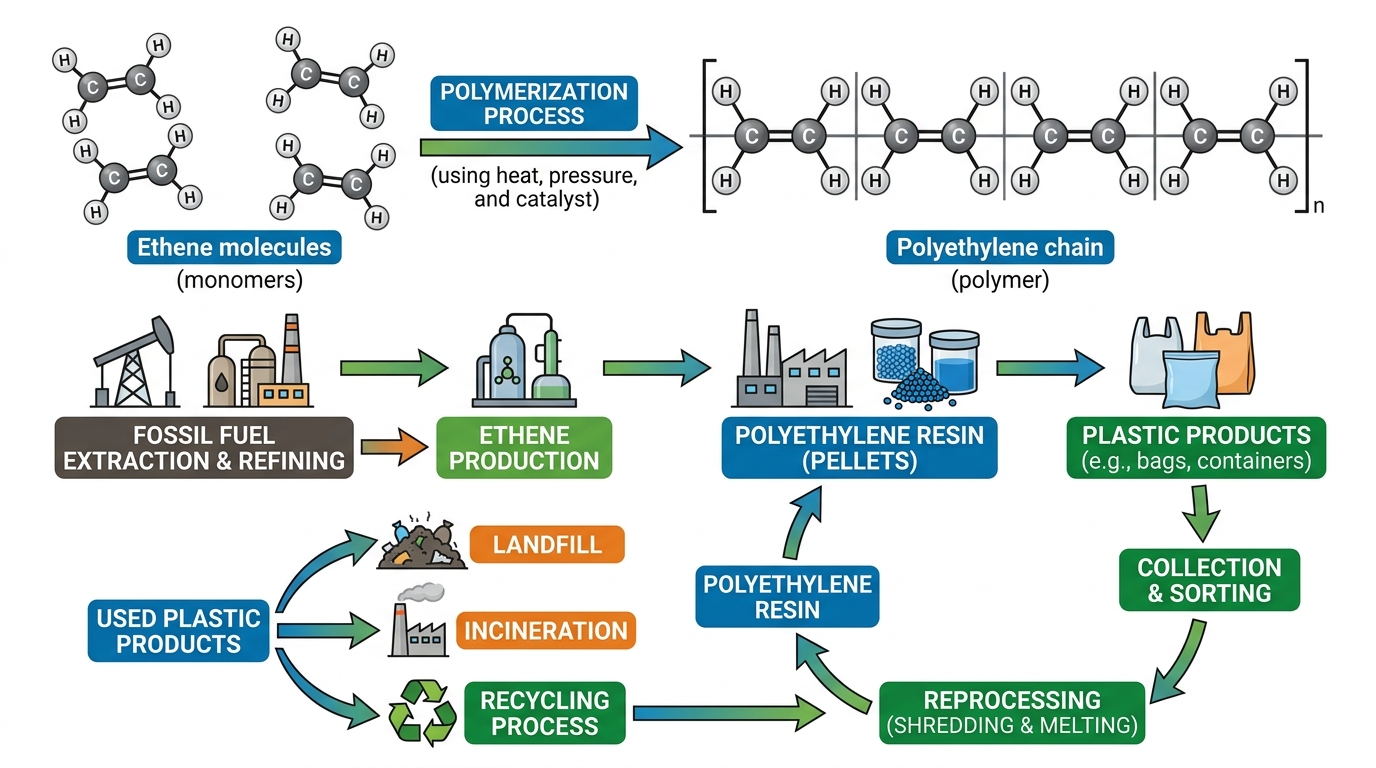
Polyethylene is a polymer produced from ethene, a non-renewable petrochemical feedstock. It is widely used in single-use packaging and is classified as an aliphatic compound.
a
State one environmental impact caused by the accumulation of polyethylene waste. [1]
b
Explain one reason why recycling alone cannot fully resolve this environmental impact. [1]
Solutions
3QuestionBasic classification like Aliphatic compounds and Aromatic compounds (basic idea only)Assessment Practice
5 marks~8 minCriterion C
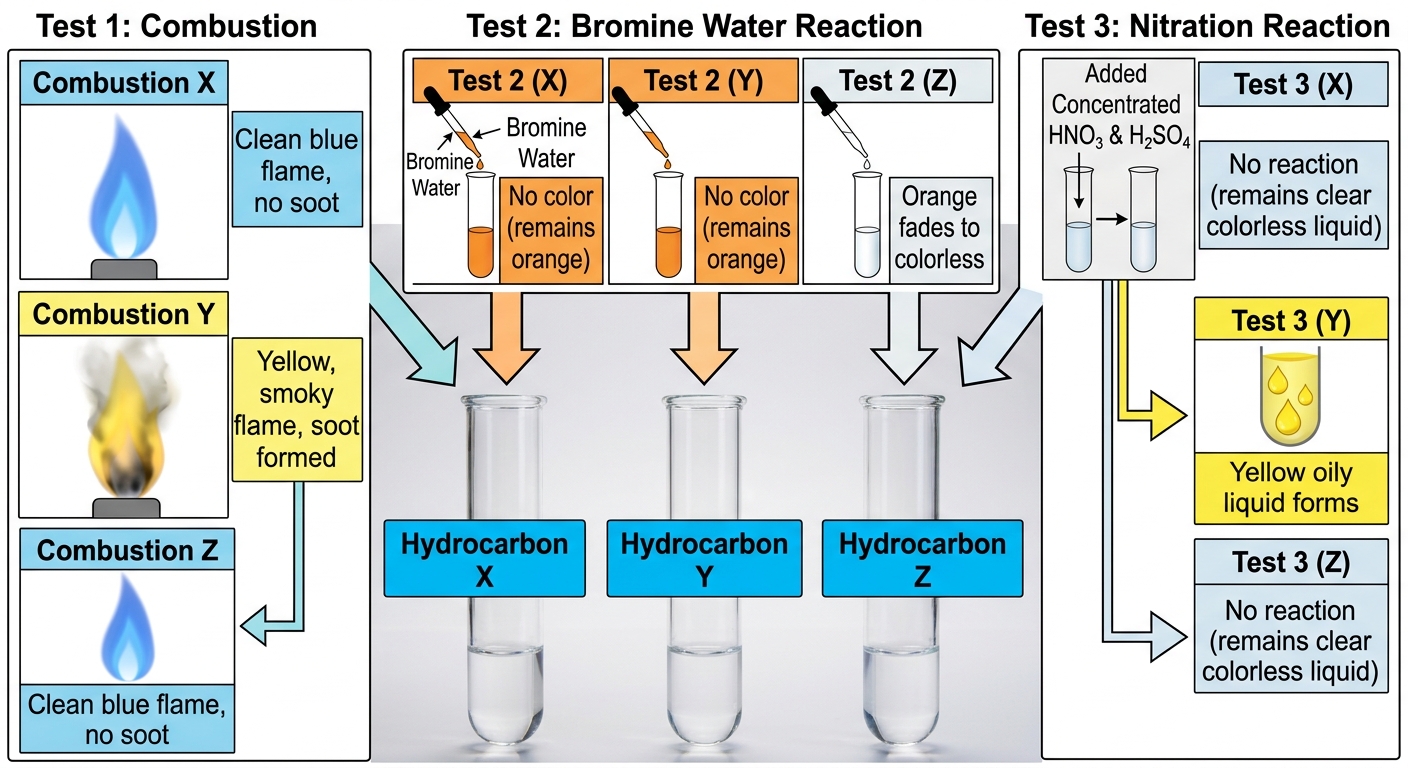
Three unknown hydrocarbons are tested. Results are summarised below.
Hydrocarbon — Formula — Combustion flame — Bromine water — Nitration (conc. HNO3 / H2SO4)
X — C6H12, ring of single bonds — clean blue — no change — no reaction
Y — C6H6, ring with alternating double bonds — yellow, sooty — no change — yellow oily product
Z — C5H10, straight chain with one double bond — clean blue — decolourises — no reaction
Hydrocarbon — Formula — Combustion flame — Bromine water — Nitration (conc. HNO3 / H2SO4)
X — C6H12, ring of single bonds — clean blue — no change — no reaction
Y — C6H6, ring with alternating double bonds — yellow, sooty — no change — yellow oily product
Z — C5H10, straight chain with one double bond — clean blue — decolourises — no reaction
a
Deduce the classification (aliphatic saturated, aliphatic unsaturated, or aromatic) of each hydrocarbon X, Y, and Z, using the experimental results as evidence. [3]
b
Explain why Y does not decolourise bromine water, even though its formula suggests unsaturation. [1]
c
Evaluate the hypothesis: "All hydrocarbons with a ring structure are aromatic," using evidence from the results for X and Y. [1]
Solutions
4QuestionTetravalency of carbon/ CatenationAssessment Practice
5 marks~8 minCriterion B
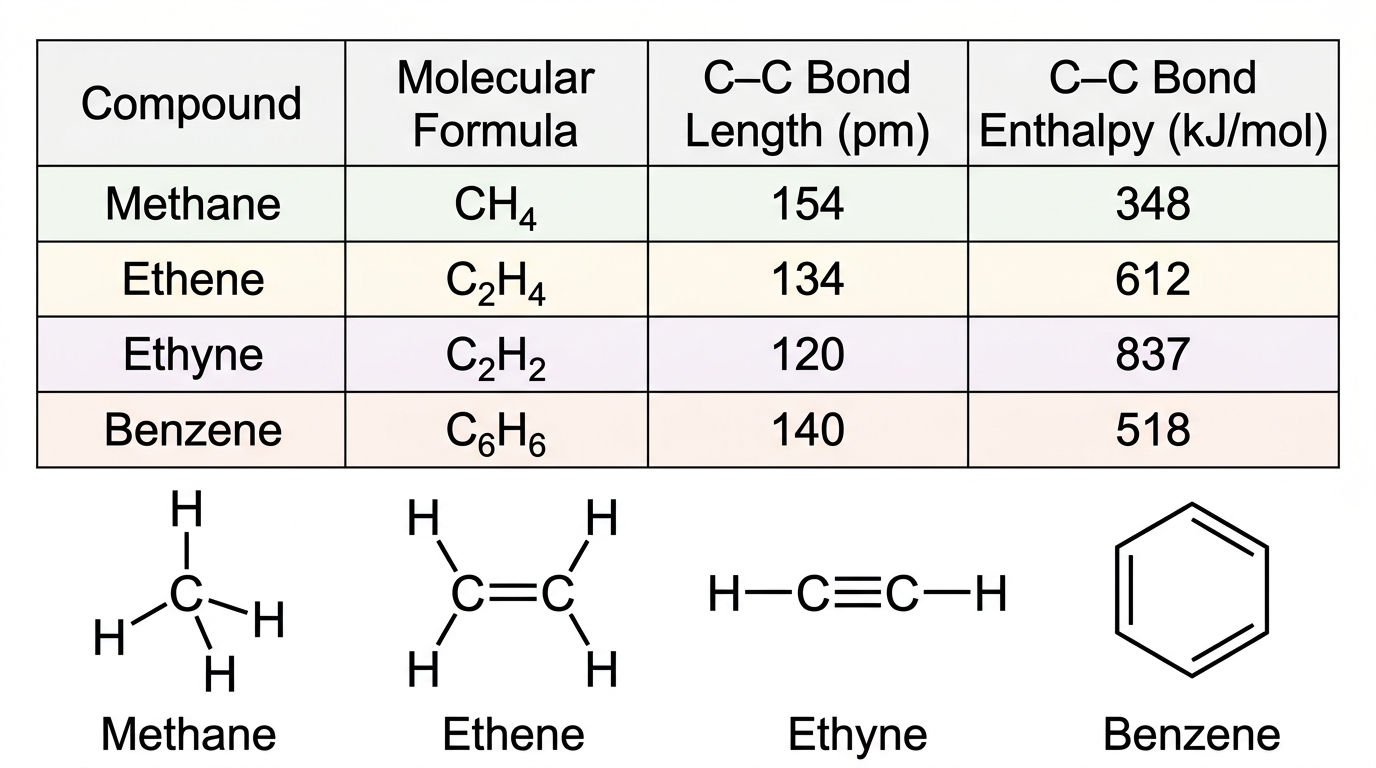
The table below shows data for four organic compounds.
Compound — Molecular formula — C–C bond length (pm) — C–C bond enthalpy (kJ/mol)
Methane — — 154 — 348
Ethene — — 134 — 612
Ethyne — — 120 — 837
Benzene — — 140 — 518
Compound — Molecular formula — C–C bond length (pm) — C–C bond enthalpy (kJ/mol)
Methane — — 154 — 348
Ethene — — 134 — 612
Ethyne — — 120 — 837
Benzene — — 140 — 518
a
State the relationship between C–C bond length and bond enthalpy shown by methane, ethene, and ethyne. [1]
b
Using the data, deduce why benzene's bond length (140 pm) and bond enthalpy (518 kJ/mol) are anomalous compared to the pattern in (a). [2]
c
Analyse whether benzene violates the tetravalency rule, using the concept of delocalized electrons to support your reasoning. [2]
Solutions
That's every free question here — 4 of 118.
+114 more questions, plus Mock Papers & Worksheets, are waiting in Premium.