You're viewing free preview questions — 4 questions previewing here — subscribe to unlock 262 more, plus the Full Question Bank, Mock Papers & Worksheets.Upgrade
IUPAC Naming of Organic Compounds — Free MYP4 Chemistry Practice Questions

1QuestionAlphabetical order of substituentsConcept Practice
2 marks~3 minCriterion A
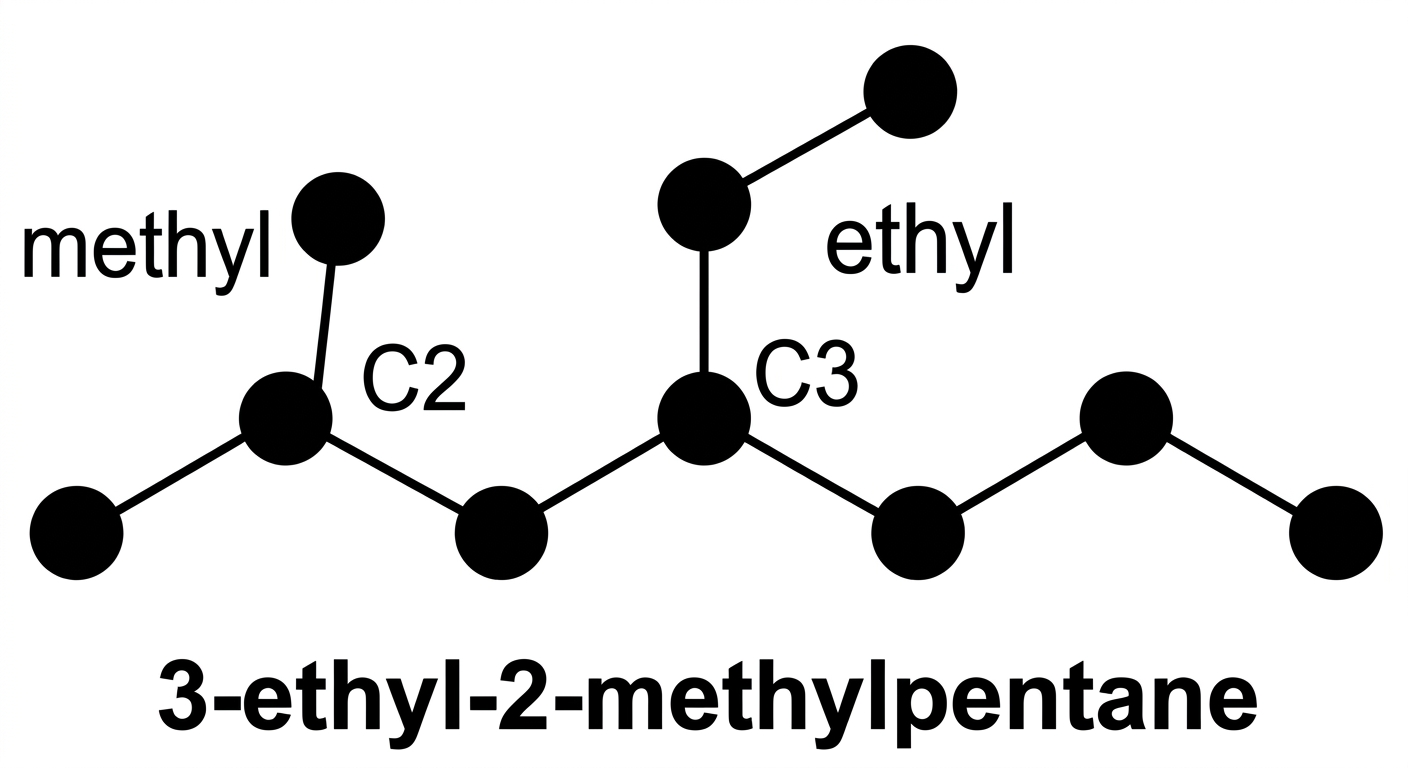
In IUPAC nomenclature, the compound 3-ethyl-2-methylpentane contains two substituents: an ethyl group () and a methyl group ().
a
State the IUPAC rule that determines the order in which substituents are listed in an organic compound's name. [1]
b
Apply this rule to explain why "ethyl" is listed before "methyl" in 3-ethyl-2-methylpentane. [1]

Solutions
2QuestionNaming compounds with functional groups like Alcohols (-ol) and Carboxylic acids (-oic acid)Assessment Practice
2 marks~3 minCriterion D
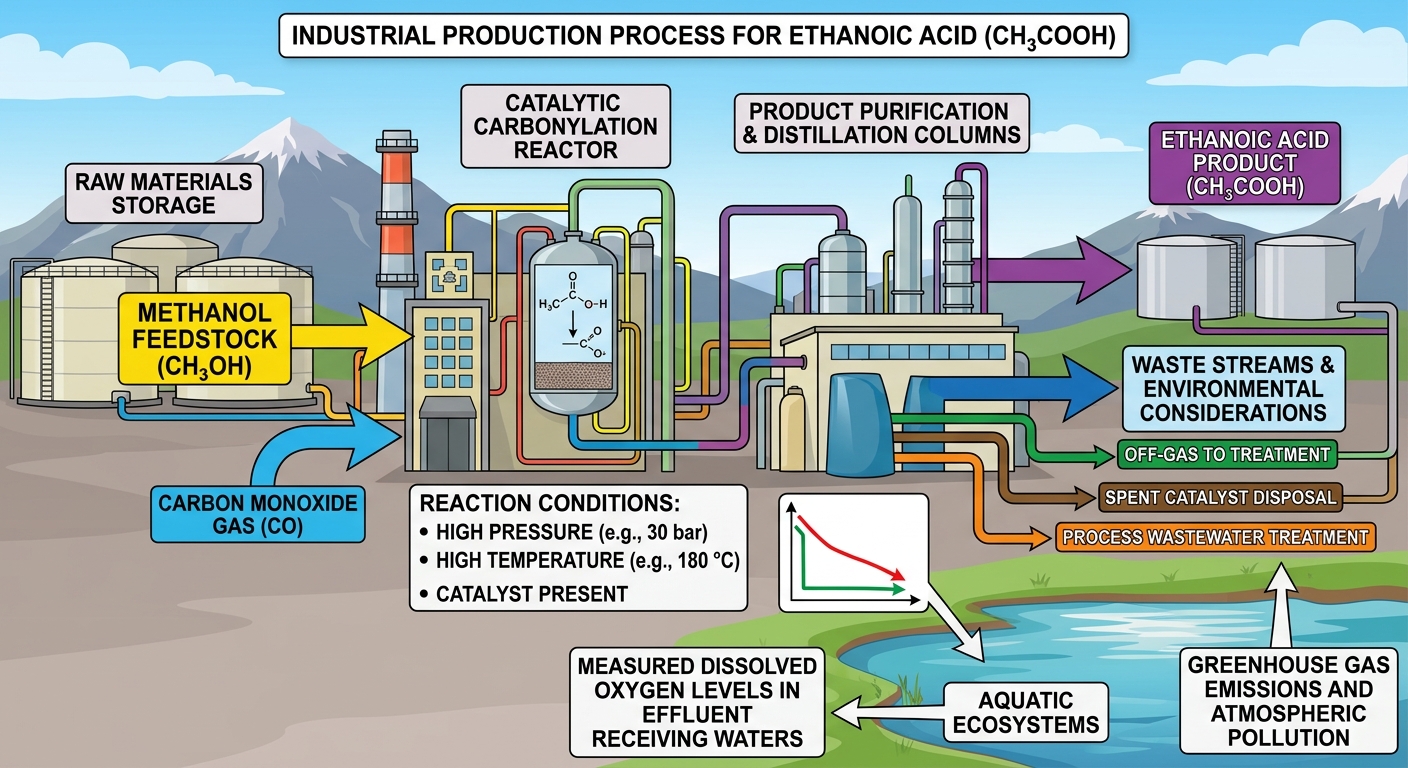
Ethanoic acid () is produced industrially via the carbonylation of methanol, a process requiring high temperatures, pressures, and fossil-fuel-derived energy. Vinegar, a dilute aqueous solution containing approximately 5% ethanoic acid, is marketed as a household cleaning agent.
a
Outline one environmental impact of producing ethanoic acid on an industrial scale. [1]
b
Explain one limitation of using vinegar as a cleaning agent, referring to the chemical properties of ethanoic acid. [1]
Solutions
3QuestionWriting structures from IUPAC namesAssessment Practice
3 marks~5 minCriterion B
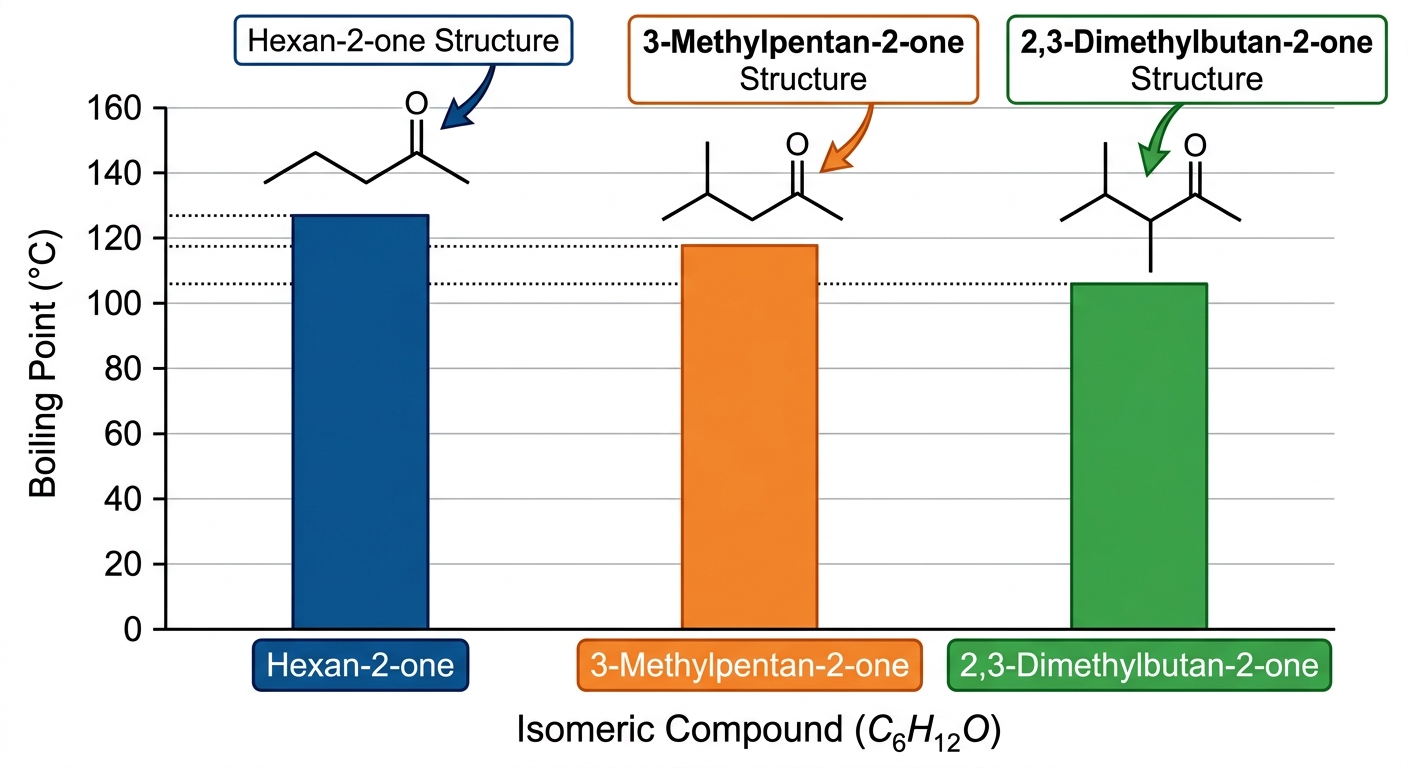
The boiling points of three isomers are: hexan-2-one (127 °C), 3-methylpentan-2-one (118 °C), and 2,3-dimethylbutan-2-one (106 °C).
a
Draw the displayed formula of 3-methylpentan-2-one, clearly showing all bonds. [1]
b
Explain how the branched structure of 3-methylpentan-2-one affects the intermolecular forces between its molecules compared with hexan-2-one. [1]
c
Using the boiling point data for all three isomers, analyse the relationship between the degree of branching and boiling point, and justify why 2,3-dimethylbutan-2-one has the lowest boiling point of the three. [1]
Solutions
4QuestionNaming alkenes / alkanes / alkynesAssessment Practice
4 marks~6 minCriterion C
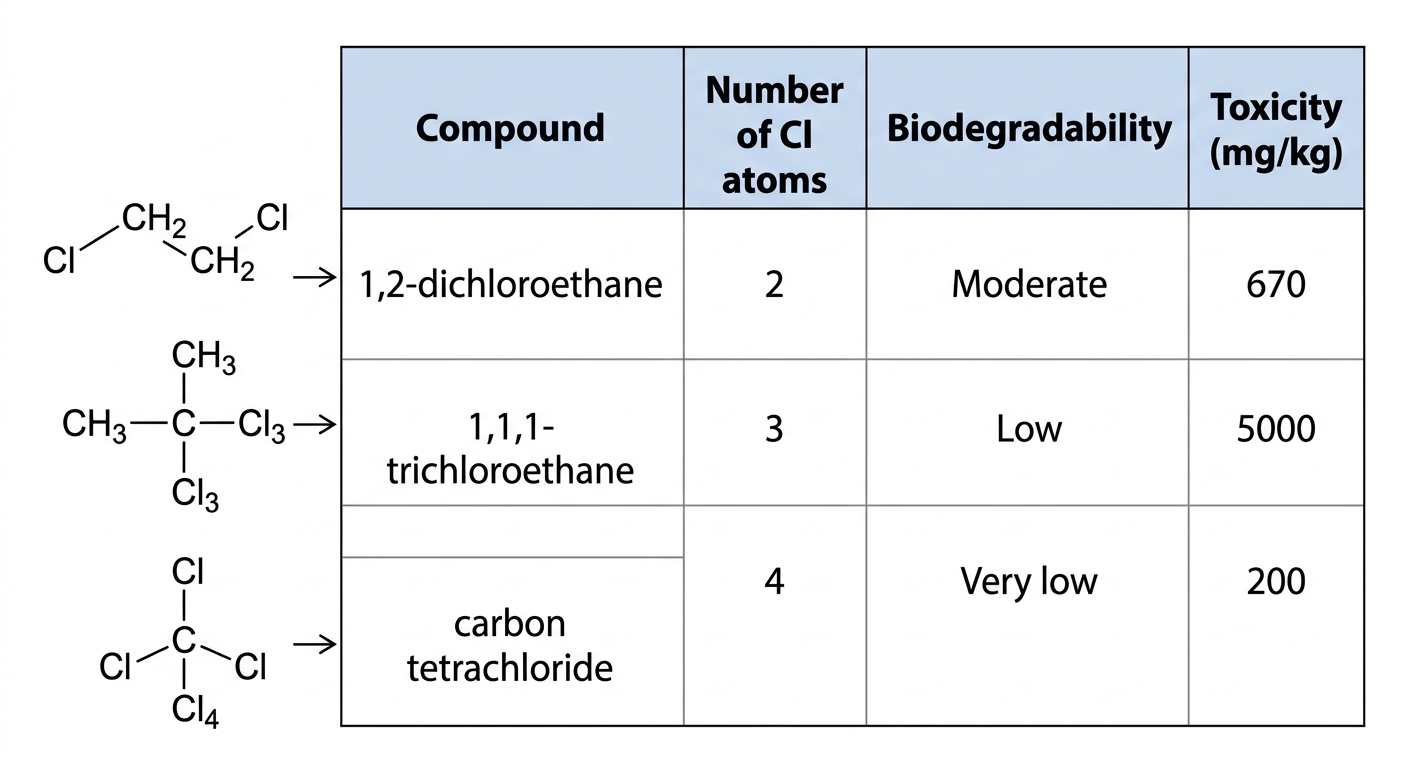
Three chlorinated alkanes are used as industrial solvents. Data for each compound is given below.
Compound: 1,2-dichloroethane / 1,1,1-trichloroethane / carbon tetrachloride ()
Number of Cl atoms: 2 / 3 / 4
Biodegradability: moderate / low / very low
(mg/kg): 670 / 5000 / 200
Compound: 1,2-dichloroethane / 1,1,1-trichloroethane / carbon tetrachloride ()
Number of Cl atoms: 2 / 3 / 4
Biodegradability: moderate / low / very low
(mg/kg): 670 / 5000 / 200
a
Explain how the number of chlorine atoms influences the biodegradability of these compounds. Use data from the table in your answer. [1]
b
The values do not follow a simple trend with increasing chlorination. Interpret the toxicity data to identify which compound poses the greatest acute health risk, and suggest one structural reason why chlorination alone does not determine toxicity. [2]
c
Discuss the limitations of IUPAC names as a tool for predicting the environmental persistence of chlorinated alkanes. [1]
Solutions
That's every free question here — 4 of 266.
+262 more questions, plus Mock Papers & Worksheets, are waiting in Premium.