You're viewing free preview questions — 4 questions previewing here — subscribe to unlock 117 more, plus the Full Question Bank, Mock Papers & Worksheets.Upgrade
Sturtural Formula, Condensed Formula and Isomerism — Free MYP4 Chemistry Practice Questions

1QuestionStructural/displayed formulaConcept Practice
3 marks~5 minCriterion A
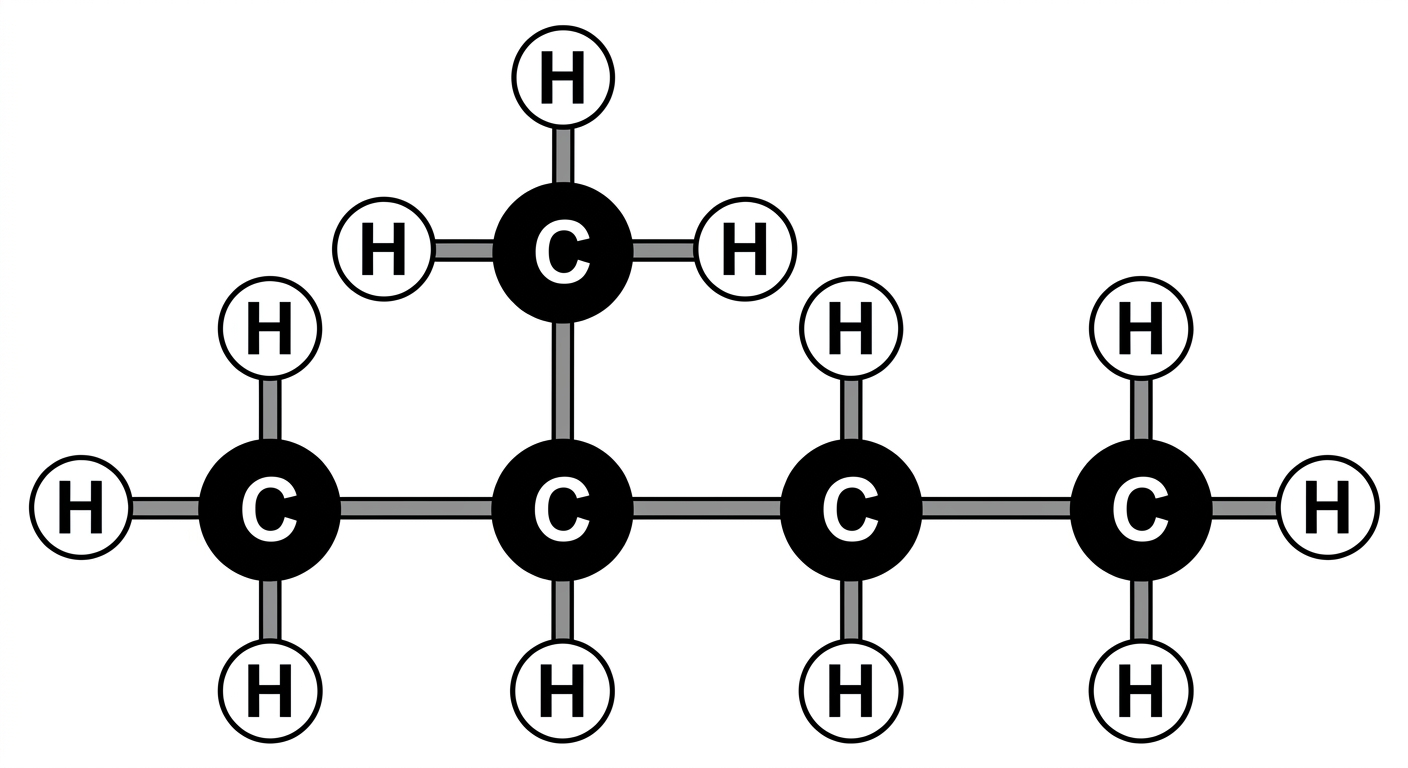
The diagram below shows the structural formula of a hydrocarbon molecule.
a
Deduce the total number of carbon atoms and the total number of hydrogen atoms present in this molecule. [2]
b
Explain, using the bonds shown in the diagram, why this molecule is classified as saturated. [1]

Solutions
2QuestionInterpreting skeletal diagramsAssessment Practice
2 marks~3 minCriterion C
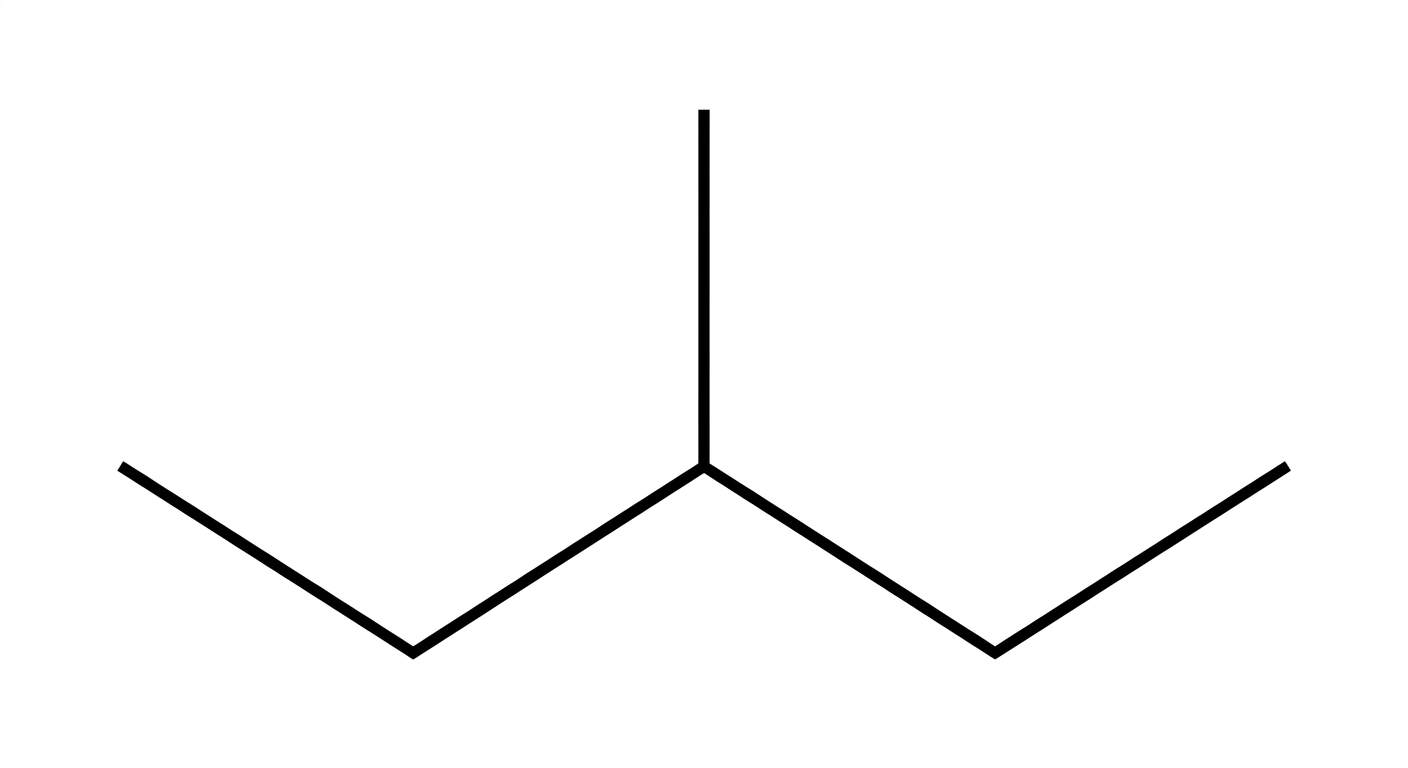
The skeletal diagram below shows 3-methylpentane.
a
Deduce the condensed structural formula of 3-methylpentane from the skeletal diagram. Show your working by identifying each carbon group in the main chain and at the branch point. [1]
b
A student claims that and represent different compounds. Evaluate this claim. [1]
Solutions
3QuestionStructural/displayed formulaAssessment Practice
8 marks~12 minCriterion D
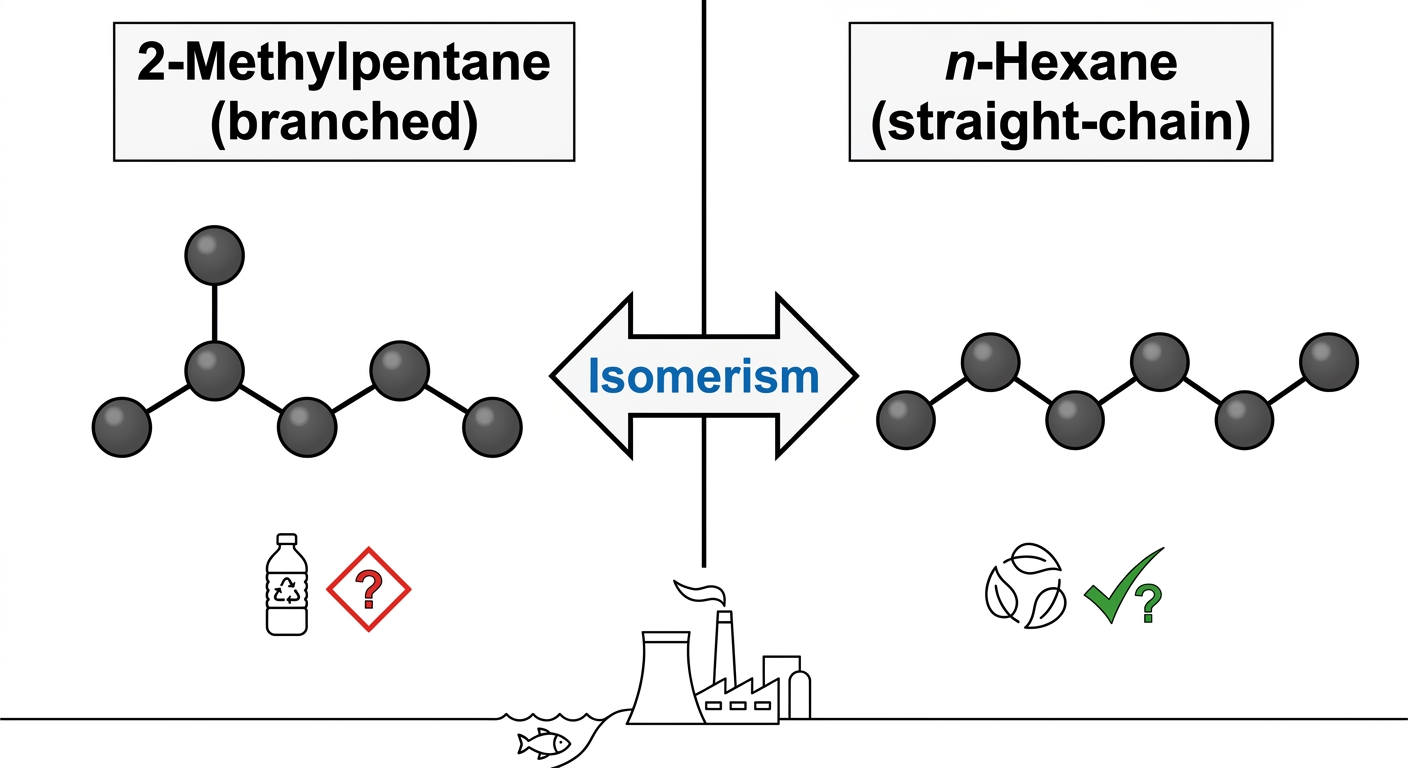
A chemical company produces a plastic using 2-methylpentane, a branched-chain alkane. To improve biodegradability, they propose substituting it with n-hexane, its straight-chain isomer. However, n-hexane poses greater toxicity risk to aquatic organisms. Both compounds share the molecular formula .
a
Draw the structural formula for each compound, clearly showing all bonds. [2]
b
Explain why n-hexane is expected to biodegrade more readily than 2-methylpentane. [2]
c
Evaluate the environmental and societal trade-offs of this substitution, including the limitations of assuming that all straight-chain alkanes biodegrade at the same rate under real landfill conditions. [4]
Solutions
4QuestionStructural/displayed formulaAssessment Practice
6 marks~9 minCriterion B
The molecular formula represents several structural isomers containing a hydroxyl group ().
a
Construct the displayed formulas for all structural isomers of , ensuring every bond and atom is clearly shown. [2]
b
Describe the pattern in how the carbon skeleton and the position of the group vary across the isomers drawn in part (a). [2]
c
Using the pattern identified in part (b), deduce the number of structural isomers of that contain an group. Justify your answer by systematically accounting for each carbon skeleton and each possible position. [2]
Solutions
That's every free question here — 4 of 121.
+117 more questions, plus Mock Papers & Worksheets, are waiting in Premium.