You're viewing free preview questions — 4 questions previewing here — subscribe to unlock 73 more, plus the Full Question Bank, Mock Papers & Worksheets.Upgrade
Calculating relative formula mass — Free MYP4 Chemistry Practice Questions

1QuestionDifference between molecular mass and formula massConcept Practice
2 marks~3 minCriterion A
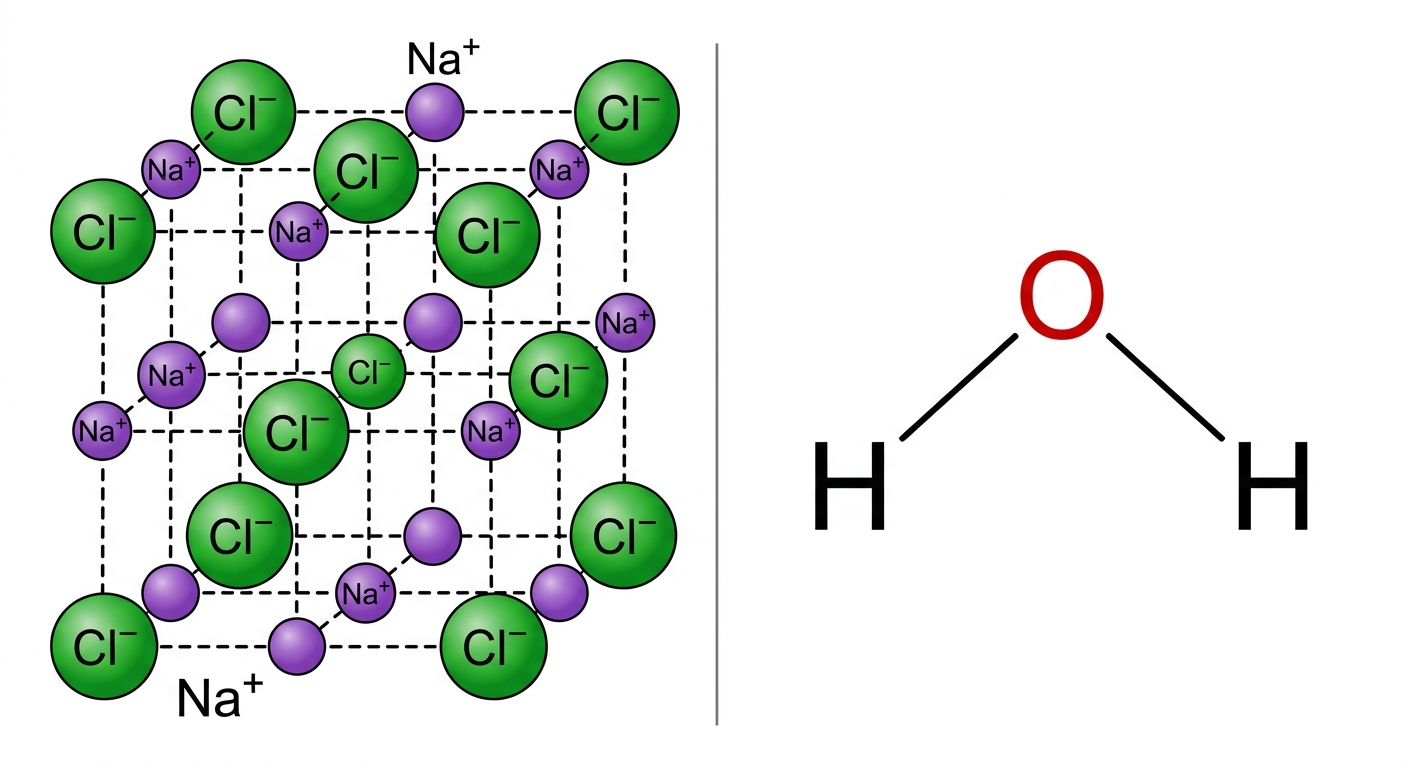
The diagram shows a sodium chloride () crystal lattice and a water () molecule.
a
State which substance has a molecular mass and which has a formula mass. [1]
b
Explain, with reference to bonding and structure, why different mass terminology is used for each substance. [1]

Solutions
2QuestionCalculation of relative formula mass (Mr) for compoundsAssessment Practice
3 marks~5 minCriterion C
A graph of mass (g) against number of moles for a pure compound produces a straight line through the origin with a gradient of 44.
a
Using the equation , explain what the gradient of this graph represents. [1]
b
Calculate the of the compound. [1]
c
Three compounds share this : , , and . Evaluate whether the graph alone is sufficient to identify which compound is present. Justify your answer. [1]
Solutions
3QuestionConcept of relative atomic mass (Ar) from periodic tableAssessment Practice
6 marks~9 minCriterion D
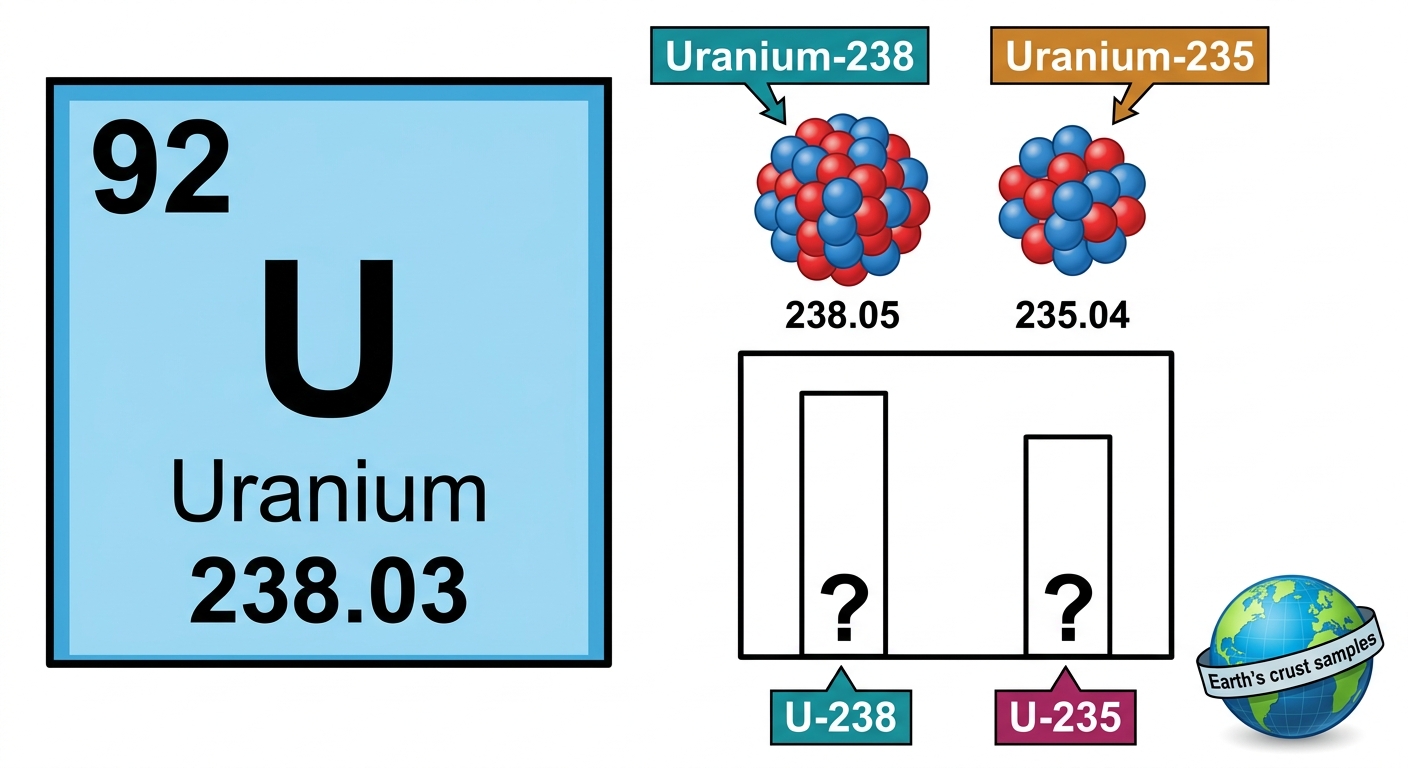
Natural uranium consists of two isotopes: uranium-235 (mass 235.04) and uranium-238 (mass 238.05). The periodic table lists uranium's relative atomic mass () as 238.03. This value is derived from uranium ore samples collected worldwide.
a
Let represent the fractional abundance of uranium-235. Show that the percentage abundance of uranium-235 in natural uranium is approximately 0.66%. [2]
b
Explain why a uranium ore sample from a single mine may have a slightly different value than the one listed in the periodic table. [2]
c
Evaluate one limitation of using the periodic table's value when assessing the radioactivity of a specific uranium ore sample, and identify one environmental risk associated with uranium mining. [2]
Solutions
4QuestionCalculation of relative formula mass (Mr) for compoundsAssessment Practice
3 marks~5 minCriterion B
The table below shows the molecular formulae and relative formula masses () of four alkanes.
| Alkane | Methane | Ethane | Propane | Butane |
|---|---|---|---|---|
| Molecular formula | ||||
| 16 | 30 | 44 | 58 |
a
State the trend in as the number of carbon atoms increases. [1]
b
Each successive alkane differs by one unit. Calculate the of this unit and show how it accounts for the increase in at each step. [1]
c
Pentane () is the next alkane in the series. Using the pattern identified above, deduce its and explain whether this value is consistent with the homologous series trend. [1]
Solutions
That's every free question here — 4 of 77.
+73 more questions, plus Mock Papers & Worksheets, are waiting in Premium.