You're viewing free preview questions — 4 questions previewing here — subscribe to unlock 87 more, plus the Full Question Bank, Mock Papers & Worksheets.Upgrade
The Mole Concept and Avogaro's constant — Free MYP4 Chemistry Practice Questions

1QuestionCounting particles in compounds vs elementsConcept Practice
2 marks~3 minCriterion A
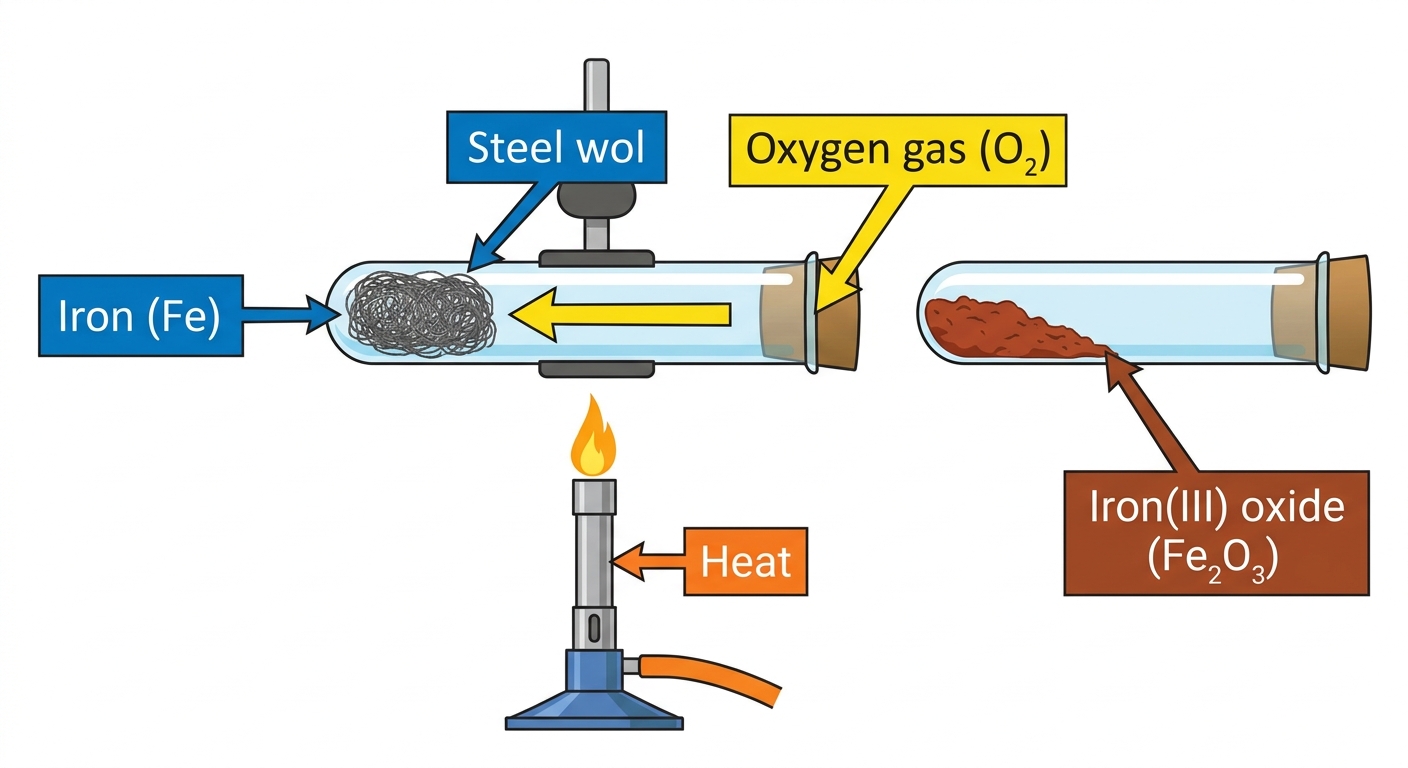
Iron rusts when exposed to air, forming iron(III) oxide — a process relevant to infrastructure maintenance worldwide.
a
Construct the balanced chemical equation for iron reacting with oxygen to form iron(III) oxide, including state symbols. [1]
b
Identify the type of particle (atom, molecule, or formula unit) that represents each reactant and the product in this reaction, and explain why iron(III) oxide is described using formula units rather than molecules. [1]

Solutions
2QuestionConverting between moles and number of particles (atoms, molecules, ions)Assessment Practice
2 marks~3 minCriterion C
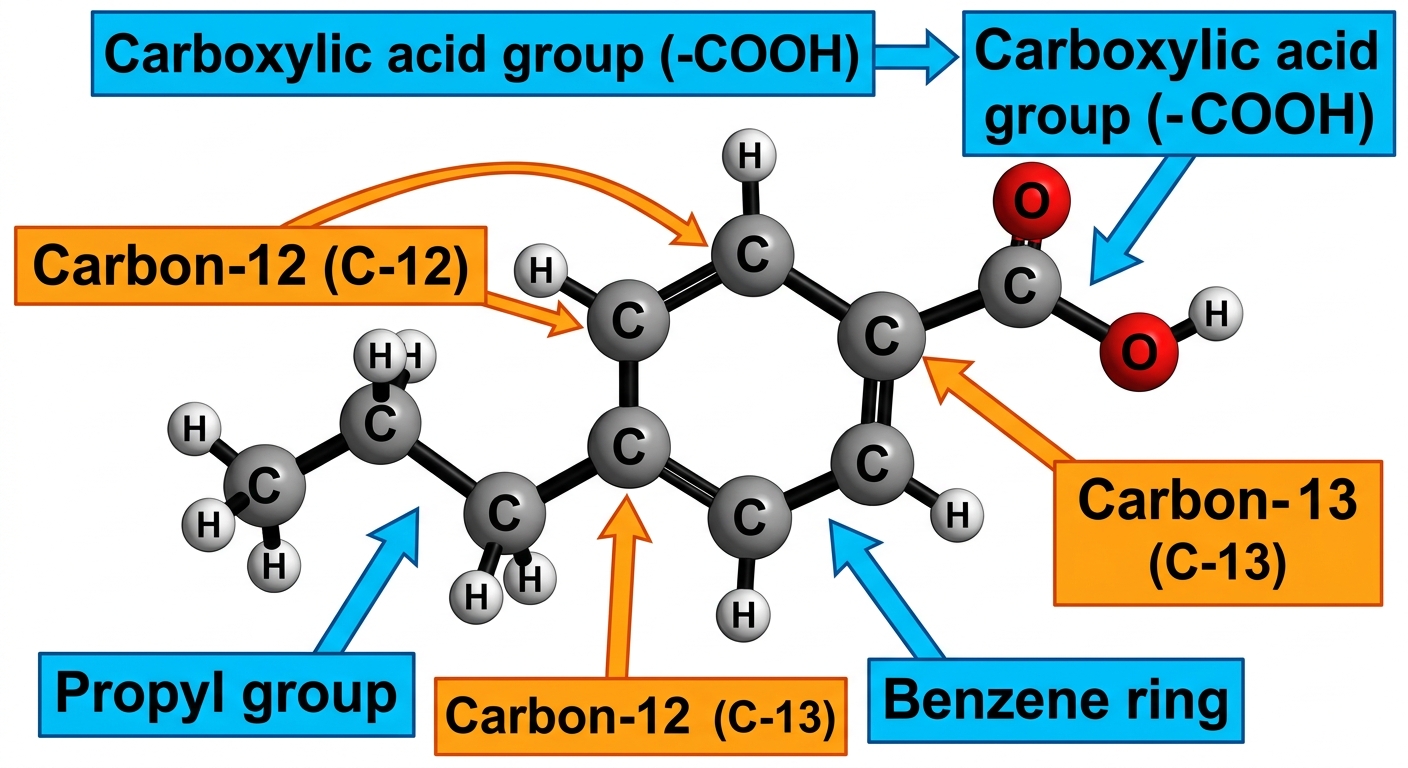
Ibuprofen (CHO) is manufactured in batches. A quality-control chemist uses Avogadro's constant () to estimate the number of ibuprofen molecules in a 0.500 mol sample. Carbon naturally exists as the isotopes carbon-12 and carbon-13.
Identify one limitation of using Avogadro's constant to determine the exact number of ibuprofen molecules in this sample, and explain how the presence of carbon isotopes causes this limitation. [2]
Identify one limitation of using Avogadro's constant to determine the exact number of ibuprofen molecules in this sample, and explain how the presence of carbon isotopes causes this limitation. [2]
Solutions
3QuestionDefinition of a mole and amount of substanceConcept Practice
3 marks~5 minCriterion B
The table below shows data for one mole of four substances.
Substance — Mass of one mole (g) — Number of particles
Carbon (C) — 12.0 —
Water (HO) — 18.0 —
Sodium chloride (NaCl) — 58.5 —
Oxygen (O) — 32.0 —
Substance — Mass of one mole (g) — Number of particles
Carbon (C) — 12.0 —
Water (HO) — 18.0 —
Sodium chloride (NaCl) — 58.5 —
Oxygen (O) — 32.0 —
a
State what the data shows about the number of particles present in one mole of each substance. [1]
b
Identify the pattern in molar mass shown by the four substances. [1]
c
Explain what the relationship between molar mass and number of particles reveals about the definition of a mole. [1]
Solutions
4QuestionDefinition of a mole and amount of substanceAssessment Practice
6 marks~9 minCriterion D
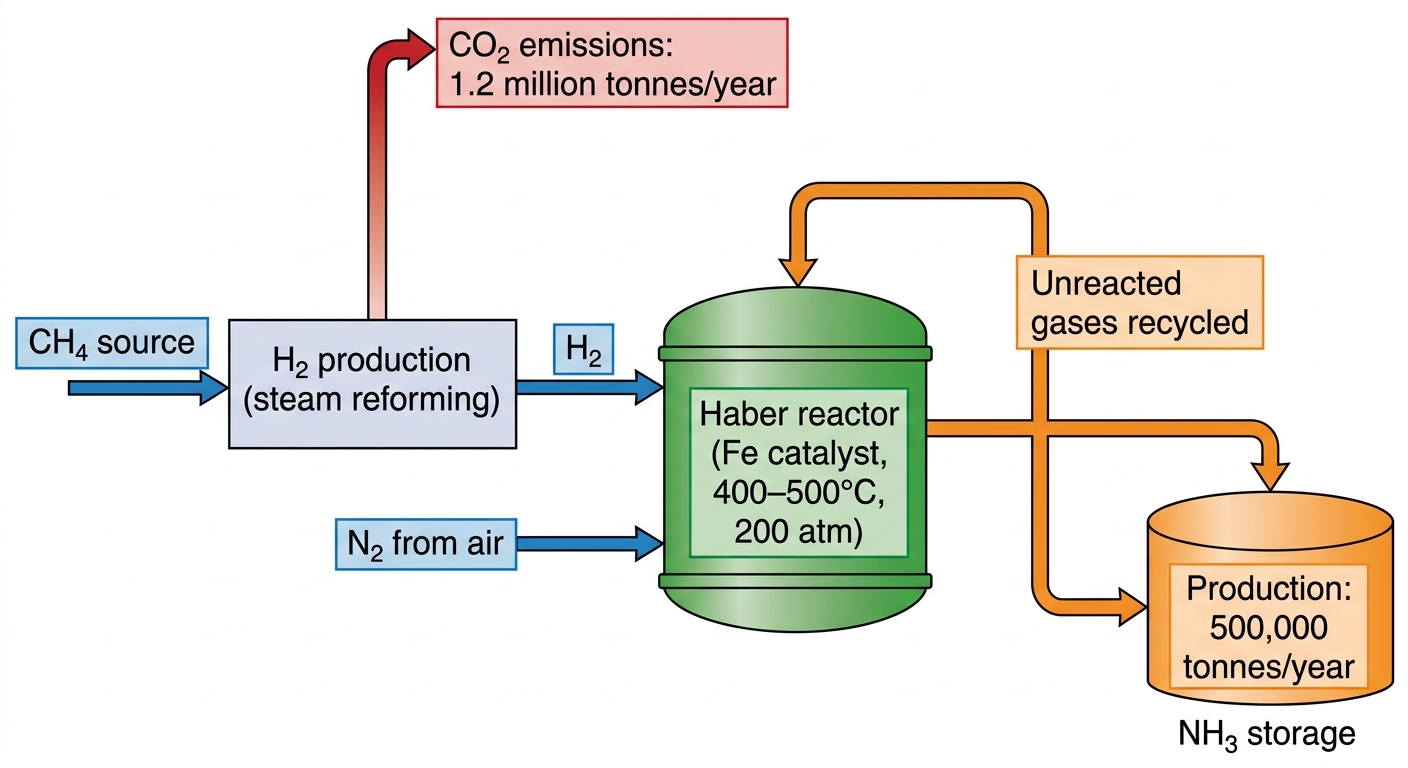
A fertilizer company proposes building an ammonia plant using the Haber process:
The plant would produce 500,000 tonnes of NH3 annually. Hydrogen is sourced from natural gas, releasing 1.2 million tonnes of CO2 per year. The ammonia would be converted into fertilizers capable of sustaining an additional 2 million people.
Molar mass of NH3 = 17.0 g mol; molar mass of CO2 = 44.0 g mol.
The plant would produce 500,000 tonnes of NH3 annually. Hydrogen is sourced from natural gas, releasing 1.2 million tonnes of CO2 per year. The ammonia would be converted into fertilizers capable of sustaining an additional 2 million people.
Molar mass of NH3 = 17.0 g mol; molar mass of CO2 = 44.0 g mol.
a
Calculate the number of moles of NH3 produced and CO2 emitted annually. [2]
b
Explain how the mole concept quantifies the industrial scale of both production and emissions. [2]
c
Evaluate the societal and environmental trade-offs of this proposal, identifying two limitations of using stoichiometric mole ratios to model real-world Haber process efficiency. [2]
Solutions
That's every free question here — 4 of 91.
+87 more questions, plus Mock Papers & Worksheets, are waiting in Premium.