You're viewing free preview questions — 4 questions previewing here — subscribe to unlock 66 more, plus the Full Question Bank, Mock Papers & Worksheets.Upgrade
Algebraic Simplification and Expansion — Free MYP4 Mathematics (Extended) Practice Questions

1QuestionExpanding Double Brackets BinomialsConcept Practice
2 marks~3 minCriterion A
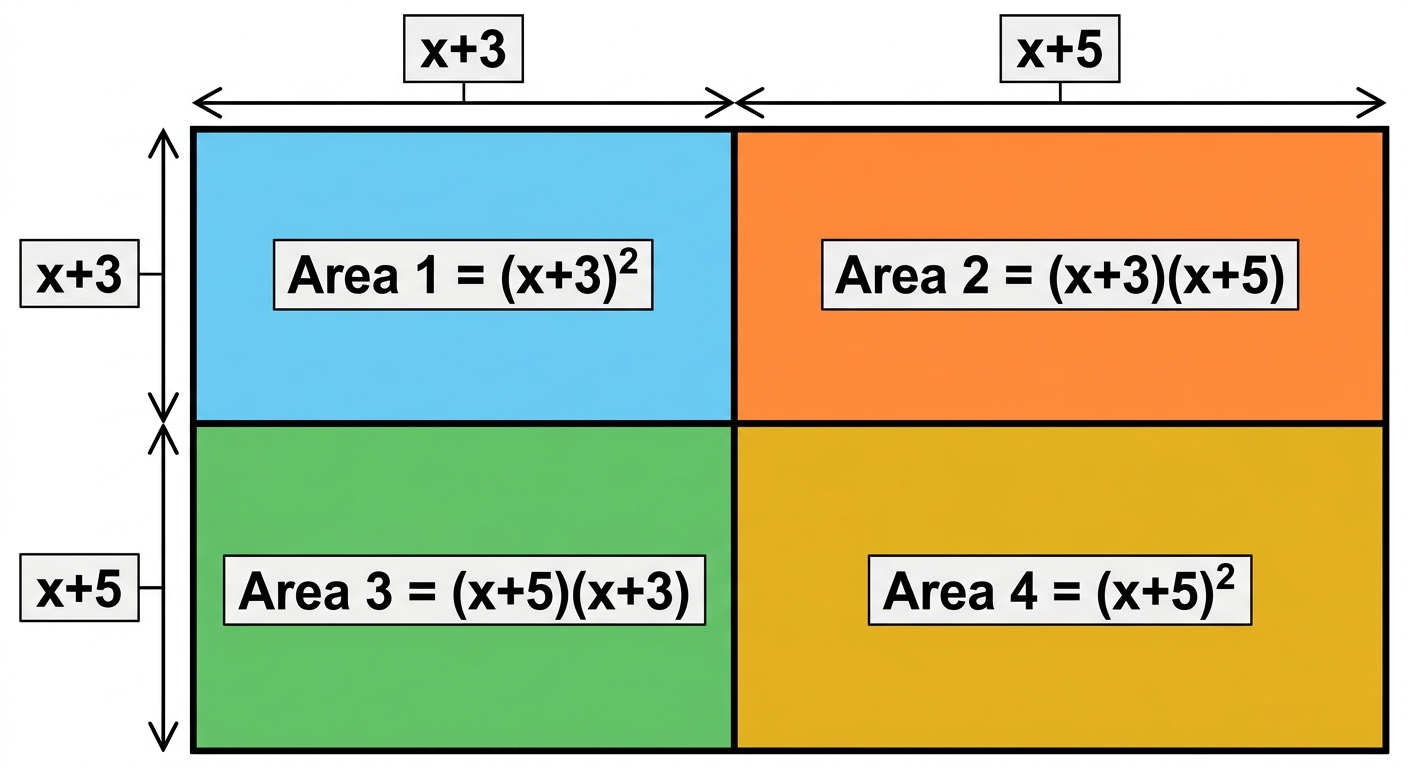
A garden designer plans a rectangular patio with side lengths m and m, where . The rectangle is divided into four smaller rectangles by splitting each side at the integer term.
a
Show that the total area of the patio can be written as . [1]
b
The designer has 40 m² of paving material available. Given that , advise the designer whether the available material is sufficient to complete the patio. [1]

Solutions
2QuestionExpanding Double Brackets BinomialsAssessment Practice
10 marks~15 minCriterion D
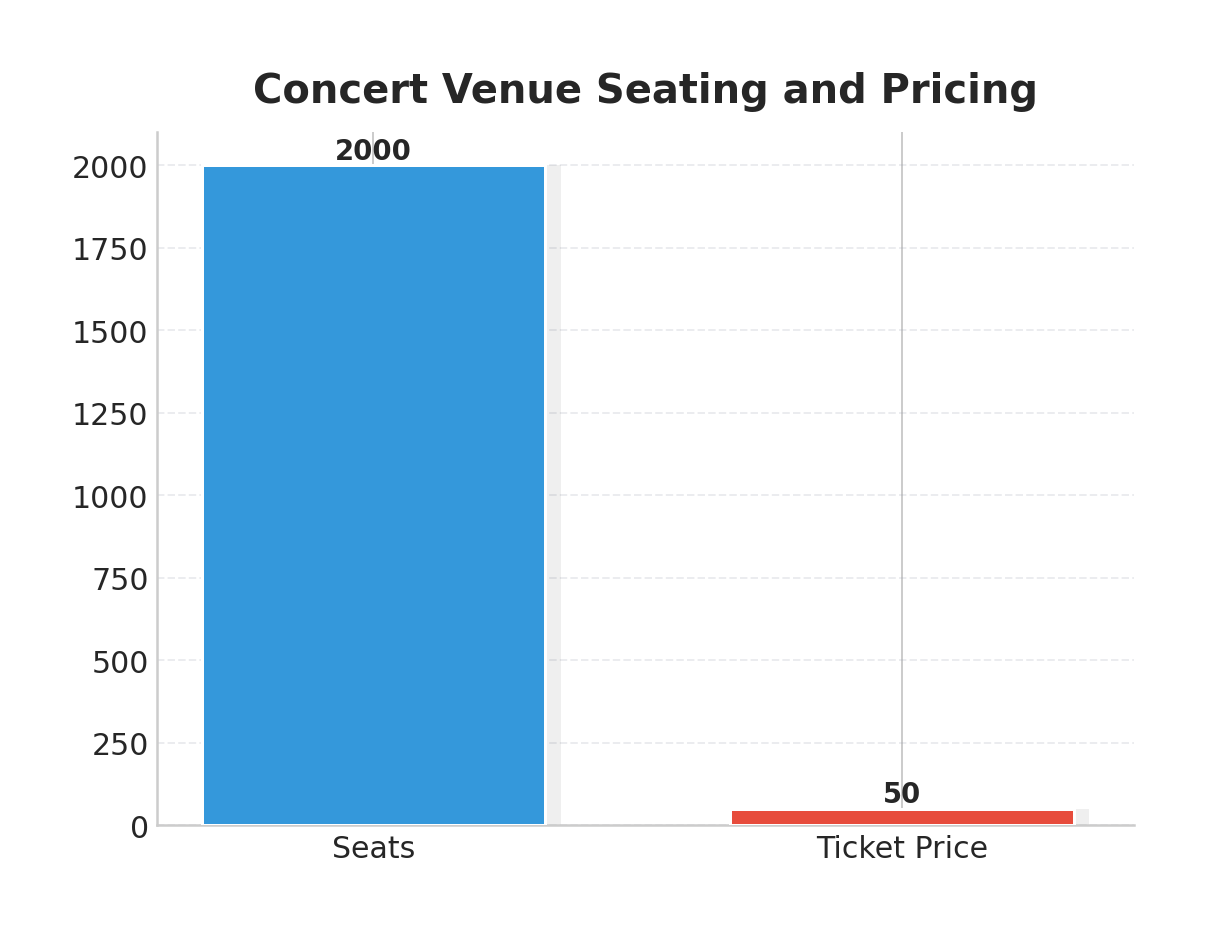
A concert venue has a maximum capacity of 4000 seats. When the ticket price is 50 dollars, 2000 people are expected to attend. Market research shows that for every 2 dollar decrease in ticket price, 120 more people are expected to attend.
Let represent the number of 2 dollar decreases in ticket price.
Revenue is modelled by .
Let represent the number of 2 dollar decreases in ticket price.
Revenue is modelled by .
a
Expand and simplify into the form . [2]
b
Deduce the value of that maximises revenue, and hence find the corresponding ticket price. [3]
c
The venue manager claims that the model predicts a maximum revenue above 105 000 dollars. Assess whether this claim is correct, and explain one reason why the model may not reflect actual revenue at this ticket price. [5]
Solutions
3QuestionCombining Like Terms After ExpansionConcept Practice
4 marks~6 minCriterion C
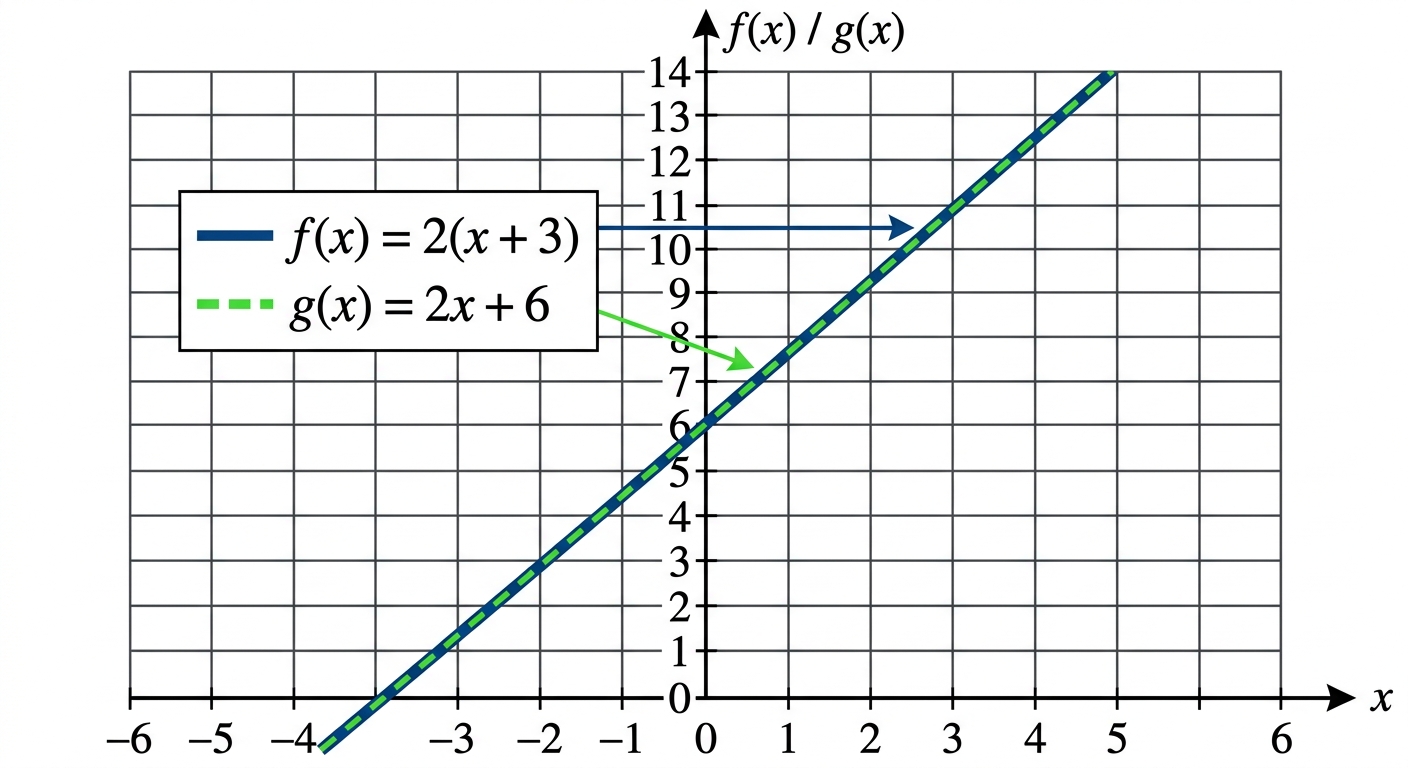
A mobile data company advertises two pricing plans:
where is the number of gigabytes used and the output is the cost in dollars.
where is the number of gigabytes used and the output is the cost in dollars.
a
Show that by expanding using the distributive property. [1]
b
Explain why and represent the same function for all values of . [1]
c
A customer claims that Plan is cheaper than Plan . Advise the customer whether this claim is correct, and what it means for their choice between the two plans. [2]
Solutions
4QuestionCombining Like Terms After ExpansionAssessment Practice
6 marks~9 minCriterion B
The product generates a family of polynomials. A cryptographer uses the constant term of this product to count the number of ways to assign distinct integer keys to slots.
a
Expand , , , and , writing each result in descending powers of . [2]
b
Deduce the constant term and the coefficient of for each expansion in part (a), expressing both as general formulas in . [2]
c
Justify why the constant term always equals and the coefficient of always equals , using the structure of polynomial multiplication. Then advise the cryptographer whether distinct integer keys provide enough unique assignments to serve as a secure one-time code, given that a code is considered secure only if more than distinct assignments exist. [2]
Solutions
That's every free question here — 4 of 70.
+66 more questions, plus Mock Papers & Worksheets, are waiting in Premium.