You're viewing free preview questions — 4 questions previewing here — subscribe to unlock 75 more, plus the Full Question Bank, Mock Papers & Worksheets.Upgrade
Operations with Fractions and Decimals — Free MYP4 Mathematics (Extended) Practice Questions

1QuestionAddition and Subtraction of FractionsConcept Practice
2 marks~3 minCriterion A
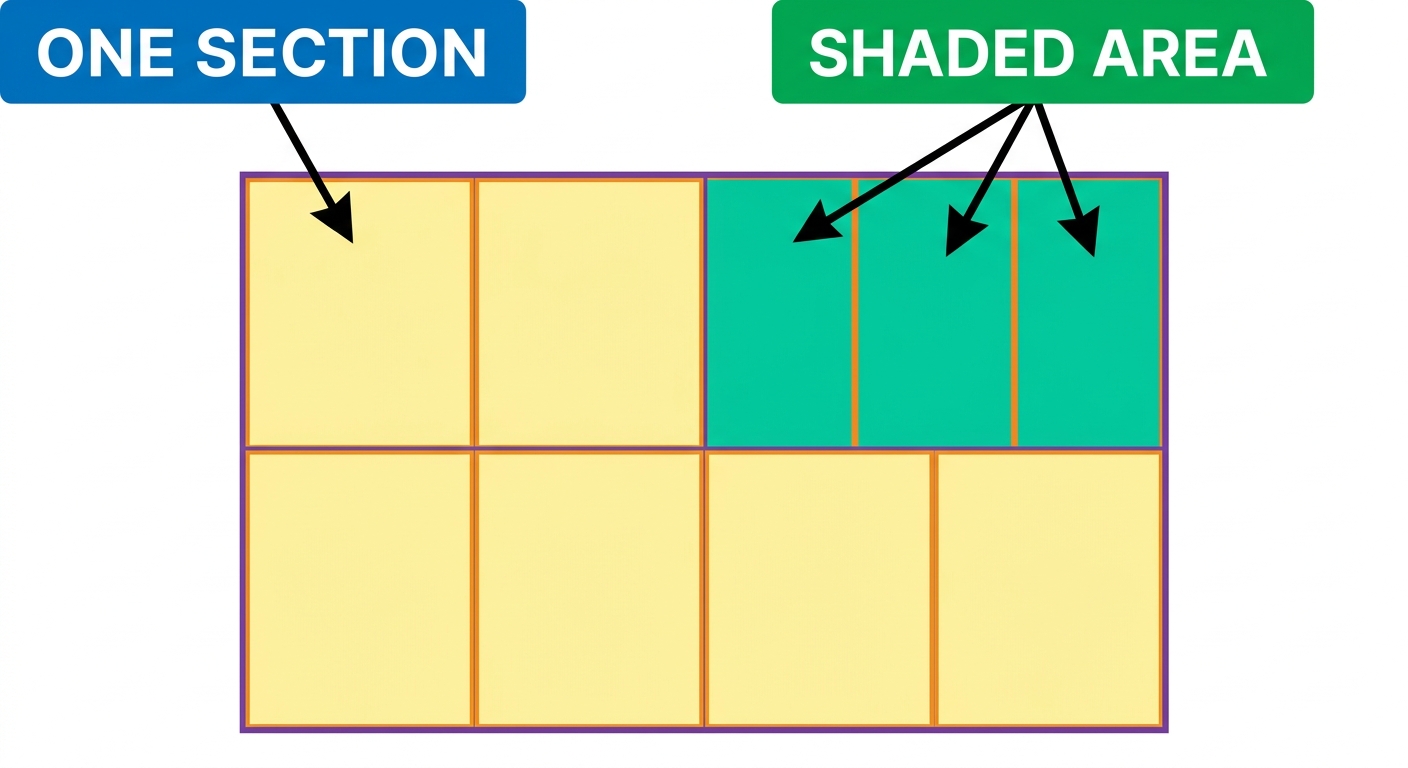
A community garden is divided into 12 equal plots. Volunteers have planted vegetables in 5 plots and flowers in 3 plots. The remaining plots are unused.
a
Calculate the fraction of the garden used for vegetables and flowers combined. Express your answer in simplest form. [1]
b
The garden committee will fund a water irrigation system only if more than of all plots are in use. Justify whether the committee will fund the irrigation system. [1]

Solutions
2QuestionAddition and Subtraction of FractionsAssessment Practice
2 marks~3 minCriterion D
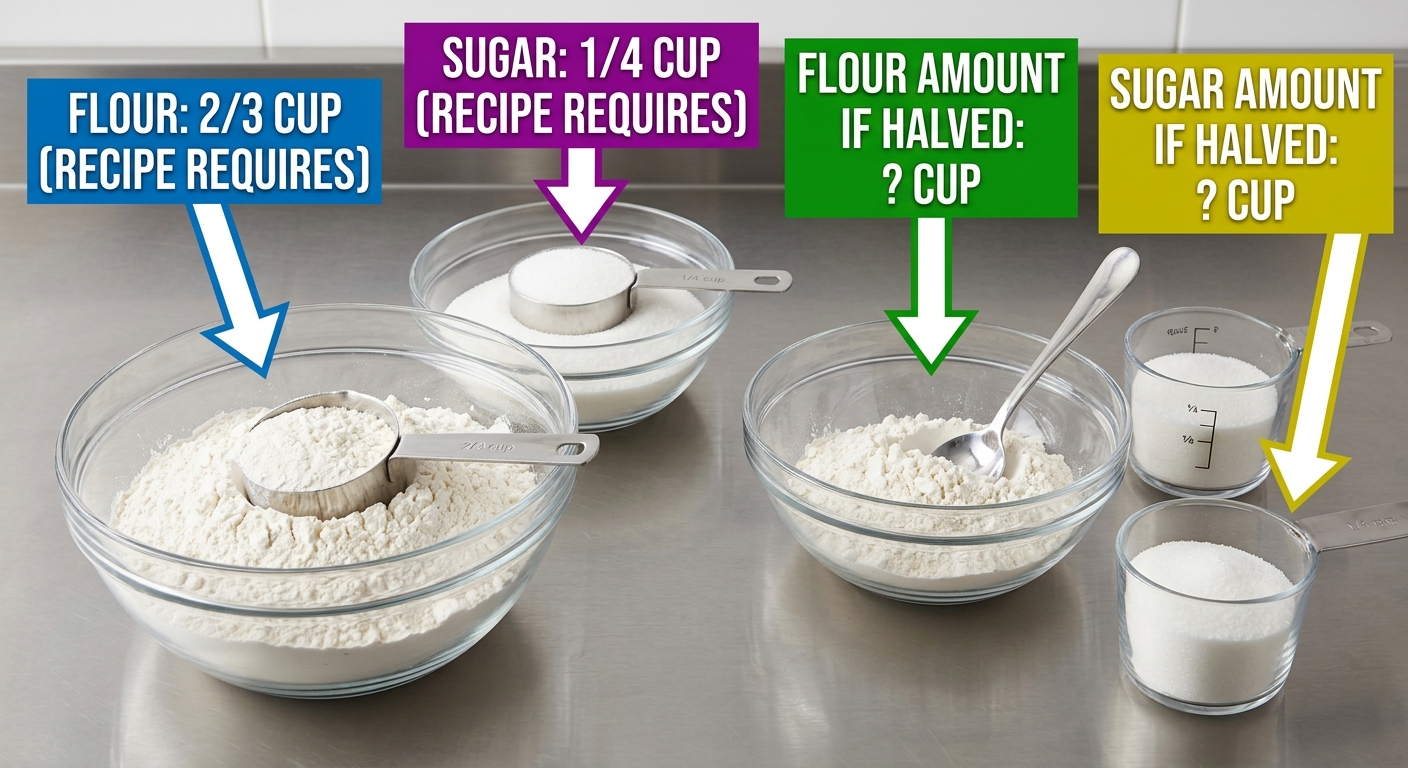
A baker's cookie recipe requires cup of flour and cup of sugar. She decides to make half the recipe.
Calculate the halved quantity of sugar. Justify whether this halved measurement presents a practical challenge when using standard measuring cups, which are marked at , , and cup intervals, and state one consequence for the finished cookies. [2]
Calculate the halved quantity of sugar. Justify whether this halved measurement presents a practical challenge when using standard measuring cups, which are marked at , , and cup intervals, and state one consequence for the finished cookies. [2]
Solutions
3QuestionOrder of Operations with Mixed Numbers and DecimalsConcept Practice
2 marks~3 minCriterion C
A student purchases 4 cinema tickets at dollars each and applies a dollar voucher to the total bill.
a
Calculate the amount the student pays, showing the correct order of operations. [1]
b
The student's friend argues that the voucher should be subtracted from one ticket price before multiplying. Justify whether the friend's interpretation is mathematically valid, referring to the real-world transaction. [1]

Solutions
4QuestionConverting Between Fractions Decimals and PercentagesAssessment Practice
12 marks~18 minCriterion B
Prime numbers can produce recurring decimals when used as the denominator of a unit fraction (numerator = 1). This question investigates the relationship between a prime denominator and the length of the recurring block .
a
Calculate the decimal form of each unit fraction. Show your long-division working. [4]
b
Deduce the length of the recurring block for each decimal in part (a), and record your results.
| Denominator () | ___ | ___ | ___ | ___ |
|---|---|---|---|---|
| Length of recurring block () | ___ | ___ | ___ | ___ [2] |
c
Analyse the values in part (b) to formulate a rule for the maximum possible length of the recurring block in terms of . Express your rule as an equation and justify why the actual length may sometimes be shorter than this maximum. [4]
d
A computer-science student claims that knowing the recurring-block length of tells you the minimum number of digits a computer must store to represent exactly. Calculate the decimal form of , determine its recurring-block length, and assess whether the student's claim is supported for this fraction, referring to your rule from part (c). [2]
Solutions
That's every free question here — 4 of 79.
+75 more questions, plus Mock Papers & Worksheets, are waiting in Premium.