You're viewing free preview questions — 4 questions previewing here — subscribe to unlock 84 more, plus the Full Question Bank, Mock Papers & Worksheets.Upgrade
Scientific Notation and Standard Form — Free MYP4 Mathematics (Extended) Practice Questions

1QuestionMultiplying and Dividing Numbers in Scientific NotationConcept Practice
2 marks~3 minCriterion A
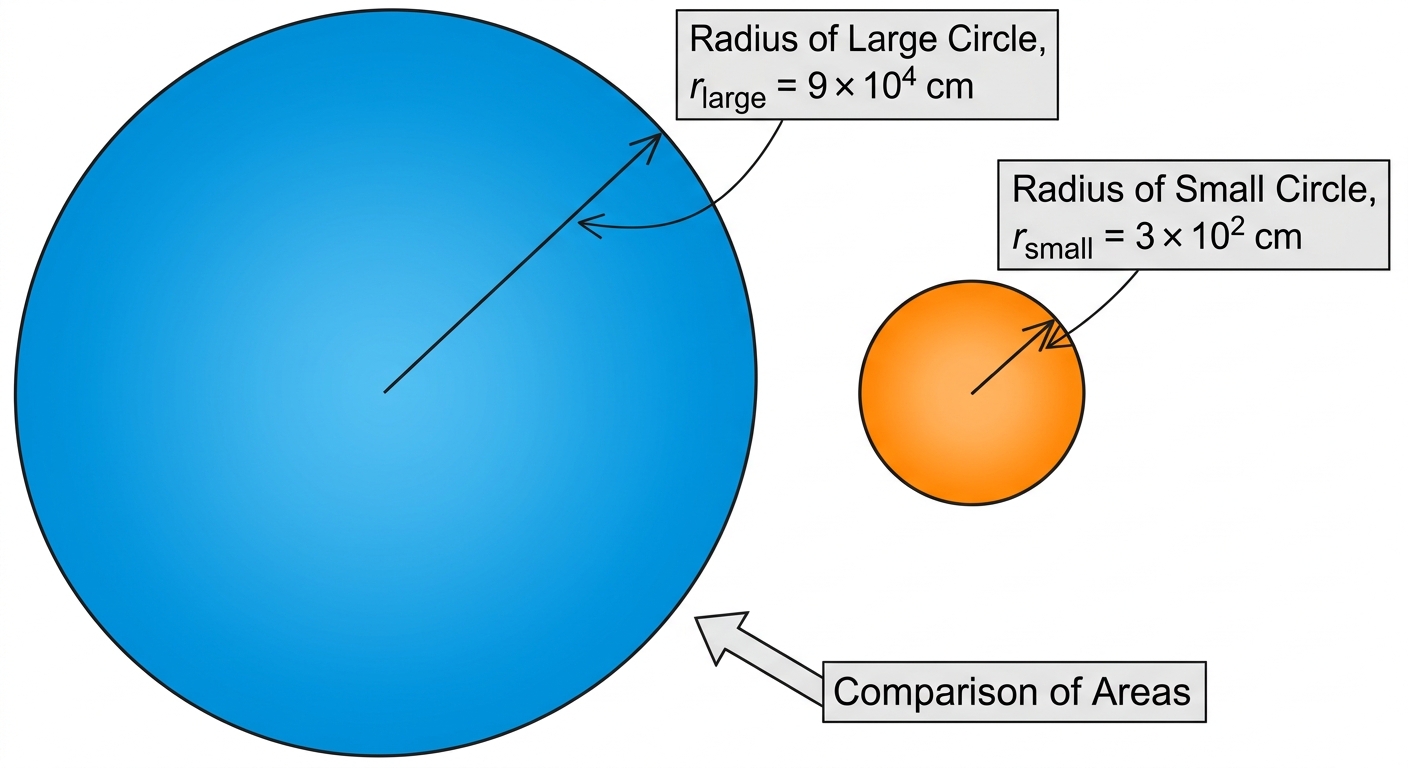
A satellite imaging system captures two circular coverage zones. The large zone has a radius of km and the small zone has a radius of km.
Using , calculate the ratio of the area of the large zone to the area of the small zone. Express your answer in scientific notation. [1]
A minimum coverage ratio of is required for the large zone to be classified as a primary zone. Justify whether the large zone meets this classification. [1]
Using , calculate the ratio of the area of the large zone to the area of the small zone. Express your answer in scientific notation. [1]
A minimum coverage ratio of is required for the large zone to be classified as a primary zone. Justify whether the large zone meets this classification. [1]

Solutions
2QuestionConverting Between FormsAssessment Practice
8 marks~12 minCriterion D
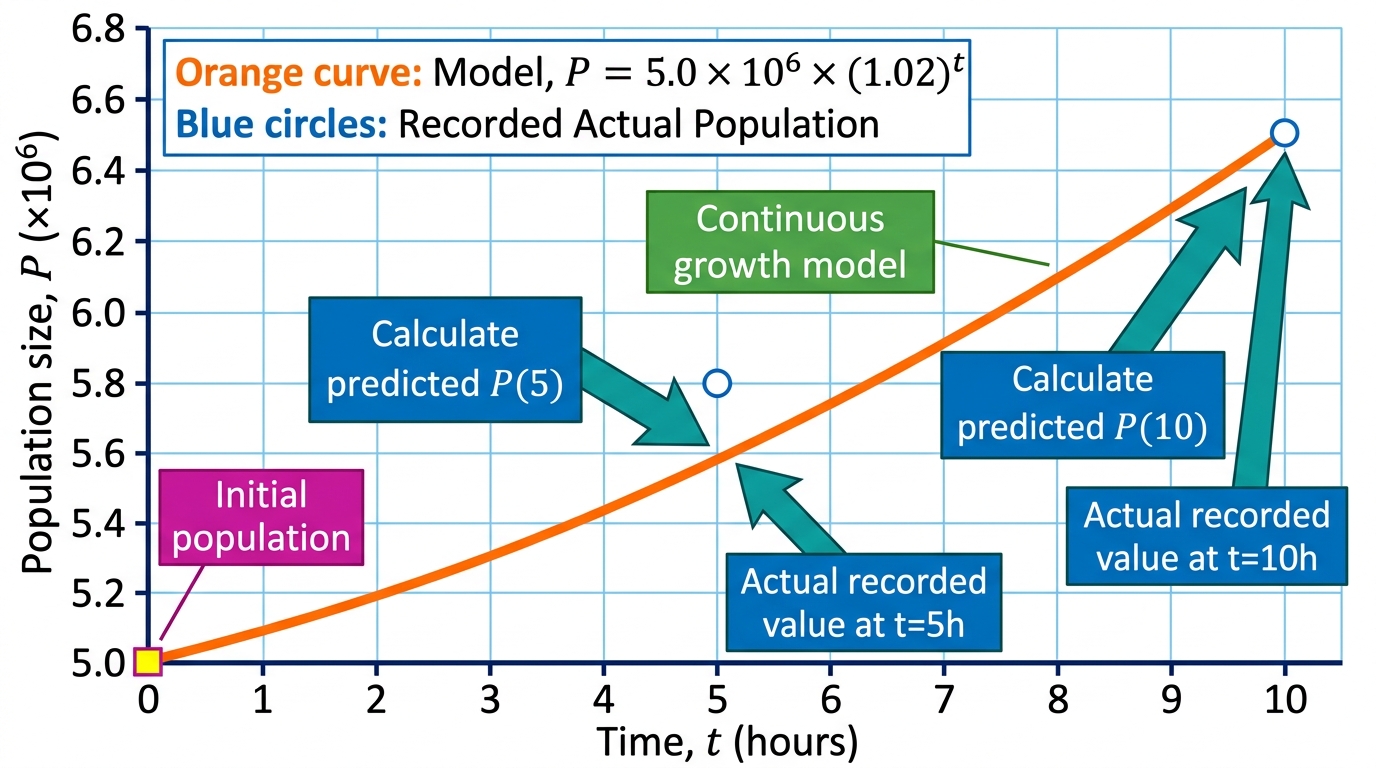
A biologist models the population of a bacterial colony using the formula
where is time in hours. Actual population counts are recorded below.
where is time in hours. Actual population counts are recorded below.
| Time (hours) | 0 | 5 | 10 |
|---|---|---|---|
| Actual population |
a
Calculate the predicted population at and . Give each answer in standard form to two significant figures. [2]
b
Convert the predicted populations from part (a) and the actual populations at and into ordinary numbers. [2]
c
Calculate the absolute difference between the predicted and actual populations at and . Express each difference in standard form to two significant figures. [2]
d
Advise the biologist whether this model should be used to predict the size of the colony beyond hours. Use your results from parts (a) to (c) and give one biological reason to support your advice. [2]
Solutions
3QuestionConverting Between FormsAssessment Practice
8 marks~12 minCriterion C
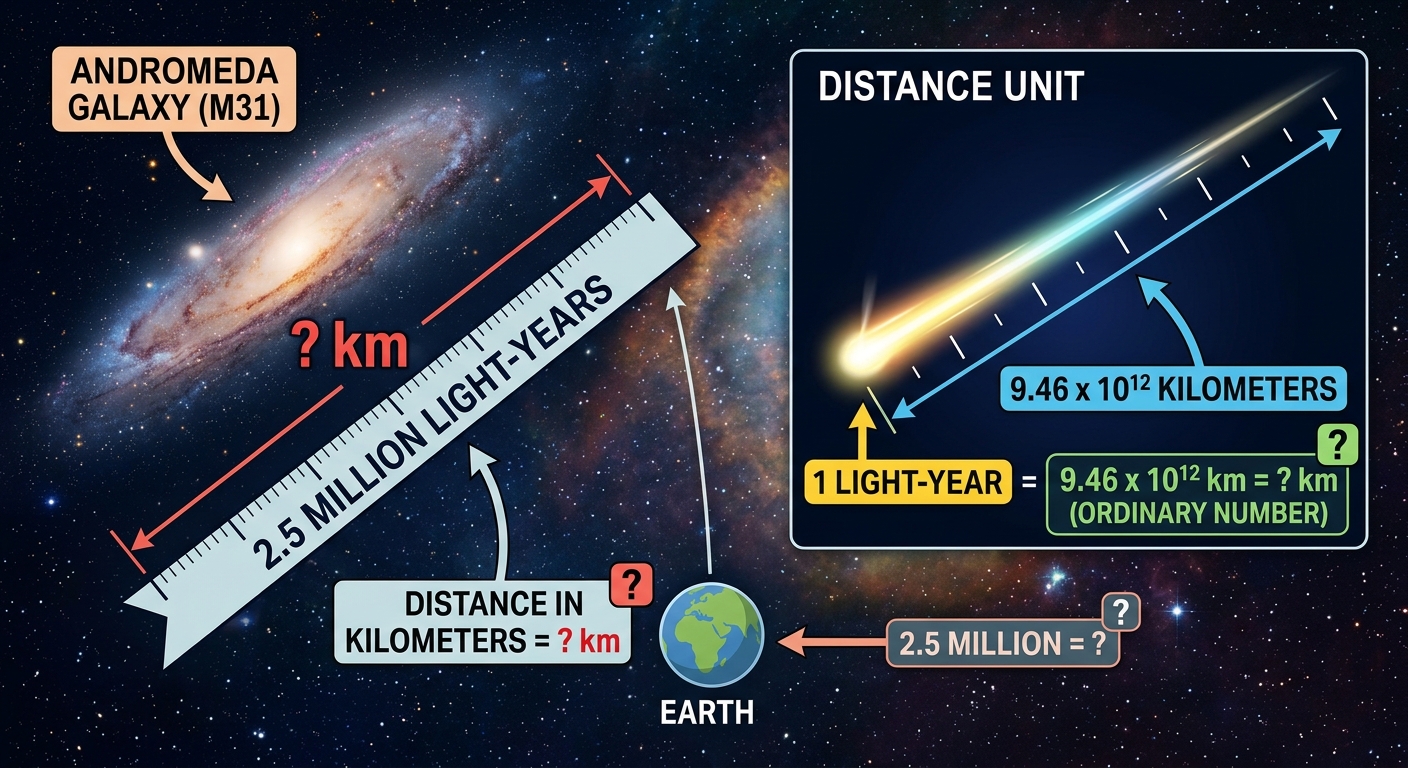
The Andromeda Galaxy is approximately 2.5 million light-years from Earth. One light-year is equivalent to km. A student claims the distance to Andromeda is km.
a
Write 2.5 million light-years and km each as an ordinary number. [2]
b
Show that the distance to Andromeda in kilometres is km, and deduce whether the student's claim is accurate. [2]
c
A science communicator must present the distance km to a general audience. Advise the communicator which format — scientific notation or ordinary number form — to use, justifying your recommendation and acknowledging the limitations of your chosen format. [4]
Solutions
4QuestionAdding and Subtracting with Powers of 10Assessment Practice
2 marks~3 minCriterion B
Three sums involving scientific notation are shown below.
Analyse the three calculations and explain the pattern connecting the exponent of each term to the position of its coefficient digit in the final sum. [2]
Analyse the three calculations and explain the pattern connecting the exponent of each term to the position of its coefficient digit in the final sum. [2]
Solutions
That's every free question here — 4 of 88.
+84 more questions, plus Mock Papers & Worksheets, are waiting in Premium.