You're viewing free preview questions — 4 questions previewing here — subscribe to unlock 75 more, plus the Full Question Bank, Mock Papers & Worksheets.Upgrade
Independent and Dependent Events — Free MYP4 Mathematics (Extended) Practice Questions

1QuestionUsing Probability Trees for Multi-Stage EventsConcept Practice
2 marks~3 minCriterion A
A hospital screening programme tests patients in two sequential stages. In Stage 1, the probability that a patient tests positive is . In Stage 2, regardless of the Stage 1 result, the probability that a patient tests positive is .
A patient is selected at random.
A patient is selected at random.
a
Construct a probability tree diagram for the two stages, labelling all branches with their probabilities. [1]
b
Calculate and interpret what this value means for the hospital's expected follow-up caseload. [1]


Solutions
2QuestionReal-Life Applications Games Genetics and Decision-MakingAssessment Practice
4 marks~6 minCriterion C
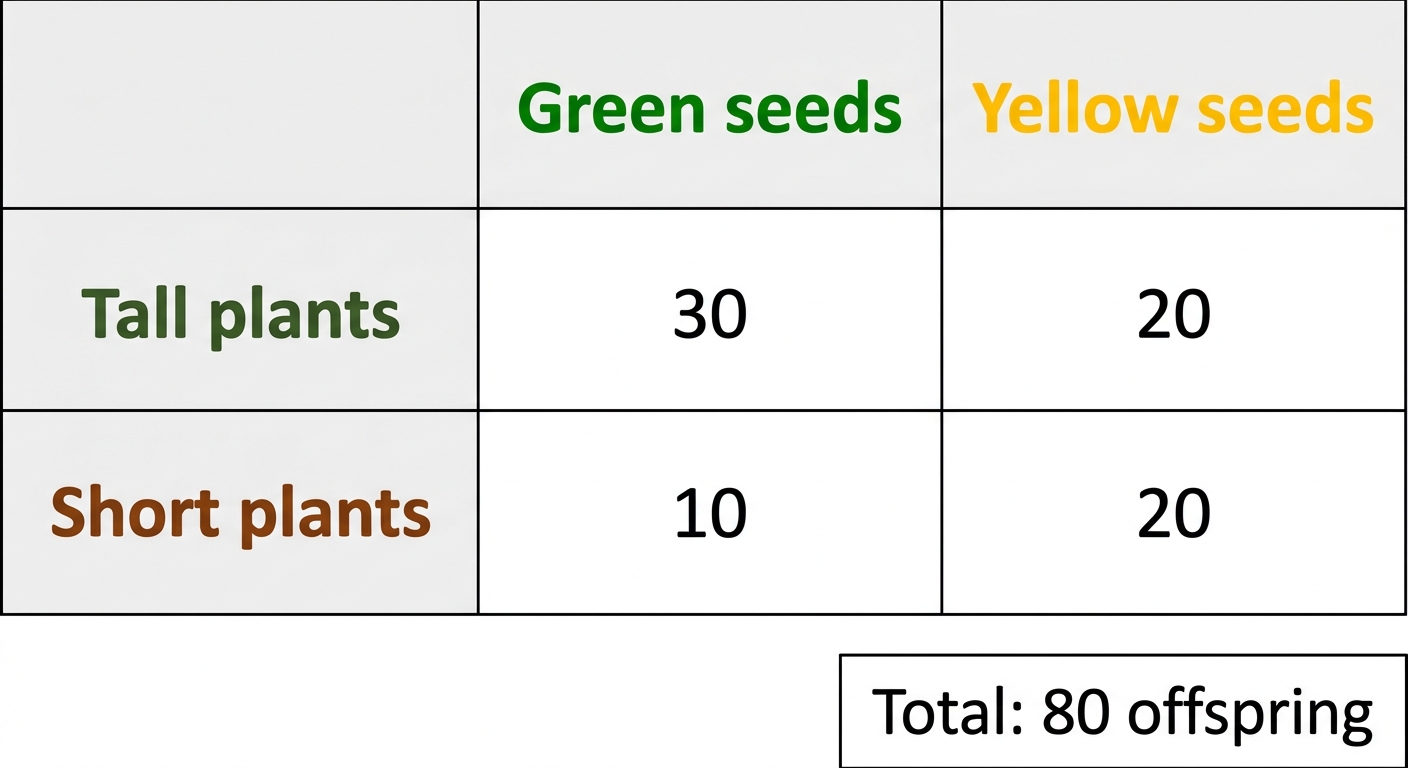
A genetics laboratory crosses two pea plants and records the phenotypes of 80 offspring.
Tall with green seeds: 30
Tall with yellow seeds: 20
Short with green seeds: 10
Short with yellow seeds: 20
Tall with green seeds: 30
Tall with yellow seeds: 20
Short with green seeds: 10
Short with yellow seeds: 20
a
Calculate the conditional probability that a randomly selected offspring is tall, given that it has green seeds. [2]
b
A second laboratory claims that height and seed colour are independent traits in this cross. Justify whether the data support this claim. [2]
Solutions
3QuestionRecognizing and Modeling Dependent EventsAssessment Practice
6 marks~9 minCriterion D
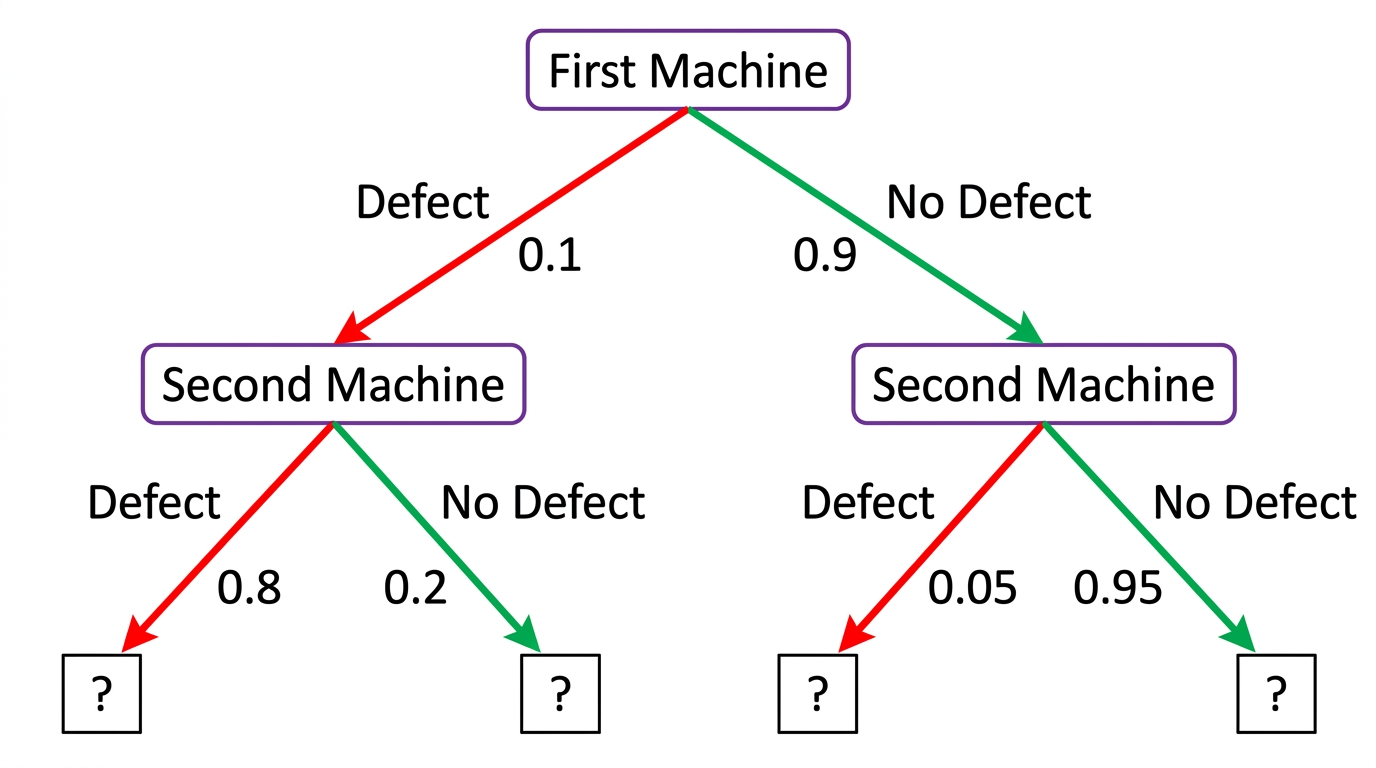
A factory produces electronic components using two sequential machines. Machine 1 produces a defect with probability . If Machine 1 produces a defect, Machine 2 produces a defect with probability ; if Machine 1 does not produce a defect, Machine 2 produces a defect with probability . A component is classified as defective if at least one machine produces a defect.
a
Calculate the probability that a randomly chosen component is defective. [2]
b
Calculate the probability that Machine 1 produced a defect, given that a component is defective. [2]
c
The factory's quality manager uses your answer from part (b) to argue that, when a defective component is found, Machine 1 is the more likely source of the defect and should be inspected first. Advise the quality manager whether this inspection strategy is reliable, identifying one assumption of the model that could undermine it in practice. [2]
Solutions
4QuestionUsing Probability Trees for Multi-Stage EventsAssessment Practice
7 marks~11 minCriterion B
A quality-control engineer tests microchips by running them through a sequence of independent diagnostic checks. At each check, a chip either passes (P) or fails (F), each with equal probability.
a
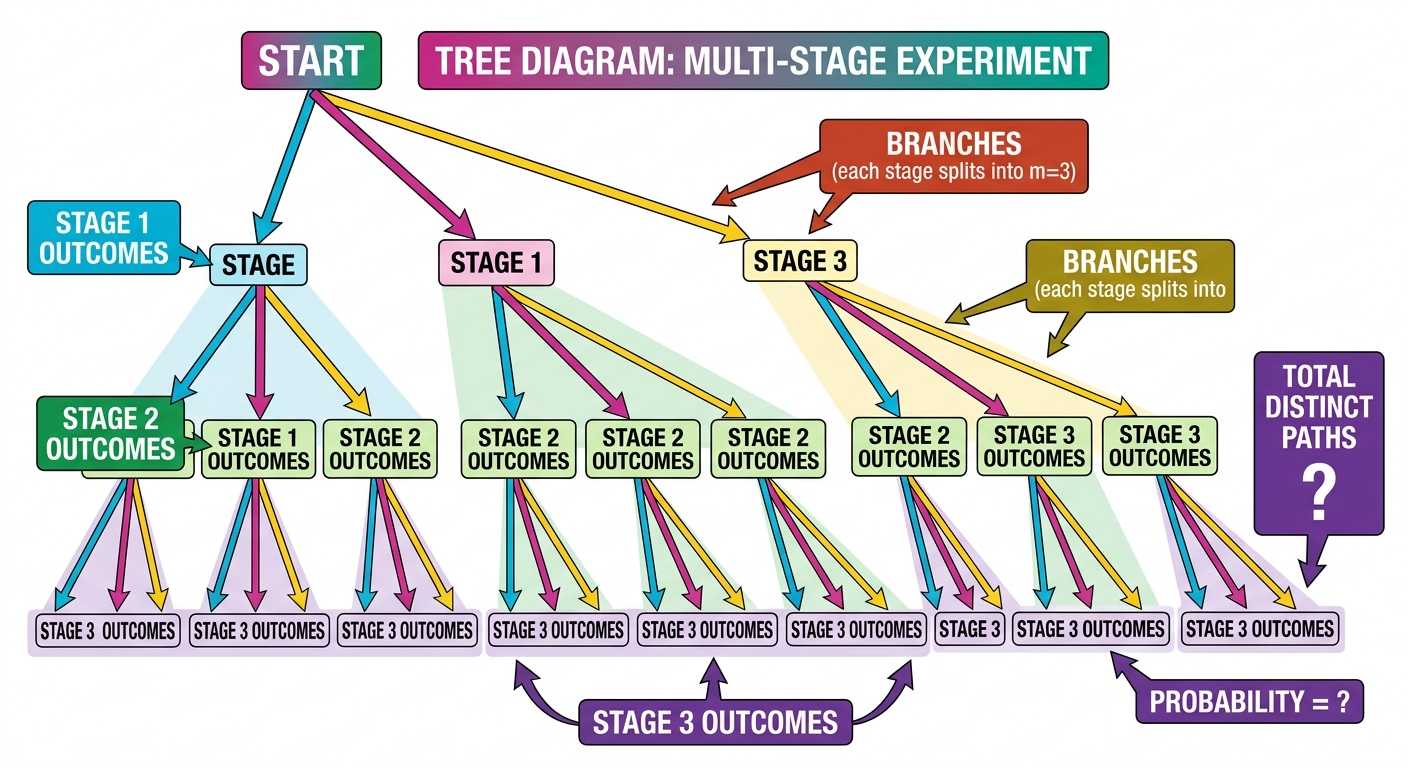
Write down the number of distinct outcomes after 1 check, after 2 checks, and after 3 checks. Identify the pattern in your sequence. [2]
b
Deduce a formula for the total number of distinct outcomes after checks, each with equally likely results. Justify your formula using the structure of a probability tree. [2]
c
The engineer runs 4 checks on each chip. Construct a probability tree for this 4-stage process and use your formula to verify the total number of distinct paths. A chip is accepted only if it passes all 4 checks. Advise the engineer whether this acceptance criterion is suitable for a production line, justifying your answer using probability. [3]
Solutions
That's every free question here — 4 of 79.
+75 more questions, plus Mock Papers & Worksheets, are waiting in Premium.