You're viewing free preview questions — 4 questions previewing here — subscribe to unlock 71 more, plus the Full Question Bank, Mock Papers & Worksheets.Upgrade
Special Identities and Common Patterns — Free MYP4 Mathematics (Standard) Practice Questions

1QuestionDeriving Identities from Expansion and FactorizationConcept Practice
2 marks~3 minCriterion A
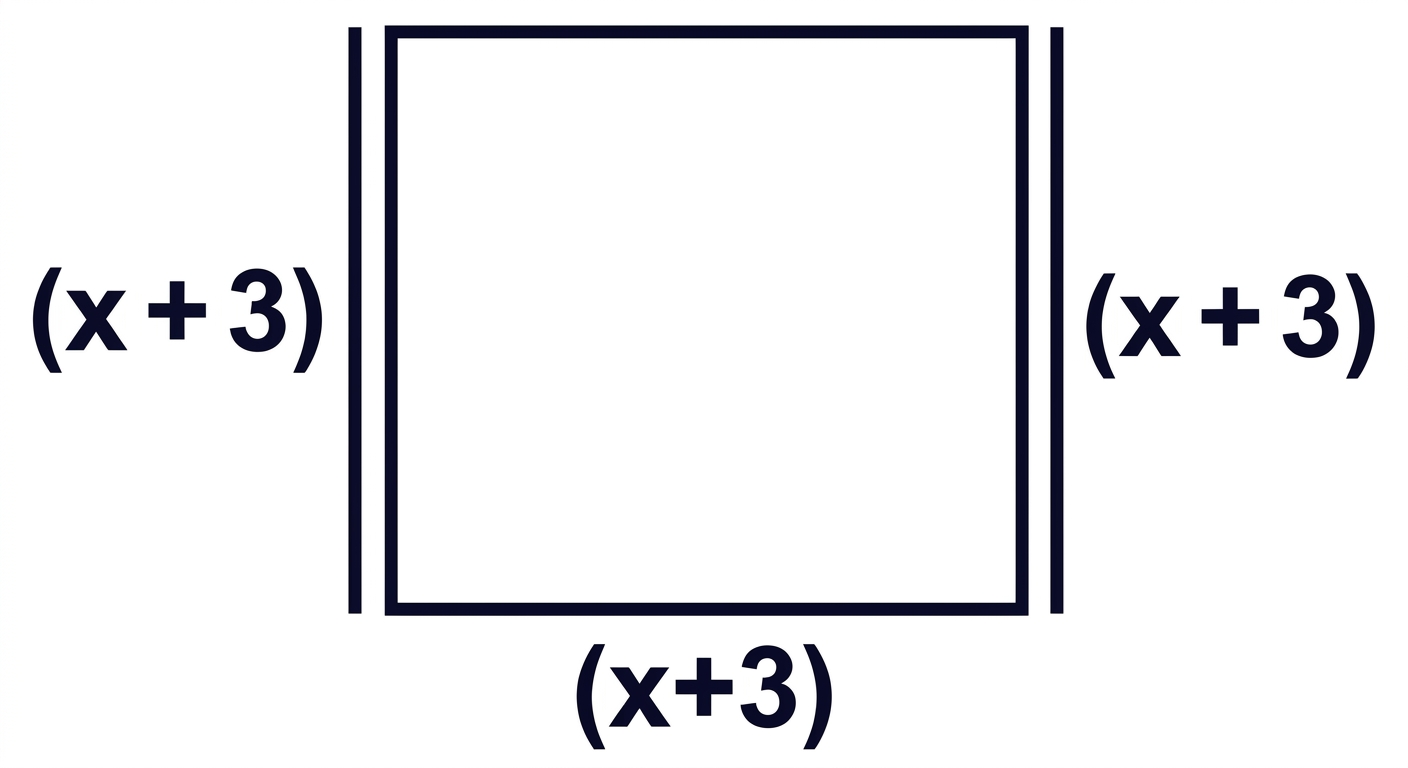
A landscape architect is designing a square patio with side length metres, where .
a
Show that the area of the patio can be written as square metres. [1]
b
The architect has 26 square metres of paving material available. Given that , advise the architect whether the available material is sufficient to complete the patio, justifying your answer. [1]

Solutions
2QuestionPerfect Square IdentitiesAssessment Practice
2 marks~3 minCriterion C
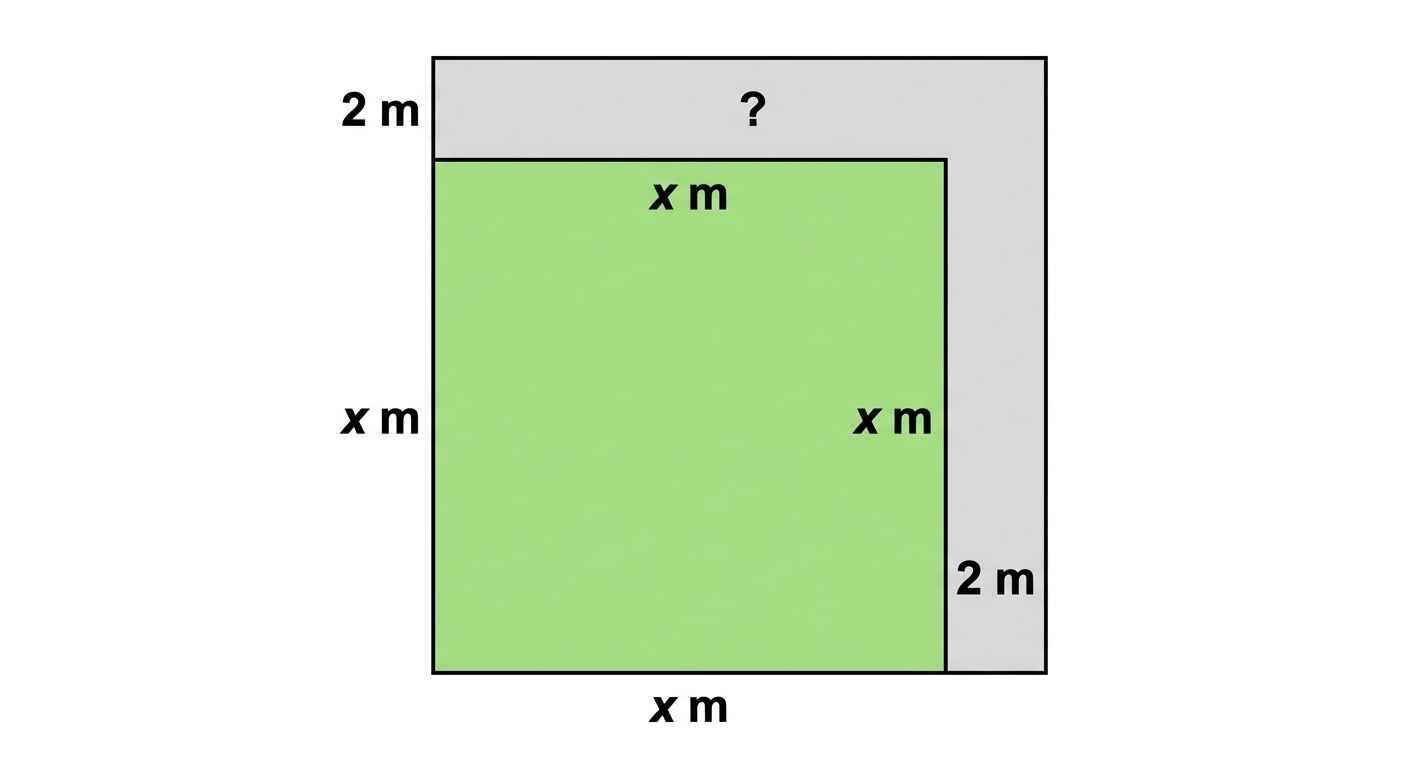
A gardener designs a square flower bed of side length metres, then adds a 2-metre-wide border path along two adjacent sides, forming an L-shaped region. The combined area satisfies , where is the flower bed area and is the path area.
a
Given metres, calculate the area of the path alone. [1]
b
The measurement of has an error of metres. Analyse how this error affects the path area, and explain why the amplification of the error depends on the border width. [1]
Solutions
3QuestionPerfect Square IdentitiesConcept Practice
2 marks~3 minCriterion B
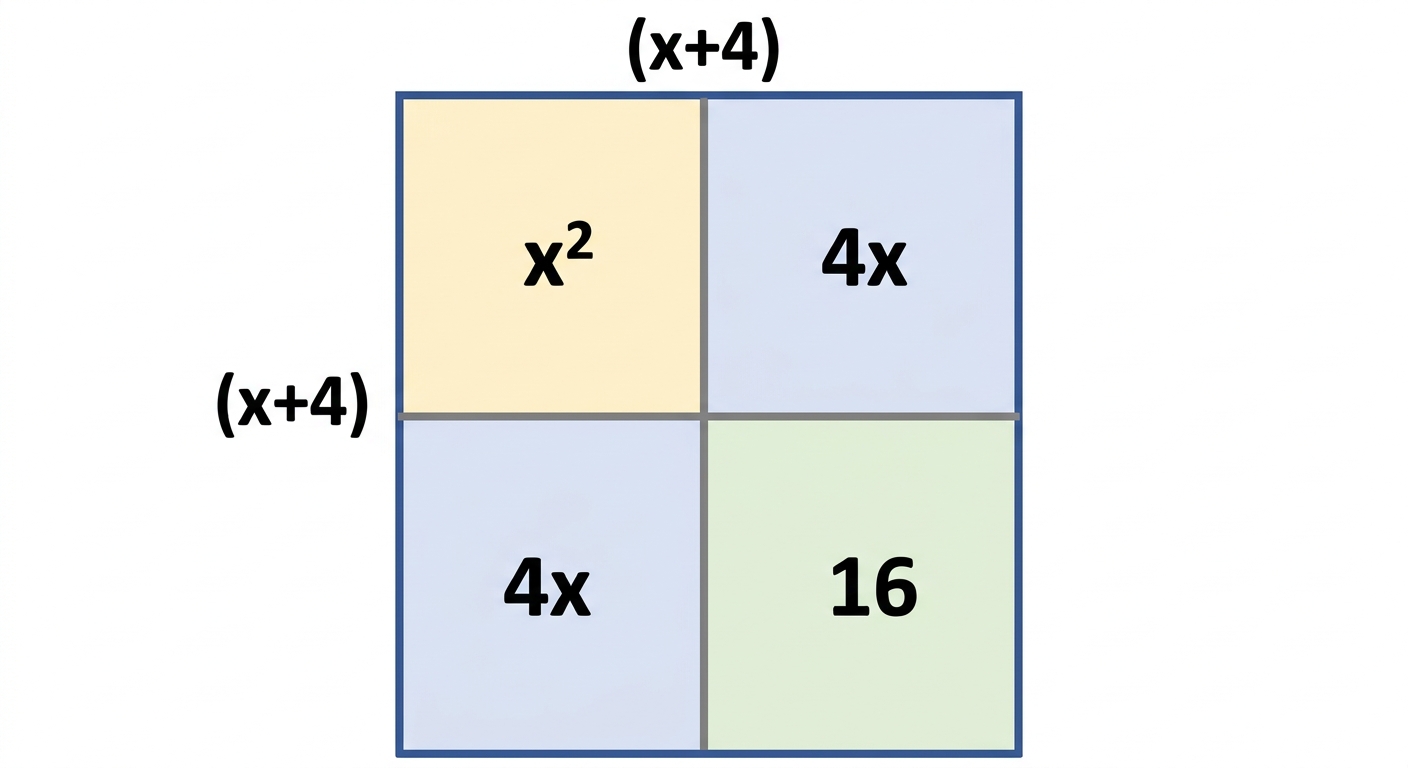
A square tile has side length cm. The tile is divided into four rectangular regions with areas , , , and cm² respectively.
Show that the total area of the tile can be written as . [2]
Show that the total area of the tile can be written as . [2]
Solutions
4QuestionPerfect Square IdentitiesAssessment Practice
6 marks~9 minCriterion D
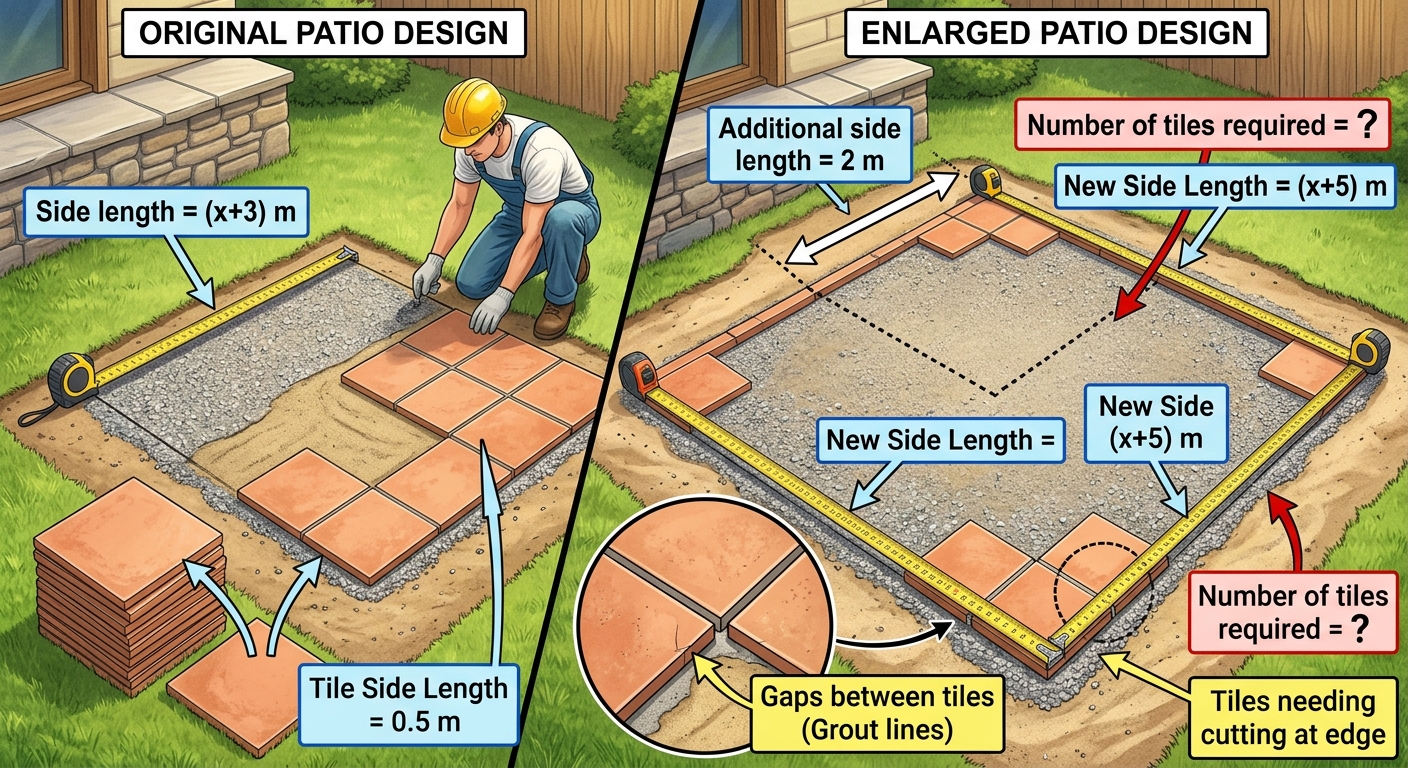
A contractor is tiling a square patio of side length m, where is a positive integer. Each square tile has side length m and area m². The client requests the patio be enlarged by adding m to each side, giving a new side length of m. The contractor uses the perfect square identity to find the new area, then calculates the number of tiles as , assuming tiles fit the patio exactly with no cuts, gaps, or wastage.
a
Calculate the number of tiles required for the enlarged patio when . [2]
b
Identify two distinct real-world factors that would cause the actual number of tiles needed to exceed the model's prediction. Explain how each factor leads to underestimation. [2]
c
A supplier recommends ordering more tiles than the model predicts to account for wastage. Using your answer from part (a), calculate the adjusted tile order for , then advise the contractor whether this adjusted figure should be used in place of the model's prediction for project planning. [2]
Solutions
That's every free question here — 4 of 75.
+71 more questions, plus Mock Papers & Worksheets, are waiting in Premium.