You're viewing free preview questions — 4 questions previewing here — subscribe to unlock 61 more, plus the Full Question Bank, Mock Papers & Worksheets.Upgrade
Substitution and Evaluation of Expressions — Free MYP4 Mathematics (Standard) Practice Questions

1QuestionMultiple Substitutions in Complex ExpressionsConcept Practice
4 marks~6 minCriterion A
The graph shows a parabola modelled by , opening upwards, with vertex at . The parabola passes through , , and .
a
State the value of by identifying the -intercept from the graph. [1]
b
Substitute the points and into to construct two equations in and . [1]
c
Deduce the values of and by solving the system of equations from part (b). [1]
d
The parabola models the cross-sectional profile of a satellite dish. The dish is functional only if its profile is symmetric about the central axis. Justify whether this dish meets the symmetry requirement, using the values of , , and . [1]

Solutions
2QuestionMultiple Substitutions in Complex ExpressionsAssessment Practice
12 marks~18 minCriterion D
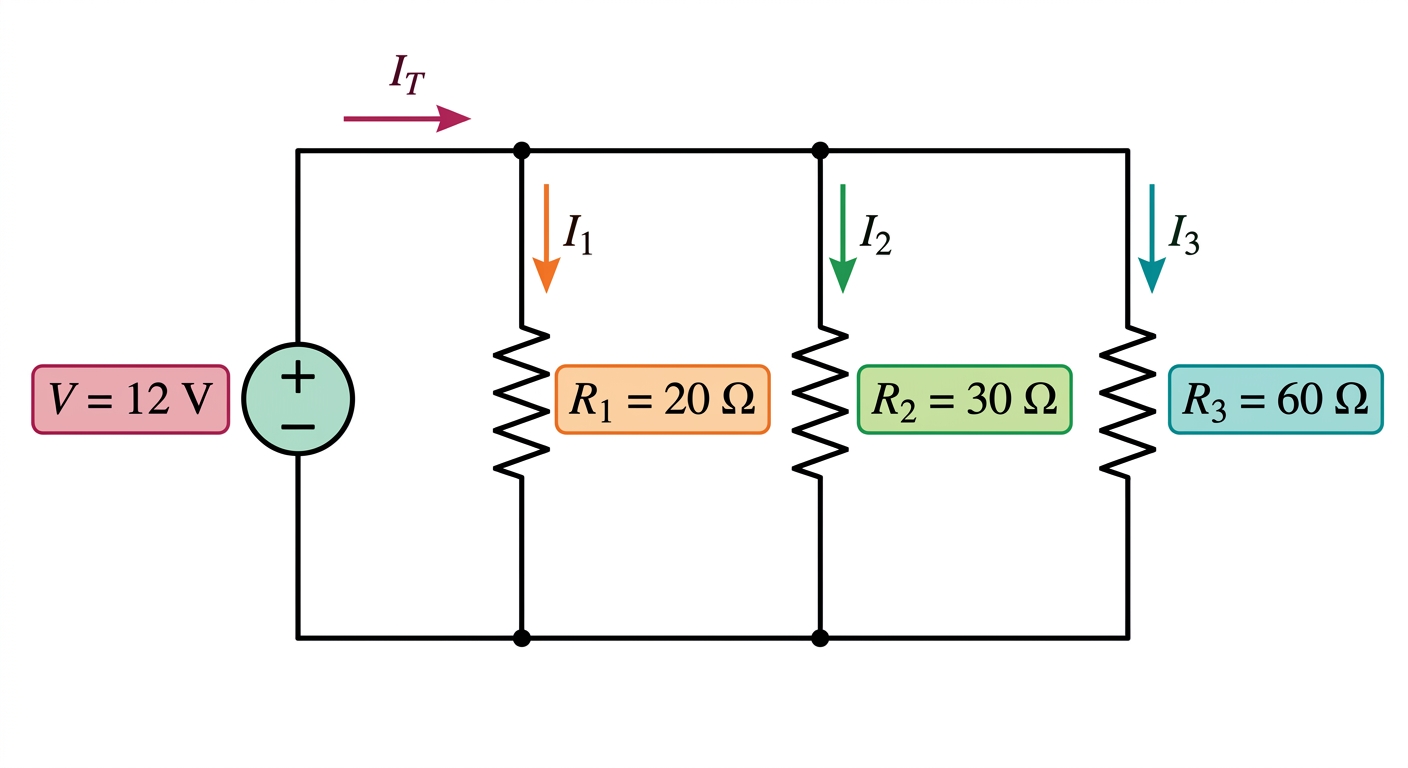
In electrical circuit analysis, the total resistance (in ohms) of a parallel circuit with three resistors is given by:
A circuit is designed with , , .
A circuit is designed with , , .
a
Calculate for these values. [2]
b
Each resistor has a tolerance of . Deduce the maximum and minimum possible values of , showing clearly which resistor values you use in each case. [4]
c
A safety specification requires to remain within of its nominal value under all operating conditions. Temperature fluctuations cause each resistor's resistance to change independently of its stated tolerance. Advise the engineer whether the tolerance alone is sufficient to guarantee the specification is met, and state what additional information is required to complete the analysis. [6]
Solutions
3QuestionEvaluating with Negative Numbers and FractionsAssessment Practice
6 marks~9 minCriterion C
A structural engineer models the flexibility of a beam joint using the expression , where is a dimensionless stiffness ratio. A negative value of indicates the joint resists in the opposite direction.
a
Evaluate and for each value of below. Show all working.
[2]
[2]
b
Show that , and hence justify why always has the same sign as , while is always positive. [2]
c
The engineer states: "For any negative stiffness ratio, the flexibility measure is always negative and its magnitude is always less than ." Evaluate for and , then critique the engineer's claim, using the expression to support your reasoning. [2]
Solutions
4QuestionEvaluating with Negative Numbers and FractionsAssessment Practice
6 marks~9 minCriterion B
A signal-processing engineer models the attenuation (reduction in strength) of a radio signal at stage of a transmission network using the expression .
The first five values are:
The first five values are:
a
Deduce a general formula for the attenuation at stage , expressing your answer in the form . [2]
b
Calculate the attenuation at stage using your formula. [2]
c
The engineer claims that the attenuation will never fall below for any stage in this network (). Justify whether this claim is correct. [2]
Solutions
That's every free question here — 4 of 65.
+61 more questions, plus Mock Papers & Worksheets, are waiting in Premium.