You're viewing free preview questions — 4 questions previewing here — subscribe to unlock 43 more, plus the Full Question Bank, Mock Papers & Worksheets.Upgrade
Applications of Functions — Free MYP4 Mathematics (Standard) Practice Questions

1QuestionPredictionConcept Practice
2 marks~3 minCriterion A
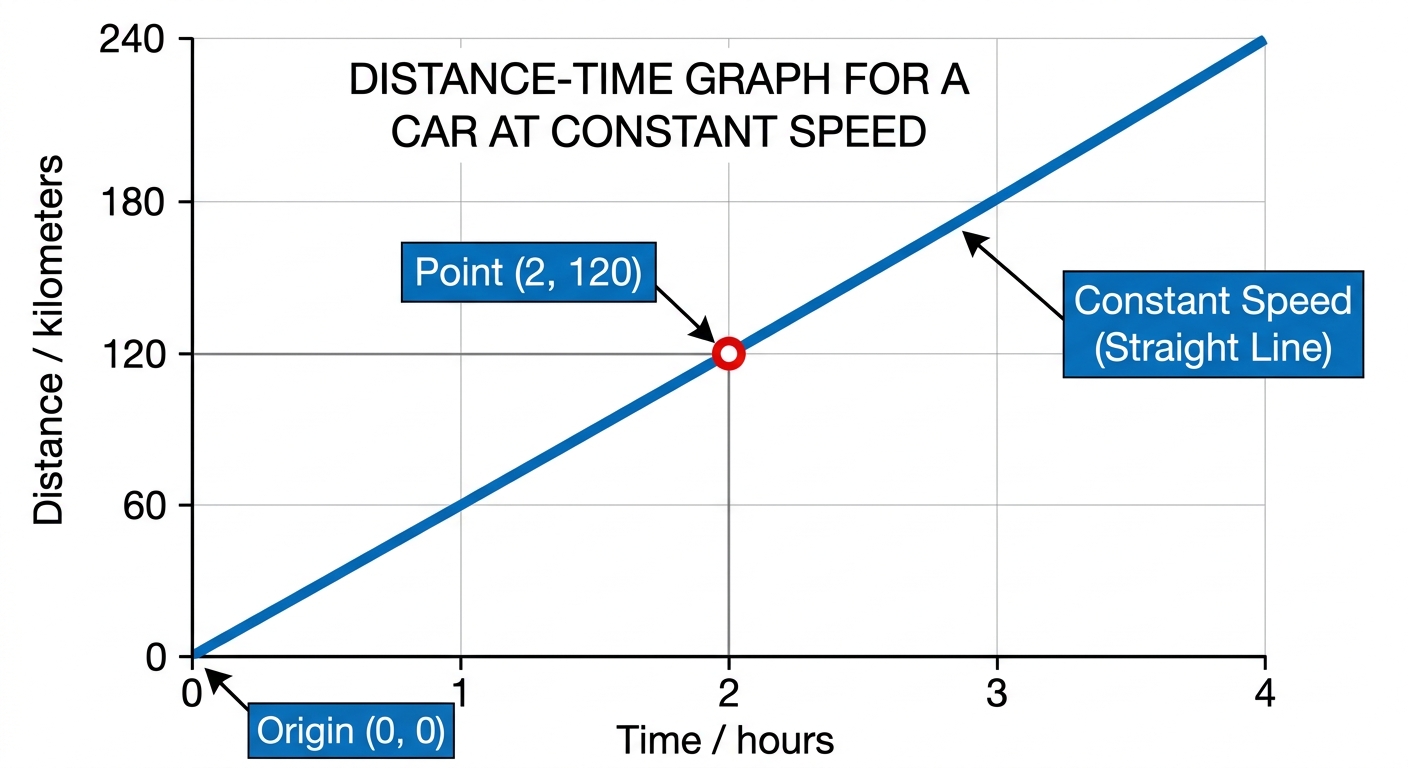
A car travels at a constant speed. A distance–time graph for the journey passes through the origin and the point , where distance is measured in kilometres and time in hours.
a
Deduce the equation of the line that models this relationship. [1]
b
The car must complete a 200 km journey within 3 hours. Justify whether the car's speed is sufficient to meet this requirement. [1]

Solutions
2QuestionReal-life modelsAssessment Practice
5 marks~8 minCriterion B
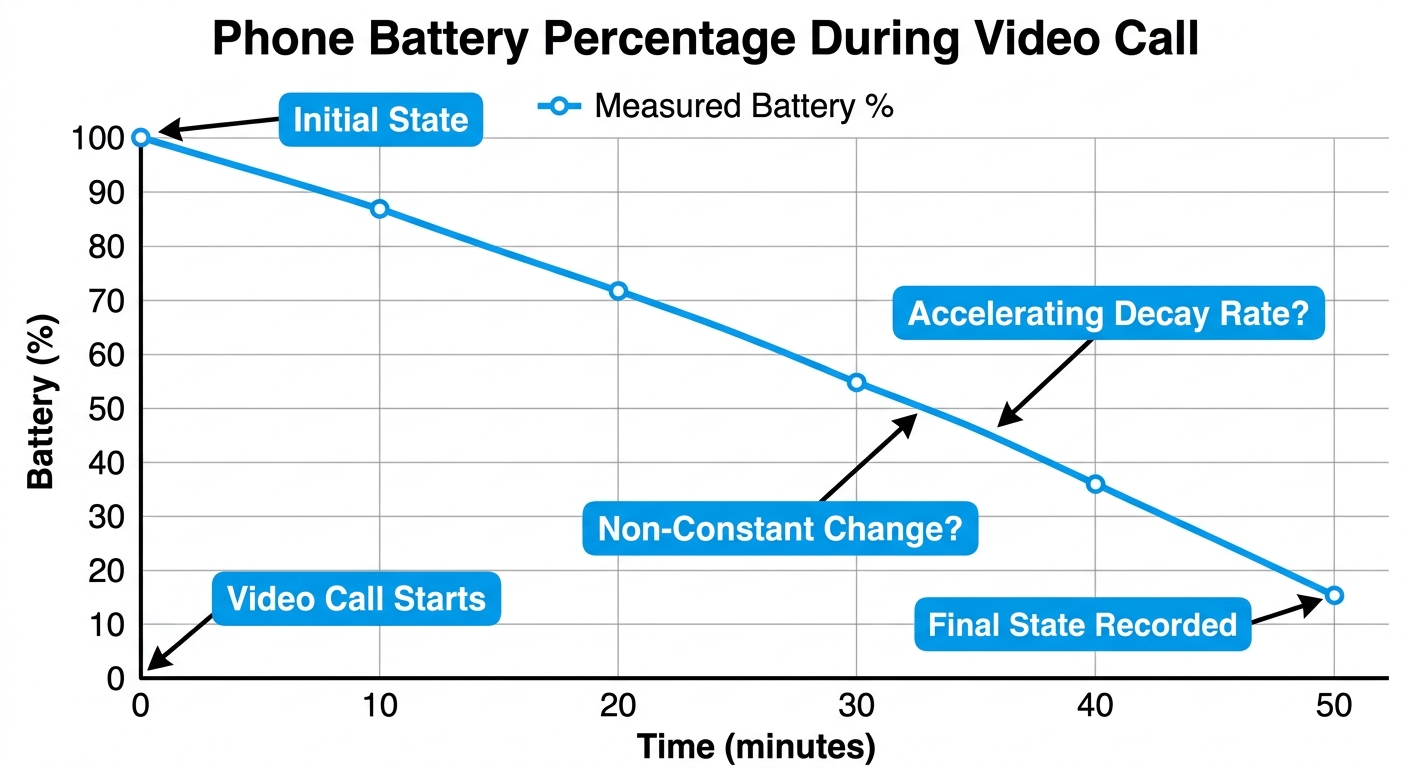
A student records the battery percentage of a phone during a video call.
Time (min):
Battery (%):
Time (min):
Battery (%):
a
Calculate the first differences in battery percentage between consecutive intervals. Justify, using these values, why a linear model is not appropriate for this data. [2]
b
Using the data points at , , and , derive a quadratic model of the form . Show your system of equations and solve for , , and . [2]
c
A phone is considered critically low when battery drops below 10 percent. Using your model, determine the time at which this occurs and advise whether the quadratic model should be used to make this prediction. [1]
Solutions
3QuestionPredictionAssessment Practice
6 marks~9 minCriterion D
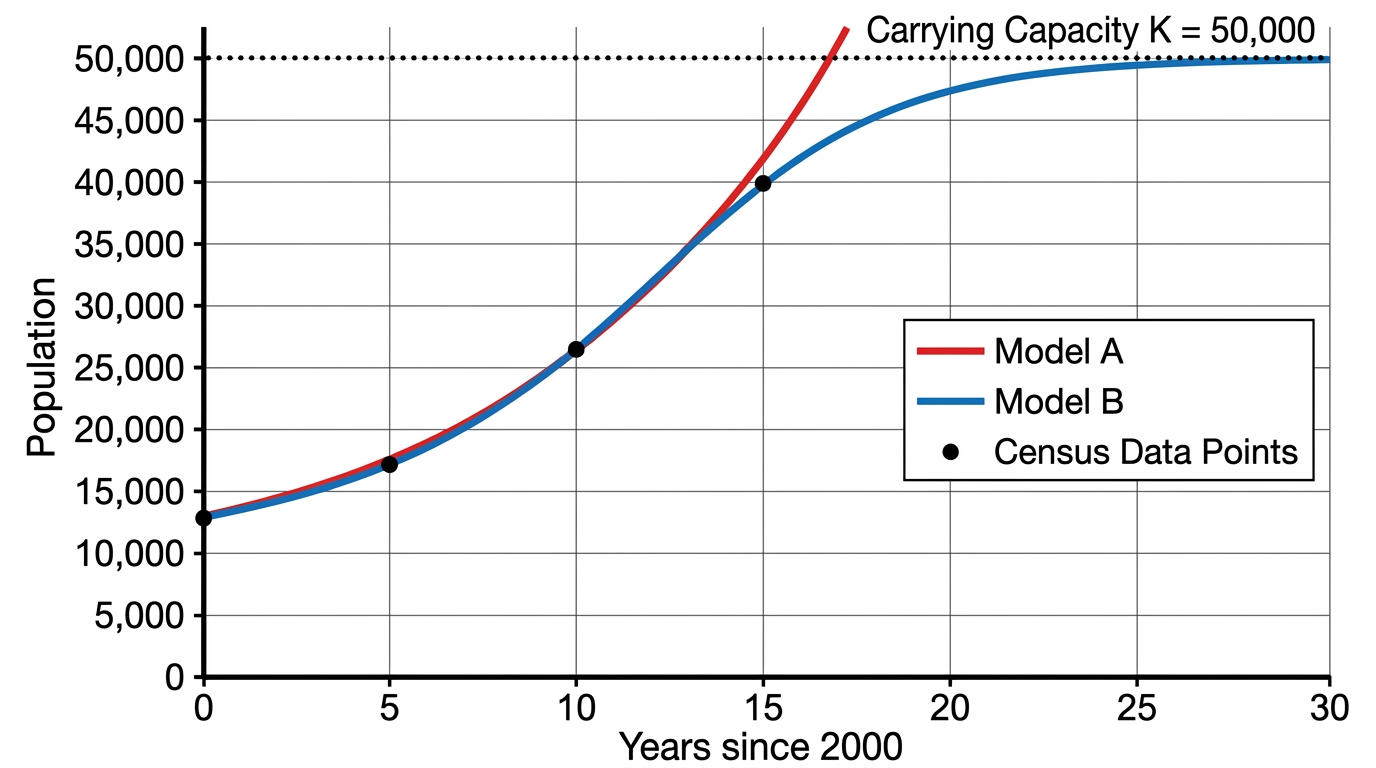
A city planner is modelling the population growth of a town. Census data shows the population was 10 000 in 2000, 12 000 in 2005, 14 400 in 2010, and 17 280 in 2015. Two models are proposed, where is years since 2000:
Model A (exponential):
Model B (logistic):
Model A (exponential):
Model B (logistic):
a
Calculate the predicted population in 2030 using both models. Show all working. [2]
b
Justify which model is more appropriate for long-term population prediction, referring to the structure of each model. [2]
c
The city planner must decide whether to commission a new water treatment plant with capacity for 30 000 residents. Advise the city planner whether either model provides sufficient justification to commission the plant for 2030, identifying one assumption of each model that could affect the reliability of this advice. [2]
Solutions
4QuestionInterpret contextAssessment Practice
4 marks~6 minCriterion C
A student records the height of a plant each day after it sprouts:
| Day () | 1 | 2 | 3 | 4 |
|---|---|---|---|---|
| Height (cm) | 3 | 6 | 11 | 18 |
a
Deduce whether the growth is linear or quadratic by calculating the first and second differences. [1]
b
Construct a general formula for the height on day . [2]
c
The student claims the plant will exceed 50 cm before Day 8. Justify whether this claim is supported by the model, and assess whether the formula is a reliable basis for this prediction. [1]
Solutions
That's every free question here — 4 of 47.
+43 more questions, plus Mock Papers & Worksheets, are waiting in Premium.