You're viewing free preview questions — 4 questions previewing here — subscribe to unlock 218 more, plus the Full Question Bank, Mock Papers & Worksheets.Upgrade
Composite Functions — Free MYP4 Mathematics (Standard) Practice Questions

1QuestionInterpret compositeConcept Practice
2 marks~3 minCriterion A
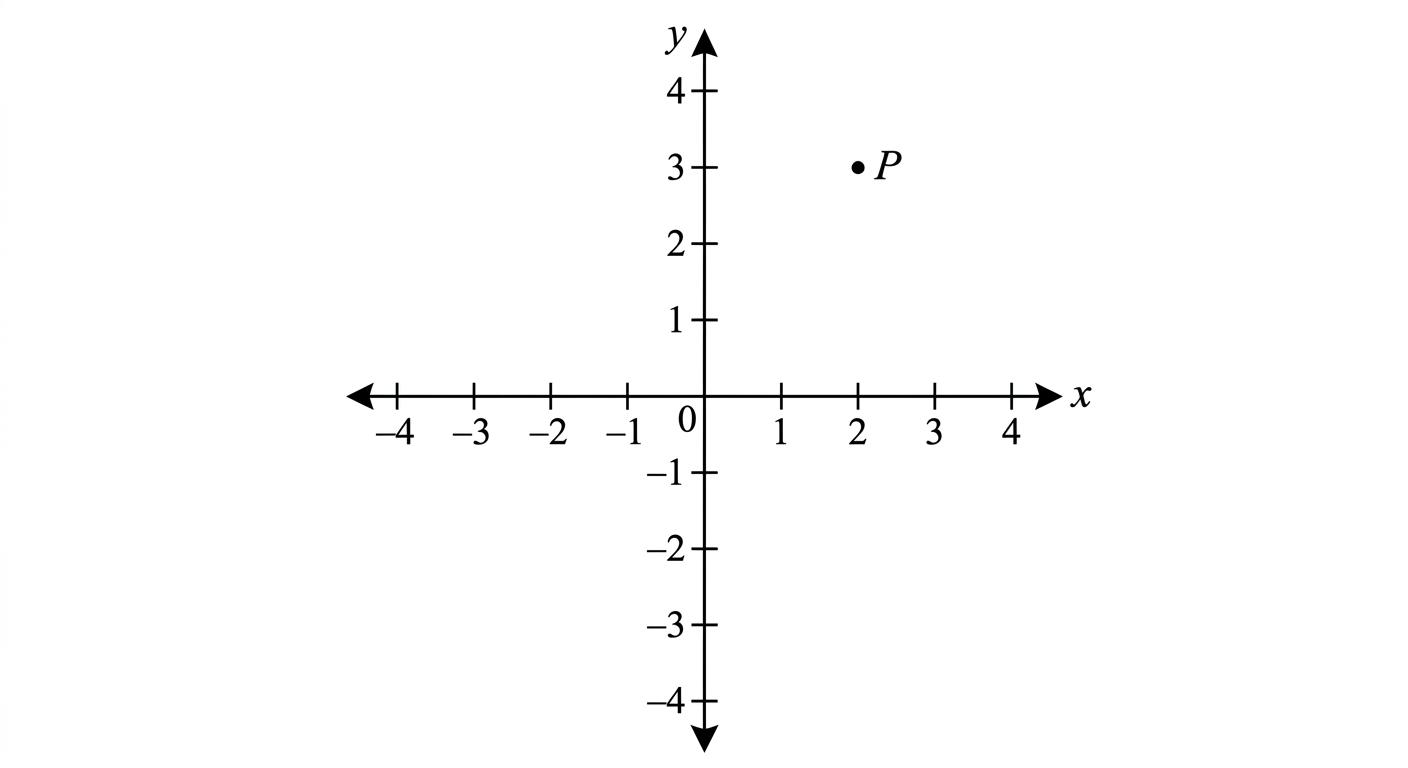
A security camera at position on a coordinate grid (units in metres) undergoes a composite transformation: a rotation of clockwise about the origin, followed by a reflection across the -axis.
a
Determine the final coordinates of the camera's image after both transformations. [1]
b
The camera has a maximum effective range of 3.5 m from the origin. Justify whether the composite transformation places the camera within its effective range. [1]

Solutions
2Questionf(g(x)) conceptAssessment Practice
2 marks~3 minCriterion D
A clothing store applies a 10% discount followed by an 8% sales tax on all items. Let be the original price in dollars, where represents the discount and represents the tax.
Determine and , and hence advise the store manager which order of operations to advertise to best serve customer perception. [2]
Determine and , and hence advise the store manager which order of operations to advertise to best serve customer perception. [2]

Solutions
3QuestionEvaluate compositeAssessment Practice
4 marks~6 minCriterion C
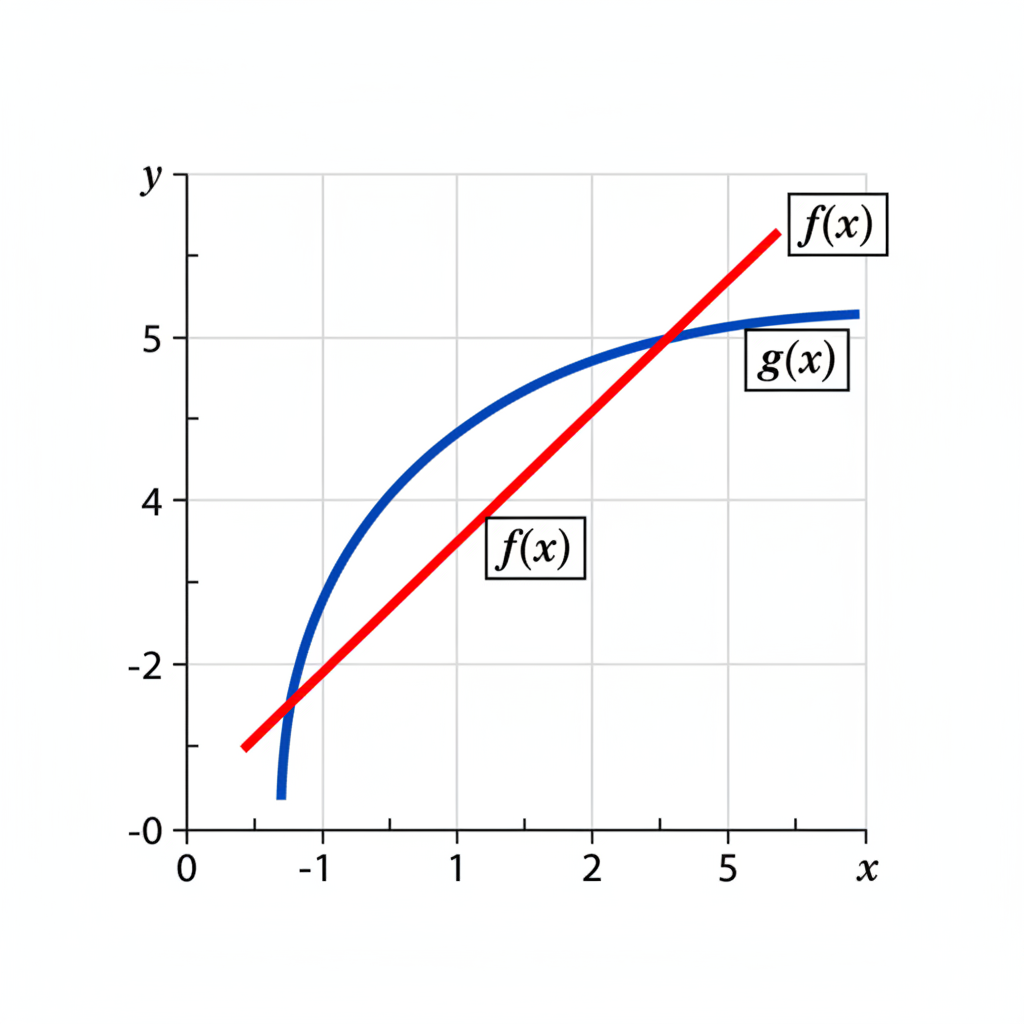
The graphs of two functions, and , are shown below.
[Imagine two graphs are shown: one for and one for .
The graph of is a straight line passing through the points and .
The graph of is a curve passing through the points and .]
Explain how you would determine the value of using these graphs. In your explanation, clearly show the order of operations and state the values you read from each graph at each step. Use complete sentences and proper mathematical notation.
[Imagine two graphs are shown: one for and one for .
The graph of is a straight line passing through the points and .
The graph of is a curve passing through the points and .]
Explain how you would determine the value of using these graphs. In your explanation, clearly show the order of operations and state the values you read from each graph at each step. Use complete sentences and proper mathematical notation.
Solutions
4QuestionInterpret compositeAssessment Practice
6 marks~9 minCriterion B
A factory uses two automated processes to price its products. Process converts a raw material quantity (kg) into a base unit count: . Process then converts the base unit count into a final price (dollars).
: 1, 2, 3, 4 — : 3, 5, 7, 9
: 3, 5, 7, 9 — : 9, 15, 21, 27
: 1, 2, 3, 4 — : 3, 5, 7, 9
: 3, 5, 7, 9 — : 9, 15, 21, 27
a
Calculate and using the tables above. [2]
b
Deduce an algebraic expression for . [2]
c
A bulk order requires 10 kg of raw material. The factory's budget allows a maximum spend of 60 dollars. Advise the factory manager whether the order should proceed, justifying your answer using . [2]
Solutions
That's every free question here — 4 of 222.
+218 more questions, plus Mock Papers & Worksheets, are waiting in Premium.