You're viewing free preview questions — 4 questions previewing here — subscribe to unlock 45 more, plus the Full Question Bank, Mock Papers & Worksheets.Upgrade
Circles and Angle Properties — Free MYP4 Mathematics (Standard) Practice Questions

1QuestionAngles at the Centre and in the CircleConcept Practice
4 marks~6 minCriterion A
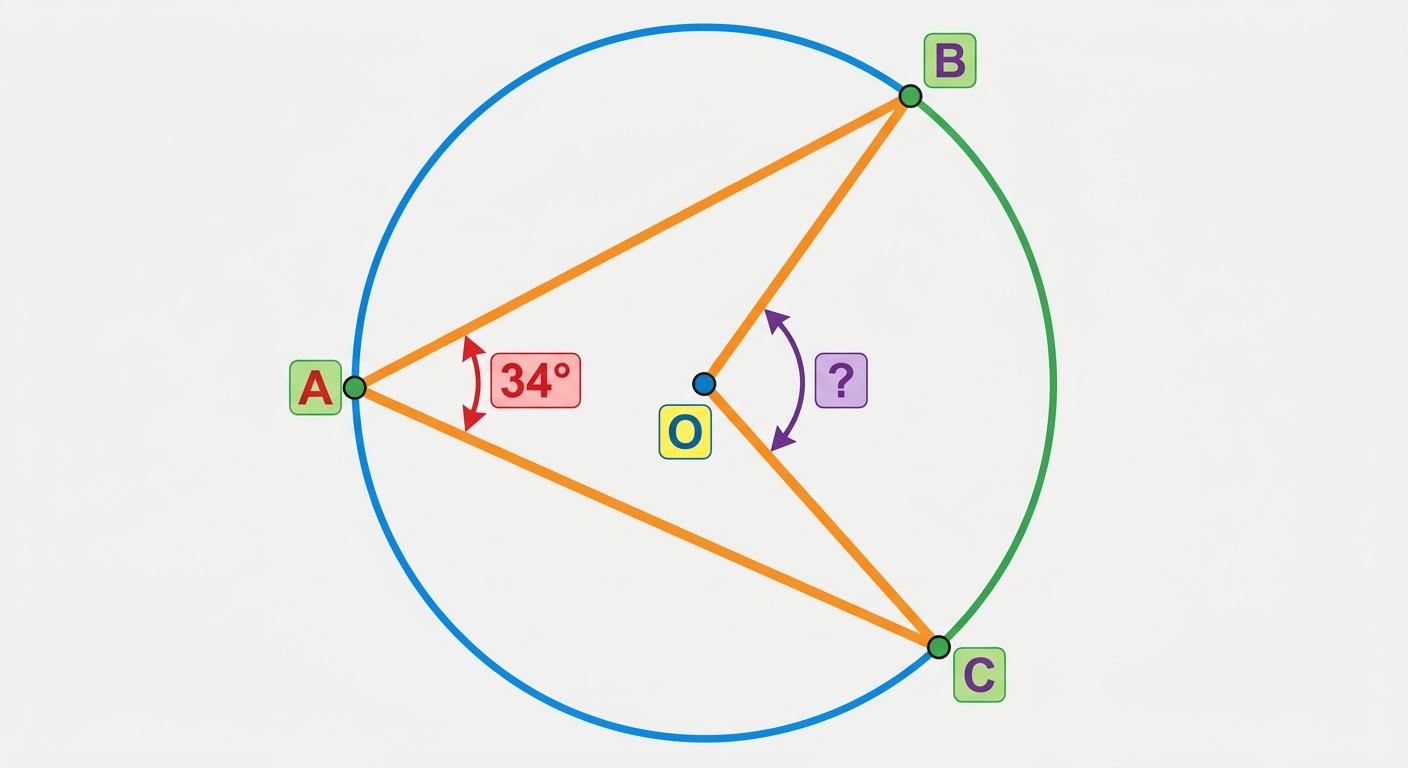
An architect is designing a circular skylight. Points , , and lie on the circumference of a circle with centre . The architect measures . The central angle is modelled by the expression .
a
Deduce the measure of . [1]
b
Find the value of . [1]
c
The architect states: "Because the central angle exceeds , arc spans more than one-sixth of the full circle." Justify whether this statement is correct. [2]

Solutions
2QuestionCyclic Quadrilaterals and ChordsAssessment Practice
4 marks~6 minCriterion D
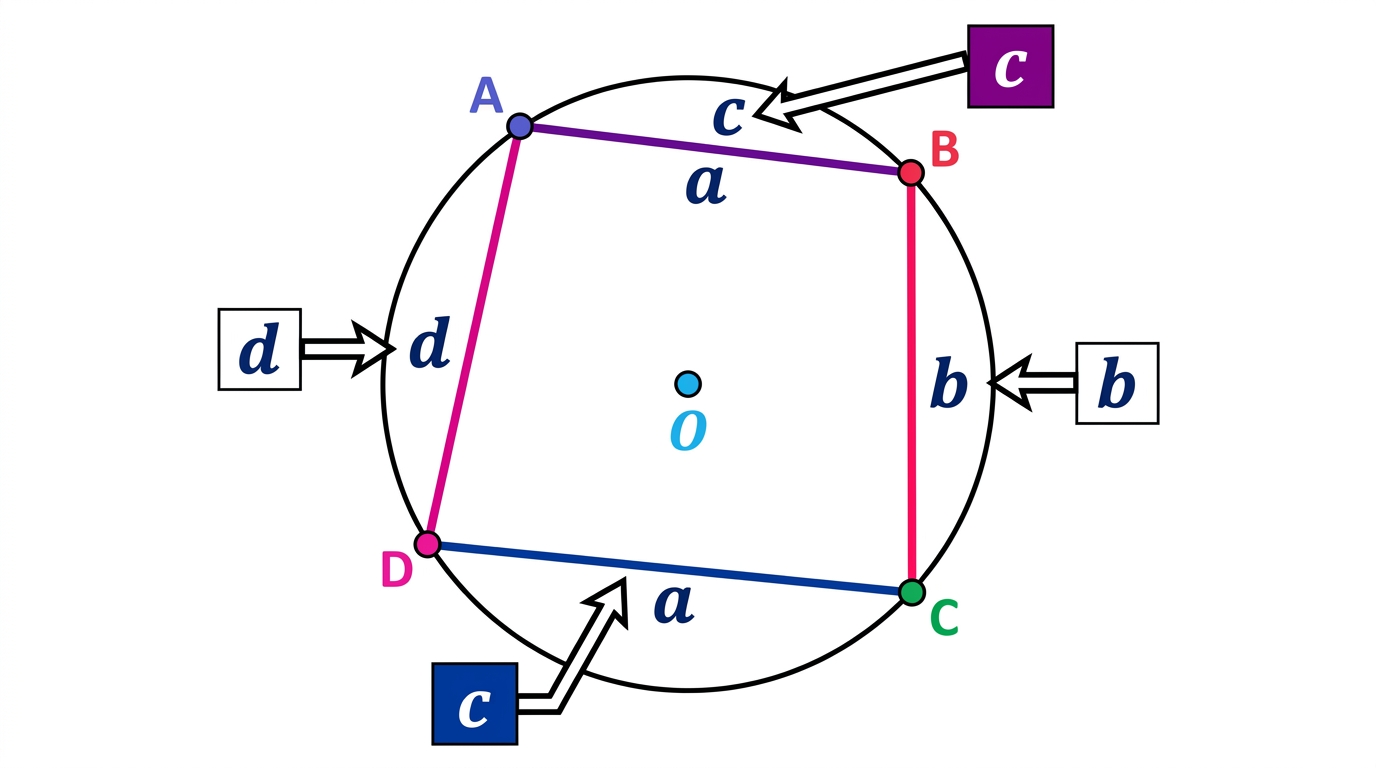
A horticulturalist designs a circular greenhouse whose floor plan is modelled as a cyclic quadrilateral with side lengths , , , and semi-perimeter . The area is estimated using Brahmagupta's formula:
a
Explain why Brahmagupta's formula requires to be a cyclic quadrilateral, referring to a key angle property. [1]
b
Discuss one strength and one limitation of using this formula to estimate the usable growing area of a real greenhouse. [2]
c
The horticulturalist measures the constructed greenhouse and finds the actual dimensions differ from the design. Advise the horticulturalist whether Brahmagupta's formula remains a reliable basis for calculating growing area, and recommend one specific adjustment to the design process. [1]
Solutions
3QuestionAngles in the Same Segment and Alternate Segment TheoremAssessment Practice
4 marks~6 minCriterion C
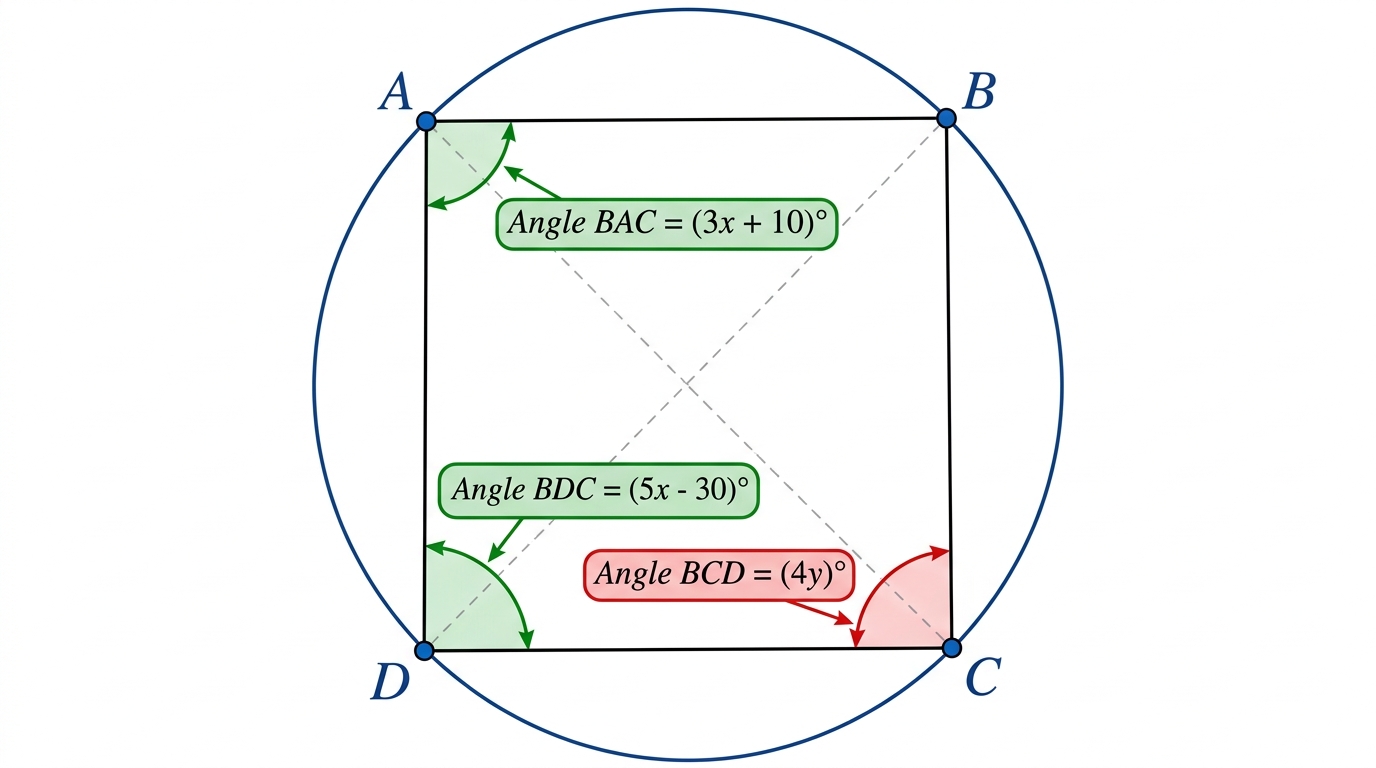
A circular road junction is modelled by a circle with four points , , , and on its circumference, forming cyclic quadrilateral . A traffic engineer records the following angles:
a
Explain why . [1]
b
Deduce two equations in and using the properties of cyclic quadrilaterals. [1]
c
Solve your equations to find and , showing all working. [1]
d
Calculate and justify whether the engineer's claim that the layout forms a valid cyclic quadrilateral is correct. [1]
Solutions
4QuestionCyclic Quadrilaterals and ChordsAssessment Practice
6 marks~9 minCriterion B
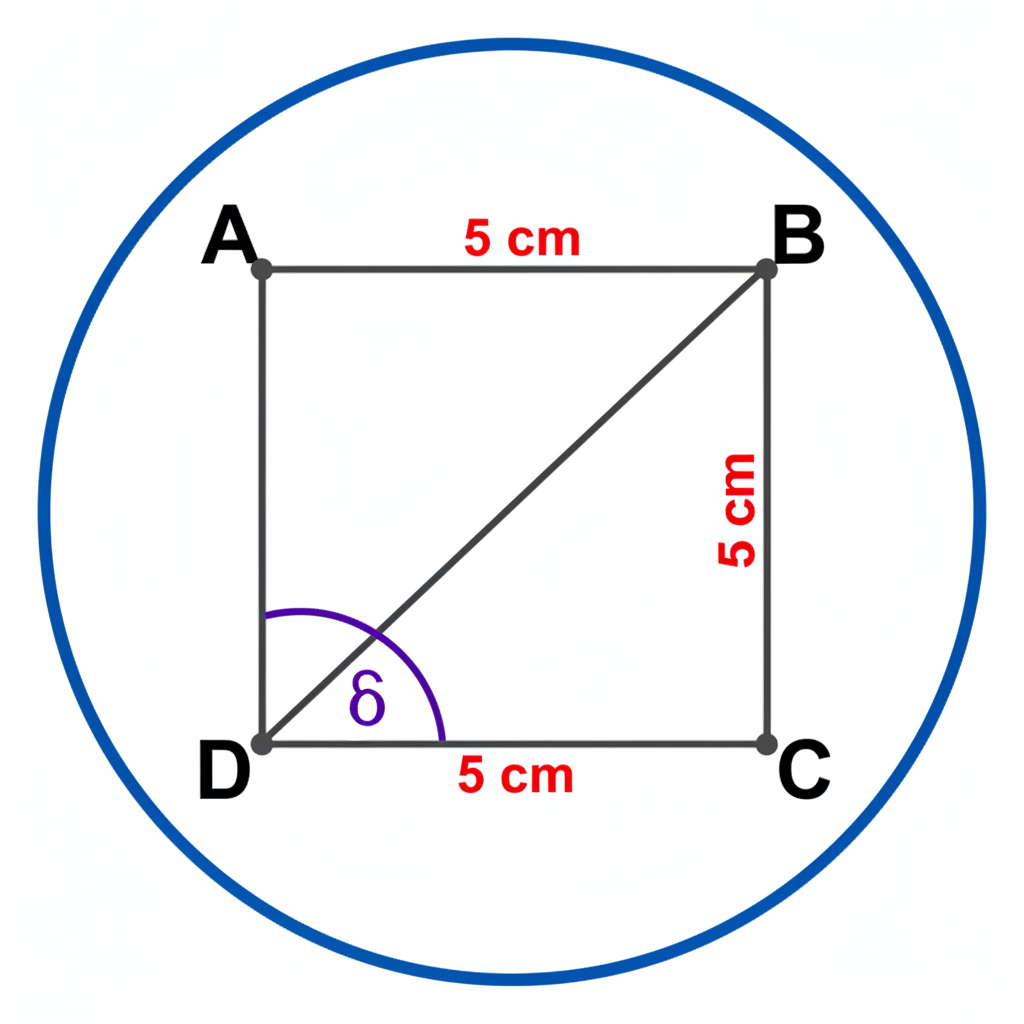
An architect is designing a circular plaza. Four anchor points , , , lie on the circle, forming cyclic quadrilateral . A diagonal support beam runs along chord .
The following measurements are recorded:
(cm): 5, 8, 7, 6, 5
(cm): 5, 8, 7, 8, 12
(degrees): 60, 120, 90, 60, 90
The following measurements are recorded:
(cm): 5, 8, 7, 6, 5
(cm): 5, 8, 7, 8, 12
(degrees): 60, 120, 90, 60, 90
a
Deduce a general formula for the length of chord in terms of , , and . [3]
b
Calculate the length of chord for each set of measurements. [2]
c
The support beam can only be installed if its length is strictly less than . Justify, for each case, whether the beam can be installed, and explain what geometric property guarantees this will always be the case. [1]
Solutions
That's every free question here — 4 of 49.
+45 more questions, plus Mock Papers & Worksheets, are waiting in Premium.